

An aerial drone photo taken on May 14, 2026 shows a beef hotpot restaurant in Chaozhou, south China's Guangdong Province.
The Chaoshan region in China's Guangdong Province is renowned nationwide for its beef hotpot, though very few cattle are raised locally. The Chaoshan people have a system of nomenclature for a dozen parts of the beef, which is a reflection of both the exquisite knife skills of the chefs and the pursuit of culinary excellence.
According to official data, only 3,200 head of cattle were slaughtered in 2025 in Chaozhou, a major city in the Chaoshan region, whereas the city boasts over 2,000 beef hotpot restaurants and beef meatball processing enterprises, consuming about 90,000 head of cattle a year. Over 90 percent of the live cattle were purchased from Inner Mongolia, Yunnan, Ningxia and other places across China.
Thanks to supply chain integration and meticulous craftsmanship, Chaozhou, a city not known for cattle production, has developed a unique beef industry. (Xinhua/Deng Hua)
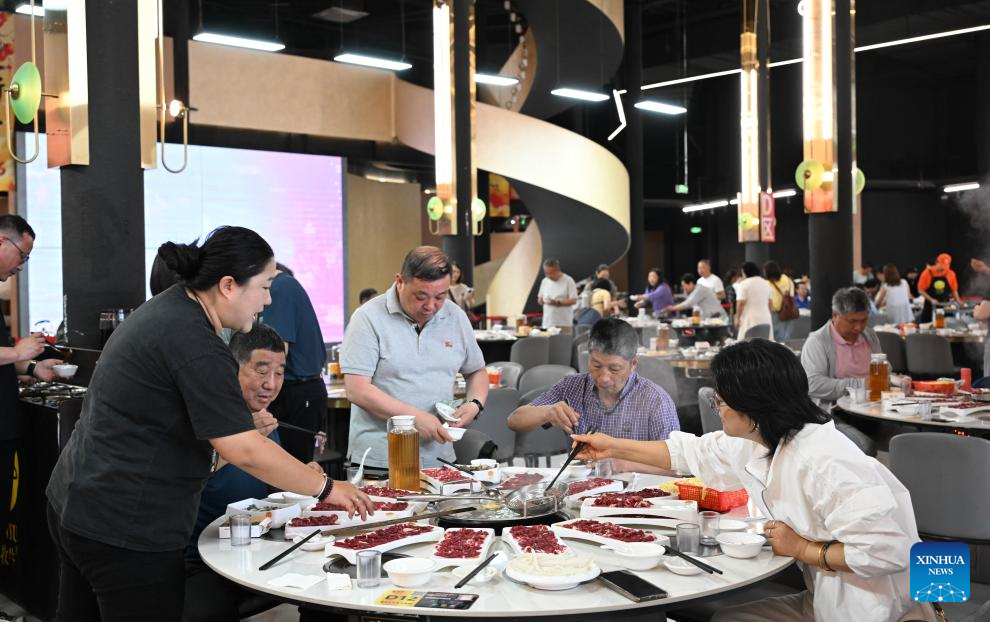
People enjoy beef hotpot at a beef hotpot restaurant in Chaozhou, south China's Guangdong Province, May 14, 2026.
The Chaoshan region in China's Guangdong Province is renowned nationwide for its beef hotpot, though very few cattle are raised locally. The Chaoshan people have a system of nomenclature for a dozen parts of the beef, which is a reflection of both the exquisite knife skills of the chefs and the pursuit of culinary excellence.
According to official data, only 3,200 head of cattle were slaughtered in 2025 in Chaozhou, a major city in the Chaoshan region, whereas the city boasts over 2,000 beef hotpot restaurants and beef meatball processing enterprises, consuming about 90,000 head of cattle a year. Over 90 percent of the live cattle were purchased from Inner Mongolia, Yunnan, Ningxia and other places across China.
Thanks to supply chain integration and meticulous craftsmanship, Chaozhou, a city not known for cattle production, has developed a unique beef industry. (Xinhua/Deng Hua)

A staff member places sliced beef on plates at a beef hotpot restaurant in Chaozhou, south China's Guangdong Province, May 13, 2026.
The Chaoshan region in China's Guangdong Province is renowned nationwide for its beef hotpot, though very few cattle are raised locally. The Chaoshan people have a system of nomenclature for a dozen parts of the beef, which is a reflection of both the exquisite knife skills of the chefs and the pursuit of culinary excellence.
According to official data, only 3,200 head of cattle were slaughtered in 2025 in Chaozhou, a major city in the Chaoshan region, whereas the city boasts over 2,000 beef hotpot restaurants and beef meatball processing enterprises, consuming about 90,000 head of cattle a year. Over 90 percent of the live cattle were purchased from Inner Mongolia, Yunnan, Ningxia and other places across China.
Thanks to supply chain integration and meticulous craftsmanship, Chaozhou, a city not known for cattle production, has developed a unique beef industry. (Xinhua/Deng Hua)
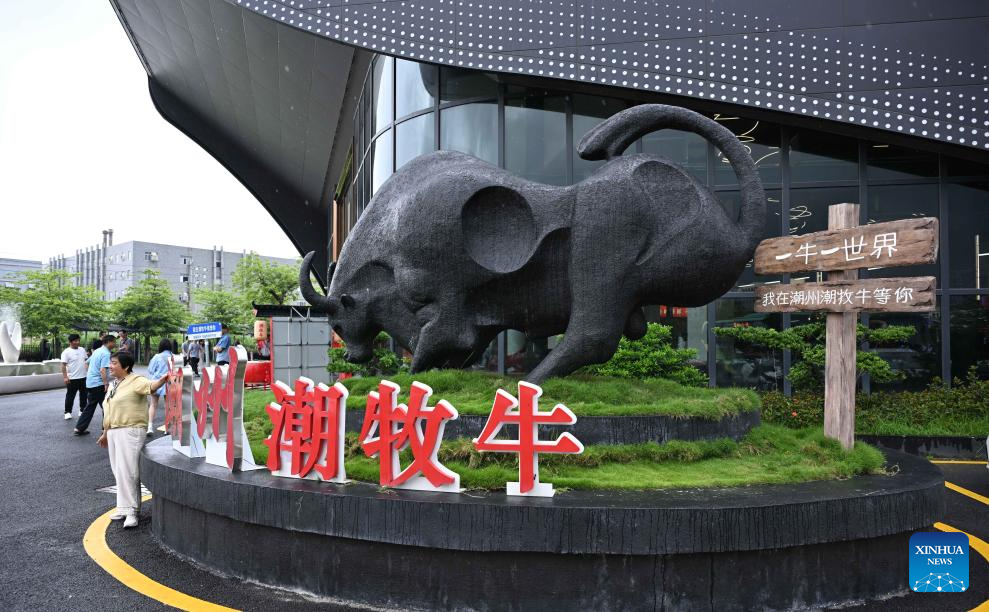
A tourist poses for photos outside a beef hotpot restaurant in Chaozhou, south China's Guangdong Province, May 14, 2026.
The Chaoshan region in China's Guangdong Province is renowned nationwide for its beef hotpot, though very few cattle are raised locally. The Chaoshan people have a system of nomenclature for a dozen parts of the beef, which is a reflection of both the exquisite knife skills of the chefs and the pursuit of culinary excellence.
According to official data, only 3,200 head of cattle were slaughtered in 2025 in Chaozhou, a major city in the Chaoshan region, whereas the city boasts over 2,000 beef hotpot restaurants and beef meatball processing enterprises, consuming about 90,000 head of cattle a year. Over 90 percent of the live cattle were purchased from Inner Mongolia, Yunnan, Ningxia and other places across China.
Thanks to supply chain integration and meticulous craftsmanship, Chaozhou, a city not known for cattle production, has developed a unique beef industry. (Xinhua/Deng Hua)
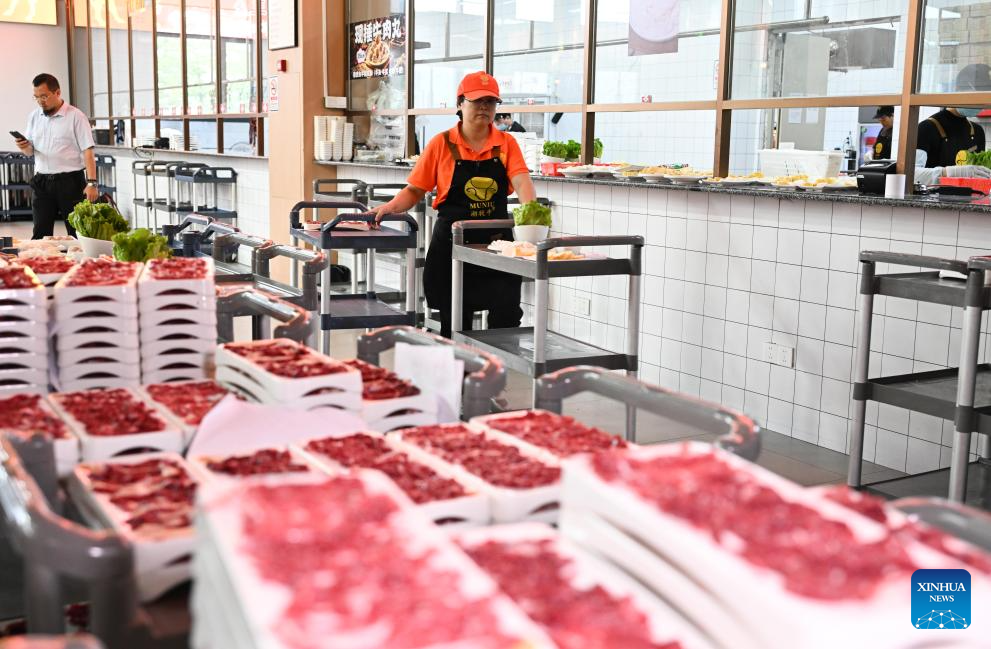
A worker delivers sliced beef to customers at a beef hotpot restaurant in Chaozhou, south China's Guangdong Province, May 14, 2026.
The Chaoshan region in China's Guangdong Province is renowned nationwide for its beef hotpot, though very few cattle are raised locally. The Chaoshan people have a system of nomenclature for a dozen parts of the beef, which is a reflection of both the exquisite knife skills of the chefs and the pursuit of culinary excellence.
According to official data, only 3,200 head of cattle were slaughtered in 2025 in Chaozhou, a major city in the Chaoshan region, whereas the city boasts over 2,000 beef hotpot restaurants and beef meatball processing enterprises, consuming about 90,000 head of cattle a year. Over 90 percent of the live cattle were purchased from Inner Mongolia, Yunnan, Ningxia and other places across China.
Thanks to supply chain integration and meticulous craftsmanship, Chaozhou, a city not known for cattle production, has developed a unique beef industry. (Xinhua/Deng Hua)
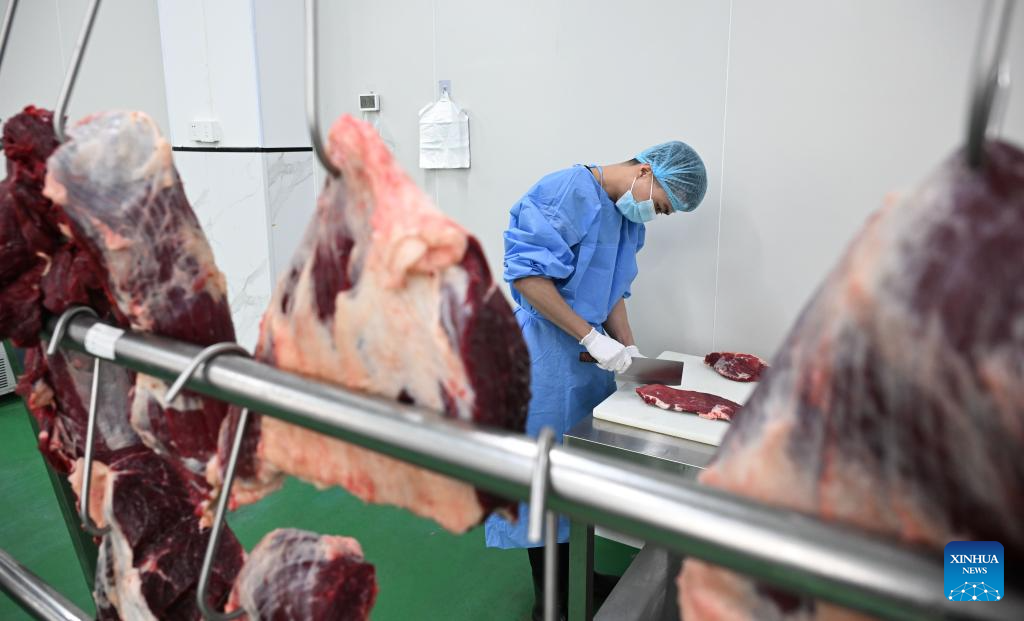
A worker cuts beef at a food company in Chaozhou, south China's Guangdong Province, May 14, 2026.
The Chaoshan region in China's Guangdong Province is renowned nationwide for its beef hotpot, though very few cattle are raised locally. The Chaoshan people have a system of nomenclature for a dozen parts of the beef, which is a reflection of both the exquisite knife skills of the chefs and the pursuit of culinary excellence.
According to official data, only 3,200 head of cattle were slaughtered in 2025 in Chaozhou, a major city in the Chaoshan region, whereas the city boasts over 2,000 beef hotpot restaurants and beef meatball processing enterprises, consuming about 90,000 head of cattle a year. Over 90 percent of the live cattle were purchased from Inner Mongolia, Yunnan, Ningxia and other places across China.
Thanks to supply chain integration and meticulous craftsmanship, Chaozhou, a city not known for cattle production, has developed a unique beef industry. (Xinhua/Deng Hua)
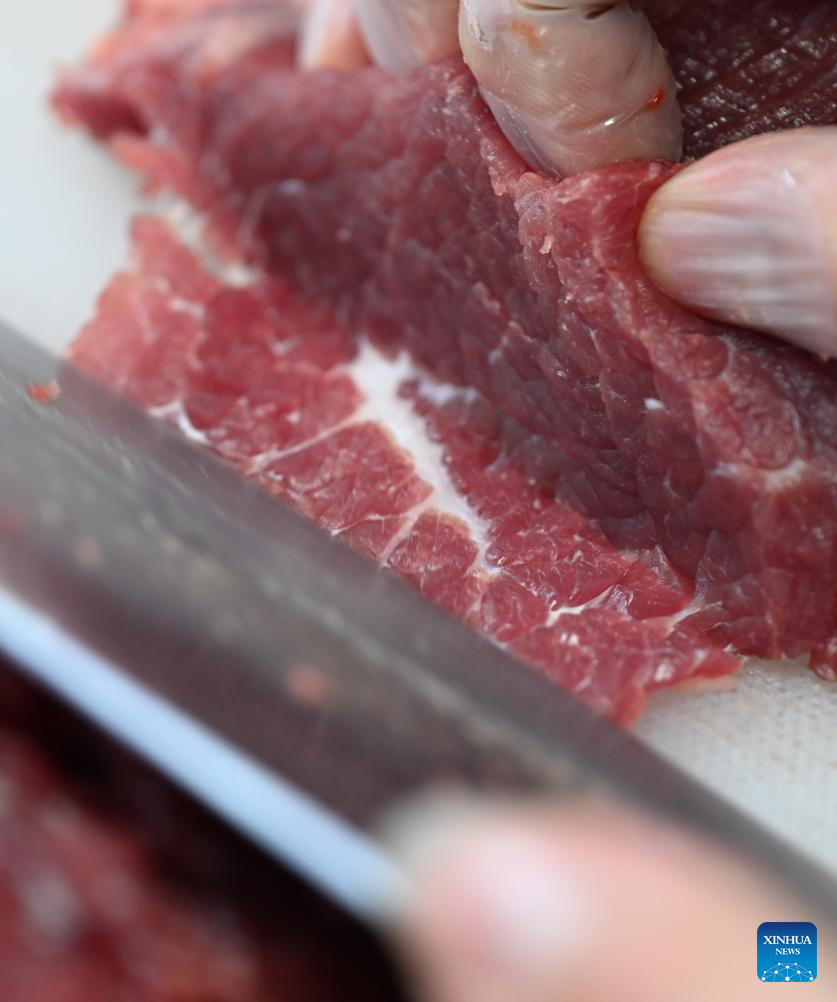
A staff member slices beef at a beef hotpot restaurant in Chaozhou, south China's Guangdong Province, May 13, 2026.
The Chaoshan region in China's Guangdong Province is renowned nationwide for its beef hotpot, though very few cattle are raised locally. The Chaoshan people have a system of nomenclature for a dozen parts of the beef, which is a reflection of both the exquisite knife skills of the chefs and the pursuit of culinary excellence.
According to official data, only 3,200 head of cattle were slaughtered in 2025 in Chaozhou, a major city in the Chaoshan region, whereas the city boasts over 2,000 beef hotpot restaurants and beef meatball processing enterprises, consuming about 90,000 head of cattle a year. Over 90 percent of the live cattle were purchased from Inner Mongolia, Yunnan, Ningxia and other places across China.
Thanks to supply chain integration and meticulous craftsmanship, Chaozhou, a city not known for cattle production, has developed a unique beef industry. (Xinhua/Deng Hua)
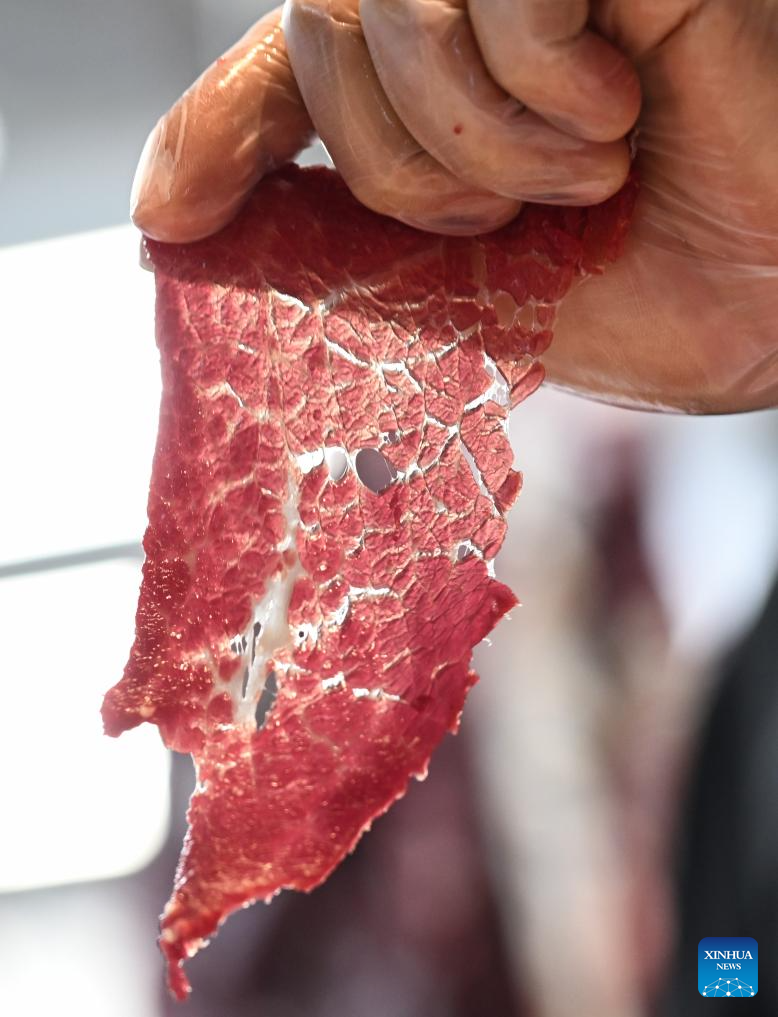
A staff member displays a piece of sliced beef at a beef hotpot restaurant in Chaozhou, south China's Guangdong Province, May 13, 2026.
The Chaoshan region in China's Guangdong Province is renowned nationwide for its beef hotpot, though very few cattle are raised locally. The Chaoshan people have a system of nomenclature for a dozen parts of the beef, which is a reflection of both the exquisite knife skills of the chefs and the pursuit of culinary excellence.
According to official data, only 3,200 head of cattle were slaughtered in 2025 in Chaozhou, a major city in the Chaoshan region, whereas the city boasts over 2,000 beef hotpot restaurants and beef meatball processing enterprises, consuming about 90,000 head of cattle a year. Over 90 percent of the live cattle were purchased from Inner Mongolia, Yunnan, Ningxia and other places across China.
Thanks to supply chain integration and meticulous craftsmanship, Chaozhou, a city not known for cattle production, has developed a unique beef industry. (Xinhua/Deng Hua)
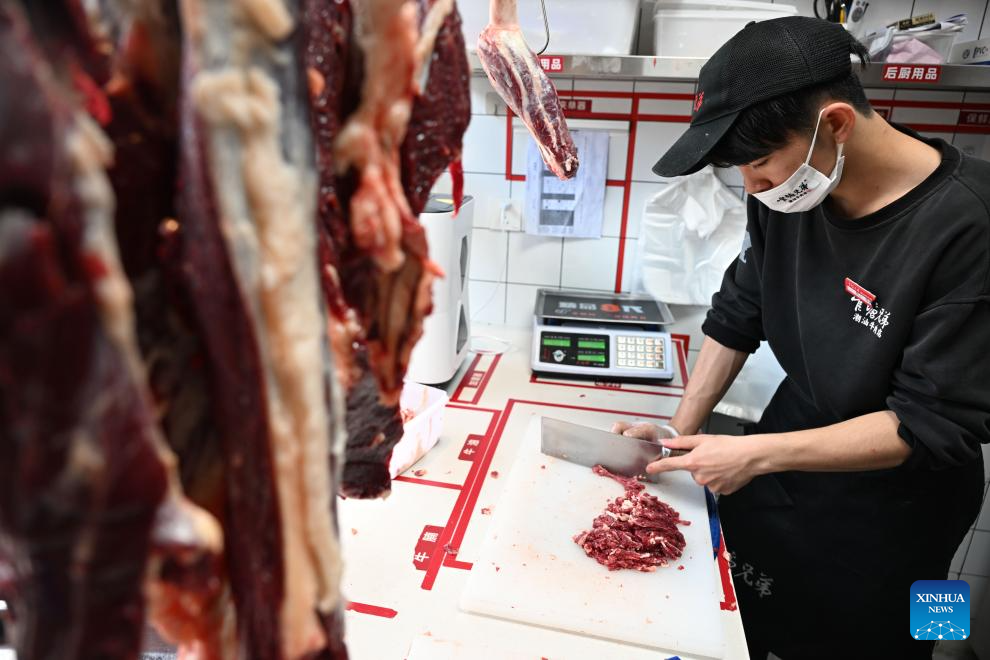
A staff member slices beef at a beef hotpot restaurant in Chaozhou, south China's Guangdong Province, May 13, 2026.
The Chaoshan region in China's Guangdong Province is renowned nationwide for its beef hotpot, though very few cattle are raised locally. The Chaoshan people have a system of nomenclature for a dozen parts of the beef, which is a reflection of both the exquisite knife skills of the chefs and the pursuit of culinary excellence.
According to official data, only 3,200 head of cattle were slaughtered in 2025 in Chaozhou, a major city in the Chaoshan region, whereas the city boasts over 2,000 beef hotpot restaurants and beef meatball processing enterprises, consuming about 90,000 head of cattle a year. Over 90 percent of the live cattle were purchased from Inner Mongolia, Yunnan, Ningxia and other places across China.
Thanks to supply chain integration and meticulous craftsmanship, Chaozhou, a city not known for cattle production, has developed a unique beef industry. (Xinhua/Deng Hua)
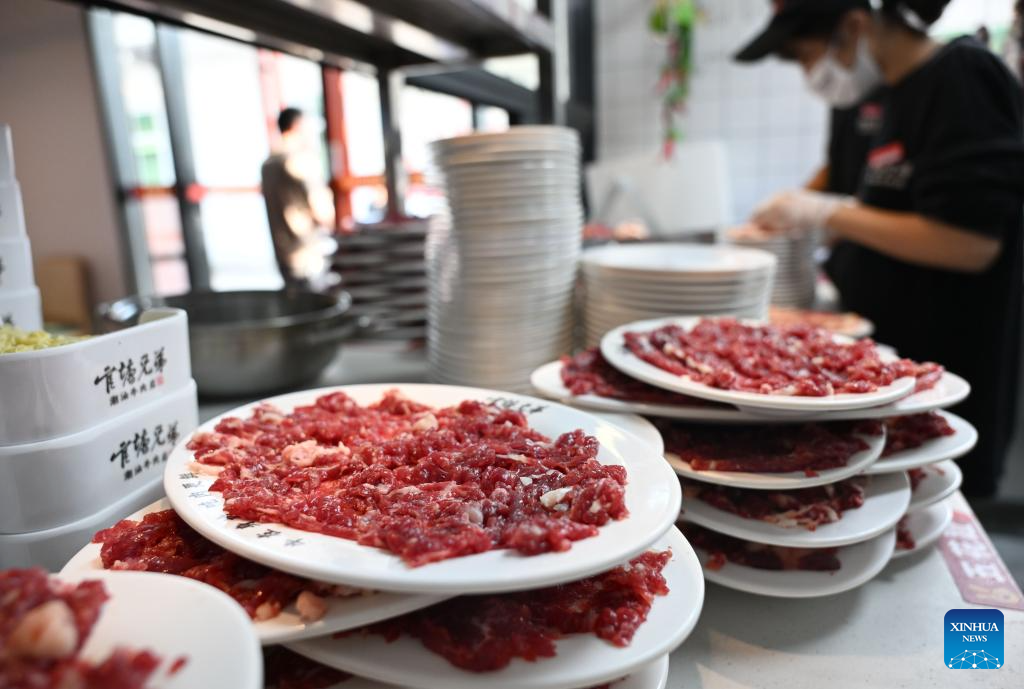
This photo taken on May 13, 2026 shows beef arranged on plates at a beef hotpot restaurant in Chaozhou, south China's Guangdong Province.
The Chaoshan region in China's Guangdong Province is renowned nationwide for its beef hotpot, though very few cattle are raised locally. The Chaoshan people have a system of nomenclature for a dozen parts of the beef, which is a reflection of both the exquisite knife skills of the chefs and the pursuit of culinary excellence.
According to official data, only 3,200 head of cattle were slaughtered in 2025 in Chaozhou, a major city in the Chaoshan region, whereas the city boasts over 2,000 beef hotpot restaurants and beef meatball processing enterprises, consuming about 90,000 head of cattle a year. Over 90 percent of the live cattle were purchased from Inner Mongolia, Yunnan, Ningxia and other places across China.
Thanks to supply chain integration and meticulous craftsmanship, Chaozhou, a city not known for cattle production, has developed a unique beef industry. (Xinhua/Deng Hua)
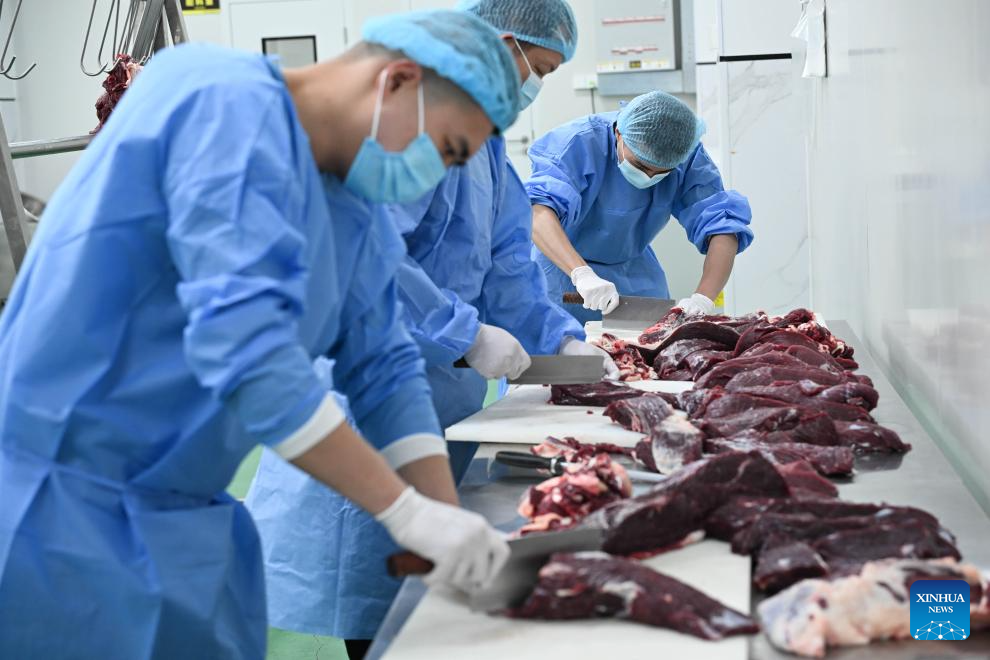
Workers cut beef at a food company in Chaozhou, south China's Guangdong Province, May 14, 2026.
The Chaoshan region in China's Guangdong Province is renowned nationwide for its beef hotpot, though very few cattle are raised locally. The Chaoshan people have a system of nomenclature for a dozen parts of the beef, which is a reflection of both the exquisite knife skills of the chefs and the pursuit of culinary excellence.
According to official data, only 3,200 head of cattle were slaughtered in 2025 in Chaozhou, a major city in the Chaoshan region, whereas the city boasts over 2,000 beef hotpot restaurants and beef meatball processing enterprises, consuming about 90,000 head of cattle a year. Over 90 percent of the live cattle were purchased from Inner Mongolia, Yunnan, Ningxia and other places across China.
Thanks to supply chain integration and meticulous craftsmanship, Chaozhou, a city not known for cattle production, has developed a unique beef industry. (Xinhua/Deng Hua)
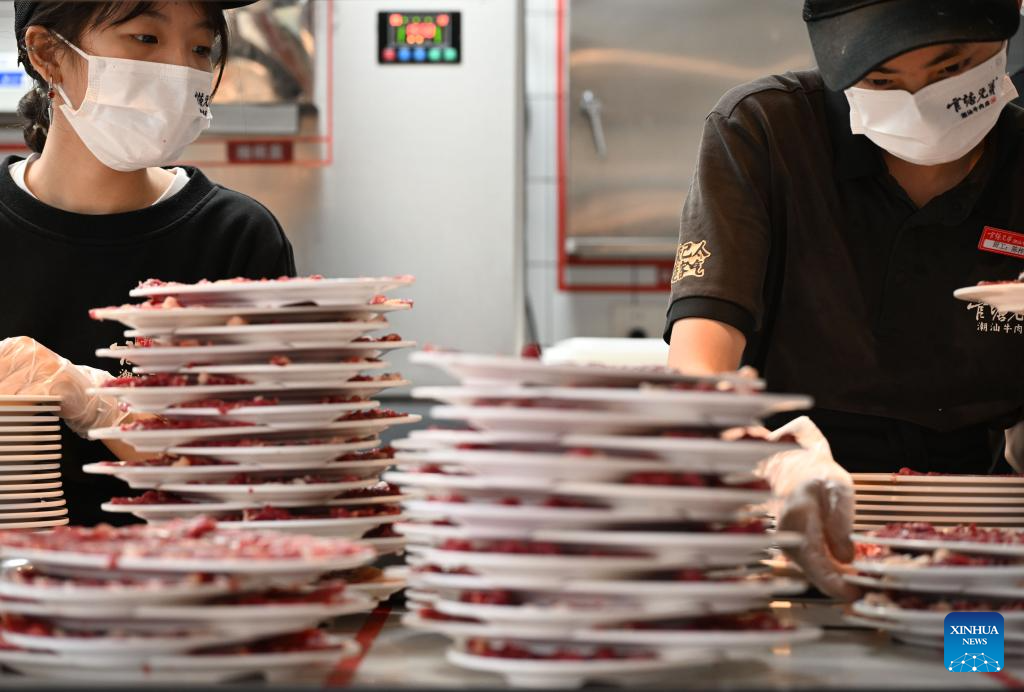
Staff members place sliced beef on plates at a beef hotpot restaurant in Chaozhou, south China's Guangdong Province, May 13, 2026.
The Chaoshan region in China's Guangdong Province is renowned nationwide for its beef hotpot, though very few cattle are raised locally. The Chaoshan people have a system of nomenclature for a dozen parts of the beef, which is a reflection of both the exquisite knife skills of the chefs and the pursuit of culinary excellence.
According to official data, only 3,200 head of cattle were slaughtered in 2025 in Chaozhou, a major city in the Chaoshan region, whereas the city boasts over 2,000 beef hotpot restaurants and beef meatball processing enterprises, consuming about 90,000 head of cattle a year. Over 90 percent of the live cattle were purchased from Inner Mongolia, Yunnan, Ningxia and other places across China.
Thanks to supply chain integration and meticulous craftsmanship, Chaozhou, a city not known for cattle production, has developed a unique beef industry. (Xinhua/Deng Hua)
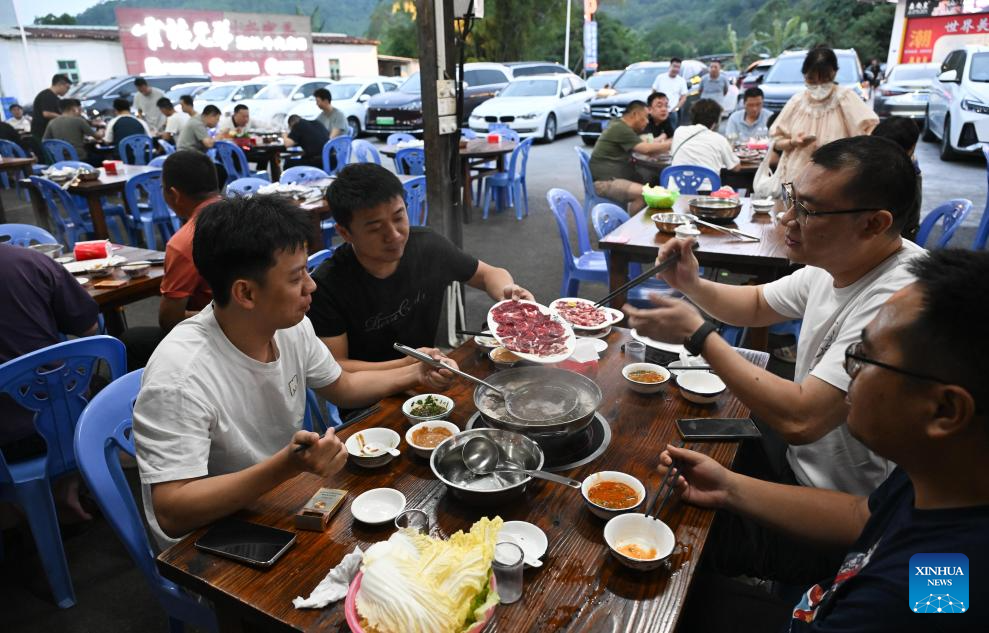
People enjoy beef hotpot in Chaozhou, south China's Guangdong Province, May 13, 2026.
The Chaoshan region in China's Guangdong Province is renowned nationwide for its beef hotpot, though very few cattle are raised locally. The Chaoshan people have a system of nomenclature for a dozen parts of the beef, which is a reflection of both the exquisite knife skills of the chefs and the pursuit of culinary excellence.
According to official data, only 3,200 head of cattle were slaughtered in 2025 in Chaozhou, a major city in the Chaoshan region, whereas the city boasts over 2,000 beef hotpot restaurants and beef meatball processing enterprises, consuming about 90,000 head of cattle a year. Over 90 percent of the live cattle were purchased from Inner Mongolia, Yunnan, Ningxia and other places across China.
Thanks to supply chain integration and meticulous craftsmanship, Chaozhou, a city not known for cattle production, has developed a unique beef industry. (Xinhua/Deng Hua)
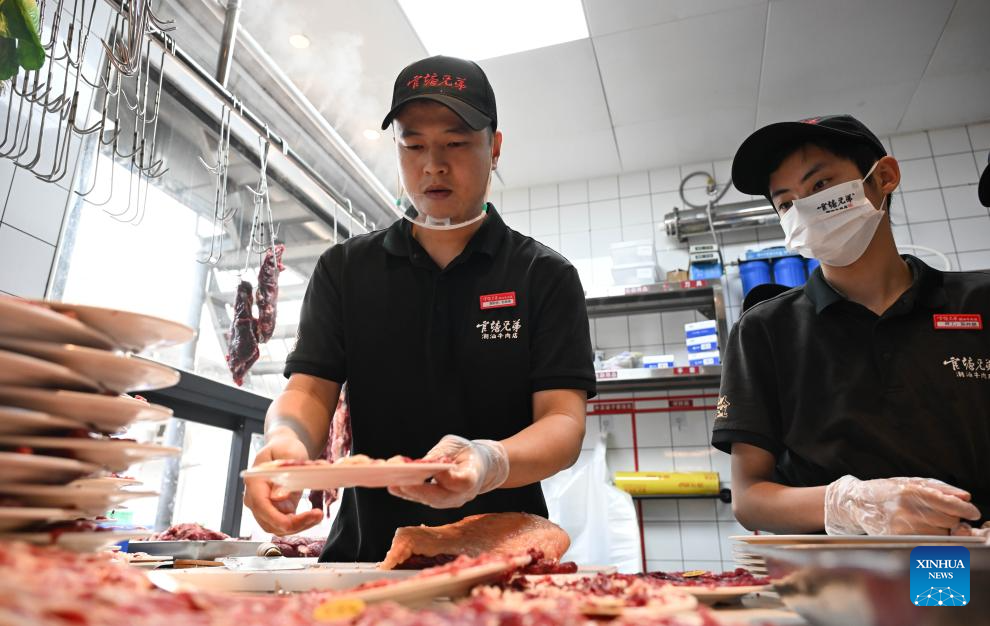
Head chef Sun Bindi (L) places sliced beef on plates at a beef hotpot restaurant in Chaozhou, south China's Guangdong Province, May 13, 2026.
The Chaoshan region in China's Guangdong Province is renowned nationwide for its beef hotpot, though very few cattle are raised locally. The Chaoshan people have a system of nomenclature for a dozen parts of the beef, which is a reflection of both the exquisite knife skills of the chefs and the pursuit of culinary excellence.
According to official data, only 3,200 head of cattle were slaughtered in 2025 in Chaozhou, a major city in the Chaoshan region, whereas the city boasts over 2,000 beef hotpot restaurants and beef meatball processing enterprises, consuming about 90,000 head of cattle a year. Over 90 percent of the live cattle were purchased from Inner Mongolia, Yunnan, Ningxia and other places across China.
Thanks to supply chain integration and meticulous craftsmanship, Chaozhou, a city not known for cattle production, has developed a unique beef industry. (Xinhua/Deng Hua)
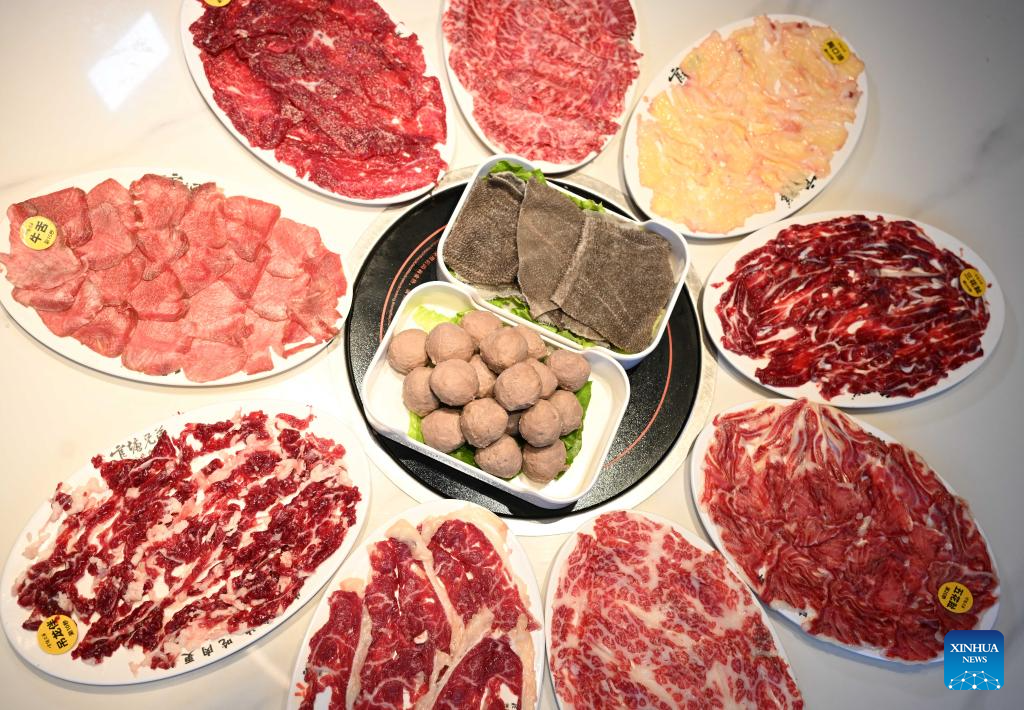
This photo taken on May 13, 2026 shows different parts of beef, tripe and beef meatballs at a beef hotpot restaurant in Chaozhou, south China's Guangdong Province.
The Chaoshan region in China's Guangdong Province is renowned nationwide for its beef hotpot, though very few cattle are raised locally. The Chaoshan people have a system of nomenclature for a dozen parts of the beef, which is a reflection of both the exquisite knife skills of the chefs and the pursuit of culinary excellence.
According to official data, only 3,200 head of cattle were slaughtered in 2025 in Chaozhou, a major city in the Chaoshan region, whereas the city boasts over 2,000 beef hotpot restaurants and beef meatball processing enterprises, consuming about 90,000 head of cattle a year. Over 90 percent of the live cattle were purchased from Inner Mongolia, Yunnan, Ningxia and other places across China.
Thanks to supply chain integration and meticulous craftsmanship, Chaozhou, a city not known for cattle production, has developed a unique beef industry. (Xinhua/Deng Hua)
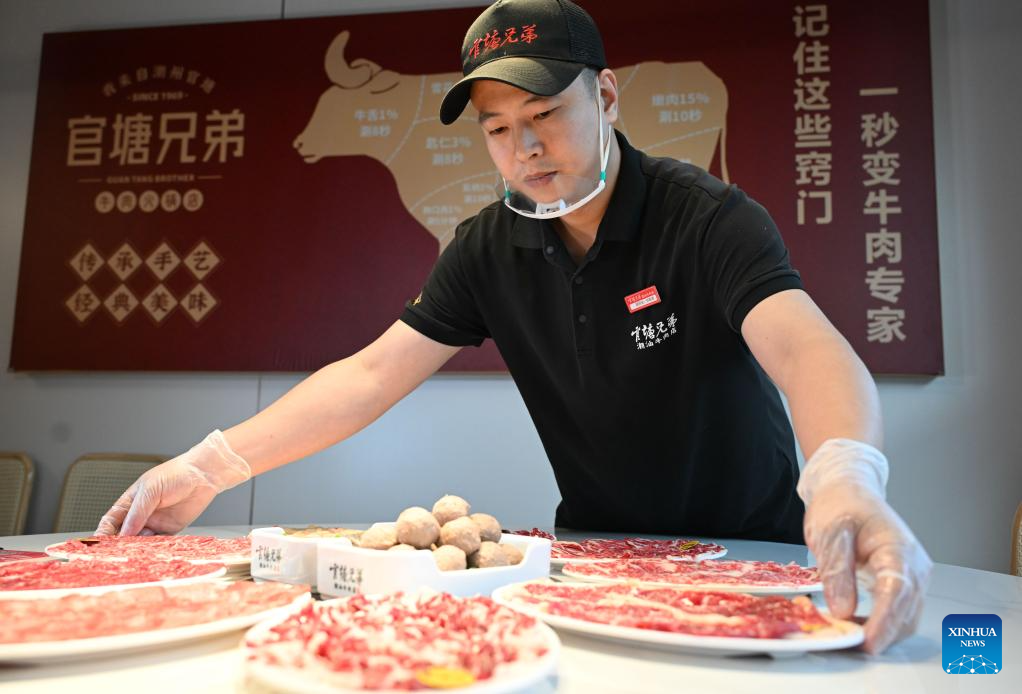
Head chef Sun Bindi places sliced beef on the table at a beef hotpot restaurant in Chaozhou, south China's Guangdong Province, May 13, 2026.
The Chaoshan region in China's Guangdong Province is renowned nationwide for its beef hotpot, though very few cattle are raised locally. The Chaoshan people have a system of nomenclature for a dozen parts of the beef, which is a reflection of both the exquisite knife skills of the chefs and the pursuit of culinary excellence.
According to official data, only 3,200 head of cattle were slaughtered in 2025 in Chaozhou, a major city in the Chaoshan region, whereas the city boasts over 2,000 beef hotpot restaurants and beef meatball processing enterprises, consuming about 90,000 head of cattle a year. Over 90 percent of the live cattle were purchased from Inner Mongolia, Yunnan, Ningxia and other places across China.
Thanks to supply chain integration and meticulous craftsmanship, Chaozhou, a city not known for cattle production, has developed a unique beef industry. (Xinhua/Deng Hua)
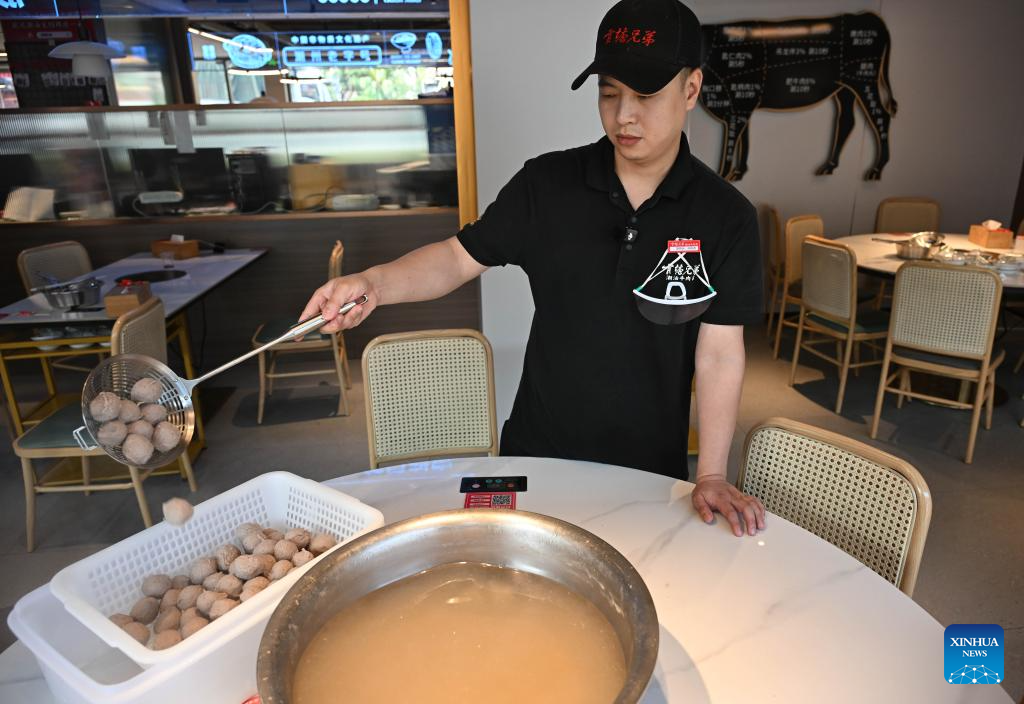
Head chef Sun Bindi picks up freshly cooked beef meatballs at a beef hotpot restaurant in Chaozhou, south China's Guangdong Province, May 13, 2026.
The Chaoshan region in China's Guangdong Province is renowned nationwide for its beef hotpot, though very few cattle are raised locally. The Chaoshan people have a system of nomenclature for a dozen parts of the beef, which is a reflection of both the exquisite knife skills of the chefs and the pursuit of culinary excellence.
According to official data, only 3,200 head of cattle were slaughtered in 2025 in Chaozhou, a major city in the Chaoshan region, whereas the city boasts over 2,000 beef hotpot restaurants and beef meatball processing enterprises, consuming about 90,000 head of cattle a year. Over 90 percent of the live cattle were purchased from Inner Mongolia, Yunnan, Ningxia and other places across China.
Thanks to supply chain integration and meticulous craftsmanship, Chaozhou, a city not known for cattle production, has developed a unique beef industry. (Xinhua/Deng Hua)
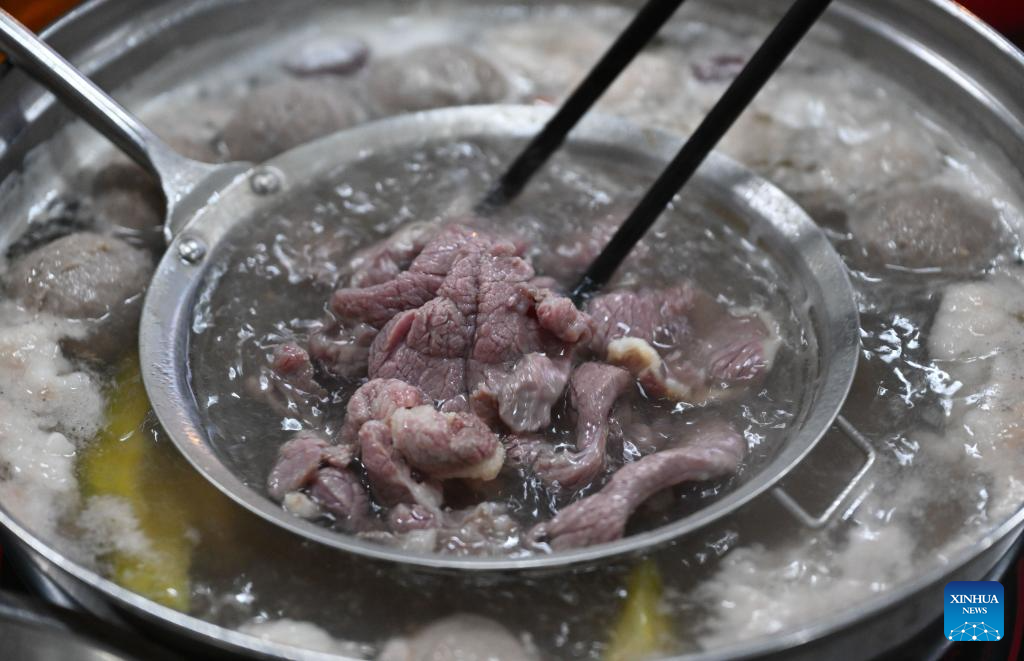
A customer boils beef at a beef hotpot restaurant in Chaozhou, south China's Guangdong Province, May 13, 2026.
The Chaoshan region in China's Guangdong Province is renowned nationwide for its beef hotpot, though very few cattle are raised locally. The Chaoshan people have a system of nomenclature for a dozen parts of the beef, which is a reflection of both the exquisite knife skills of the chefs and the pursuit of culinary excellence.
According to official data, only 3,200 head of cattle were slaughtered in 2025 in Chaozhou, a major city in the Chaoshan region, whereas the city boasts over 2,000 beef hotpot restaurants and beef meatball processing enterprises, consuming about 90,000 head of cattle a year. Over 90 percent of the live cattle were purchased from Inner Mongolia, Yunnan, Ningxia and other places across China.
Thanks to supply chain integration and meticulous craftsmanship, Chaozhou, a city not known for cattle production, has developed a unique beef industry. (Xinhua/Deng Hua)
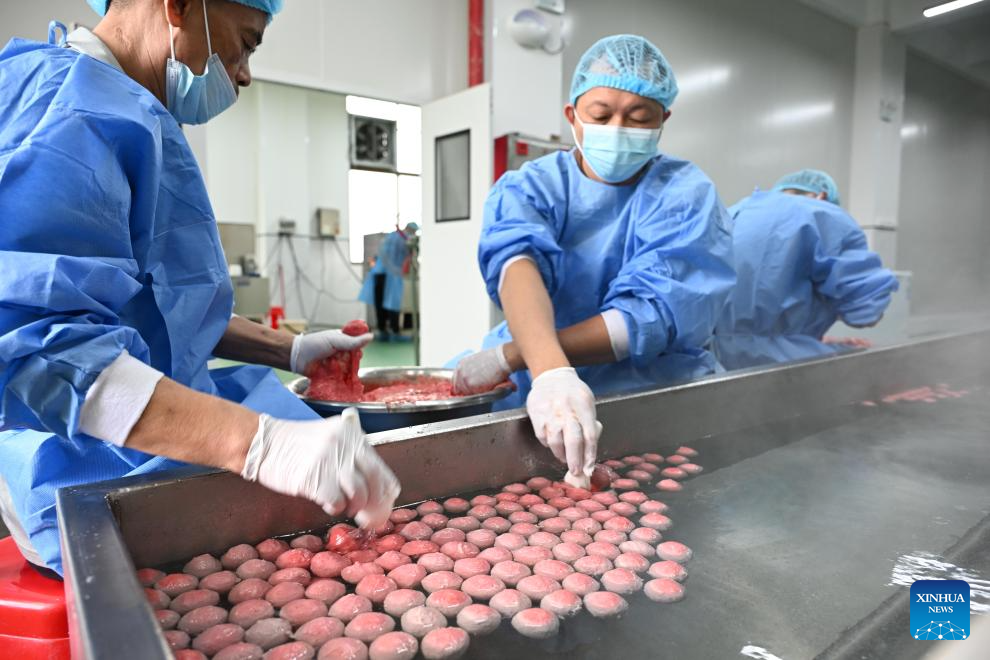
Workers make beef meatballs at a food company in Chaozhou, south China's Guangdong Province, May 14, 2026.
The Chaoshan region in China's Guangdong Province is renowned nationwide for its beef hotpot, though very few cattle are raised locally. The Chaoshan people have a system of nomenclature for a dozen parts of the beef, which is a reflection of both the exquisite knife skills of the chefs and the pursuit of culinary excellence.
According to official data, only 3,200 head of cattle were slaughtered in 2025 in Chaozhou, a major city in the Chaoshan region, whereas the city boasts over 2,000 beef hotpot restaurants and beef meatball processing enterprises, consuming about 90,000 head of cattle a year. Over 90 percent of the live cattle were purchased from Inner Mongolia, Yunnan, Ningxia and other places across China.
Thanks to supply chain integration and meticulous craftsmanship, Chaozhou, a city not known for cattle production, has developed a unique beef industry. (Xinhua/Deng Hua)
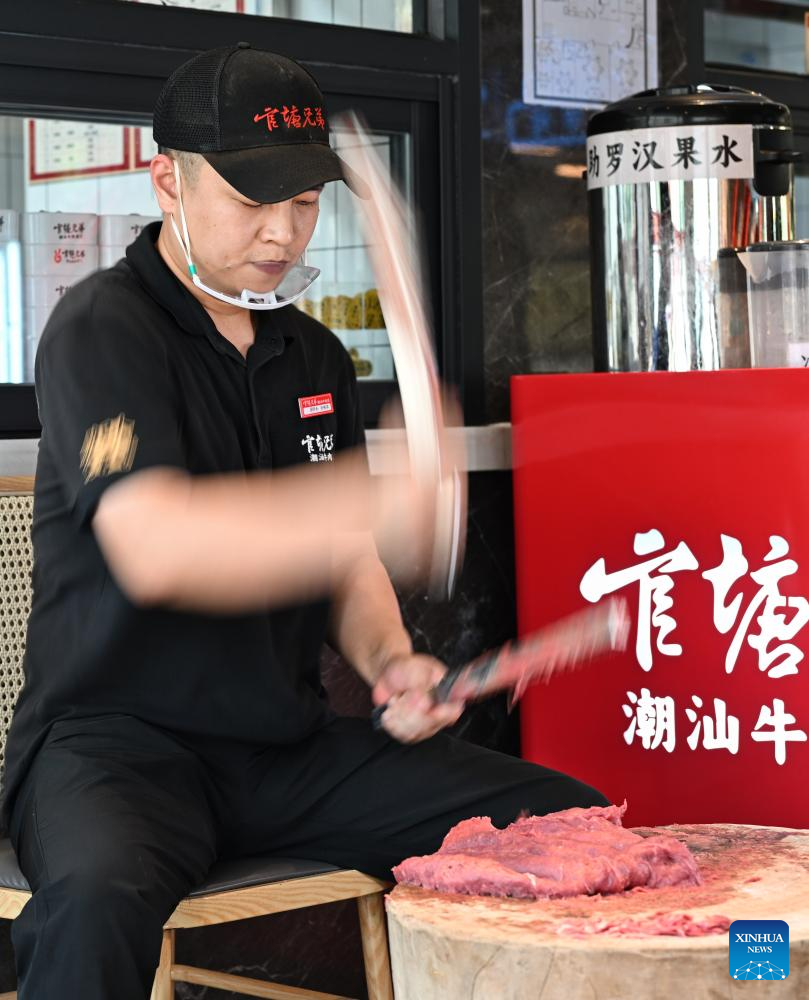
Head chef Sun Bindi makes hand-beaten beef meatballs at a beef hotpot restaurant in Chaozhou, south China's Guangdong Province, May 13, 2026.
The Chaoshan region in China's Guangdong Province is renowned nationwide for its beef hotpot, though very few cattle are raised locally. The Chaoshan people have a system of nomenclature for a dozen parts of the beef, which is a reflection of both the exquisite knife skills of the chefs and the pursuit of culinary excellence.
According to official data, only 3,200 head of cattle were slaughtered in 2025 in Chaozhou, a major city in the Chaoshan region, whereas the city boasts over 2,000 beef hotpot restaurants and beef meatball processing enterprises, consuming about 90,000 head of cattle a year. Over 90 percent of the live cattle were purchased from Inner Mongolia, Yunnan, Ningxia and other places across China.
Thanks to supply chain integration and meticulous craftsmanship, Chaozhou, a city not known for cattle production, has developed a unique beef industry. (Xinhua/Deng Hua)


