
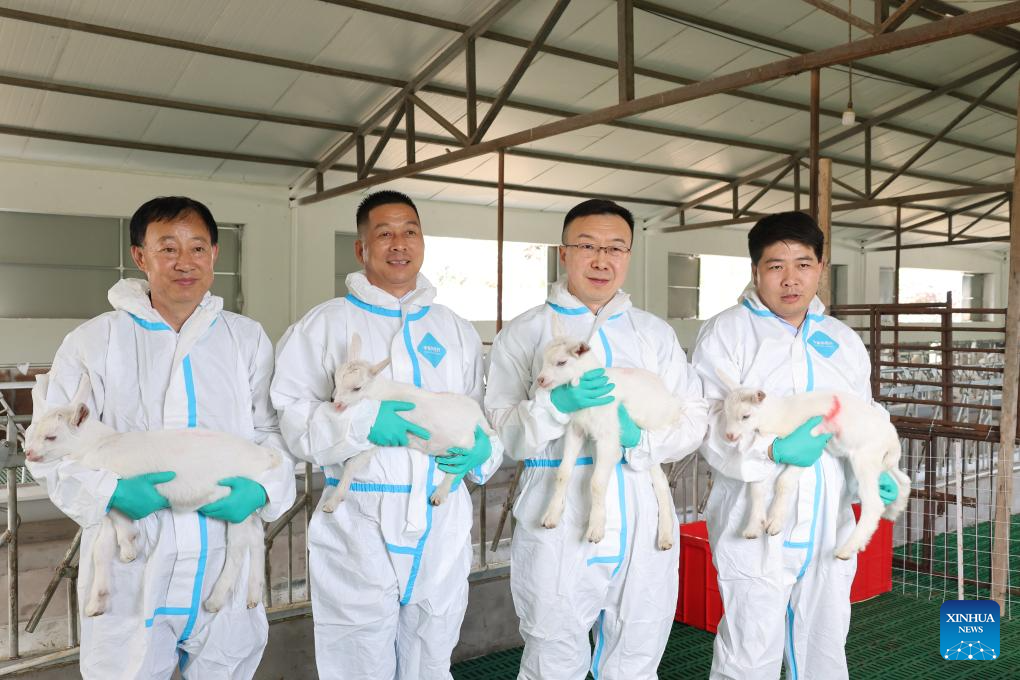
Members of a research team from the Northwest A&F University pose for a group photo holding cloned super high-yield dairy goats in Fuping County, northwest China's Shaanxi Province, May 14, 2026. Chinese scientists have successfully cloned six super high-yield dairy goats in northwest China's Shaanxi Province, marking the country's first successful batch cloning of such animals and a major breakthrough in dairy goat breeding technology. (Xinhua)
XI'AN, May 14 (Xinhua) -- Chinese scientists have successfully cloned six super high-yield dairy goats in northwest China's Shaanxi Province, marking the country's first successful batch cloning of such animals and a major breakthrough in dairy goat breeding technology.
The cloning project was led by a research team from the Northwest A&F University. The cloned goats, four males and two females, were bred from elite high-yield Saanen donors with an average annual milk yield exceeding 2,800 kilograms, Wang Xiaolong, head of the research team, told Xinhua Thursday.
The donor goats also showed significantly better milk fat and protein levels than ordinary goats, while possessing stable reproductive performance, strong environmental adaptability and good disease resistance.
Leveraging an advanced molecular breeding system that integrates genomic selection and somatic cell cloning, the team precisely isolated high-quality somatic cells and optimized the entire process from cell line establishment and embryo reconstruction to embryo transfer and pregnancy monitoring, ultimately achieving successful batch cloning.
Compared with traditional breeding methods, which typically require eight to 10 years to cultivate superior goat populations, cloning technology can significantly shorten the breeding cycles and help address industry bottlenecks such as the slow propagation of elite goats, long generational intervals, and the difficulty of preserving desirable traits across generations.
Shaanxi, where the Northwest A&F University is located, is home to 40 percent of China's dairy goats and processes 80 percent of the country's goat milk products.
China's 15th Five-Year Plan (2026-2030) has pledged to build a diversified food supply system, including efforts to improve the quality and efficiency of the livestock industry. ■
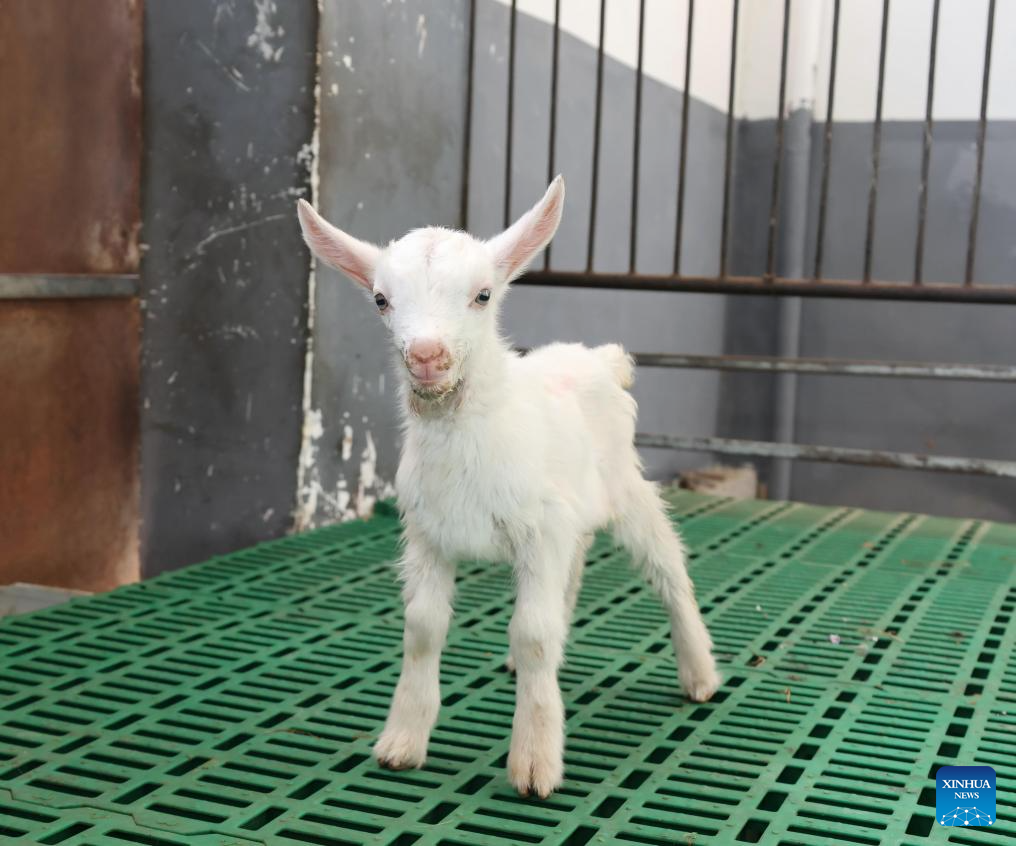
A cloned super high-yield dairy goat is pictured in Fuping County, northwest China's Shaanxi Province, May 14, 2026. Chinese scientists have successfully cloned six super high-yield dairy goats in northwest China's Shaanxi Province, marking the country's first successful batch cloning of such animals and a major breakthrough in dairy goat breeding technology. (Xinhua)
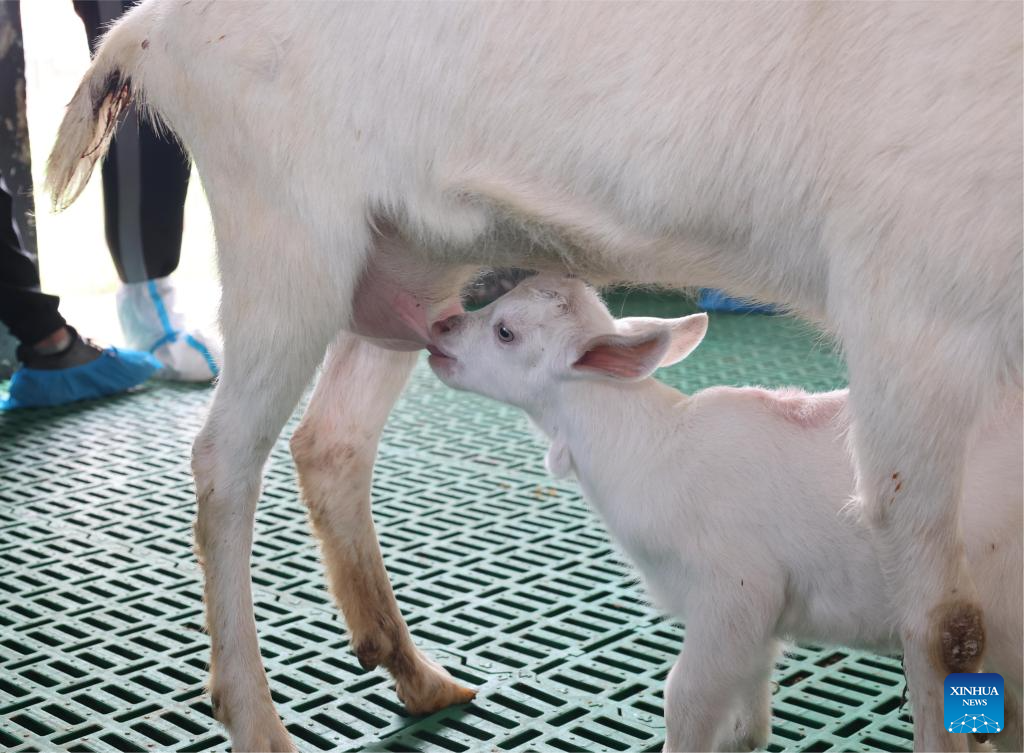
A cloned super high-yield dairy goat suckles in Fuping County, northwest China's Shaanxi Province, May 14, 2026. Chinese scientists have successfully cloned six super high-yield dairy goats in northwest China's Shaanxi Province, marking the country's first successful batch cloning of such animals and a major breakthrough in dairy goat breeding technology. (Xinhua)


