
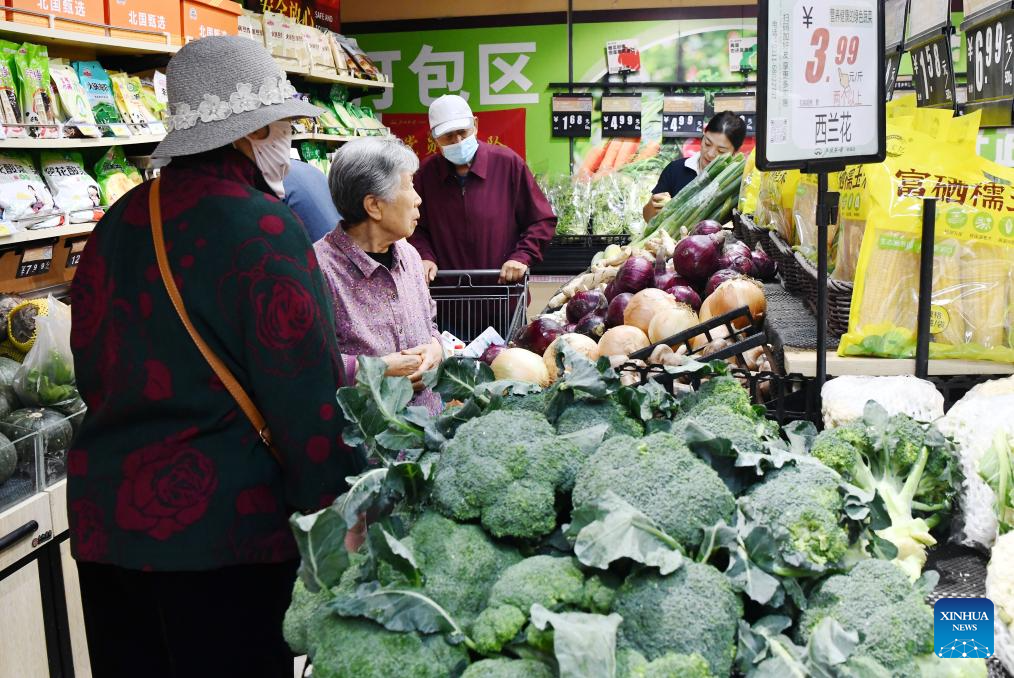
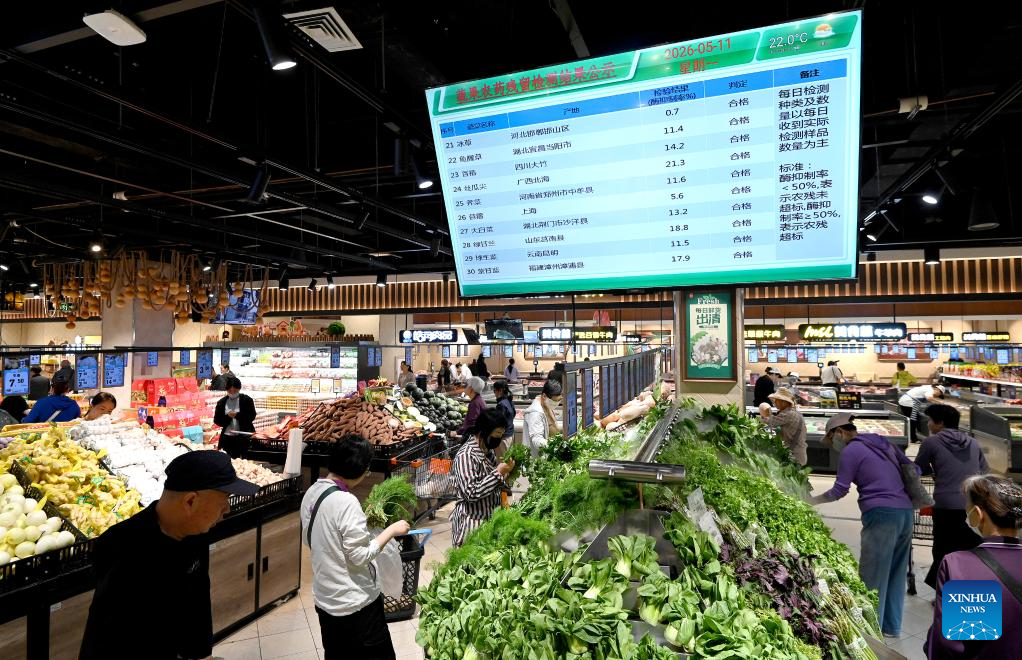
Customers buy vegetables at a supermarket in Shijiazhuang City, north China's Hebei Province, on May 11, 2026. (Photo by Li Mingfa/Xinhua)
BEIJING, May 11 (Xinhua) -- China's consumer inflation extended its moderate recovery in April, supported by robust spring travel demand and rising energy prices, in a sign that domestic demand continues to improve and the broader economic recovery remains on track.
The country's consumer price index (CPI), a main gauge of inflation, rose 1.2 percent year on year in April, up 0.2 percentage points from the previous month, according to data released by the National Bureau of Statistics (NBS) on Monday.
The core CPI, which excludes food and energy prices, also increased 1.2 percent from a year earlier, data showed.
On a monthly basis, the CPI climbed 0.3 percent in April, reversing a 0.7-percent decline in March and exceeding the seasonal level by 0.4 percentage points.
Dong Lijuan, an NBS statistician, attributed the increase partly to stronger travel demand during the Qingming Festival holiday, the May Day holiday, and spring breaks in some regions, citing a 3.7 percent year-on-year rise in travel-related service prices last month.
Meanwhile, prices of industrial consumer goods rose 3.5 percent, with gasoline and gold jewelry recording particularly notable increases, Dong said.
Moreover, service prices also rose 0.9 percent year on year in April, up 0.1 percentage points from the previous month. Among them, prices for medical and education services increased 3.4 percent and 0.5 percent, respectively, according to Dong.
The NBS also said that China's producer price index, which measures costs for goods at the factory gate, rose 2.8 percent year on year in April and, on a month-on-month basis, rose 1.7 percent.
The latest figures added to signs of a continued recovery in China's consumer market. Xing Yuguan, a researcher with the State Information Center (SIC), said government policy measures, including the consumer goods trade-in program, have helped consolidate the recovery momentum and further unleash consumer vitality.
Leading indicators released Sunday by the SIC showed China's goods consumption grew 2.7 percent year on year in April, with robust expansion in electronics and daily consumer goods.
Private-sector data also pointed to improving consumer sentiment. Robert Wu, CEO of BigOne Lab, a market research and information services company, said average selling price of KFC products had declined for more than two years, but the trend began stabilizing in the fourth quarter of 2025.
When pricing trends begin to shift at leading restaurant chains, it is often an early signal of a broader recovery, Wu said.
Earlier official data showed that retail sales of consumer goods, a major indicator of consumption strength, rose 2.4 percent year on year in the first quarter of 2026, accelerating by 0.7 percentage points from the fourth quarter of last year.
Experts believe that China's consumer market is not only recovering but also upgrading, with experience-driven spending emerging as a new growth point. During the five-day May Day holiday earlier this month, cross-regional passenger trips nationwide reached nearly 1.52 billion, averaging more than 300 million per day and setting a record for the same holiday period.
Consumer confidence is gradually returning and will become a stronger driver of future spending growth, Wu said. ■

Customers choose digital products at a digital store in Anshun City, southwest China's Guizhou Province, on May 11, 2026. (Photo by Chen Xi/Xinhua)
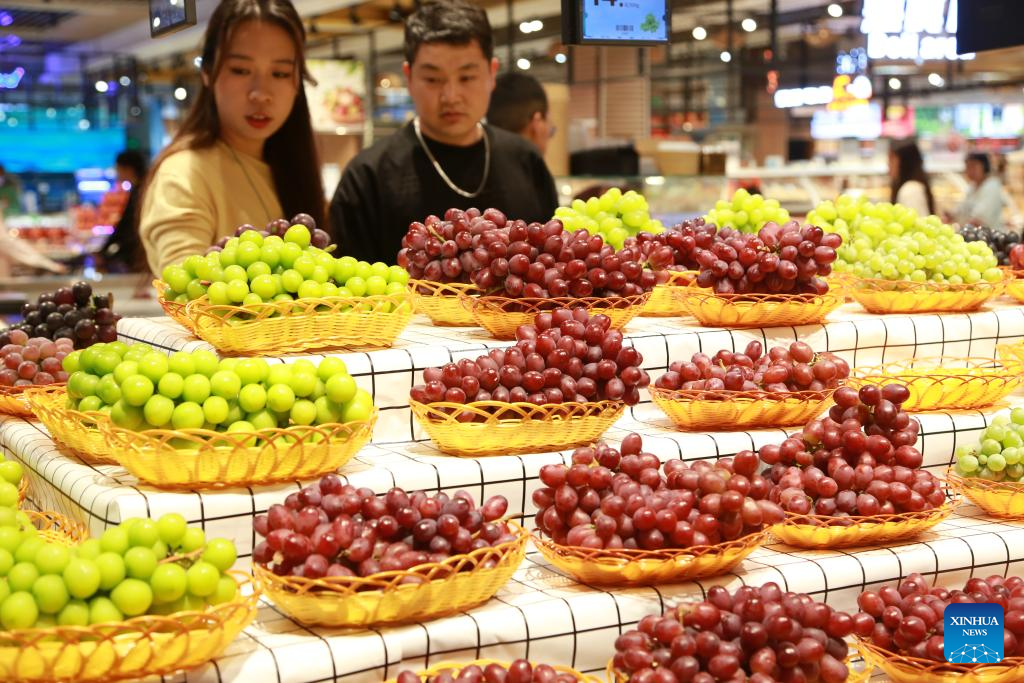
Customers buy fruit at a supermarket in Mengzi City, southwest China's Yunnan Province, on May 11, 2026. (Photo by Xue Yingying/Xinhua)
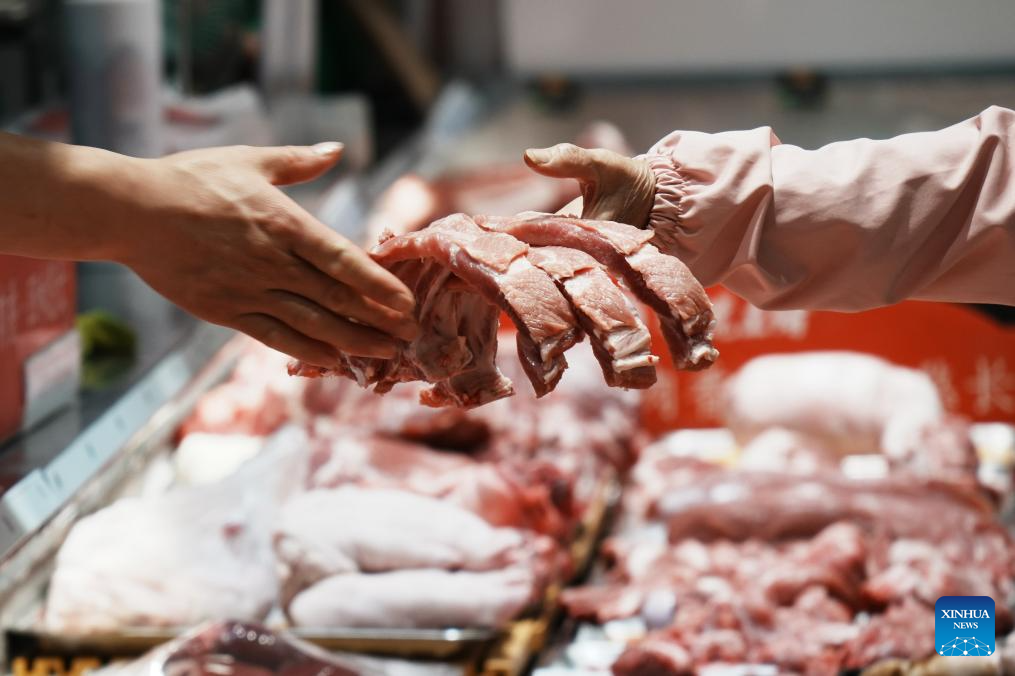
A customer buys pork at a supermarket in Hangzhou City, east China's Zhejiang Province, on May 11, 2026. (Photo by Long Wei/Xinhua)
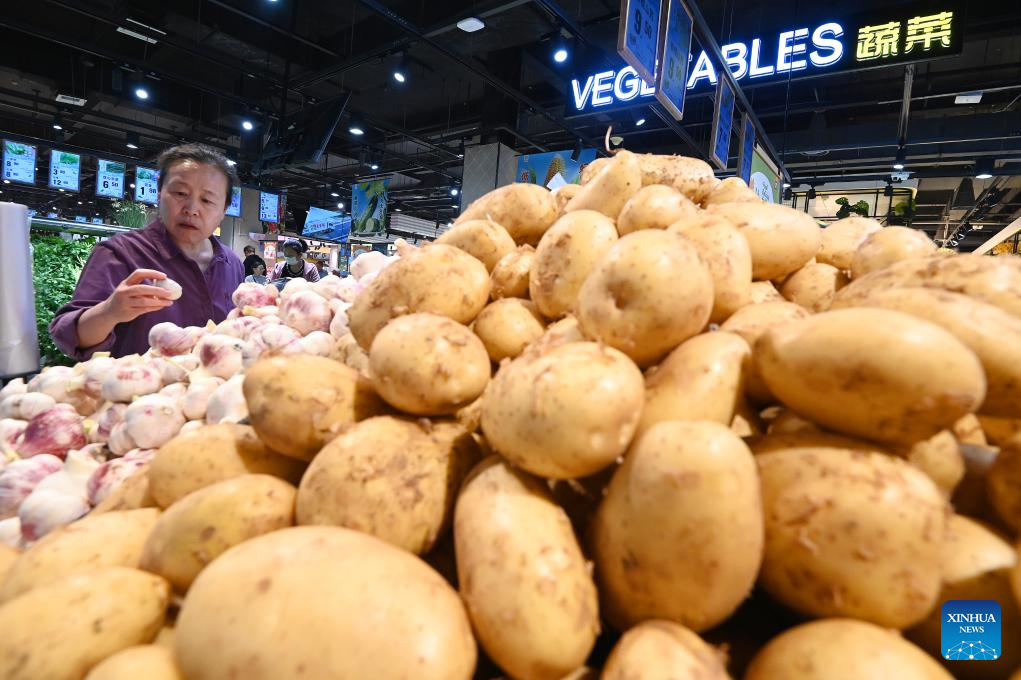
A customer buys vegetables at a supermarket in Handan City, north China's Hebei Province, on May 11, 2026. (Photo by Hao Qunying/Xinhua)
Customers buy vegetables at a supermarket in Handan City, north China's Hebei Province, on May 11, 2026. (Photo by Hao Qunying/Xinhua)


