
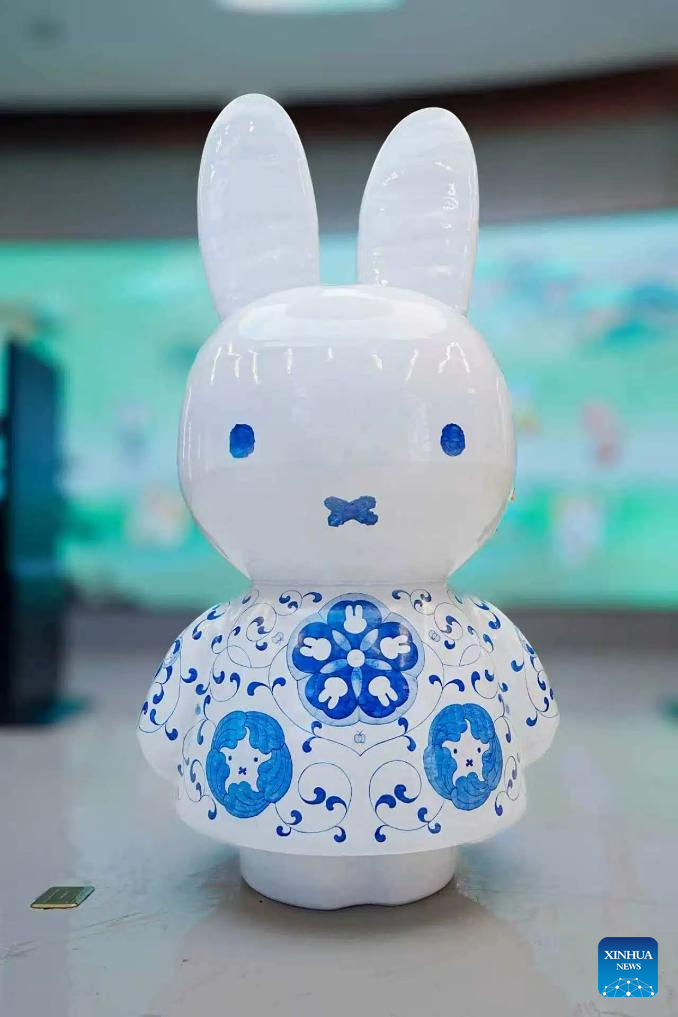
This photo taken on May 8, 2026 shows a ceramic toy co-branded with Miffy in Jingdezhen, east China's Jiangxi Province. (Xinhua)
NANCHANG, May 9 (Xinhua) -- In Jingdezhen, a city long known as China's "porcelain capital," one of its newest landmarks appears almost as if it has emerged directly from a kiln.
It is a giant white "bowl," a smooth, eye-catching structure standing in Changnanli, a ceramic trendy-toy district in this eastern Chinese city. Jingdezhen has been producing porcelain for more than 1,700 years. Today, inside this bowl-shaped building, its ancient craft is being reimagined for a new global audience.
On the walls are familiar characters from some of the world's most well-known animation intellectual properties (IPs), including Nezha from China, Transformers from the United States and One Piece from Japan. At the center of one exhibition hall stands Miffy, the Dutch cartoon rabbit once familiar to many Chinese children from school supplies, now dressed in a blue-and-white porcelain pattern.
The rabbit is part of Jingdezhen's first co-branded ceramic trendy toy created with the Miffy brand. Small, cute and highly collectible, it also points to a larger experiment in how a city built on imperial kilns and export porcelain is learning to speak the language of contemporary pop culture.
"Ceramic itself has unique beauty in material and craftsmanship," said Yang Mingjun, curator of the Jingdezhen Youjian Dongfang trend art IP center. "It is not only an artifact, but also a carrier of culture."
Unlike most trendy toys on the market, which are typically made of plastic or resin, ceramic toys rely more heavily on material, firing techniques, handcrafting and finishing, Yang explained, noting that their appeal lies not only in their cuteness or collectability, but also in their tactile quality, craftsmanship and cultural depth.
For Jingdezhen, the shift is not simply about putting cartoon characters on porcelain. It is about steering an old industrial and cultural system toward a new market.
Huang Hu, president and artistic director of the company operating Changnanli world ceramic trendy toys town, said Jingdezhen holds an advantage that is difficult to replicate, thanks to its more than 1,000-year-old porcelain-making traditions, a complete industrial chain, and a living system of craft innovation.
Porcelain-making in Jingdezhen is known for its precision and complexity. The traditional process is often described as involving 72 procedures, from preparing clay and glaze to shaping, painting, decorating and firing. Each step depends on the one before it. Together, they carry the accumulated knowledge of generations of artisans.
That devotion to craft helped make Jingdezhen porcelain a "world commodity" centuries before the phrase existed.
In the city's Export Porcelain Museum, one object makes the point clear: a Qing Dynasty (1644-1911) porcelain shaving plate from the reign of Emperor Qianlong (1711-1799). It has a broad rim, a folded form and a crescent-shaped notch cut into one side. The pattern around the notch remains complete, suggesting that the piece was designed that way from the beginning.
Li Jing, who is in charge of the museum, said the plate was made for European aristocratic men. When shaving, a man could rest his chin in the notch, allowing cut beard trimmings to fall neatly into the plate while he looked at the painted image inside.
The detail is small, but revealing. "It shows that Jingdezhen artisans were already responding directly to international demand," Li said. "With superb craftsmanship and an open attitude, they produced global commodities for the age of world trade and even helped shape European tastes at the time."
From the porcelain found in the Tang Dynasty-era (618-907) Black Stone shipwreck, to the widely traded Kraak porcelain, a Chinese ceramic product smuggled by a Portuguese merchant ship in the Ming Dynasty (1368-1644), later to Qing Dynasty pieces customized for European markets including armorial porcelain, shaving plates and duck-shaped vessels, Jingdezhen porcelain has traveled abroad for more than a thousand years, reaching Asia, Africa, Europe and the Americas.
In that sense, today's ceramic toys are less a break from history than a continuation of an old tradition, adapting Chinese porcelain to the tastes and demands of a global audience.
The difference is the audience. Instead of European nobles ordering customized tableware, today's buyers are collectors, animation fans and young consumers drawn to characters, limited editions and cultural crossover.
In recent years, Jingdezhen has built a creative design hub with the Center for International Economic and Technological Cooperation of the Ministry of Industry and Information Technology, as well as a ceramic trendy town with China Animation Group Corporation. A mature business model, from matching demand to creative designs and launching products on the market, has been established, which has benefited over 5,000 ceramic artists and hundreds of ceramic enterprises.
One example is Chentian Ceramics, based in Jingdezhen's Changnan New Area. It is Chinese toy brand Pop Mart's only ceramic co-branded partner, and has used traditional ceramic techniques -- including brocaded decoration, enamel, gold tracing and Langhong red glaze -- to develop collectible toys.
When a ceramic version of Molly, one of Pop Mart's best-known characters, went online, 40,000 orders were snapped up in just two seconds. Chentian has since expanded into more than 30 products across six major series, including Hirono.
Yet the crossover has not been easy. One limited-edition Molly figure, made with a traditional Jingdezhen brocaded decoration technique, was priced at 14,000 yuan, or about 2,044 U.S. dollars. Only 199 pieces were released worldwide, and they sold out immediately. Yet the figure's shape created serious technical problems. With a heavy head and a lighter body, it was prone to collapsing during high-temperature firing.
Out of 2,000 pieces attempted, only about 10 percent survived as finished products.
"The cost of this collaboration was very high," said Xu Wan, general manager of Chentian Ceramics, who comes from a family of porcelain makers. The project took two years of experimentation and more than 20 rounds of sampling, she added.
Xu said she did not charge any upfront fees for the early development work. For her, the effort was about more than a single product.
"I hope more people can get to know Jingdezhen through new ways," she said.
Jingdezhen is now home to more than 3,400 inheritors of intangible cultural heritage, the largest number in China in the ceramic category. More than 100,000 young creators have come here to start businesses or pursue artistic work, while tens of thousands of ceramic enthusiasts from more than 50 countries have also arrived, forming a community often described in Chinese as "Jingpiao," or Jingdezhen drifters.
For Yang, even the name of his center, Youjian Dongfang, or "encountering the East through glaze," reflects an ambition. "We hope to present a new future for Jingdezhen," he said.
In the past, Jingdezhen's export porcelain helped carry Chinese culture to Europe. Today, Yang said, ceramic trendy toys are another attempt to let Chinese culture "go global" in a contemporary form. ■
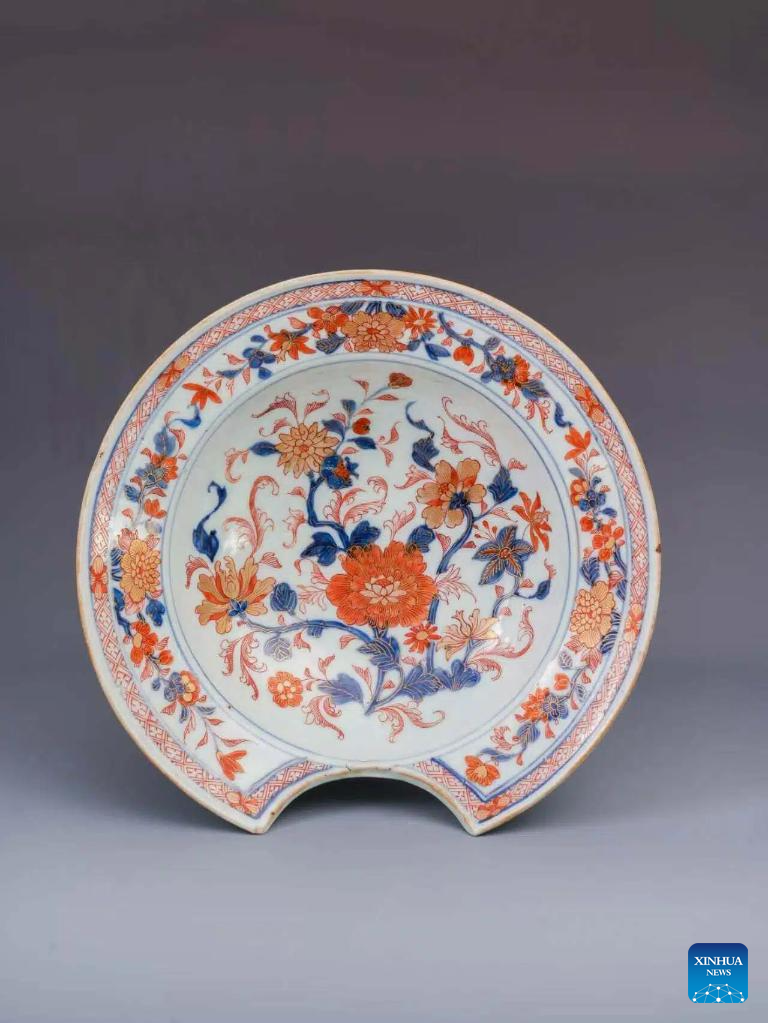
This photo taken on May 8, 2026 shows a Qing Dynasty (1644-1911) porcelain shaving plate from the reign of Emperor Qianlong (1711-1799), in Jingdezhen, east China's Jiangxi Province. (Xinhua)
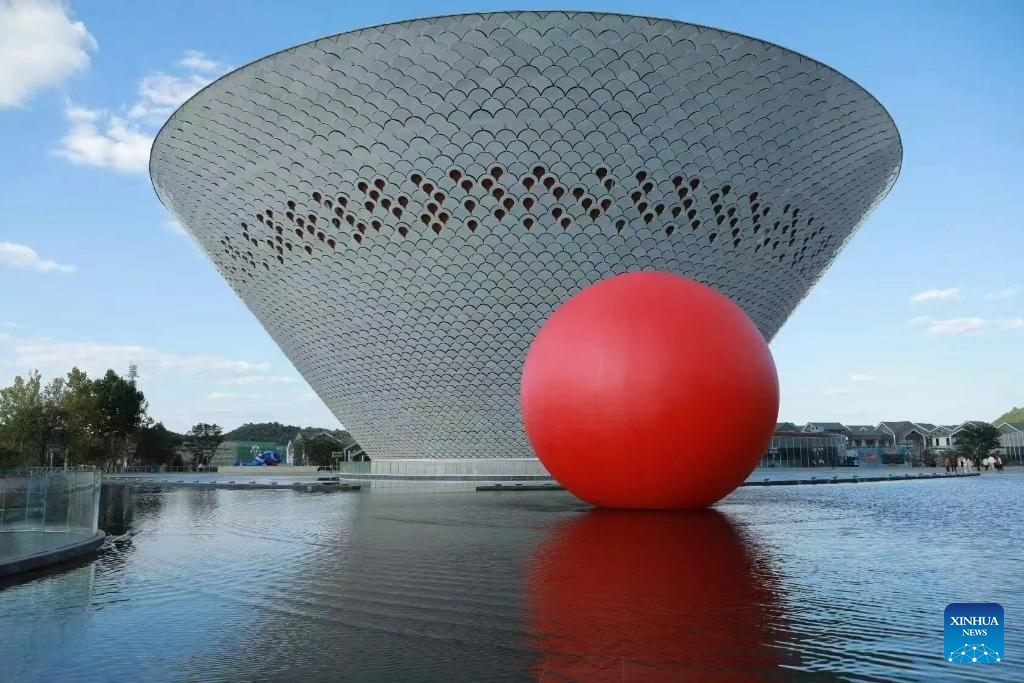
This photo taken on May 8, 2026 shows a bowl-shaped building in Jingdezhen, east China's Jiangxi Province. (Xinhua)


