

British Prime Minister Keir Starmer (L) and his wife arrive at a polling station for local elections in London, Britain, May 7, 2026. (Photo by Ray Tang/Xinhua)
by Xinhua writers Zhao Jiasong, Yu Aicen, Larry Neild
LONDON, May 6 (Xinhua) -- Britain will go to the polls on Thursday in a set of local and devolved elections that could prove to be a pivotal test of Prime Minister Keir Starmer's leadership and a window into a rapidly fragmenting political landscape.
At stake are thousands of council seats in England, directly elected local mayors, the Scottish Parliament in Edinburgh, and Senedd Cymru, the Welsh parliament, in Cardiff.
Although local councils in England deal with everyday services such as housing, planning, social care, waste collection, and local transport, British politics often treats local elections as a national midterm verdict on the government of the day.
Therefore, Thursday's vote is being watched closely in Westminster. The Institute for Government, a London-based think tank, has described the May 7 contests as a "major political test" for Starmer and his Labour Party, as well as for the first ministers of Scotland and Wales and local leaders across England.
British media have framed the vote in similar terms. Sky News said the results could have a "profound impact" on all main parties "not just locally, but on a national scale too," while ITV reported that Labour was "under siege" in London, citing polling that pointed to fragmentation in the capital.
PRESSURE ON LABOUR
During the midterm local elections, the scale and geography of any setback for the governing parties will be closely watched, especially for what it may suggest about Starmer's authority inside the party.
Last week, the House of Commons voted down an opposition motion seeking to refer Starmer to the Commons Privileges Committee over claims he misled the parliament regarding the vetting of former British Ambassador to the United States Peter Mandelson. The episode has added to a sense of political vulnerability around the prime minister as Labour heads into the elections.
John Bryson, a political expert at the University of Birmingham, told Xinhua that local elections in Britain are "always seen to be a reaction to national politics." "The problems for Labour and the Conservatives are that many of the other political parties are hoping to be the recipient of votes from voters who are fed up with Westminster's big two parties," he said.
Polls indicate that both Labour and the Conservatives are expected to lose ground, while Reform UK, the Greens and the Liberal Democrats hope to benefit from public disillusionment with the traditional two-party system.
Bryson said the election "might be a tipping point" for Starmer, adding that it could fire "a starter pistol" for those who might seek to replace him.
Jon Tonge, a professor with the University of Liverpool, said that this was "by far the biggest electoral test to date for Keir Starmer's premiership" and one he was "likely to fail disastrously."
"Labour faces possibly the worst set of English, Scottish and Welsh election results in its history," Tonge added.
A poor result would not automatically force the prime minister out. But a severe setback would strengthen a doubt already circulating in the media and among Labour figures about whether Starmer remains the party's best route to recovery.
IN WALES AND SCOTLAND
In Wales and Scotland, Thursday's votes will decide devolved parliaments with their own governments, political identities, and constitutional questions.
In Scotland, the 129-member Scottish Parliament will be elected. The Scottish National Party (SNP) currently holds 60 seats, while Scottish Labour holds 20. YouGov estimated on Wednesday that the SNP could win 62 seats, short of the 65 needed for an outright majority, signaling a need for other parties' support to govern.
The SNP leader John Swinney said he would seek a second independence referendum after the election. But Britain's Supreme Court ruled in 2022 that the Scottish Parliament does not have the power to legislate for an independence referendum without Westminster's consent, a position maintained by the British government.
Murray Leith, a political scientist at the University of the West of Scotland, told Xinhua that the SNP is still expected to win, but the more interesting question is who comes second: Scottish Labour or Reform UK.
Leith said the SNP could win seats in the "mid to high 50s," and that together with the Scottish Greens, it could create a pro-independence majority in the Parliament. But he cautioned that this would not automatically lead to another referendum. "It takes two to tango," Leith said. "The Scottish government requires the authority of the UK government to hold an independence referendum."
In Wales, the change could be more dramatic. Senedd Cymru will elect 96 members, an expansion from 60 in previous elections. Labour currently holds 29 of the 60 seats after the election of a Plaid Cymru candidate in last year's Caerphilly by-election. YouGov has estimated that Plaid Cymru could become the largest party, while Labour could fall sharply.
For Labour, Wales carries symbolic weight. The party has dominated Welsh politics since the establishment of the Welsh Parliament in 1999 and has been the dominant political force in Wales for much of the past century.
Anwen Elias, a leading researcher at the Centre for Welsh Politics and Society at Aberystwyth University, told Xinhua that recent polling correctly captured a major shift. "Voters in Wales are very disillusioned with the track record of the Welsh Labour-led government; some voters are also frustrated with the UK Labour Party," she said.
Elias said a Plaid Cymru breakthrough would be "mostly a rejection of Labour's record in Cardiff and Westminster," rather than a simple surge in Welsh nationalism. She added that Labour and the Conservatives were likely to decline, while Plaid Cymru and Reform were expected to become the largest parties.
A FRAGMENTED BRITAIN
A broader reason the elections matter is that they point to the fragmentation of Britain's party system.
For decades, British general elections have been shaped largely by Labour and the Conservatives. But the country's electoral landscape now shows the growing influence of diversified party forces.
Reform UK is trying to prove that it is not only a protest vote or an English nationalist force, but a party able to win real representation across England, Wales and Scotland. Tonge said the elections would show whether Reform peaks as an English nationalist party or becomes "a genuine nationwide force."
The Greens are also seeking gains, especially in urban and progressive areas where Labour has been hurt by anger over climate policy, housing, inequality and the war in Gaza.
The Liberal Democrats aim to consolidate gains in parts of southern England, especially areas where Conservative support has weakened. The Conservatives, meanwhile, face pressure from Reform on the right and the Liberal Democrats in their traditional southern heartlands.
Britain is seeing party fragmentation "the likes of which" had not been seen for about a century, Leith said.
In an analysis published by the London School of Economics and Political Science, Tony Travers, associate dean of the School of Public Policy, said the rise of the Greens and Reform, together with declining Labour and Conservative support, would produce more councils with no overall control.
"Such an outcome will make governing more difficult," Travers said. He added that the result "looks set to deliver the most profound change to London's politics since the shocking result of 1968, when Labour was wiped out by the Conservatives." ■
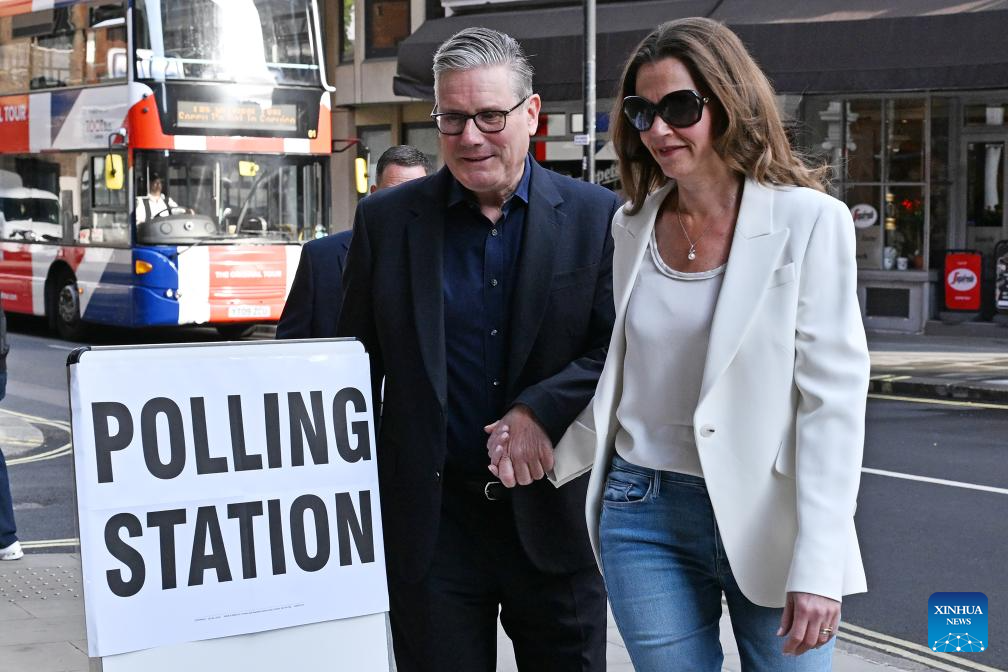
British Prime Minister Keir Starmer (L) and his wife arrive at a polling station for local elections in London, Britain, May 7, 2026. (Photo by Ray Tang/Xinhua)
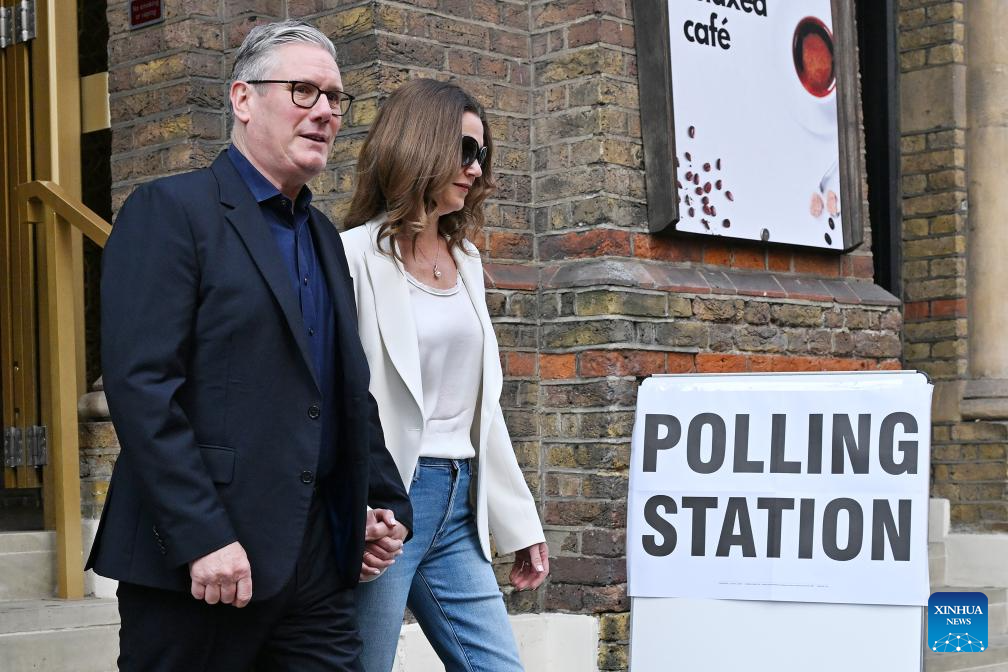
British Prime Minister Keir Starmer (L) and his wife leave a polling station after voting for local elections in London, Britain, May 7, 2026. (Photo by Ray Tang/Xinhua)
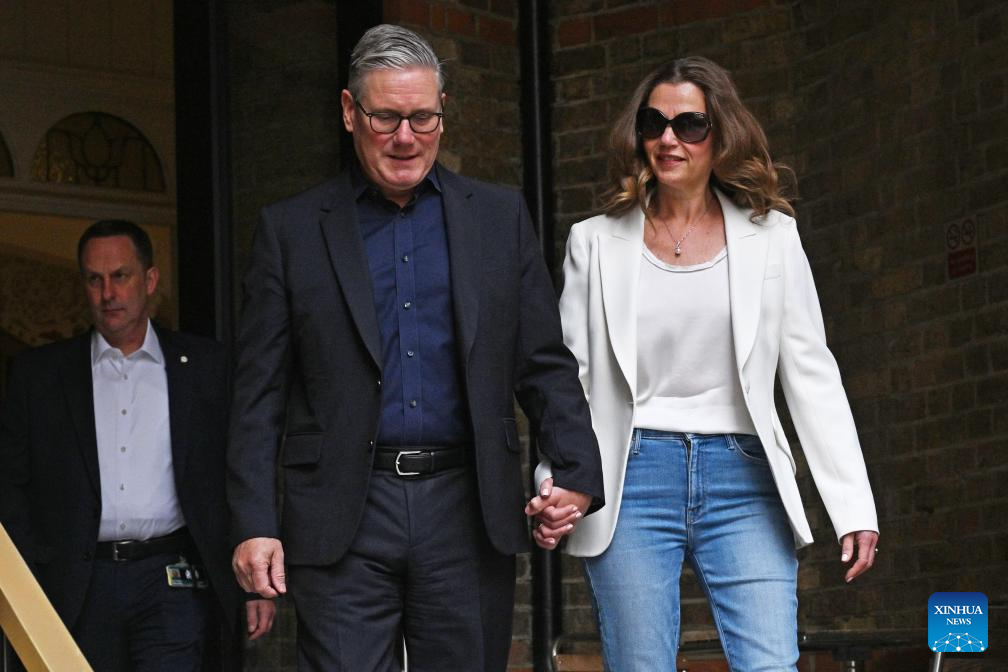
British Prime Minister Keir Starmer (L) and his wife leave a polling station after voting for local elections in London, Britain, May 7, 2026. (Photo by Ray Tang/Xinhua)
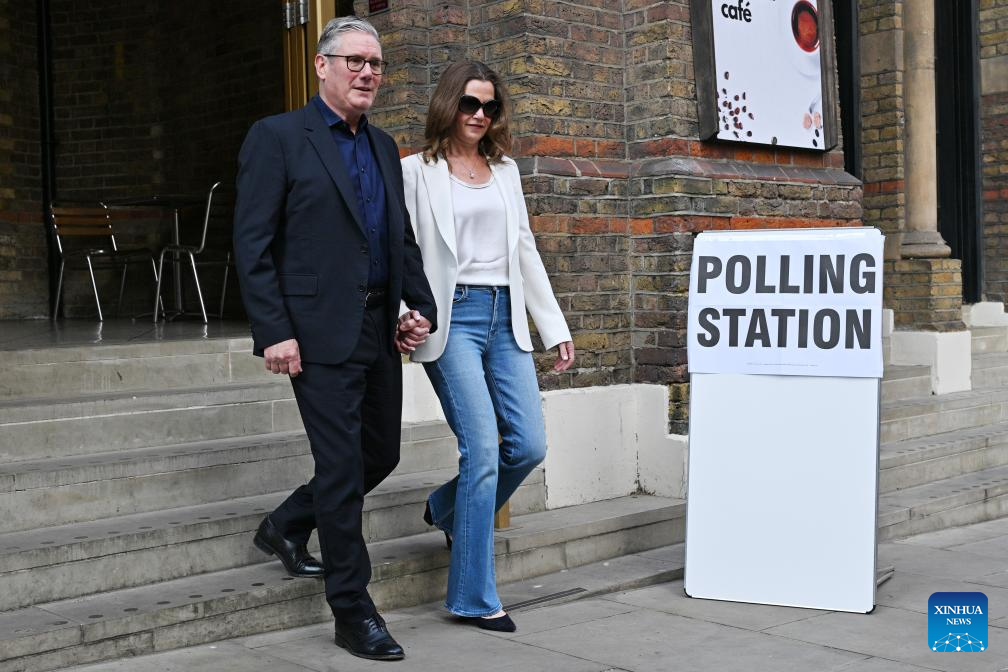
British Prime Minister Keir Starmer (L) and his wife leave a polling station after voting for local elections in London, Britain, May 7, 2026. (Photo by Ray Tang/Xinhua)
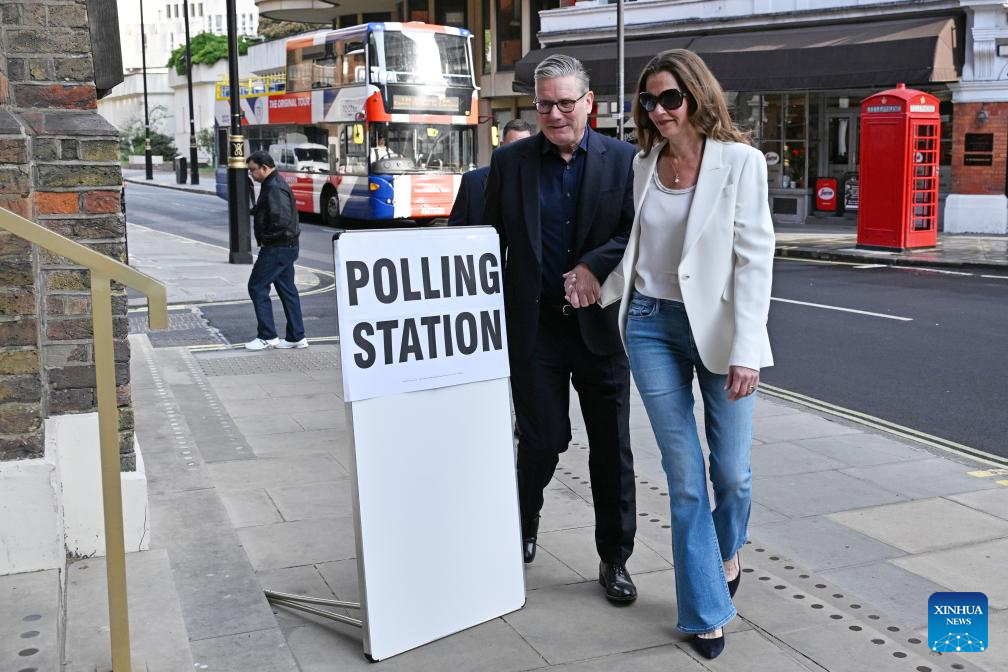
British Prime Minister Keir Starmer (L) and his wife arrive at a polling station for local elections in London, Britain, May 7, 2026. (Photo by Ray Tang/Xinhua)
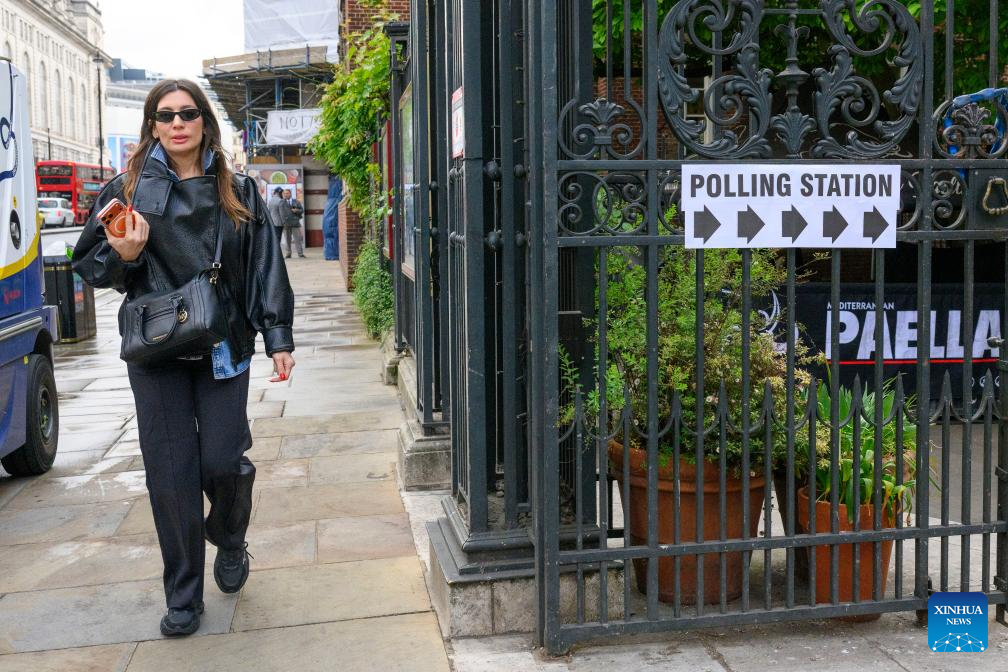
A woman walks past a polling station for local elections in London, Britain, May 7, 2026. (Photo by Ray Tang/Xinhua)
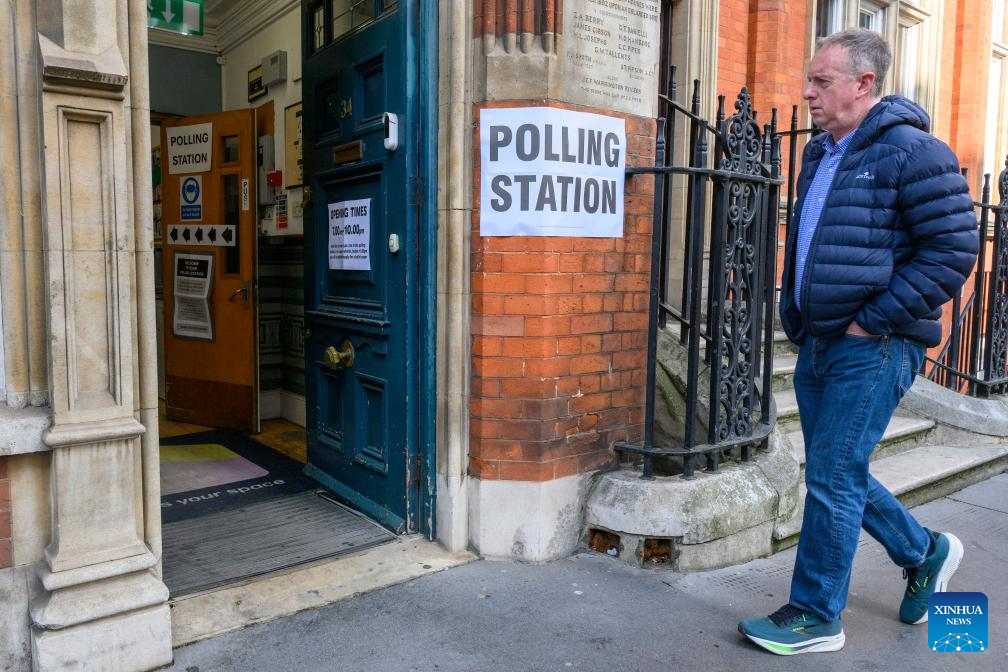
A man arrives at a polling station for local elections in London, Britain, May 7, 2026. (Photo by Ray Tang/Xinhua)
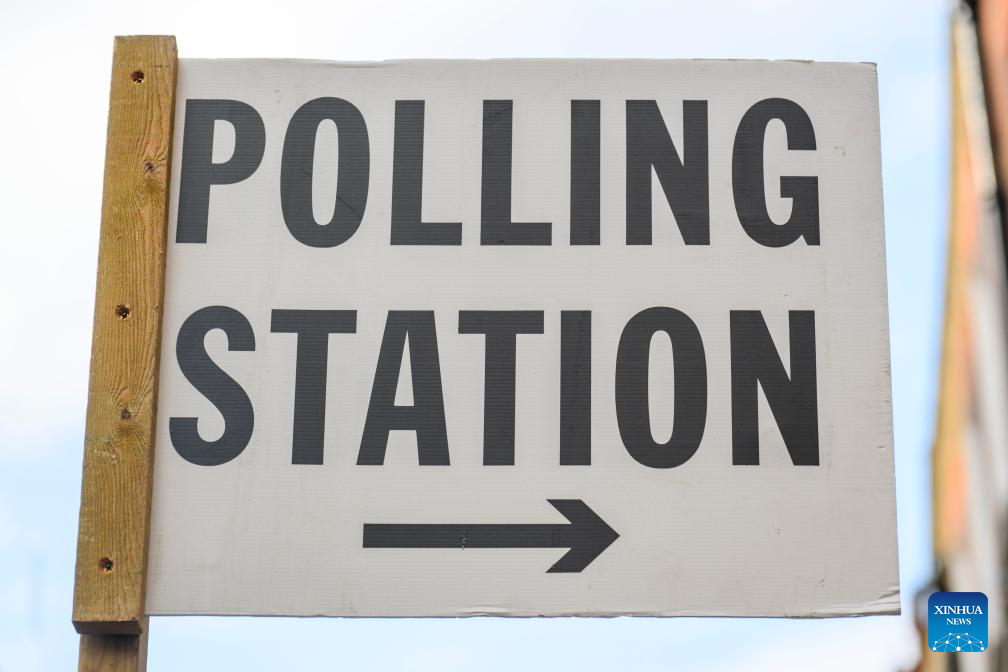
A sign is seen outside a polling station for local elections in London, Britain, May 7, 2026. (Photo by Ray Tang/Xinhua)
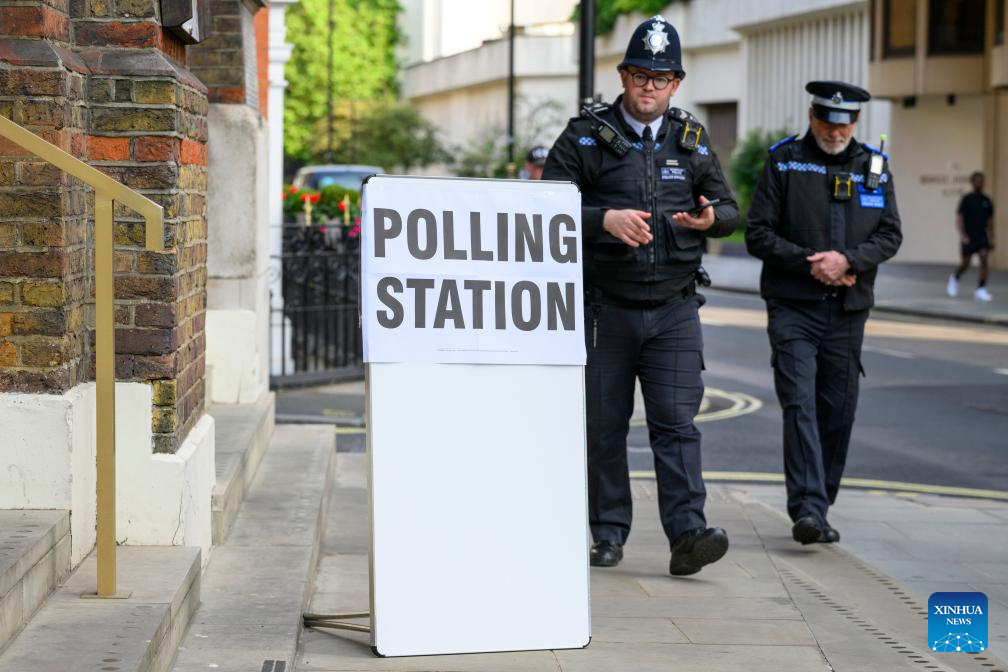
Police officers walk past a polling station for local elections in London, Britain, May 7, 2026. (Photo by Ray Tang/Xinhua)
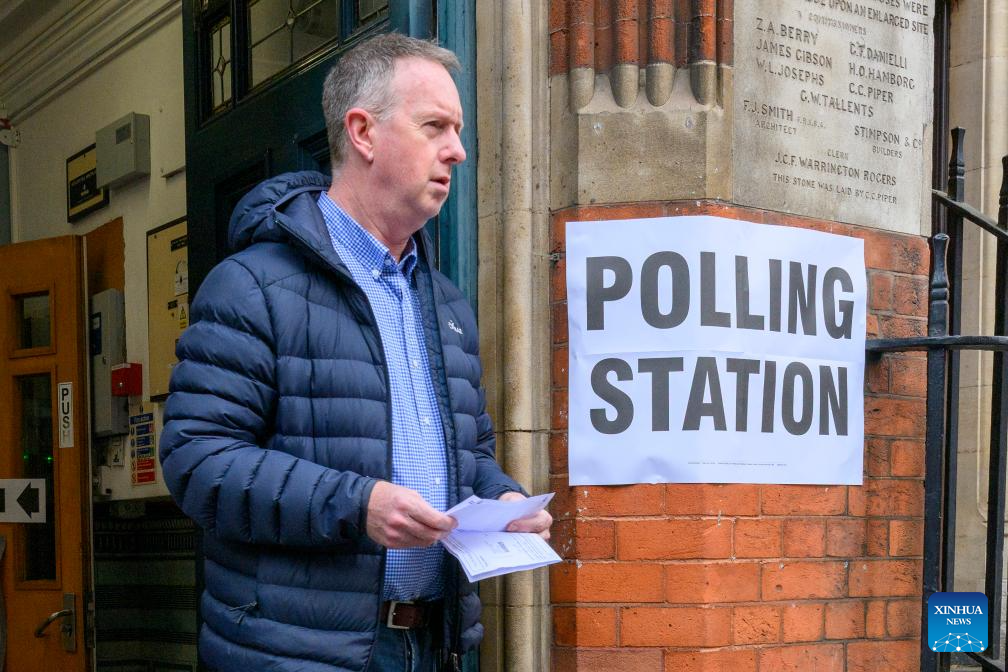
A man leaves a polling station after voting for local elections in London, Britain, May 7, 2026. (Photo by Ray Tang/Xinhua)
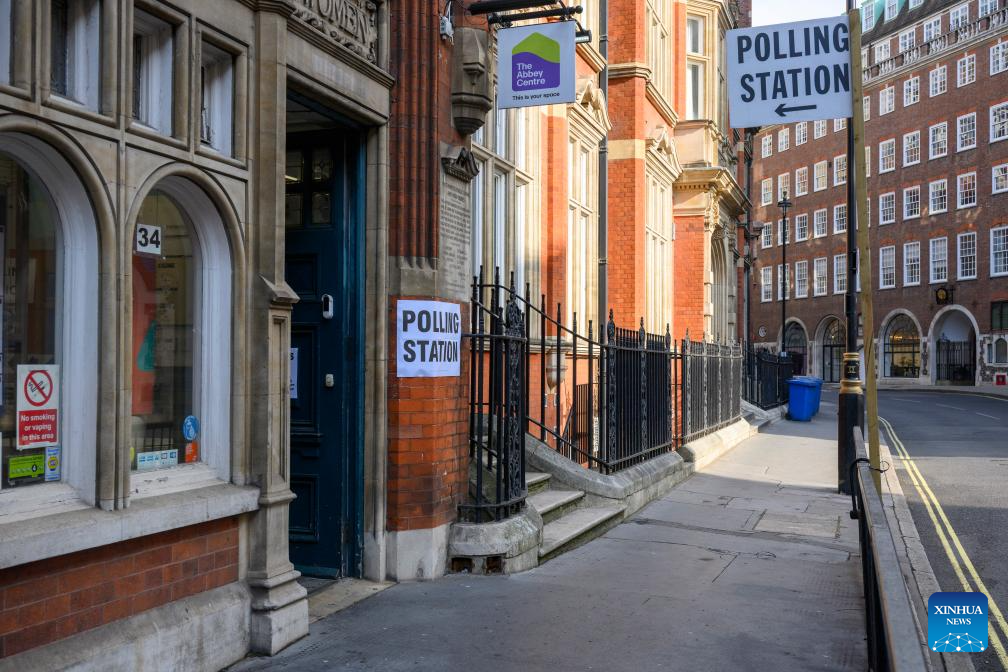
A polling station for local elections is seen in London, Britain, May 7, 2026. (Photo by Ray Tang/Xinhua)


