The U.S.-German dispute has evolved into a broader rift between the United States and its European allies, with leaders and analysts warning of lasting implications for NATO and Europe's strategic future.
BERLIN, May 1 (Xinhua) -- U.S. President Donald Trump's threat to cut American troop deployments in Europe has intensified transatlantic tensions, exposing deep divisions over security, defense commitments and Washington's military actions in Iran.
The dispute, triggered by disagreements over U.S. engagement in the Middle East, has evolved into a broader rift between the United States and its European allies, with leaders and analysts warning of lasting implications for NATO and Europe's strategic future.
GERMANY-U.S. FRICTION AMID TURMOIL
The latest friction erupted after Trump criticized European allies over their stance on the Iran conflict and suggested pulling U.S. troops stationed in Germany, while also warning of possible cuts in Spain and Italy on Friday.
His remarks came in response to criticism from German Chancellor Friedrich Merz, who on Monday accused Washington of pursuing a "planless" strategy and weakening its own position in the Middle East conflict.
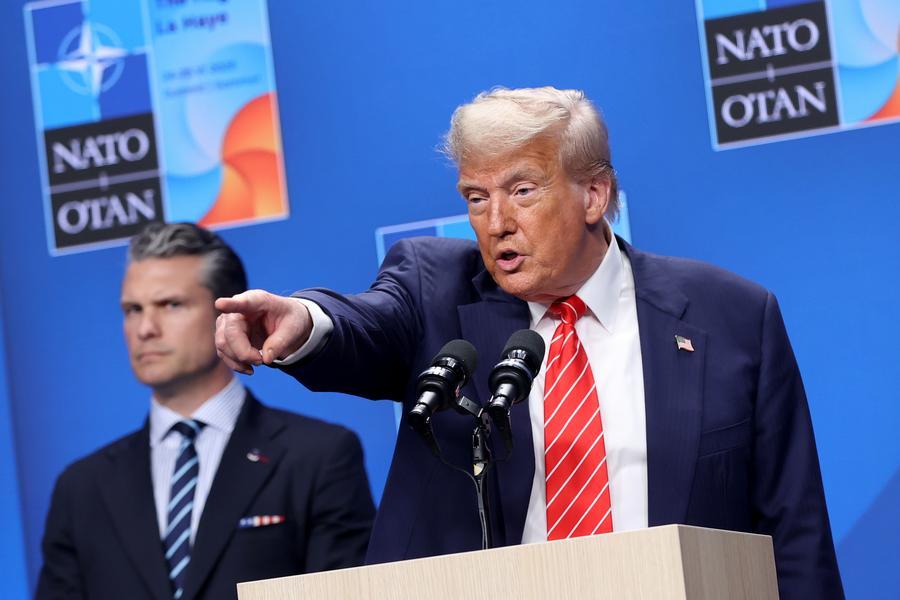
Trump fired back by saying Merz "is doing a terrible job." German Vice Chancellor and Finance Minister Lars Klingbeil on Friday said that Germany "does not need any tips from Donald Trump" and urged Washington to focus on serious peace talks.
Spain's Defense Minister Margarita Robles also dismissed Trump's troop-cut threat, calling Trump's statements "neither appropriate nor, of course, based on any legal grounds."
Speaking to Spanish public broadcaster RTVE, she said, "We do not accept lectures, and we remain absolutely calm because Spain is among the countries that most fully comply with its commitments to NATO."
Although Merz has sought to downplay the dispute by stressing his personal relationship with Trump remains good, analysts say the underlying structural strains are difficult to mask.
Josef Gregory Mahoney, a professor of politics and international relations at East China Normal University, said the U.S. war in Iran has directly impacted Germany's export-dependent economy.
"After barely surviving losing access to Russian energy given the conflict in Ukraine, Germany is facing real risks of de-industrialization," Mahoney said, adding that the latest row has "reopened old wounds" over defense spending and burden-sharing within NATO.
POSSIBILITY OF WITHDRAWAL
Trump's remarks have also sparked debate over the feasibility and consequences of a potential U.S. troop reduction in Europe.
German Foreign Minister Johann Wadephul said Berlin is prepared, while stating that major U.S. military sites in Germany, such as the Ramstein Air Base, still serve an irreplaceable role for both sides.
Experts generally view a full withdrawal as unlikely due to mutual strategic needs, though partial reductions are seen as a realistic possibility.
French economic daily Les Echos reported that discussions within NATO have already begun on scaling down the U.S. military presence in Europe gradually.
The challenge for European countries, the report said, is to slow any potential U.S. drawdown to allow time for an orderly transition and to strengthen their own defense capabilities.
Germany hosts more than 36,400 U.S. troops as of late 2025, making it the second-largest U.S. military location outside American soil, after Japan, according to Tagesschau, a flagship news program of German public broadcaster ARD.
Yu Xiaohua, a professor at Germany's University of Goettingen, suggested that Trump might execute a symbolic reduction, maybe a few hundred troops, as a political gesture.
Still, some observers see a broader shift underway. "Whatever the case, the dissolution of the alliance has already begun," said former German foreign minister and vice chancellor Joschka Fischer in a commentary published in the French daily Le Monde.
EUROPE'S ROCKY PATH
Concerns over U.S. reliability have accelerated Europe's push for greater strategic autonomy. "The moment the U.S. withdraws, it will have enormous consequences for our defense," said Dutch Defense Minister Dilan Yesilgoz-Zegerius in a local broadcast.
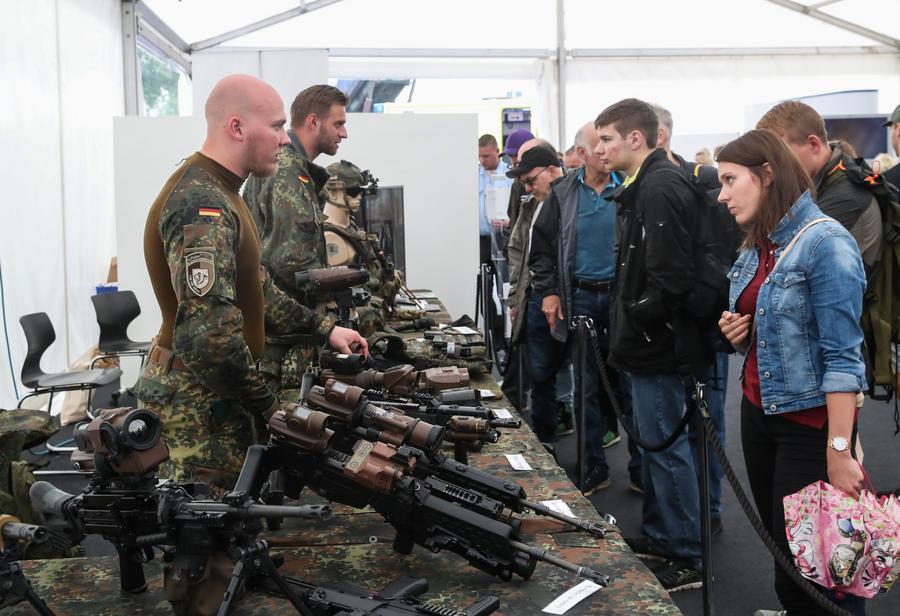
Analysts say Europe's ability to act independently will depend largely on strengthening its defense industry and overcoming internal divisions.
Rob de Wijk, a Dutch professor of international relations and security, said in the Dutch newspaper Trouw that faster decision-making and fewer bureaucratic obstacles will be key for Europe to achieve defense independence.
Meanwhile, broader geopolitical pressures persist. Safet Music, a security expert from Bosnia, told Xinhua that the ongoing conflict in Ukraine and rising global polarization continue to increase Europe's security challenges.
In response, Germany has begun a historic military buildup, aiming to transform the Bundeswehr into the "strongest conventional army in Europe."
While differences remain among European countries, a growing consensus suggests that the transatlantic relationship is undergoing a fundamental change.
As Fischer wrote, long-standing structures like NATO erode as confidence in mutual defense diminishes. "The long-standing American protectorate came to an end under Donald Trump and will not return," he said. "Europe must now chart its own course." ■