
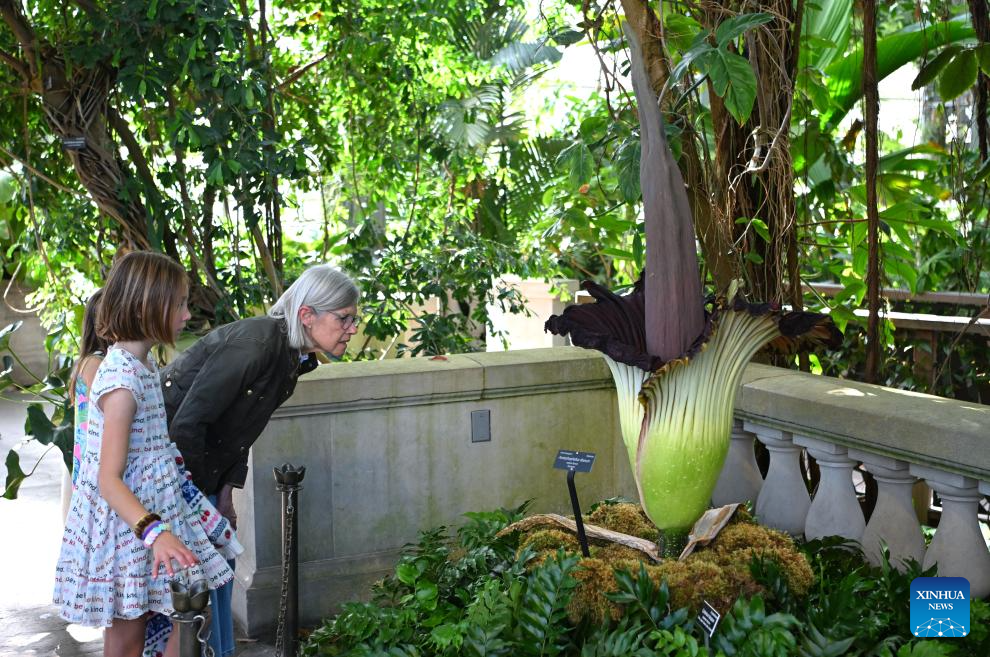
People watch a blooming corpse flower at the U.S. Botanic Garden in Washington, D.C., the United States, on May 1, 2026. The corpse flower, officially known as Amorphophallus titanum, is native to Indonesia. It is known as a corpse flower from the infamous rotting smell that helps it attract pollinators when the plant is in bloom. (Xinhua/Li Rui)
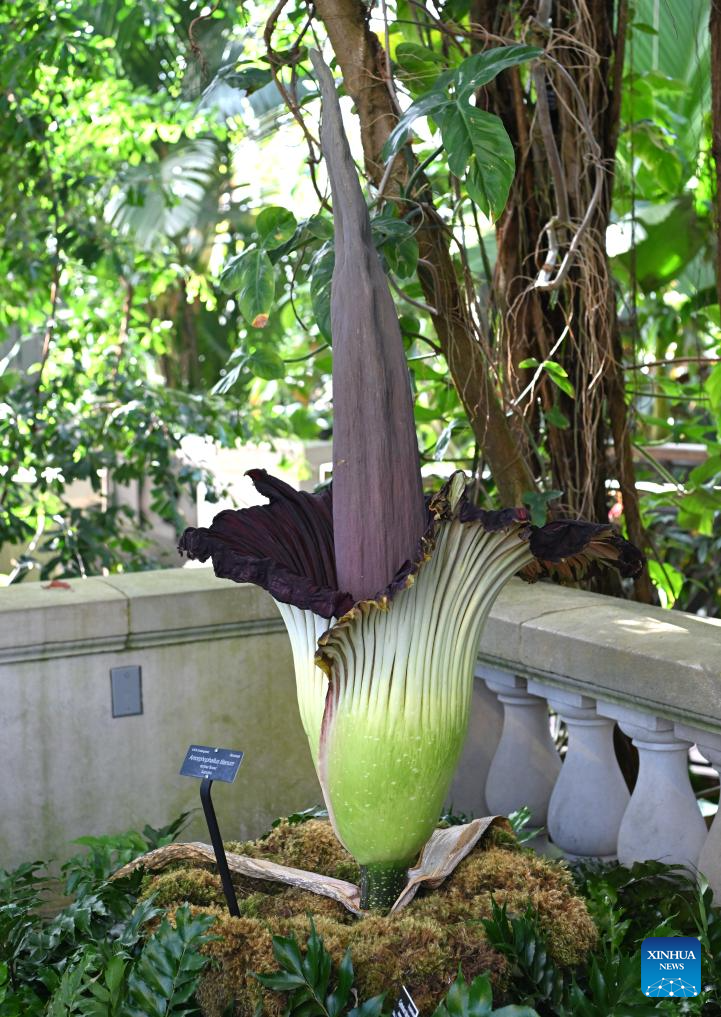
A blooming corpse flower is seen at the U.S. Botanic Garden in Washington, D.C., the United States, on May 1, 2026. The corpse flower, officially known as Amorphophallus titanum, is native to Indonesia. It is known as a corpse flower from the infamous rotting smell that helps it attract pollinators when the plant is in bloom. (Xinhua/Li Rui)
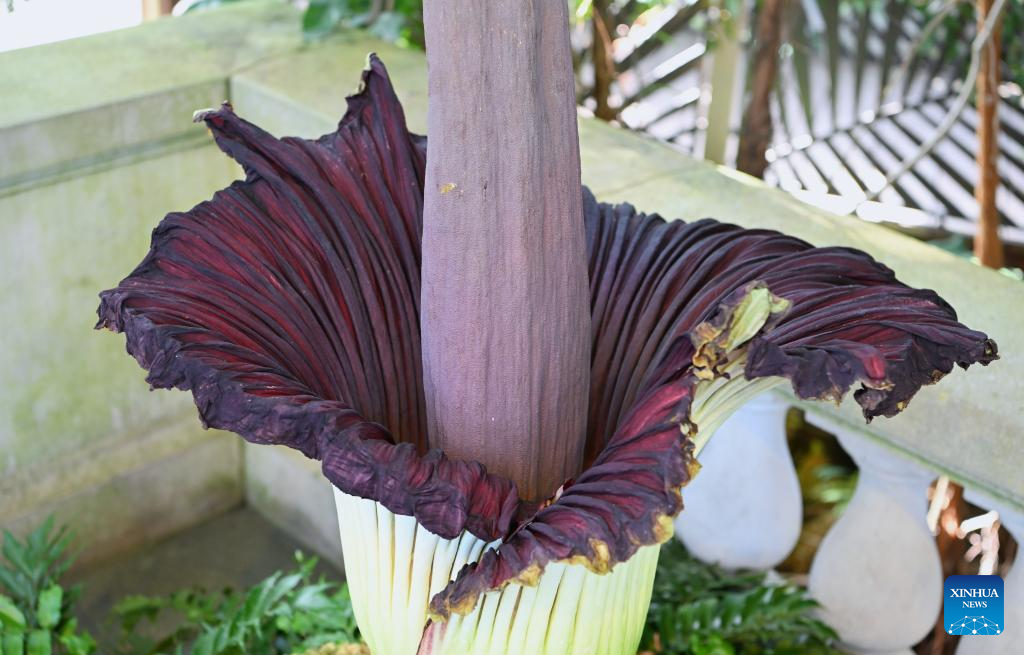
A blooming corpse flower is seen at the U.S. Botanic Garden in Washington, D.C., the United States, on May 1, 2026. The corpse flower, officially known as Amorphophallus titanum, is native to Indonesia. It is known as a corpse flower from the infamous rotting smell that helps it attract pollinators when the plant is in bloom. (Xinhua/Li Rui)

People pose for a selfie with a blooming corpse flower at the U.S. Botanic Garden in Washington, D.C., the United States, on May 1, 2026. The corpse flower, officially known as Amorphophallus titanum, is native to Indonesia. It is known as a corpse flower from the infamous rotting smell that helps it attract pollinators when the plant is in bloom. (Xinhua/Li Rui)


