* Yiwu built a "world's supermarket" from scratch, a transformation powered by decades of market-oriented reforms and a dense ecosystem of small commodity producers that connect Chinese factories with buyers across the globe.
* Yiwu has sold 2.1 million varieties of small commodities to 233 countries and regions and Yiwu's export value ranked first among all county-level regions nationwide in 2025.
* Yiwu experience offers a persuasive message that Chinese modernization is not a closed process serving only its own citizens, but one that extends institutional support and opportunity to those who choose to be part of it.
YIWU, Zhejiang, April 30 (Xinhua) -- Senegalese businessman Tirera Sourakhata still vividly recalls his first visit to Yiwu more than two decades ago, little imagining that the trip would transform his business and win him a front-row seat to the city's rise.
Back then, when he first stepped into the Yiwu market, its trading space was barely one-tenth of what it is today. Now, the city is known worldwide as the "world's supermarket."
"China develops so fast, especially Yiwu," he said, noting that his business has expanded several hundredfold. "Every shipment sells out as soon as it arrives in Senegal. In the early days, I would send maybe 20 or 30 containers to Africa a year. But now, I send thousands."
Located in east China's Zhejiang Province, Yiwu is neither coastal nor situated on an international border. Yet the county-level city has sold an astounding 2.1 million varieties of small commodities to 233 countries and regions. In 2025, Yiwu's export value ranked first among all county-level regions nationwide.
The landlocked city with little innate advantage built a "world's supermarket" from scratch, a transformation powered by decades of market-oriented reforms and a dense ecosystem of small commodity producers that connect Chinese factories with buyers across the globe, according to Pan Yigang, vice president of the Zhejiang Development & Planning Institute.
FROM ROADSIDE STALLS TO GLOBAL HUB
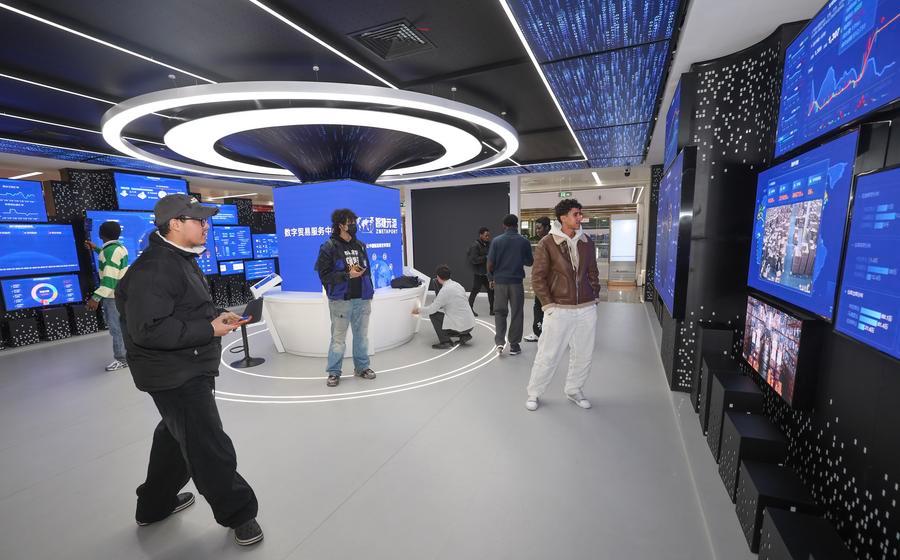
At the Yiwu Global Digital Trade Center, He Tao cradled a smart pet toy as he spoke with Xinhua, noting that the device can even simulate snoring and that its "personality" evolves with the owner's habits. "It's incredibly popular. Orders are already lined up all the way to June."
He Tao, a merchant born in the 2000s, is a third-generation Yiwu trader. His 74-year-old grandmother, Zhang Chunhua, and his 47-year-old mother, Zhang Qiaomei, are also merchants in the city. Together, the three generations have witnessed Yiwu's evolution, from a makeshift roadside market to a modern international trade hub.
Back in 1982, Yiwu made a bold move by launching its first small-commodities market. "In the early days, it was just an open-air roadside bazaar. You would spread a cloth on the ground, lay out some plastic hangers, and that was your shop," recalled Zhang Chunhua. "There were no facilities, only the spontaneous drive of ordinary people."
When his mother, Zhang Qiaomei, started up her business, China joined the World Trade Organization. Yiwu followed the trend and built the Yiwu International Trade Market. She adapted quickly, running her shop by day and transporting sacks of plush ornaments at night to secure export orders.
Today, Yiwu hosts the world's largest wholesale market for small commodities, supplying everything from Christmas goods to World Cup souvenirs. It is home to over 1.26 million business entities and supports more than 32 million jobs.
As a window into China's reform and opening-up and a barometer of global small-commodities trade, Yiwu is fully embracing the digital era.
Amid the surge of artificial intelligence (AI), the idea of a "world's supermarket" is being quietly reshaped. Yiwu is no longer just a vast mall for low-cost trinkets; it is edging toward a marketplace where technology, branding, and data matter as much as scale.
Nowhere is this shift more palpable than at the Yiwu Global Digital Trade Center, opened last October and renowned as the city's sixth-generation market.
For many Yiwu merchants, AI has been a necessity rather than a novelty for unlocking global markets by breaking down language barriers and analyzing cultural preferences in product design. Statistics show that nearly 30,000 merchants in Yiwu routinely use various AI tools to do business, and the AI applications developed by Yiwu have been used over 1 billion times in total.
"Yiwu's success has relied mainly on a series of reforms, innovations and institutional breakthroughs," said Pan, noting that those efforts include constantly innovating import trade models, improving cross-border e-commerce systems, and optimizing policies for foreign investment access and entry and exit procedures.
In the first quarter of 2026, Yiwu's total foreign trade reached 209.37 billion yuan (about 30.51 billion U.S. dollars), a year-on-year increase of 25 percent, which is 10 percentage points above the national average.
SHARED GAINS
In an age defined more by uncertainty than by certainty, Yiwu has emerged as a pivotal node in global trade and a reminder that opportunities for developing economies remain within reach, illustrating how opening up and entrepreneurship can turn a local marketplace into an international hub and benefit the whole world.
For Tanya Emmanuel, a Cameroonian trader who has spent more than a decade in Yiwu, the city's impact is deeply personal. "Yiwu changed not only my fate but also the lives of many people back home," he told Xinhua.
When he first arrived, it was not textiles or trinkets that caught his eye, but the growing array of new-energy products. At the time, his family's farm in Ndu subdivision relied on firewood and noisy diesel generators. He purchased a set of solar equipment from Yiwu and, with remote guidance, had it installed back home.
The results were immediate. In his hometown, solar-powered pumps have transformed daily life. Farmers who once hauled water by hand several times a day can now irrigate their fields with ease, no small gain in a region blessed with sunlight but plagued by unreliable electricity.
Since 2014, Emmanuel has expanded the business, supplying affordable solar, wind, and energy storage equipment across parts of Africa, supporting farms, schools, and clinics. "Africa's solar resources, combined with Chinese technology, are turning nature into wealth," he said. "That is the lesson Yiwu offers."
Sourakhata has also drawn similar lessons. Two years ago, he ordered 100 electric vehicles from China and launched a ride-hailing service in Senegal modeled on Chinese platforms.
The business, he said, is as much about development as it is about profit, creating jobs, cutting emissions, and lowering operating costs. "In China, I didn't just learn how to make money," he said. "I learned how development works."
Peter Kreutzberger, Chairman of the Gesellschaft für Deutsch-Chinesische Verständigung (GDCV), first came to Yiwu in 2006. Twenty years after his encounter with the once-humble city, he found a city almost unrecognizable. Its skyline is now lined with high-rises, and its infrastructure has been vastly expanded.
"I see a lot of foreign business people around in the market. The welcoming atmosphere is well developed here," said Kreutzberger. "It is a very up-to-date development, good for the people who live here, good for the people who come here for trade."
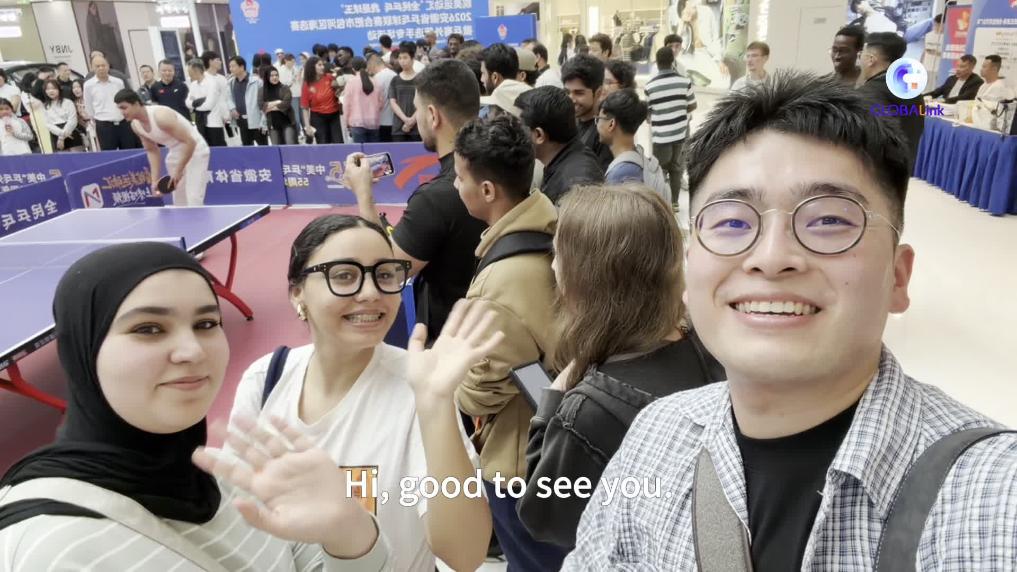
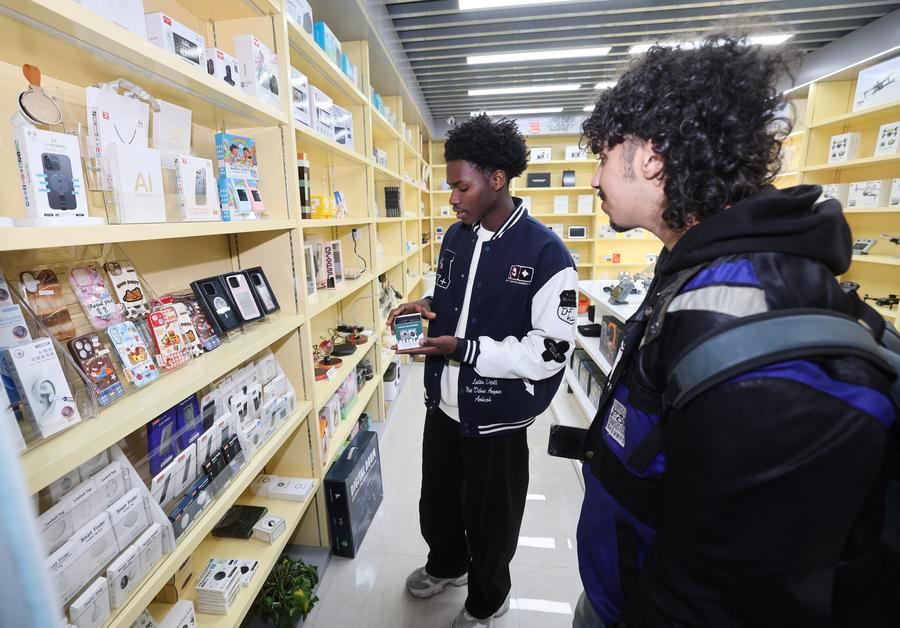
The numbers help explain the appeal. Yiwu is home to more than 30,000 resident foreign merchants, and over 10,000 foreign-funded businesses have set up shop. For traders like Ali Kamran, a Pakistani businessman, the draw is as much about efficiency as it is about scale.
"More and more foreigners see Yiwu as a place to do business because it's safe and stable, and you can get any product you want. The convenience for business, policy transparency and service efficiency are all rising," said Kamran.
These individual stories reflect a broader reality: Yiwu has become a global city for merchants. "Yiwu's respect for difference and embrace of diversity have created a space where people of varied backgrounds and nationalities can meet, do business, and over time, come to understand one another," said Jiang Jiajiang, director of the Institute of Public Policy at the Zhejiang Academy of Social Sciences.
In that sense, the Yiwu experience offers a quiet but persuasive message that Chinese modernization is not a closed process serving only its own citizens, but one that extends institutional support and opportunity to those who choose to be part of it, an embodiment of the idea of a shared future for humanity, particularly at a time when globalization is under strain, Jiang noted. (Reporting by Ji Hang, Huang Zechen, Zhu Han and Zheng Keyi; Video reporters: Wang Yiwen and Liu Mingxiang; Video editors: Zhang Yichi and Luo Hui.) ■