
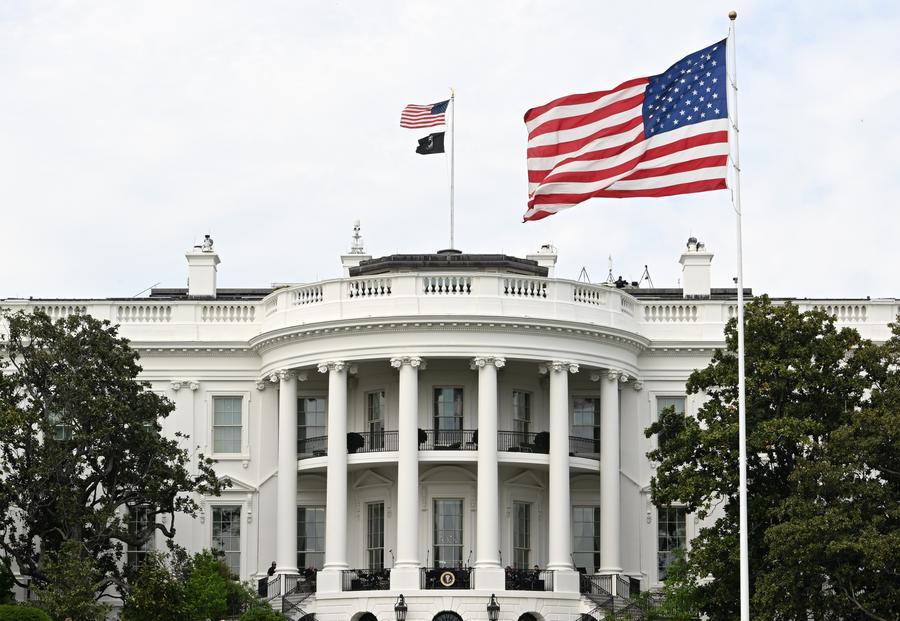
The shooting is the latest in a string of politically motivated attacks that have targeted officials from both major parties, reinforcing concerns that political violence is becoming normalized in the United States.
WASHINGTON, April 29 (Xinhua) -- A shooting at the annual dinner of the White House Correspondents' Association has cast a harsh light on the state of political discourse in the United States, where deepening polarization, widespread gun violence and rising distrust are converging into a volatile mix.
The 2026 dinner marked the first time Donald Trump attended the event during his presidency, after skipping it throughout his first term and breaking with a long-standing tradition of engagement between the White House and the press. The gathering, typically a showcase of politics-media interactions, instead unfolded under the shadow of violence.
It's reported that the 31-year-old suspect, identified by U.S. authorities as Cole Allen, expressed anger toward the federal government and sought to target senior officials. Minutes before the attack, he allegedly sent a manifesto to family members outlining grievances with the Trump administration and broader societal injustices.
The suspect's writings referenced high-profile controversies, including the Jeffrey Epstein case and U.S. military actions abroad, suggesting a blend of personal outrage and political motivation. He described federal officials as his primary targets while indicating that bystanders were not targets.
POLITICAL VIOLENCE
The shooting is the latest in a string of politically motivated attacks that have targeted officials from both major parties, reinforcing concerns that political violence is becoming normalized in the United States.
Academic research points to a troubling trend. James Piazza, a professor at Pennsylvania State University, has found that rising partisan hostility is reshaping how Americans view one another. Supporters of opposing parties increasingly see each other not simply as political rivals but as fundamentally immoral or threatening groups.
That shift, analysts say, lowers the threshold for violence. Grievances tied to economic strain, foreign policy disputes and domestic political battles can accumulate, creating conditions for individuals to feel justified in taking extreme action.
At the same time, the widespread availability of firearms is a catalyst. The United States continues to have more civilian-owned guns than population, with millions sold each year. The suspect in Saturday's attack reportedly carried multiple weapons, highlighting persistent gaps in gun regulation.
The overlap of polarization and gun proliferation has led to a series of high-profile incidents. Trump himself survived an assassination attempt during a campaign rally in 2024.
The violence has not been one-sided. On June 14, 2025, Minnesota State Representative Melissa Hortman, a Democrat, was assassinated at her home in Brooklyn Park alongside her husband. State Senator John Hoffman and his wife were also shot and wounded in a separate early-morning attack.
ELECTION CALCULUS
The political impact of such violence is complex. Historically, attacks on sitting presidents or candidates have sometimes led to short-term surges in public support. After surviving an assassination attempt in 1981, Ronald Reagan saw his approval ratings rise. Trump experienced a similar boost following the 2024 attempt.
In the aftermath of the dinner shooting, Trump and his allies moved quickly to frame the incident in political terms. He described the presidency as inherently dangerous and blamed Democratic rhetoric for contributing to a climate of hostility. Republican lawmakers echoed those claims, using the incident to criticize policy disputes and security funding decisions, pressuring the Democratic Party.
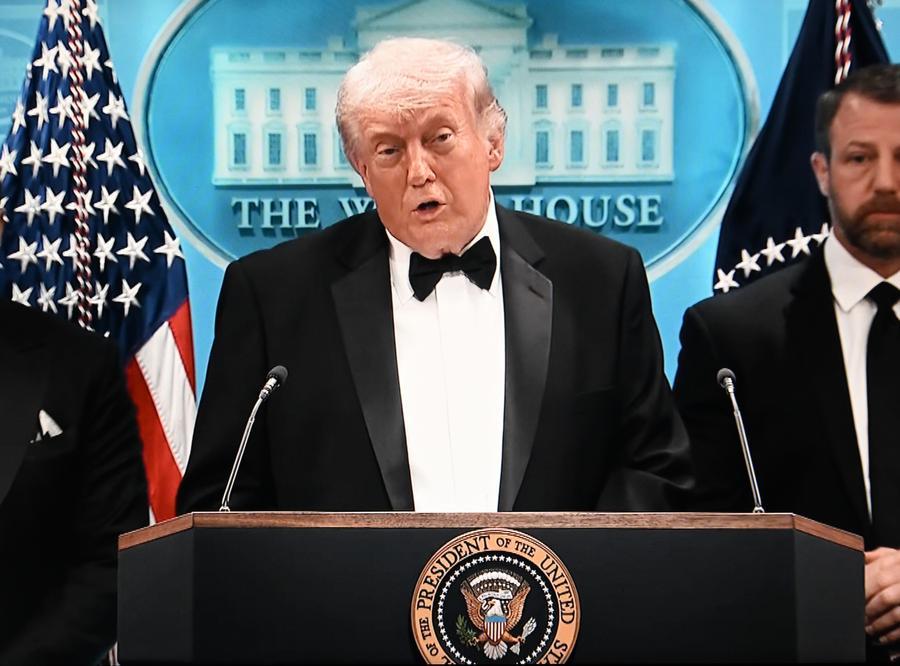
Greg Cusack, a former member of the Iowa House of Representatives, argued the episode could serve as a political opportunity, shifting attention away from contentious issues such as the administration's handling of the Iran war and domestic economic challenges.
The Associated Press-NORC Center for Public Affairs Research reported Trump's approval rating at 33 percent, weighed down by concerns over foreign policy and the economy. Scholars such as Nolan Higdon of the University of California at Santa Cruz argue that structural issues -- including inflation, governance challenges and international tensions -- are likely to play a more decisive role in shaping voter attitudes ahead of the midterm elections. ■