
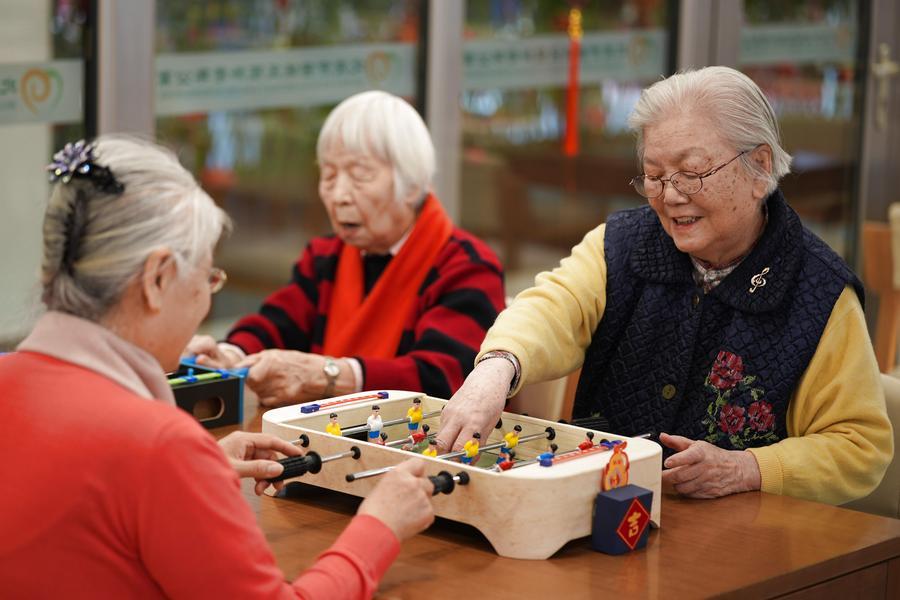
BEIJING, April 29 (Xinhua) -- China has unveiled a policy document to promote the development of mutual-aid eldercare services, as the country steps up efforts to address the challenges of an aging population and meet the increasingly diverse needs of older residents, authorities said on Wednesday.
By the end of 2025, more than 320 million people in China were aged 60 or above, accounting for 23 percent of the total population. This number is expected to exceed 400 million within a decade. As a result, eldercare has become an increasingly pressing national issue.
The guideline, jointly issued by 11 government departments, including the Ministry of Civil Affairs, defines mutual-aid eldercare as voluntary, non-profit services delivered through mutual assistance among neighbors or residents within villages and communities.
According to the document, by 2030, no less than 70 percent of urban and rural communities are expected to be equipped with eldercare facilities capable of providing mutual-aid services.
A nationwide mechanism for regular visits and care services for elderly people in particular difficulties will also be fully established, while the sustainability of such services will be significantly strengthened.
The guideline calls for developing community-supported, home-based mutual-aid services, including the formation of volunteer teams to provide help regarding the likes of meals, hygiene, mobility and emergency assistance for elderly people in need.
It also encourages the cultivation of professional service operators, with the aim of improving service quality and long-term viability.
Efforts will also be made to advance mutual-aid eldercare services in rural areas based on local conditions, for example, repurposing existing facilities such as township nursing homes, rural eldercare centers and idle school buildings to build elderly-friendly mutual-aid communities. ■