
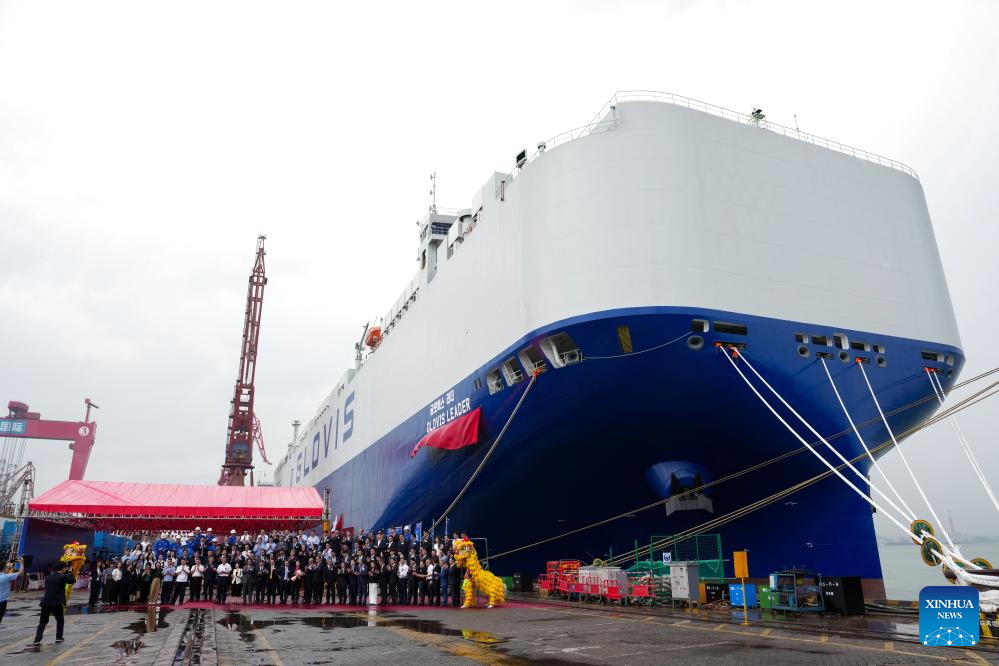
Guests pose for a group photo at the delivery ceremony of car carrier Glovis Leader in Guangzhou, south China's Guangdong Province, April 28, 2026. A car carrier with a maximum capacity of 10,800 car equivalent units, described as the world's largest of its kind, was delivered Tuesday in the southern Chinese city of Guangzhou. The vessel, named Glovis Leader, was built by Guangzhou Shipyard International Company Limited under the China State Shipbuilding Corporation (CSSC), together with China Shipbuilding Trading Co., Ltd. It was delivered to HMM, a leading shipping company in the Republic of Korea (ROK). After delivery, the vessel will be operated by Hyundai Glovis Co., Ltd., a logistics company also based in the ROK. (Xinhua/Wu Lu)
GUANGZHOU, April 28 (Xinhua) -- A car carrier with a maximum capacity of 10,800 car equivalent units, described as the world's largest of its kind, was delivered Tuesday in the southern Chinese city of Guangzhou.
The vessel, named Glovis Leader, was built by Guangzhou Shipyard International Company Limited under the China State Shipbuilding Corporation (CSSC), together with China Shipbuilding Trading Co., Ltd. It was delivered to HMM, a leading shipping company in the Republic of Korea (ROK). After delivery, the vessel will be operated by Hyundai Glovis Co., Ltd., a logistics company also based in the ROK.
Lee Kyoo-bok, CEO of Hyundai Glovis, said at the delivery ceremony that the new-generation ultra-large vessel is more than an ordinary means of transport. With its large capacity and enhanced green operating system, it is expected to set a new benchmark for global seaborne automobile transport and mark an important milestone for the shipping industry.
Industry insiders say the delivery demonstrates China's growing capabilities in high-end shipbuilding and reflects broader efforts by the global shipping industry to move toward lower-carbon operations.
Classified as a pure car and truck carrier, the ship is 230 meters long and 40 meters wide, with a design draft of 10.5 meters and a cruising speed of 19 knots. It features 14 vehicle decks and can carry a range of cargo, including electric vehicles, hydrogen-powered vehicles and heavy trucks.
In recent years, Chinese-built vessels have renewed the record for the world's largest car carrier. In late April 2025, BYD Shenzhen, with 9,200 standard vehicle spaces, made its maiden export voyage. Less than a month later, Anji Ansheng, with 9,500 vehicle spaces, set off from Shanghai for Europe on its maiden voyage. Both vessels were independently built by Chinese shipyards.
The Glovis Leader is powered by a dual-fuel system using liquefied natural gas and conventional fuel, meeting the International Maritime Organization's Tier III emissions standards. It also incorporates energy-saving technologies, including optimized hull design, waste heat recovery systems and shore power capability.
A shaft generator developed by a research institute under the CSSC enables the vessel to generate electricity while sailing, reducing fuel consumption.
Car carriers are typical high-value-added vessels with a high technical threshold. The vessel type poses technical challenges in areas such as multi-layer thin-plate structures, vehicle fire safety, roll-on/roll-off systems and high-stability design.
Zhou Xuhui, general manager of Guangzhou Shipyard International, said the company has overcome a number of key technical challenges through the batch construction of car carriers while production efficiency has also improved significantly.
Industry insiders said the large number of orders placed by overseas shipping giants with Chinese shipyards, especially for high-end vessels, shows that the technical maturity and product reliability of relevant Chinese-built vessels have been widely recognized by the global market.
Guangzhou, one of China's major shipbuilding bases, has developed a complete supply chain. Local authorities have pledged to continue building Guangzhou into a hub for marine innovation, targeting cutting-edge sectors such as the deep sea, green and smart marine industries.
Guangzhou Shipyard International highlighted its commitment to innovation and efficiency with the delivery of its latest car carrier. The company has secured more than 40 orders for car carriers and delivered 26 to date. All vessels delivered so far were completed ahead of schedule, with 11 ships delivered in 2025 averaging 151 days early.
The company currently holds orders worth about 100 billion yuan (about 14.58 billion U.S. dollars), with overseas contracts accounting for more than 95 percent of the total. Production is scheduled through 2030.
China's ocean economy withstood pressure and maintained high-quality development in 2025, with faster shifts toward quality and efficiency, innovation-driven growth, and integrated marine development and conservation, said Shen Jun, an official with the Ministry of Natural Resources, in March.
The country's shipping volume and container throughput each exceeded one-third of the global total, while China held more than 50 percent of the global market share in shipbuilding and offshore engineering equipment, according to data released by the ministry.
In 2025, the country's three major shipbuilding indicators -- completed shipbuilding output, new orders and orders on hand -- accounted for the largest share of the global market for the 16th consecutive year, according to data released by the Ministry of Industry and Information Technology. ■
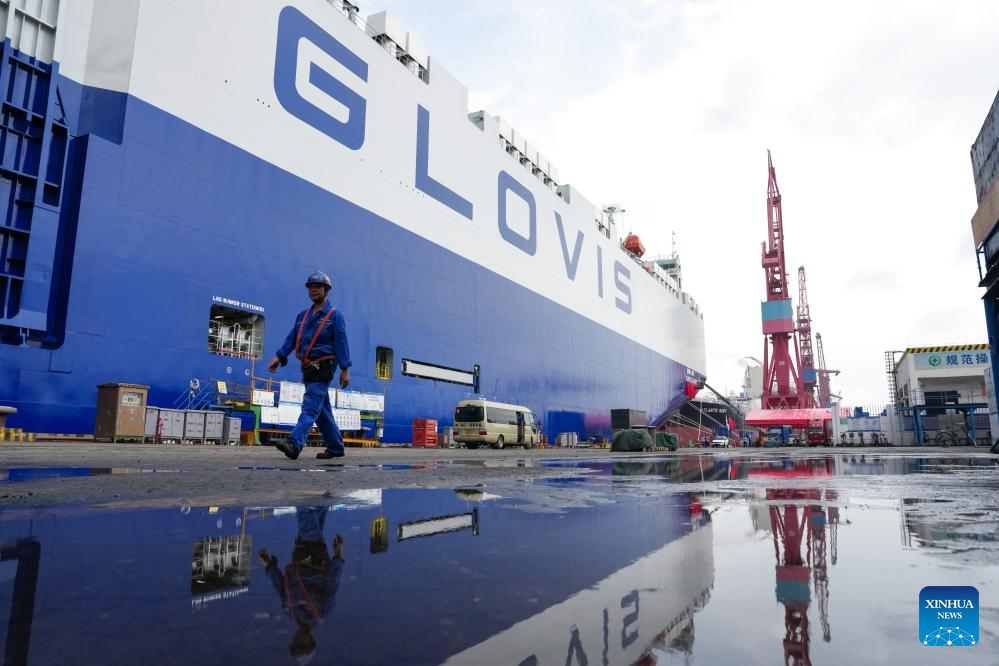
A staff member walks past car carrier Glovis Leader in Guangzhou, south China's Guangdong Province, April 28, 2026. A car carrier with a maximum capacity of 10,800 car equivalent units, described as the world's largest of its kind, was delivered Tuesday in the southern Chinese city of Guangzhou.
The vessel, named Glovis Leader, was built by Guangzhou Shipyard International Company Limited under the China State Shipbuilding Corporation (CSSC), together with China Shipbuilding Trading Co., Ltd. It was delivered to HMM, a leading shipping company in the Republic of Korea (ROK). After delivery, the vessel will be operated by Hyundai Glovis Co., Ltd., a logistics company also based in the ROK. (Xinhua/Wu Lu)
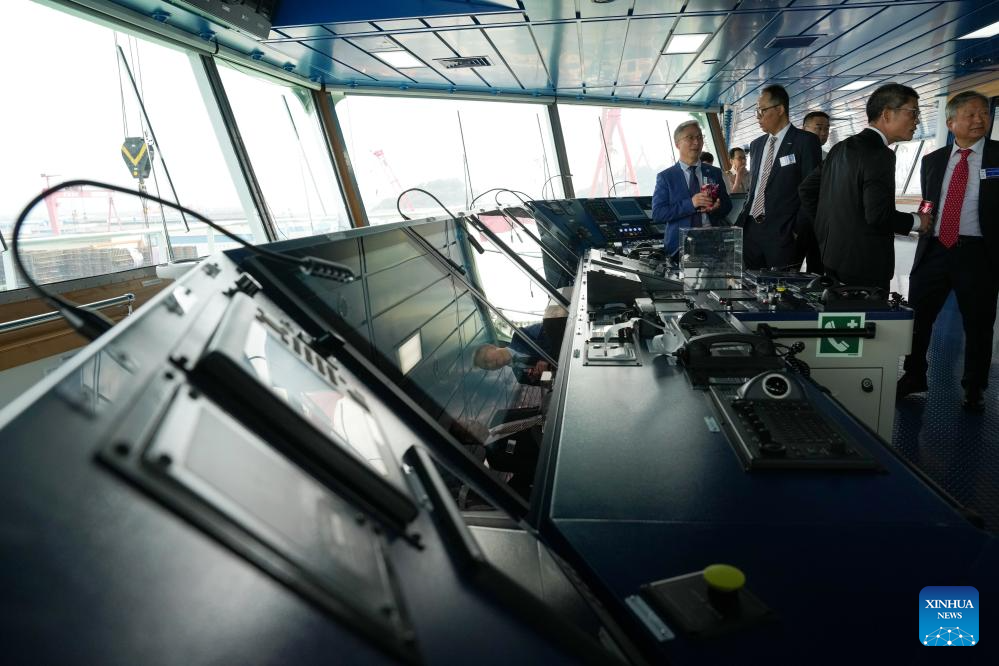
Guests attending the delivery ceremony visit the control room of car carrier Glovis Leader in Guangzhou, south China's Guangdong Province, April 28, 2026. A car carrier with a maximum capacity of 10,800 car equivalent units, described as the world's largest of its kind, was delivered Tuesday in the southern Chinese city of Guangzhou.
The vessel, named Glovis Leader, was built by Guangzhou Shipyard International Company Limited under the China State Shipbuilding Corporation (CSSC), together with China Shipbuilding Trading Co., Ltd. It was delivered to HMM, a leading shipping company in the Republic of Korea (ROK). After delivery, the vessel will be operated by Hyundai Glovis Co., Ltd., a logistics company also based in the ROK. (Xinhua/Wu Lu)
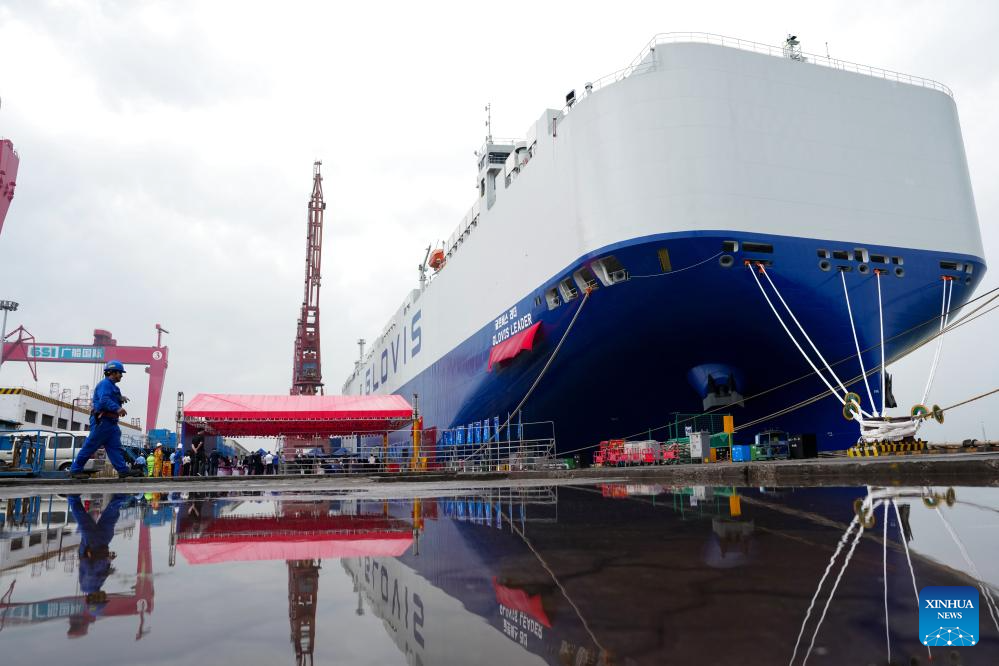
A staff member walks past car carrier Glovis Leader in Guangzhou, south China's Guangdong Province, April 28, 2026. A car carrier with a maximum capacity of 10,800 car equivalent units, described as the world's largest of its kind, was delivered Tuesday in the southern Chinese city of Guangzhou.
The vessel, named Glovis Leader, was built by Guangzhou Shipyard International Company Limited under the China State Shipbuilding Corporation (CSSC), together with China Shipbuilding Trading Co., Ltd. It was delivered to HMM, a leading shipping company in the Republic of Korea (ROK). After delivery, the vessel will be operated by Hyundai Glovis Co., Ltd., a logistics company also based in the ROK. (Xinhua/Wu Lu)
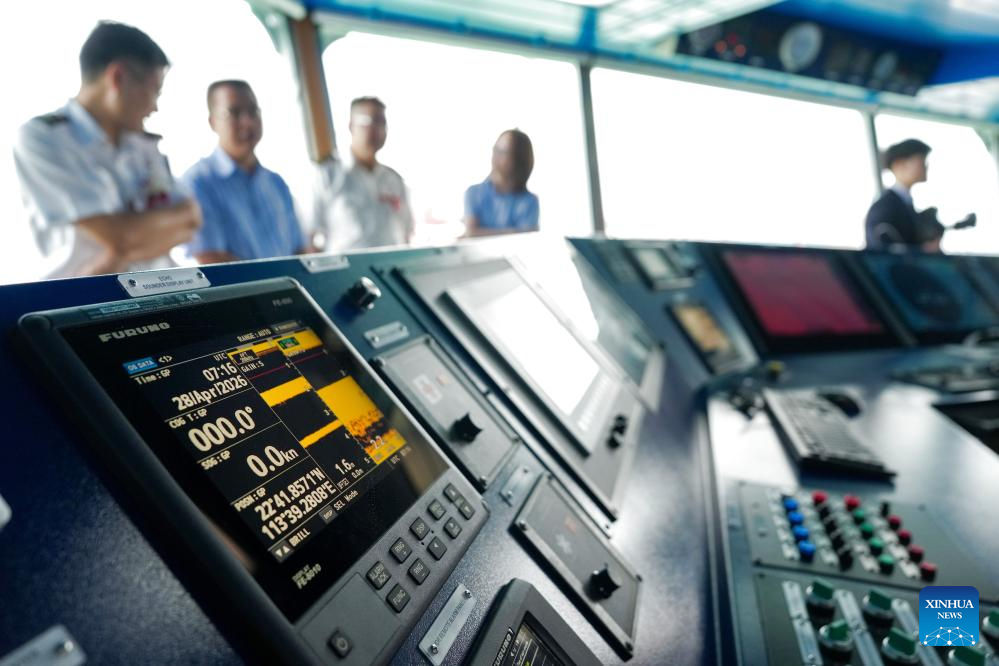
Guests attending the delivery ceremony visit the control room of car carrier Glovis Leader in Guangzhou, south China's Guangdong Province, April 28, 2026. A car carrier with a maximum capacity of 10,800 car equivalent units, described as the world's largest of its kind, was delivered Tuesday in the southern Chinese city of Guangzhou.
The vessel, named Glovis Leader, was built by Guangzhou Shipyard International Company Limited under the China State Shipbuilding Corporation (CSSC), together with China Shipbuilding Trading Co., Ltd. It was delivered to HMM, a leading shipping company in the Republic of Korea (ROK). After delivery, the vessel will be operated by Hyundai Glovis Co., Ltd., a logistics company also based in the ROK. (Xinhua/Wu Lu)
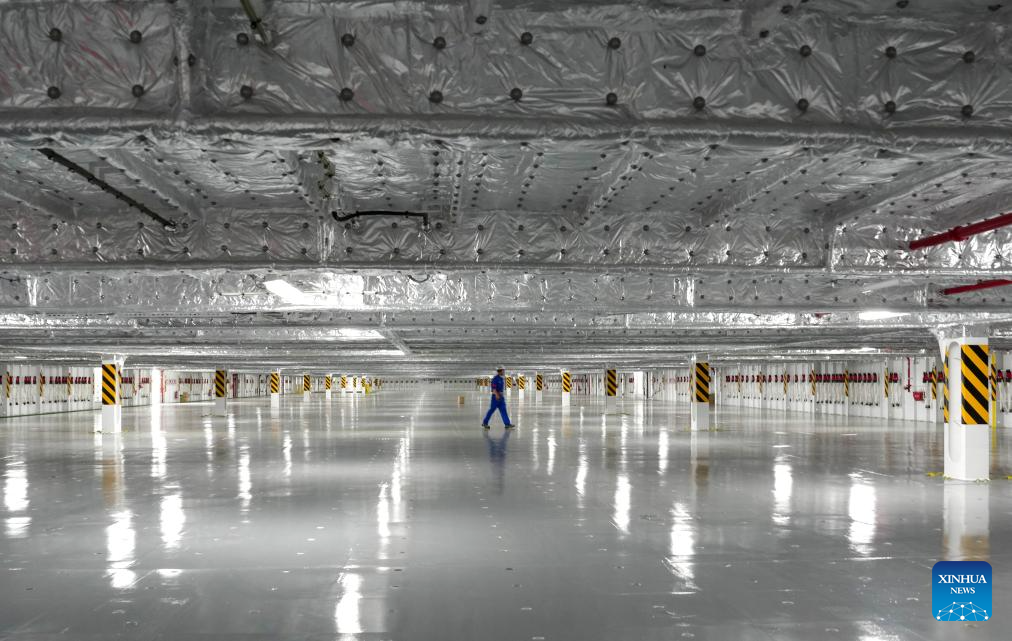
A staff member walks past the 14th story of the carpark on car carrier Glovis Leader in Guangzhou, south China's Guangdong Province, April 28, 2026. A car carrier with a maximum capacity of 10,800 car equivalent units, described as the world's largest of its kind, was delivered Tuesday in the southern Chinese city of Guangzhou.
The vessel, named Glovis Leader, was built by Guangzhou Shipyard International Company Limited under the China State Shipbuilding Corporation (CSSC), together with China Shipbuilding Trading Co., Ltd. It was delivered to HMM, a leading shipping company in the Republic of Korea (ROK). After delivery, the vessel will be operated by Hyundai Glovis Co., Ltd., a logistics company also based in the ROK. (Xinhua/Wu Lu)
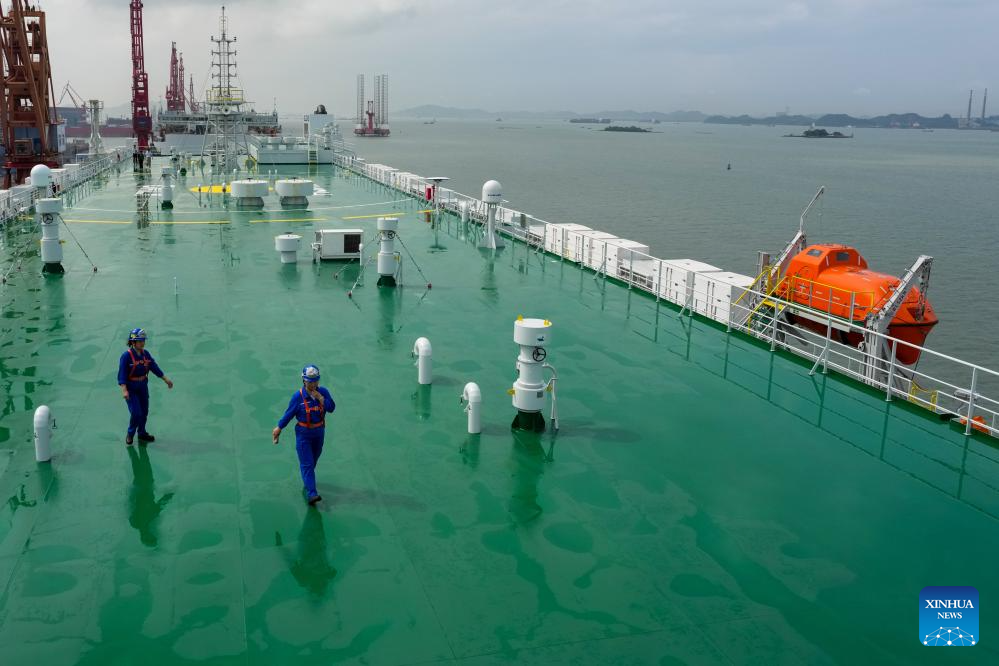
Staff members work on the car carrier Glovis Leader in Guangzhou, south China's Guangdong Province, April 28, 2026. A car carrier with a maximum capacity of 10,800 car equivalent units, described as the world's largest of its kind, was delivered Tuesday in the southern Chinese city of Guangzhou.
The vessel, named Glovis Leader, was built by Guangzhou Shipyard International Company Limited under the China State Shipbuilding Corporation (CSSC), together with China Shipbuilding Trading Co., Ltd. It was delivered to HMM, a leading shipping company in the Republic of Korea (ROK). After delivery, the vessel will be operated by Hyundai Glovis Co., Ltd., a logistics company also based in the ROK. (Xinhua/Wu Lu)
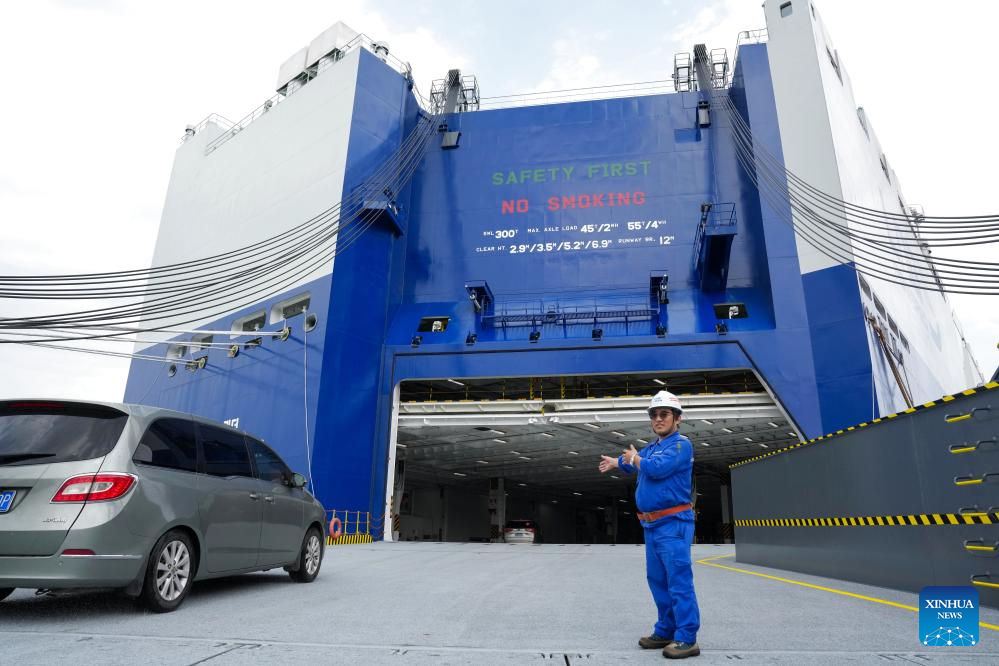
A staff member guides a visiting vehicle onto the car carrier Glovis Leader in Guangzhou, south China's Guangdong Province, April 28, 2026. A car carrier with a maximum capacity of 10,800 car equivalent units, described as the world's largest of its kind, was delivered Tuesday in the southern Chinese city of Guangzhou.
The vessel, named Glovis Leader, was built by Guangzhou Shipyard International Company Limited under the China State Shipbuilding Corporation (CSSC), together with China Shipbuilding Trading Co., Ltd. It was delivered to HMM, a leading shipping company in the Republic of Korea (ROK). After delivery, the vessel will be operated by Hyundai Glovis Co., Ltd., a logistics company also based in the ROK. (Xinhua/Wu Lu)
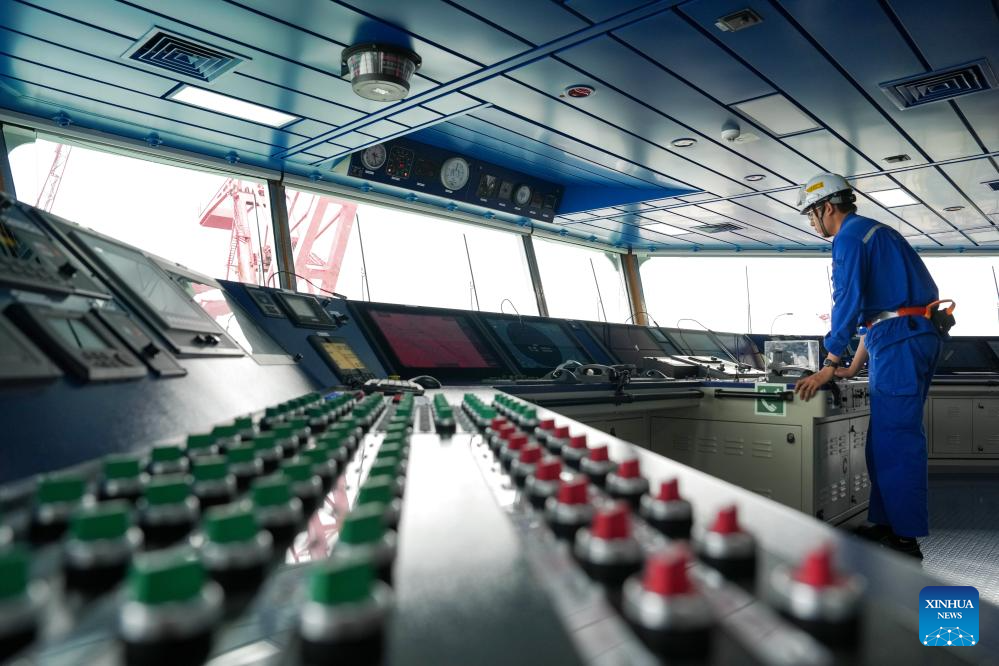
A staff member conducts equipment inspection in the control room of car carrier Glovis Leader in Guangzhou, south China's Guangdong Province, April 28, 2026. A car carrier with a maximum capacity of 10,800 car equivalent units, described as the world's largest of its kind, was delivered Tuesday in the southern Chinese city of Guangzhou.
The vessel, named Glovis Leader, was built by Guangzhou Shipyard International Company Limited under the China State Shipbuilding Corporation (CSSC), together with China Shipbuilding Trading Co., Ltd. It was delivered to HMM, a leading shipping company in the Republic of Korea (ROK). After delivery, the vessel will be operated by Hyundai Glovis Co., Ltd., a logistics company also based in the ROK. (Xinhua/Wu Lu)
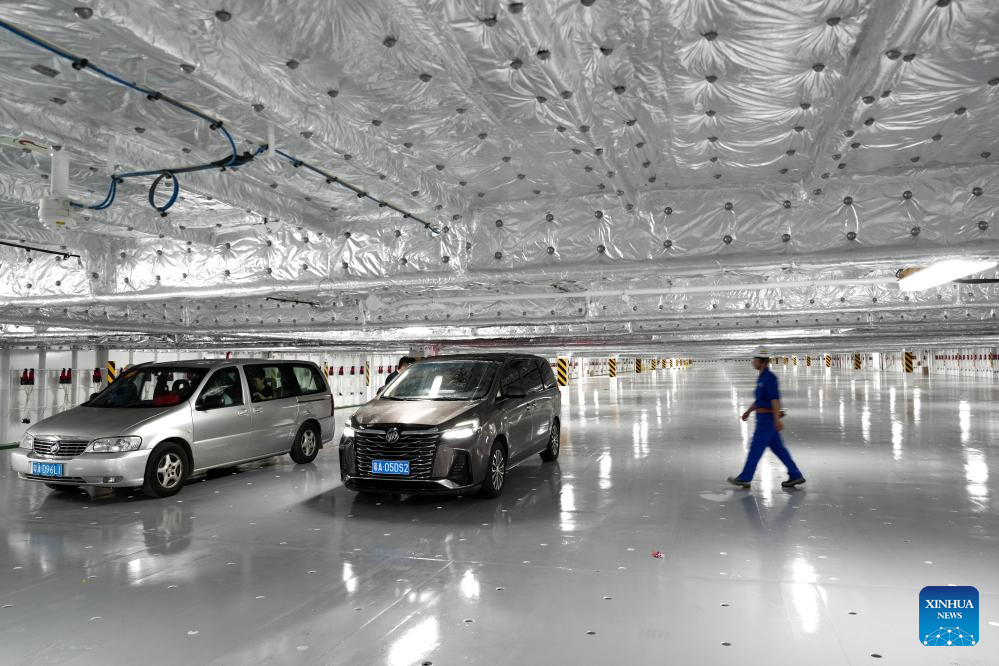
A staff member walks past the 14th story of the carpark on car carrier Glovis Leader in Guangzhou, south China's Guangdong Province, April 28, 2026. A car carrier with a maximum capacity of 10,800 car equivalent units, described as the world's largest of its kind, was delivered Tuesday in the southern Chinese city of Guangzhou.
The vessel, named Glovis Leader, was built by Guangzhou Shipyard International Company Limited under the China State Shipbuilding Corporation (CSSC), together with China Shipbuilding Trading Co., Ltd. It was delivered to HMM, a leading shipping company in the Republic of Korea (ROK). After delivery, the vessel will be operated by Hyundai Glovis Co., Ltd., a logistics company also based in the ROK. (Xinhua/Wu Lu)


