*China has made nationwide reading a national strategy. To enhance institutional support, a regulation on promoting nationwide reading, which took effect in February, designates the fourth week of April as national reading week, observed for the first time this year.
*Many new media formats, including short videos and immersive plays, are fueling this wave of classic reading.
*Engaging in a dialogue with classics is akin to engaging in a dialogue with human nature. The reading of classics by successive generations ensures the inheritance and continuity of civilization.
BEIJING, April 23 (Xinhua) -- Wang Zixuan's fascination with classic Chinese novels has been sparked by a recent trip to a bustling theme park.
During his visit to Kaifeng in central China's Henan Province, the 10-year-old boy watched plays inspired by the Chinese classic "Outlaws of the Marsh." Afterward, he asked his mother to find him audio recordings to delve deeper into the story, and eventually, he lost himself in the print books.
"Every character in the book captivates me," Wang said. "Reading the book after school is the happiest moment of my day, and it allows me to learn about the society and history of that era."
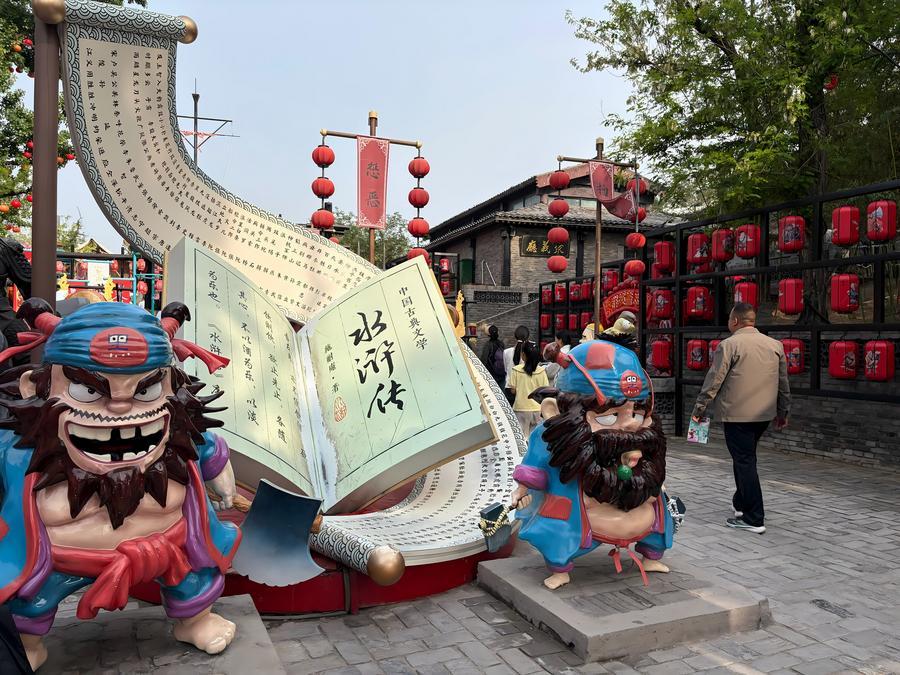
The Wansuishan Martial Arts City is a Disney-style theme park that features many scenes and plays inspired by "Outlaws of the Marsh." Not far from its entrance stands a sculpture of the literary masterpiece written about 700 years ago.
In a nearby pub, a well-known scene of the classic novel was brought to life, as Lin Chong, one of the book's main characters, engaged in a spirited duel with another martial arts master, deftly wielding a stick as he moved with agility. The audience erupted in thunderous applause.
Wang's mom never expected that the trip could transform her child from a passive reader into a bookworm. But after watching the shows, she was impressed as well. "Incredible! They have perfectly recreated the iconic scenes from the original work."
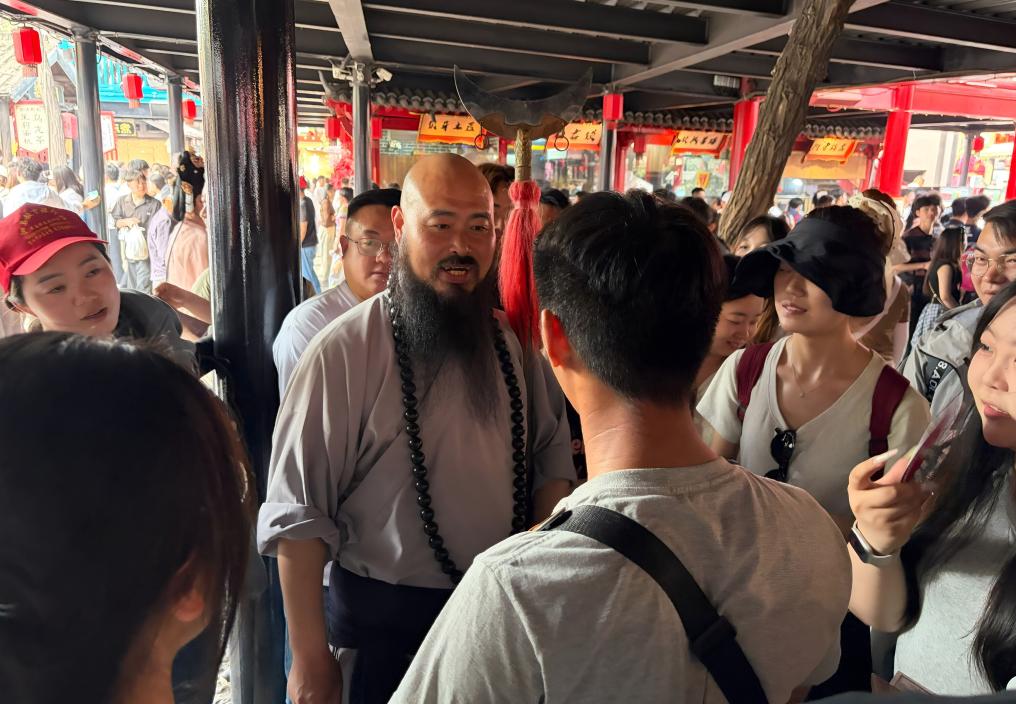
Lin Chong, an official-turned-rebel, was portrayed by 25-year-old Zhao Yunze. "During the early rehearsals, the director told me repeatedly that I wasn't capturing the essence of the character. So I immersed myself in the book and watched the TV adaptation over and over again, delving deep into Lin's personality," he recalled.
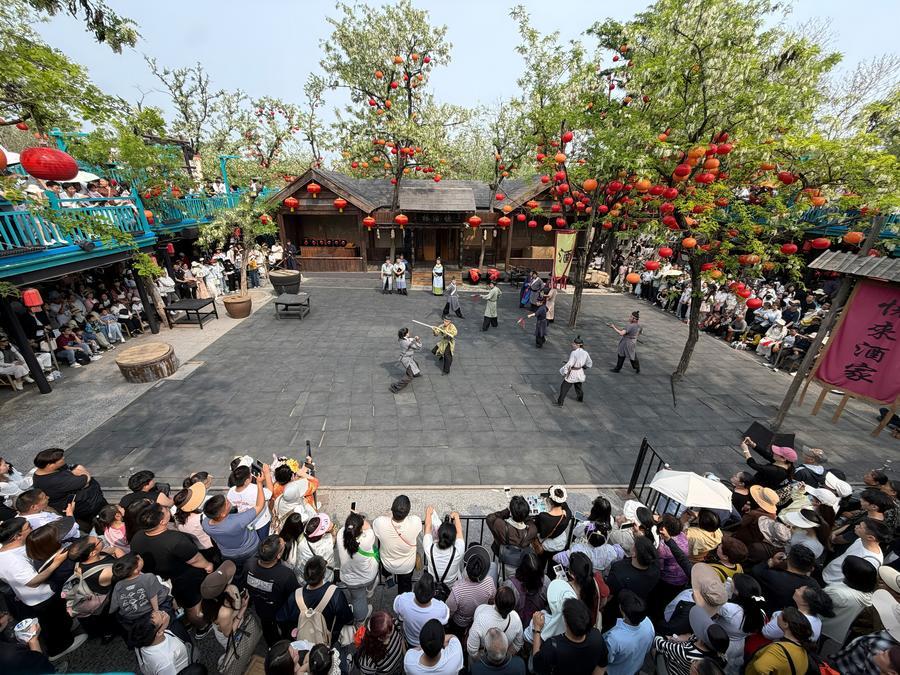
In the theme park, there are over 100 such plays a day, catering to an enthusiastic audience. During the three-day Qingming Festival holiday earlier this month, a show depicting an epic siege in the novel attracted nearly 4,000 spectators per show. It was staged three times daily by over 100 actors, including 20 cavaliers.
It represents a new approach to inspire youngsters to read the sometimes obscure literary classics in the era of short videos. The Wansuishan park has become a social media sensation with vibrant live-action shows and bubbly character performers. Still, many visitors like Wang said such an "influencer hotspot" has nevertheless motivated them to dive into the original texts.
"Our programs aim to honor the original work while ensuring that audiences can easily grasp and connect with the story," said Yu Liuyi, director of the performances. "Our performance style is more like a cinematic presentation than a traditional stage play. And we enhance the visual impact with special effects like pyrotechnics."
More than 500 kilometers away from Kaifeng, another attraction in Langfang of north China's Hebei Province draws inspiration from yet another Chinese magnum opus and has amassed 14 million visits since its launch in 2023.
Named "Unique Dream of Red Mansion," this theater complex features 21 innovative plays, including those inspired by the seminal 18th-century book "A Dream of Red Mansions" and independent plays. In one theater, the audience members stand on a stage while characters from the book observe them from spectator seats as if gazing upon the afterlife, while in another show, many female figures in the novel confront the author over the cruel twists of fate he penned for them.
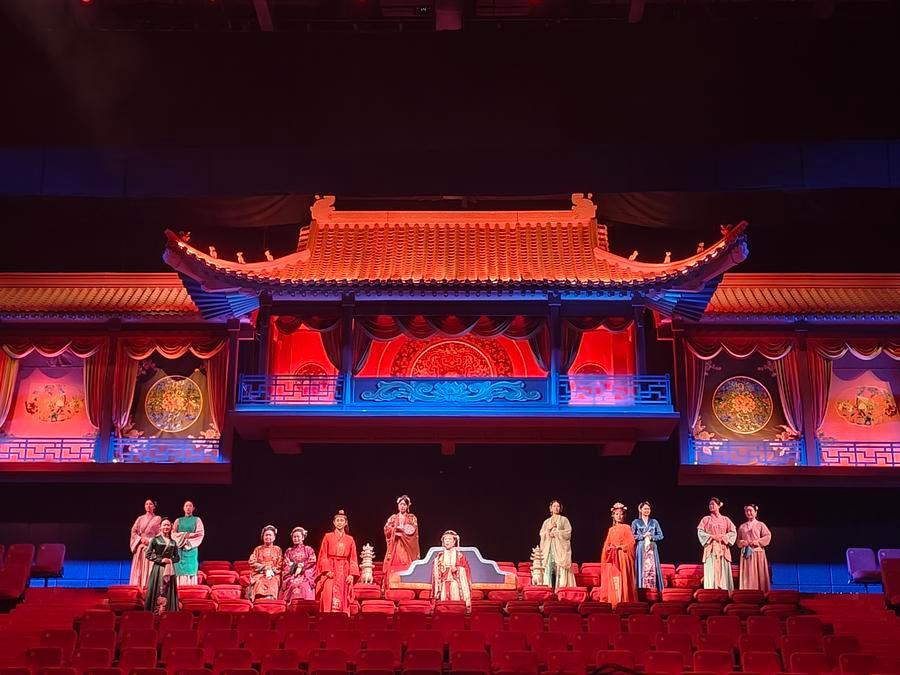
Among the visitors on Tuesday were about 270 tenth-grade students from the Hua Chen School in the neighboring city of Tianjin, who are currently studying the novel that chronicles the rise and fall of an aristocratic Chinese family. Yang Zhuqing, 16, was visiting the theater complex for the second time.
"I used to find the book hard to comprehend, but the plays here helped me better understand the characters," she said. "Now we even playfully liken our classmates to characters from the book."
Han Shiyan, a Chinese-language teacher at the school, believes that the social atmosphere for reading classics is improving, noting that schools are encouraging students to read classic literature. She said that a dedicated class on the novel is held every two weeks, continuing for an entire semester.
Many new media formats, including short videos and immersive plays, are also fueling this wave of classic reading. Han said such content can spark interest, encouraging more children to pick up physical books. "Once they become interested in a certain story, they will probably explore the entire book," she said.
Wang Zuoquan, who is in charge of the "Unique Dream of Red Mansion" brand, told Xinhua that they have forged partnerships with more than 100 schools, resulting in approximately 150,000 visits from teachers and students.
He noted that one primary objective of this attraction is to ignite people's interest in the original work. "Through our performances, we plant a seed in the hearts of the audience. The director of the plays envisions these theaters as a starting point, encouraging audiences to open the book once again," he said.
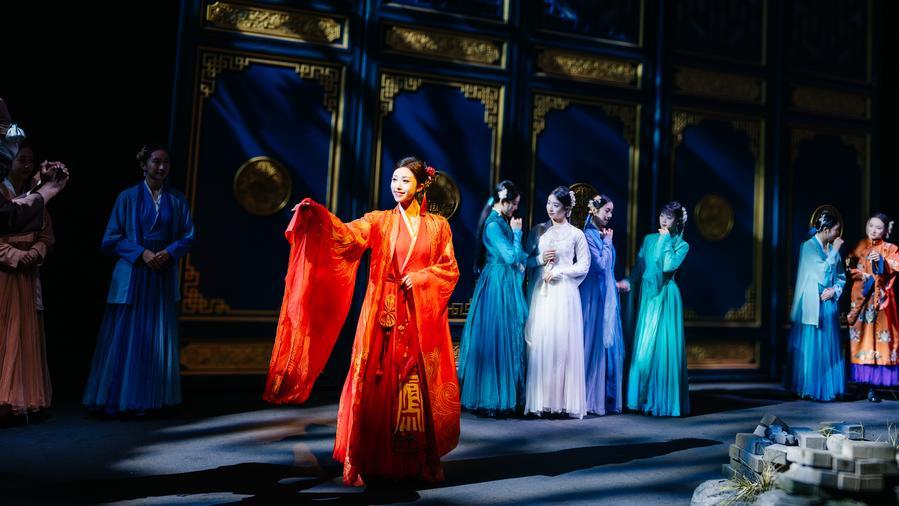
China has made nationwide reading a national strategy. In the Outline of the 15th Five-Year Plan (2026-2030) for national economic and social development, it is stated that the country will further promote nationwide reading to build China into a nation of avid readers.
To enhance institutional support, a regulation on promoting nationwide reading, which took effect in February, designates the fourth week of April as national reading week, observed for the first time this year.
Hui Dong, an associate professor at the School of History and Culture at Henan University, agrees that performance-based attractions help with the reading trend, as they translate static texts into dynamic experiences, rendering ancient books more approachable and comprehensible to modern readers.
"This is mutual empowerment between tourism and literature," Hui said.
"Classics are those that transcend their times and touch upon universal human nature," said Wang Zuoquan. "Engaging in a dialogue with classics is akin to engaging in a dialogue with human nature. The reading of classics by successive generations ensures the inheritance and continuity of civilization."
At the end of a 65-minute play at the "Unique Dream of Red Mansion," characters from the original novel appeared on the stage to remind readers to go back to the original book.
Dowager Lady Jia, a pivotal character in "A Dream of Red Mansions," thanked the audience: "We have lived for 270 years (since the book was written). We will continue to be alive as long as you keep reading this book." ■
(Reporting by Bai Xu, Cheng Lu, Yao Yuan, Ren Zhuoru and Ren Liying.)