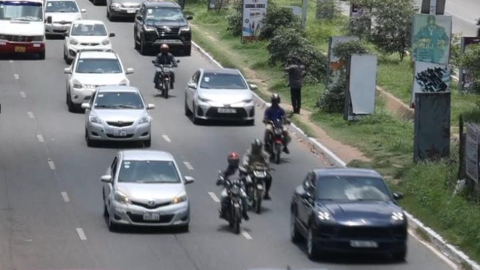
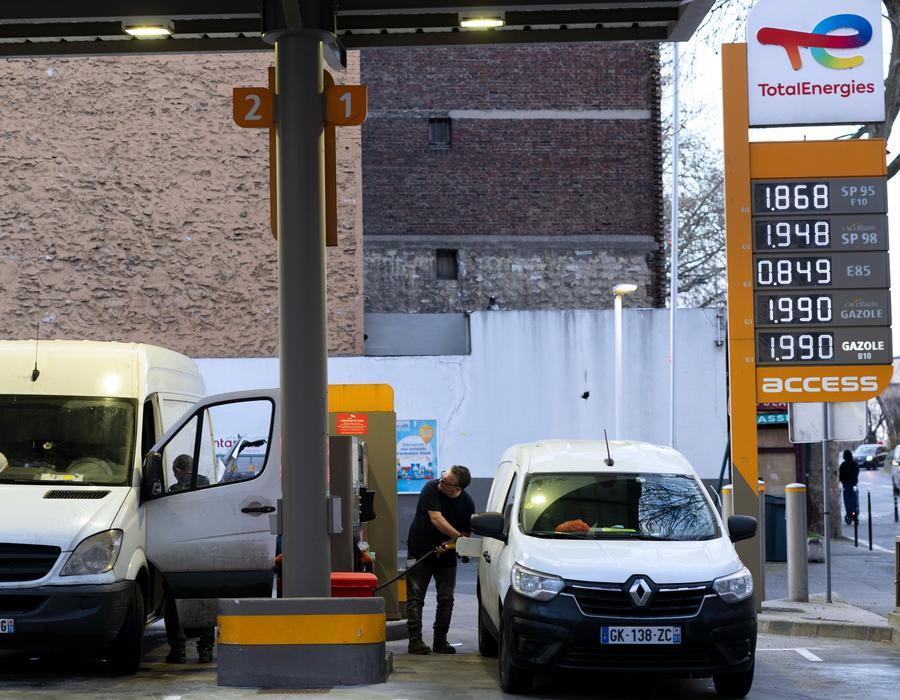
It takes time for the global oil market to return to normal prices amid the Iran war and the Hormuz blockade. For the second time in less than five years, with no end in sight yet for the Ukraine crisis, Europeans have recognized the great price of Europe's dependency on imported fossil fuels.
BRUSSELS, April 23 (Xinhua) -- How to bring down the high energy costs in European Union (EU) countries? This topic is expected to dominate most discussions at the informal meeting of heads of state or governments scheduled for Thursday and Friday in Nicosia, Cyprus, amid a continued blockade of the Strait of Hormuz that transports roughly a fifth of the world's oil and gas supplies.
Although Washington's indefinite extension of a ceasefire with Tehran allows for more diplomatic efforts toward a political settlement of the strait blockade and the war in the Middle East, it takes time for the global oil market to return to normal prices even after peace is restored. Moreover, for the second time in less than five years, with no end in sight yet for the Ukraine crisis, Europeans have recognized the great price of Europe's dependency on imported fossil fuels.
One day ahead of the Cyprus meeting, the European Commission on Wednesday proposed a package of measures aimed at protecting European households and industries from the energy crisis and accelerating the shift to clean, homegrown energy.
Since the escalation of the conflict in the Middle East, the 27-member EU has spent an additional 24 billion euros (28.2 billion U.S. dollars) on energy imports due to higher prices, without receiving any extra energy, the commission said in a statement.
REDUCING ENERGY DEPENDENCE
The new EU package, called "AccelerateEU," includes both short-term and structural measures to reduce dependence on volatile fossil fuel markets and strengthen Europe's resilience through homegrown clean energy and electrification.
The measures include closer coordination among members on refilling underground gas storage, flexibility in filling rules and any exceptional releases of oil stocks. Monitoring will be strengthened through a Fuel Observatory to be established to track EU production, imports, exports and stock levels of transport fuels.
Targeted income support schemes, energy vouchers, social leasing schemes and lower excise duties on electricity for vulnerable households are on the list of household shield options. National governments can also be allowed extra flexibility to support the most exposed economic sectors under a State Aid Temporary Framework.
An Electrification Action Plan expected to be unveiled by the summer, including an electrification target and measures to remove barriers in the industrial, transport and building sectors, will also be discussed by leaders at the informal meeting called by the European Council.
European Commission President Ursula von der Leyen said earlier this month that EU legislative proposals on electricity taxes and grid charges are expected to be presented in May.
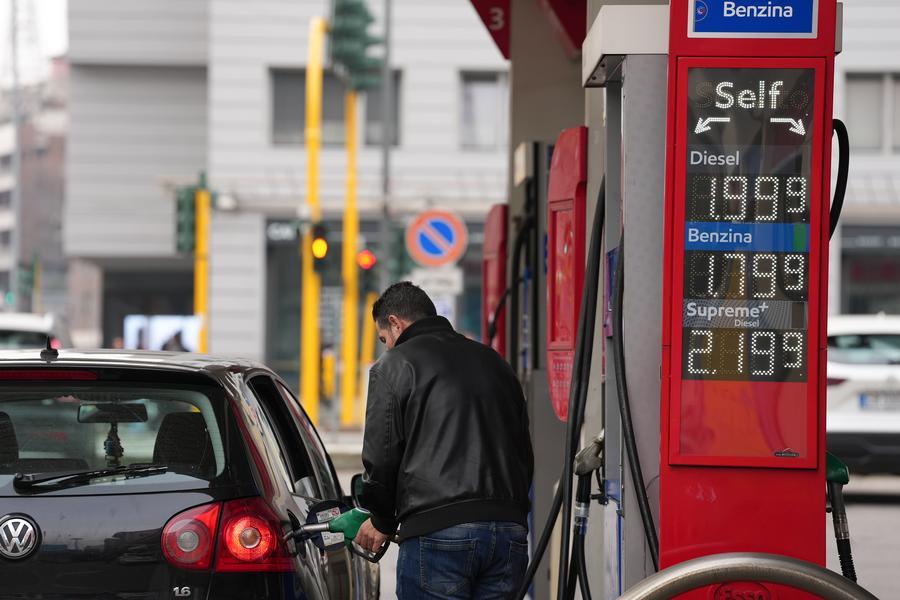
FACING ENERGY IMPACT FROM MIDEAST CONFLICT
"We will address the challenging geopolitical environment and Europe's response to it," European Council President Antonio Costa said in his invitation letter, speaking of the Cyprus meeting's focus.
EU members have rejected involvement in the Iran war after the United States and Israel jointly launched military strikes on Iran in late February. As part of the EU's latest efforts to help de-escalate tensions in the Middle East, French President Emmanuel Macron on Tuesday urged Israel to "renounce its territorial ambitions" in its parallel conflict in Lebanon.
Faced with mounting pressure, Macron warned that the EU could reconsider its trade relations with Israel if the latter's policies remain unchanged. "War must not be allowed to resume," Macron noted while calling for extending negotiations between Washington and Tehran.
Iran has demanded the inclusion of Lebanon in its ceasefire with the United States as a precondition for peace talks, a second round of which is yet to begin.
Earlier in April, Von der Leyen said that there could be no stability in the Middle East while Lebanon is in flames, adding that restoring freedom of navigation in the Strait of Hormuz is of "paramount importance." She noted that the energy crisis arising from tensions in the Middle East has had an enormous economic impact on the EU.
PLANNING LONG-TERM EU BUDGET
Costa said the EU summit in Cyprus, which currently holds the rotating EU presidency, comes at a crucial moment for the EU agenda as "it will provide a moment for coordination and further political guidance in light of the ongoing crisis in the Middle East and its impact on European economies; and it will be an important milestone on the way to an agreement on the next Multiannual Financial Framework (MFF)."
He further said that Friday's working session will be dedicated to an open discussion on the EU's MFF for 2028-2034, "to prepare the ground for an agreement by the end of this year."
The seven-year framework regulates the EU's annual budget, focusing on EU competitiveness, security, defense and support for Ukraine in the next phase.
Following the meeting, EU leaders will meet with representatives from Egypt, Jordan, Lebanon and Syria on Friday afternoon to discuss shared challenges and explore cooperation opportunities.
Cyprus has deemed strengthening EU ties with the Middle East as a key priority for its EU presidency. ■