
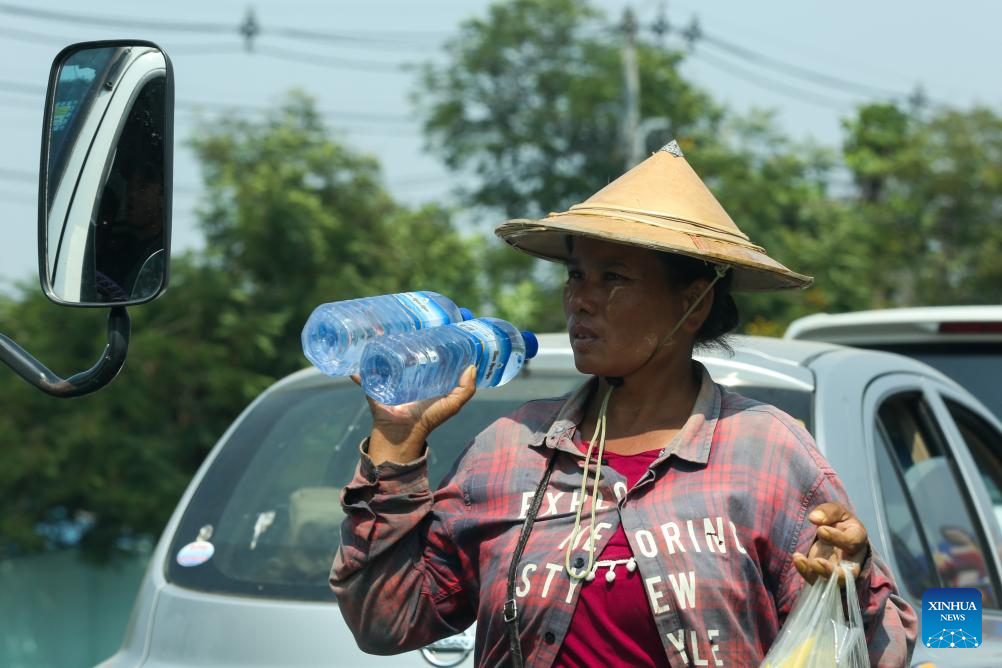
A vendor sells bottled drinking water in Yangon, Myanmar, April 22, 2026. (Xinhua/Myo Kyaw Soe)
YANGON, April 22 (Xinhua) -- At 1 p.m. local time on Wednesday, when the sun hung heavy over Yangon and the heat pushed most people indoors, U Soe Nyunt sat on his trishaw counting a day's earnings that no longer added up.
Sweat beaded on his forehead and ran down his temples. "The weather is very hot. Most people don't go outside during the hottest hours," he said, wiping sweat from his face.
For the 73-year-old trishaw driver, the absence of customers was more than a nuisance -- he said the heat had cut his income by roughly one-third.
Despite fewer passengers in the punishing sun, he said he had no choice but to keep working year-round to make ends meet.
When the heat became unbearable, he sought refuge under trees. "For the poor like us, the shade of trees is the best during the hottest time," he said.
Across Myanmar, this had become a shared reality. In the Southeast Asian country, April and May are typically the hottest months, as temperatures spike before the monsoon season begins. On Tuesday, temperatures climbed above 38 degrees Celsius in Yangon and exceeded 44 degrees in central regions. Daily life was being reshaped by the heat.
In downtown Yangon, 70-year-old U Than Nyunt sat under a tree, wearing a hat and holding an umbrella. He said he was resting in the shade because of the heat.
"At home, the rooms that do not have air conditioners are very hot. I have to stay on the veranda using hand fans when it is very hot, and there is no electricity," he said.
For 60-year-old street vendor Daw Nyunt Myaing, the heat had also taken a toll on her livelihood as sales were low during extremely hot weather. She added that she had to drink plenty of water and apply Thanakha (a traditional yellowish-white paste made from ground bark) to cope.
Younger workers were not spared. Aung Wai Phyo, a 23-year-old deliveryman in Yangon, said he had to take care of his health by staying hydrated and getting enough sleep.
But he acknowledged that rest came at a cost. He said that even when his body demanded a break, he had to keep working to maintain his income. "If I take a rest, my income could reduce. So, I have to work even in the hottest hours while taking care of my health as well," he said.
In Myanmar's central dry zone, where temperatures were often the highest, daily routines had shifted even more sharply.
In Magway region's Minbu town, temperatures exceeded 43 degrees Celsius on Tuesday. Ko Ko Maung, a 36-year-old resident of Minbu, said residents sprayed water around their homes and stayed under shady trees to cope.
"Now, we cannot work in the afternoon until 4 p.m. We have to take electrolyte drinks when it is very hot," he said, adding that elderly residents choose to go to heat relief centers to escape the extreme temperatures.
According to meteorological reports, many regions across the country have experienced high temperatures, surpassing 40 degrees Celsius in recent days, with conditions expected to persist over the next 10 days
Several towns in central Myanmar had recently been listed among the hottest places in the world, prompting authorities to open relief shelters since early April, particularly for vulnerable groups.
U Hla Tun, a director from Myanmar's Department of Meteorology and Hydrology, told Xinhua on Tuesday that rising temperatures were increasingly linked to climate change.
Even as temperatures soared, he warned of strong winds, lightning, and isolated rain, which often follow extreme heat during the hot season.
The country's Ministry of Health also issued guidelines advising people to stay in cool, shaded, and well-ventilated areas, avoid strenuous activity during peak heat, and take extra precautions for children, the elderly, and those with chronic illnesses. ■
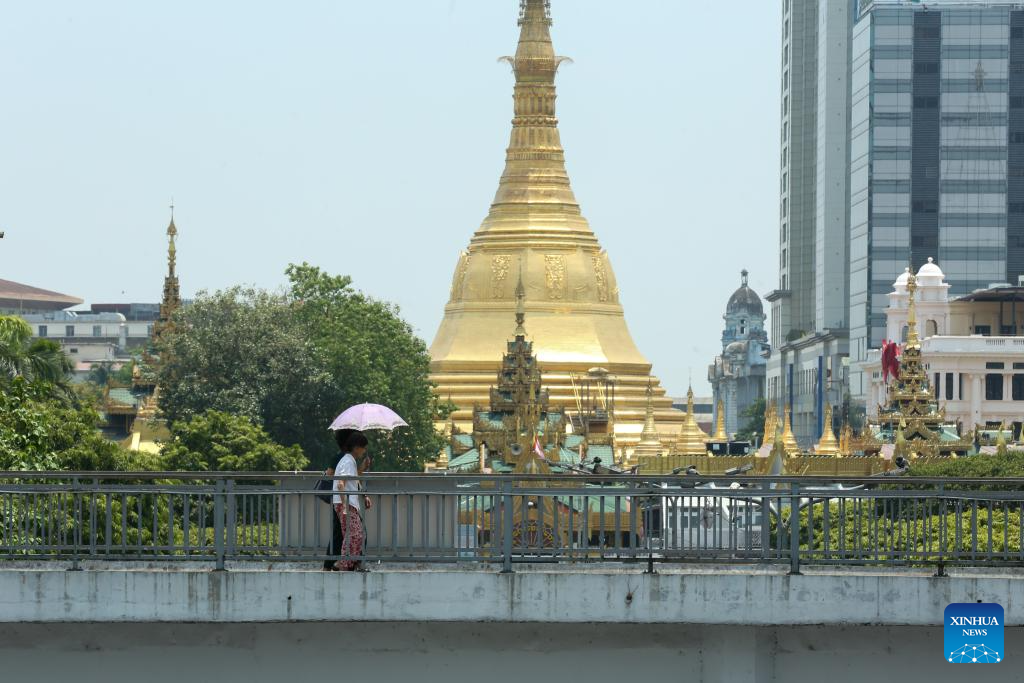
Pedestrians shield themselves from the sun with an umbrella in Yangon, Myanmar, April 22, 2026. (Xinhua/Myo Kyaw Soe)
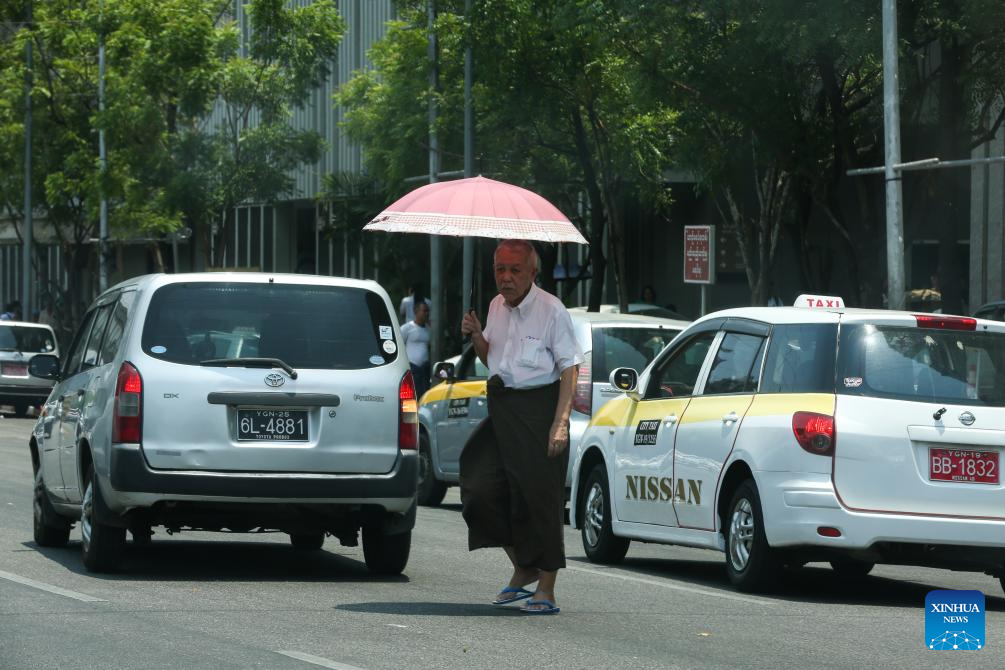
A man shields himself from the sun with an umbrella in Yangon, Myanmar, April 22, 2026. (Xinhua/Myo Kyaw Soe)


