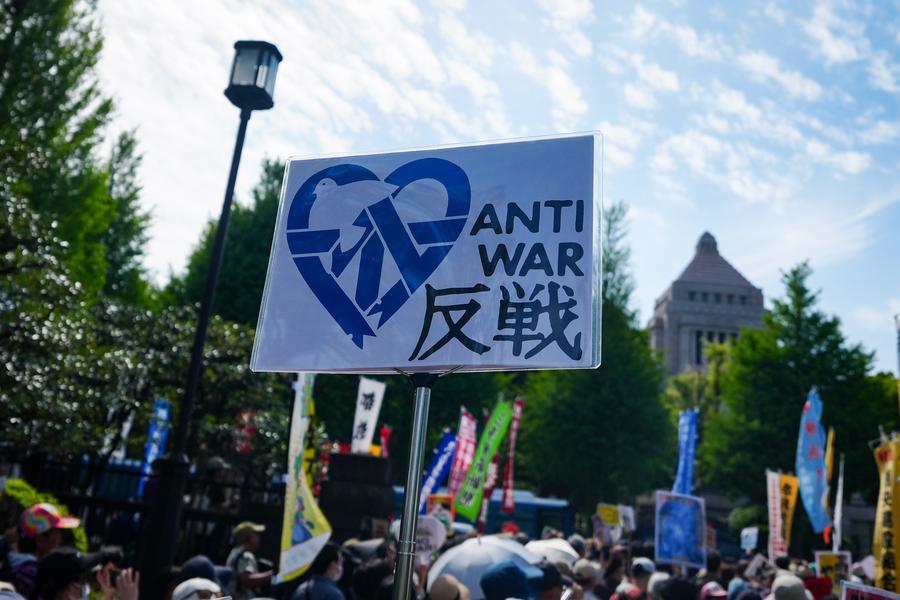
MANILA, April 21 (Xinhua) -- Japan is undermining regional stability by returning its combat troops to Philippine soil for the first time in 81 years since the end of World War II, a Filipino expert said.
"Japan's right-wing government towards aggressive militarization is a foreboding of imminent dangers to the peace, stability and prosperity of the Asia-Pacific region, including the Philippines," Herman Tiu Laurel, president of a Manila-based think tank, told Xinhua in an exclusive interview.
As the Philippines and the United States kicked off their annual Balikatan military exercises on Monday, Japan, no longer merely an observer, has dispatched over 1,000 combat troops to participate in the largest-ever Philippines and U.S. military drills, in which over 17,000 troops are engaged.
"The return of Japan's combat forces to the Philippines poses blatant challenges to the outcomes of the World Anti-Fascist War victory," Laurel said.
Following the outbreak of WWII, Japan occupied the Philippines in 1942. Since then, the Japanese forces committed a litany of atrocities, including the Manila Massacre, the Bataan Death March and the forced recruitment of "comfort women," a system of sexual slavery, claiming the lives of over a million Filipinos.

Laurel noted that the Japanese authorities have recently actively demanded that the Self-Defense Forces be enshrined in the Constitution, while continuously expanding its armaments and advocating possession of nuclear weapons.
"These signs of the resurgence of right-wing forces could become a 'ticking time bomb' for regional security," Laurel said. He added that Japan's expansionism is laid bare, noting that its plutonium stockpile is sufficient to produce 5,500 nuclear warheads, and its draft defense budget was set at a record 58 billion U.S. dollars for fiscal 2026.
"In fact, the rise of Japan's neo-militarism is part of its collusion with the United States to pursue imperialist expansion in the Asia-Pacific," he said, adding that Japan serves as Washington's proxy to contain emerging economies in the Asia-Pacific region.
Commenting on recent moves, such as the Philippines' signing of a defense pact with Japan and consenting to the United States deploying more missiles and building fuel depots, Laurel warned that Filipinos should remain vigilant.
"The U.S. and Japan are shaping the Philippines into a 'frontline position' against other countries. This exposes Filipinos to the risk of conflicts and seriously endangers regional stability," he said.
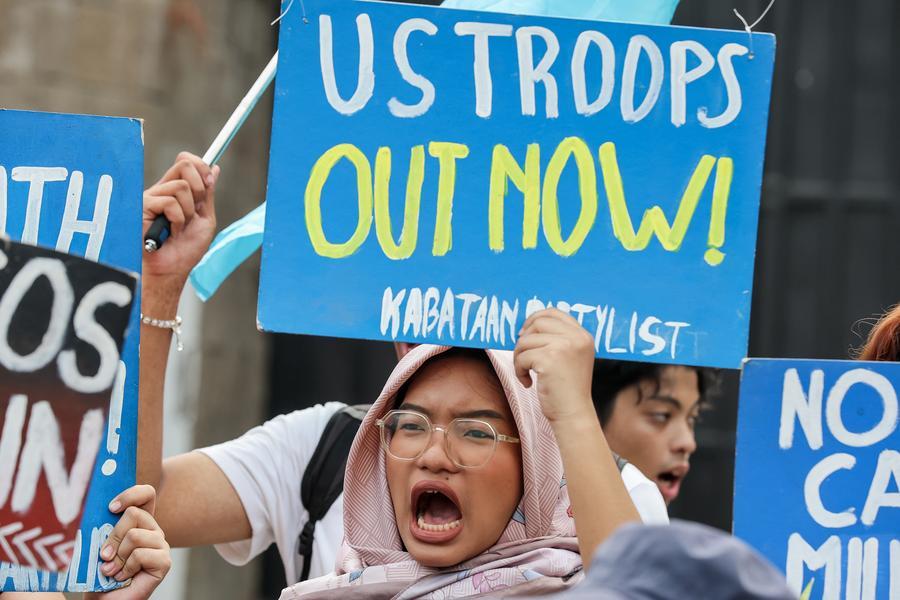
Laurel called on the Filipino people to remember history, firmly safeguard national and regional peace, and cherish relations with China, as their bilateral friendship has historical roots.
After the Japanese occupation in WWII, overseas Chinese in the Philippines established guerrilla forces and waged an arduous struggle against Japanese troops. Over 70 members of the Chinese guerrillas sacrificed their lives during the fight.
Laurel said that China remains a pragmatic and responsible partner. He pointed out that the Philippines has an urgent need to deepen cooperation with China in fields such as energy, tourism, trade and agriculture.
"The Philippines should draw on China's experience -- channeling its resources fully into economic development -- and pursue modernization through peaceful development," Laurel emphasized.
"We must distinguish our genuine friends and uphold an independent foreign policy. Any attempt to revive militarism and undermine regional stability is bound to fail," he added.■