
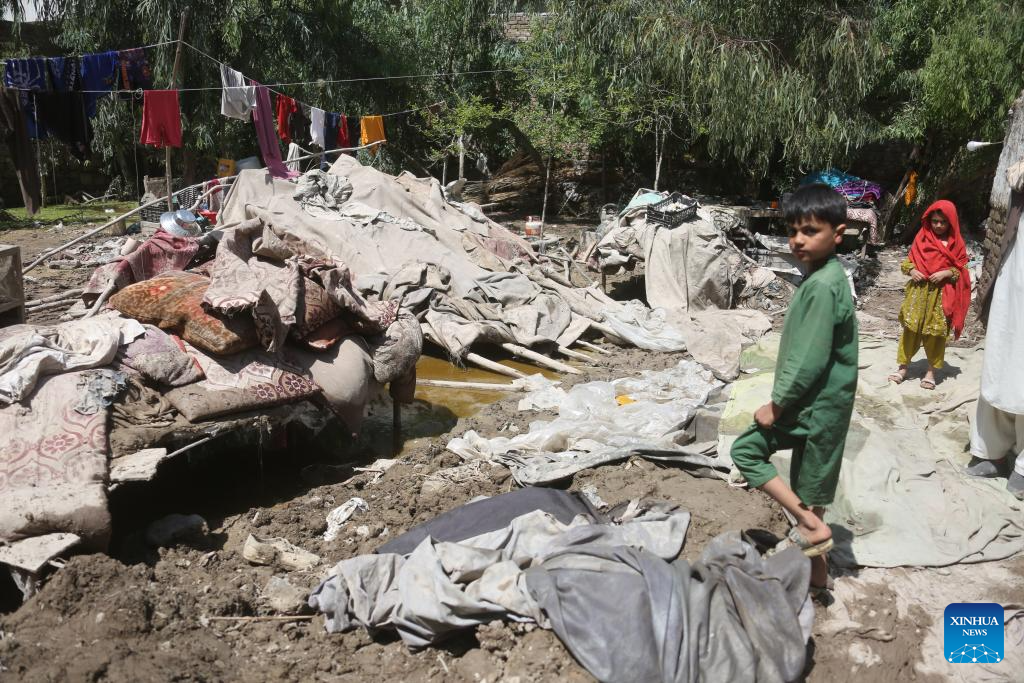
Kids clean up outside their homes after flooding in Nangarhar province, Afghanistan, April 13, 2026. (Photo by Saifurahman Safi/Xinhua)
JALALABAD, Afghanistan, April 21 (Xinhua) -- "We have nothing. We don't have a house to live in, and we don't have anything to wear either," said Shir Khan, standing amid the mud and silt that now fill his courtyard in a village on the outskirts of Jalalabad city, the capital of eastern Afghanistan's Nangarhar province. "The flood destroyed everything."
The raging waters not only swept away all the family's household belongings but also destroyed every room and the kitchen. Shir Khan, who once supported his eight-member family by renting a rickshaw, is now desperately planning to rebuild a few basic living rooms so his family can have shelter again.
For now, they are forced to spend their days and nights with great difficulty in their neighbors' homes. "Building one room costs around 200,000 to 300,000 afghanis (about 3,120 to 4,680 U.S. dollars), and we cannot afford to construct it," Shir Khan told Xinhua inside his full silt courtyard in Zengawee area, Jalalabad city, about 120 km east of the capital Kabul.
Just a short distance away, landowner Haji Sayed Ghani watched the same scene of destruction. His family of 10 depends entirely on the wheat harvest from his fields for their livelihood.
The crop was only weeks away from being gathered when the floods struck. "All the people were waiting for the harvest from the fields," he said. "The flood has caused a lot of damage; all the agricultural lands have been destroyed." "All the people are poor; no one can solve their problems on their own," Ghani said.
Provincial disaster management officials in Nangarhar confirm that the recent floods have killed 15 people and injured more than 80 others in the province, while destroying hundreds of acres of farmland.
Reza Osmani's losses are even heavier. The flood destroyed both his house and his agricultural land. "Water came from several directions and shattered the agricultural lands and houses," he said.
Like his neighbors, Osmani had pinned all his hopes on this year's harvest to feed his family of 9 for the coming year. "We don't have any other income; our income is from agriculture. The flood destroyed our agriculture."
He explained that every family affected in the area is trying to repair their homes and fields, but without outside help it is impossible. "About 250 to 300 residential houses have been submerged and 600 to 700 acres of agricultural land have been smashed," Osmani said.
More than 73,000 people have been affected by recent floods in 31 out of the country's 34 provinces, according to the United Nations Population Fund. Displaced families, particularly women and girls, face acute challenges in accessing healthcare, while immediate needs for food, emergency shelter, cash assistance and psychosocial support remain largely unmet.
Meanwhile, official data from Afghanistan's National Disaster Management Authority paints an even graver picture nationwide: natural disasters such as heavy rain, windstorms, earthquakes, and landslides have killed 189 people and injured 253 others in the past three weeks. The disasters have completely or partially destroyed more than 7,000 residential homes and washed away over 21,000 acres of agricultural land in one of the world's most vulnerable countries. ■
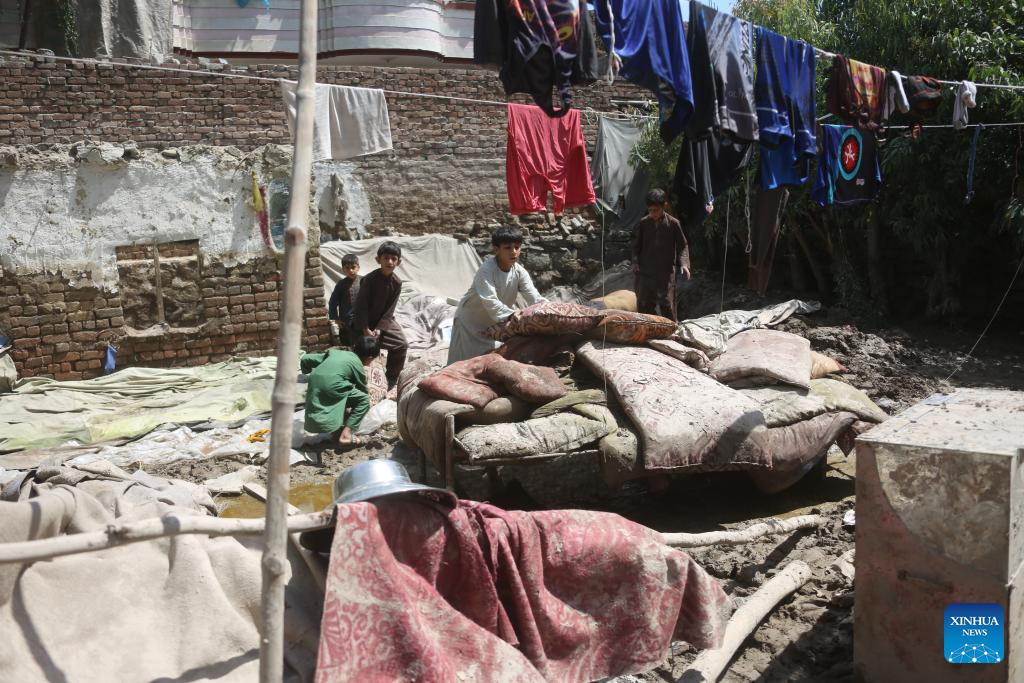
Kids clean up outside their homes after flooding in Nangarhar province, Afghanistan, April 13, 2026. (Photo by Saifurahman Safi/Xinhua)
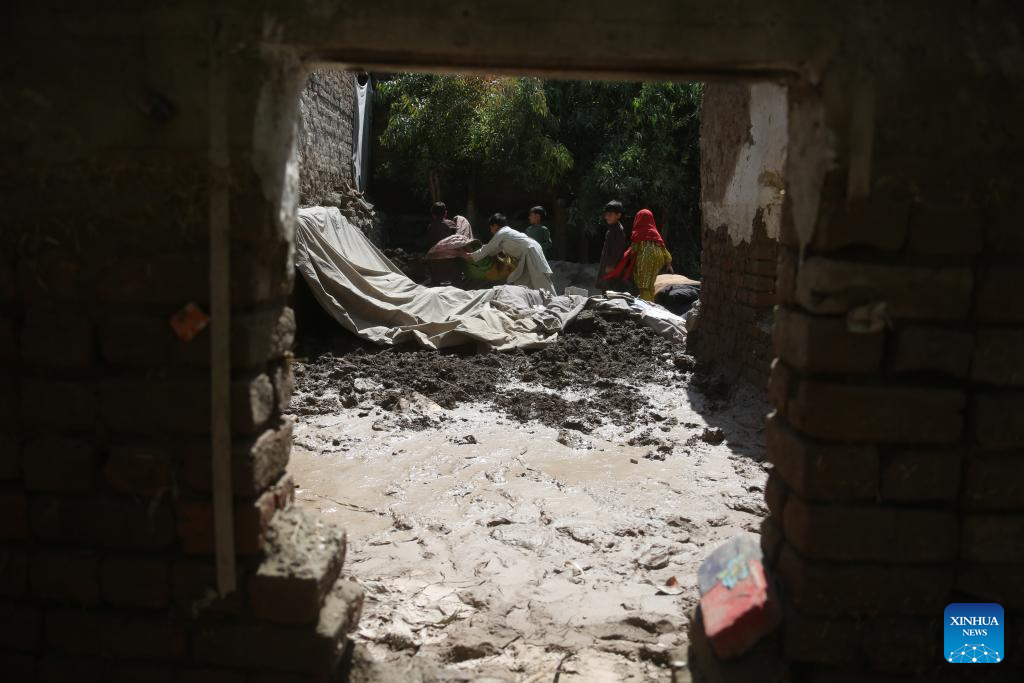
Kids clean up outside their homes after flooding in Nangarhar province, Afghanistan, April 13, 2026. (Photo by Saifurahman Safi/Xinhua)
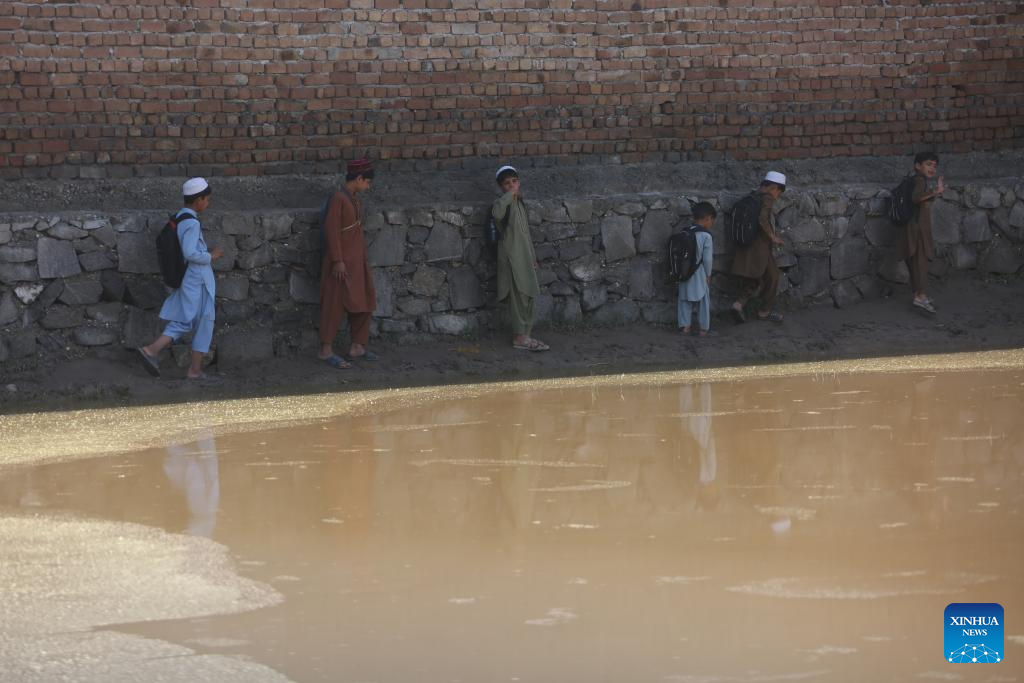
Kids walk by flooded areas in Nangarhar province, Afghanistan, April 13, 2026. (Photo by Saifurahman Safi/Xinhua)


