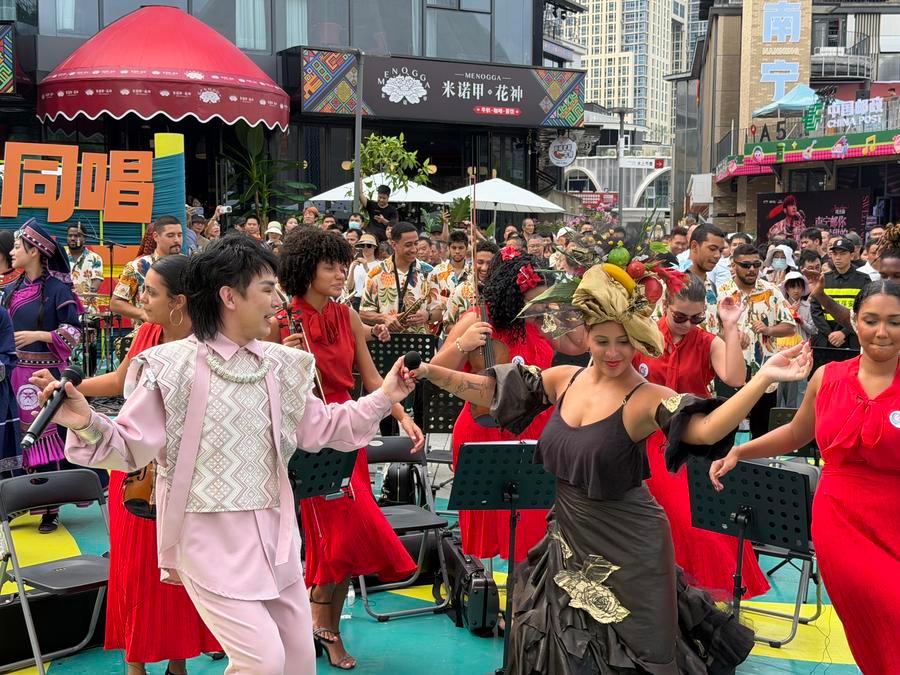
NANNING, April 21 (Xinhua) -- A Chinese folk song echoed across the stage, its melody carrying through the air. Drawn in by the rhythm, Brazilian musicians began to dance, while Chinese participants stepped closer to the stage. Within moments, a circle formed, and the crowd swayed together to the same beat.
The scene unfolded in Nanning, capital of Guangxi Zhuang Autonomous Region in south China, where the Copacabana Fort Orchestra took part in a cultural exchange program during the "Sanyuesan" festival, a traditional ethnic and regional celebration known for its singing and communal gatherings.
Founded in Rio de Janeiro, the Copacabana Fort Orchestra blends classics with the vibrant rhythms of Brazil. Márcia Melchior, the orchestra's artistic director, believed this China tour went beyond performance and expectations.
"Music is universal. It unites people. You don't need to speak the same language to feel it in your heart," she said, noting that music is the natural starting point for deeper international understanding.
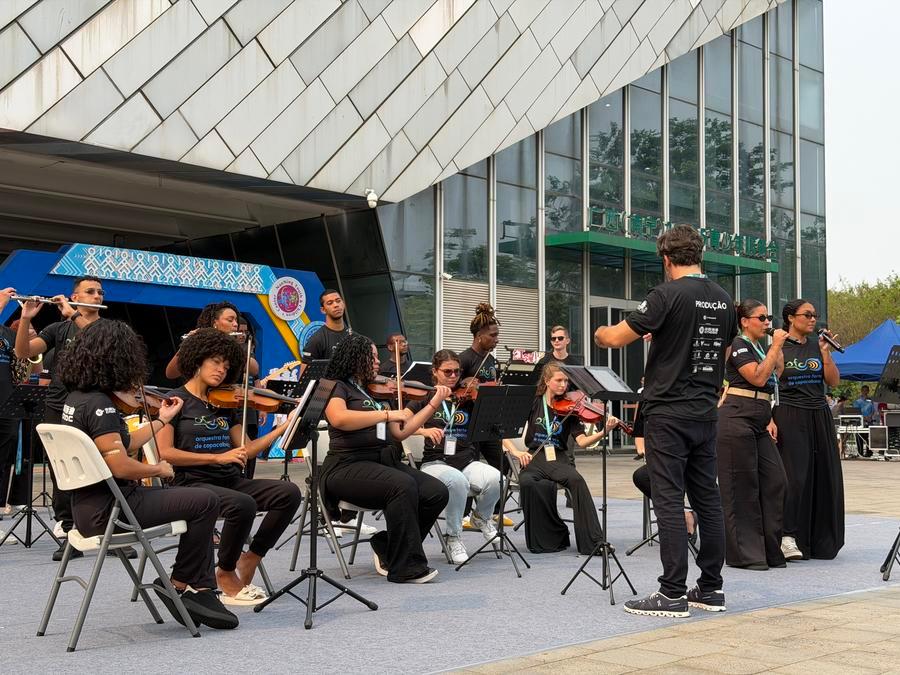
Coinciding with the China-Brazil Year of Culture 2026 and at the invitation of the Chinese People's Association for Friendship with Foreign Countries, the visit was designed to foster cultural exchange between the two nations.
Throughout the event, the orchestra alternated between Brazilian classics and well-known Chinese songs. The selection carried symbolic weight: "Tico-Tico no Fubá" channels the festive Brazilian spirit, while "Flor de Lis" serves as a counterpart to the Chinese folk song "Mo Li Hua" (Jasmine Flower), creating a floral-themed dialogue between the two cultures.
For singer Michelly Gondim, performing a song in Chinese presented a challenge she had to master in a short time. "It was an incredible experience. Sharing these cultural elements with Chinese artists is truly special," she said.
During the program, the Brazilian musicians performed alongside children dressed in the traditional attire of Guangxi ethnic groups. The Brazilian musicians played and sang, while the children provided the harmonies.
"I was enchanted watching the children singing, participating, and joining in with us," Gondim said, highlighting the warm reception from the audience and the sense of closeness forged through music.
Violinist Bruna Zurmele recalled spending time with the children during rehearsals and how easily they picked up Brazilian rhythms. She also mentioned a boy who even played a pandeiro (a Brazilian hand drum) with the orchestra, keeping precise time with samba and baião rhythms, a moment she said left a lasting impression.
In the festive atmosphere of "Sanyuesan," artists and tourists from different countries shared the stage with performers singing traditional songs from Guangxi. The line from a local traditional song, "from one side they sing, from the other they answer," aptly embodied the symbolic meaning of this exchange.
Bruna said Guangxi impressed her with its scenery, adding that it reminded her in some ways of Rio de Janeiro, which gave her an immediate sense of closeness. She also highlighted the audience's reception, emphasizing how warm and communicative the local residents were, always showing interest whenever they saw the group playing, singing or dancing.
Cellist Thiellen Sena said that the exchange broadened her understanding of China and sparked a desire to delve deeper into the local culture. "I'm discovering everything for the first time, learning as I go, and this whole process has been incredibly fascinating," she said. ■