by Xinhua writer Zeng Yan
BEIJING, April 21 (Xinhua) -- Japanese leader Sanae Takaichi's decision to send a ritual offering to Yasukuni Shrine on Tuesday -- explicitly in the name of "prime minister" -- openly panders to Japan's toxic legacy tied to militarism.
It is not only a fresh affront to the victims of wartime aggression, but also a troubling signal that challenges the moral foundations of the postwar order.
Framed as an act of mourning, the gesture in reality carries far heavier historical and political weight. The shrine is no ordinary religious site. It is a political symbol, as it honors 14 convicted Class-A war criminals of World War II among the enshrined, glorifying Japan's militarist past. For decades, visits or offerings by Japanese leaders have triggered outrage across Asia, where memories of wartime aggression remain raw.
Given the context, there is no room for pretext. Any official act tied to Yasukuni -- especially in an official capacity -- is a deliberate political signal. No amount of rhetorical framing can strip it of that meaning. It is also a conscious choice that disregards the sensitivities of those who suffered under Japan's wartime aggression.
Takaichi's move is consistent with her longstanding erroneous stance. She has a track record of endorsing historical revisionism that tries to whitewash Japan's wartime crimes, and her repeated engagement with Yasukuni predates her premiership.
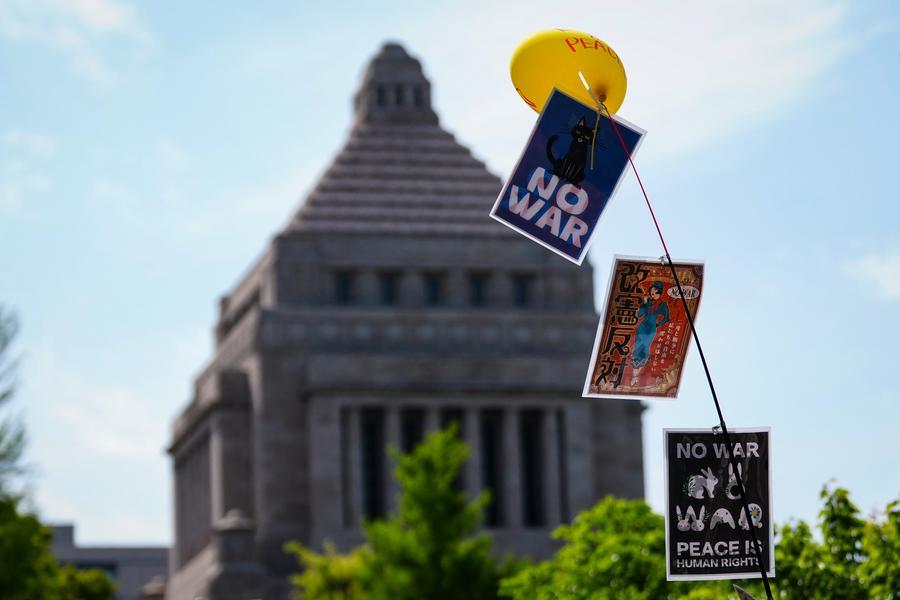
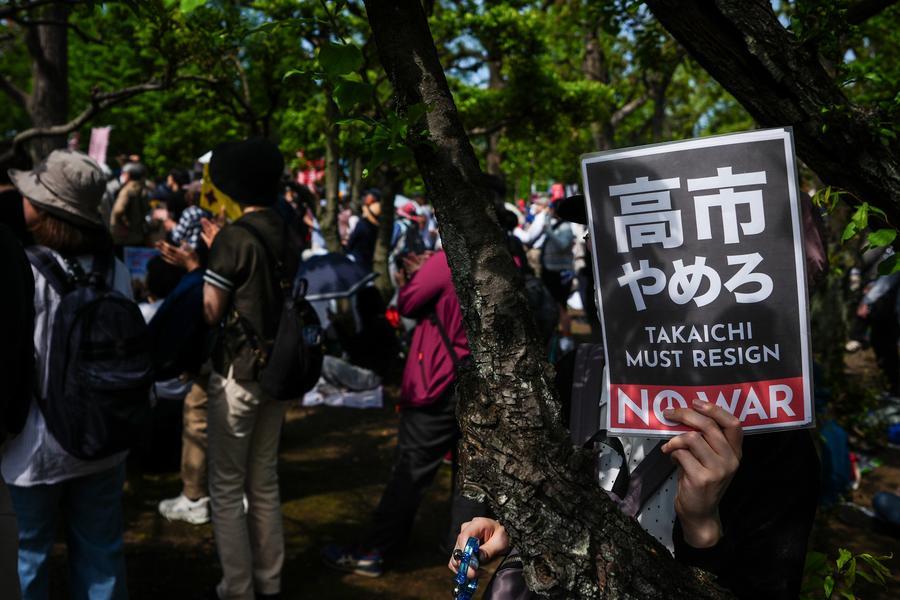
In recent years, Japan's right-wing forces have steadily tested and expanded the boundaries of the country's postwar constraints through incremental steps. Security legislation reinterpreting collective self-defense, revisions of security strategies, relaxed arms export rules and open discussions about nuclear-sharing arrangements all point to a push to erode the core principles of Japan's pacifist constitution and advance remilitarization.
Takaichi's actions form part of a coherent pattern. Since rising to prominence, she has championed a security agenda framed around a so-called "survival-threatening situation," a dangerous logic reminiscent of pre-WWII expansionism. Under her leadership, defense spending has surged, and efforts to acquire pre-emptive strike capabilities have accelerated. Even more concerning are signals suggesting a wavering commitment to the Three Non-Nuclear Principles, long regarded as a cornerstone of Japan's postwar security policy.
For Japan's neighbors, this combination is deeply alarming. A country that beats the drum for expanded military power while its leader worships convicted war criminals is not sending mixed signals -- it is sending a very clear one. The shadow of militarism is no relic of the past. Under Takaichi, it is stalking Japan's future. ■