
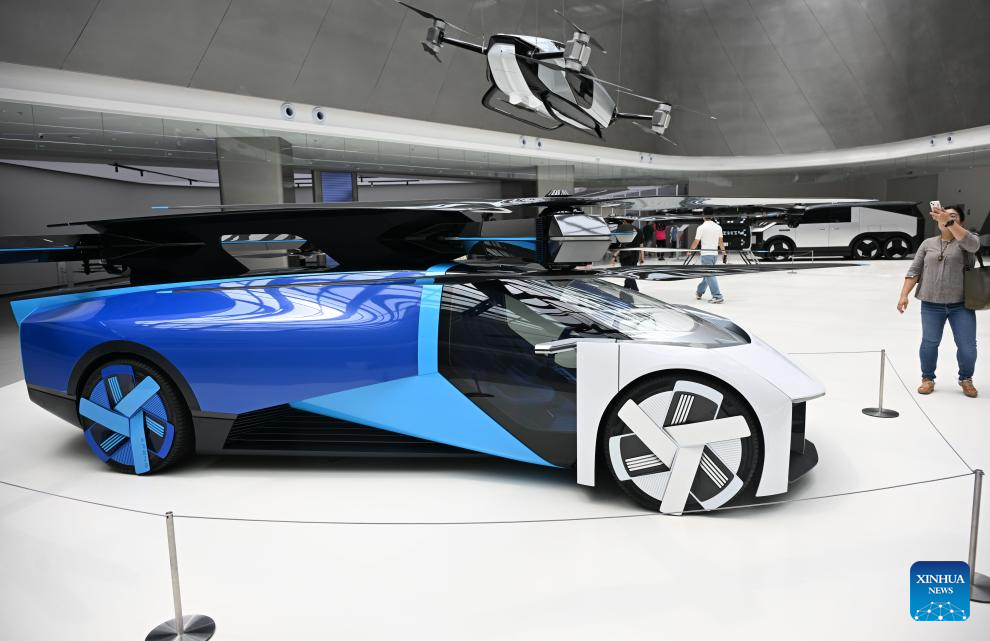
Visitors view vehicles displayed at Xpeng Technology Park in Tianhe District of Guangzhou, south China's Guangdong Province on March 24, 2026.
Guangdong Province has emerged as a leading hub for robotics and AI in China, offering a highly autonomous industrial ecosystem, strong large-scale manufacturing capacity, and diverse real-world application scenarios. In recent years, it has accelerated technological breakthroughs and scenario applications in the field of future mobility including intelligent electric vehicles, autonomous driving and low-altitude economy. (Xinhua/Deng Hua)
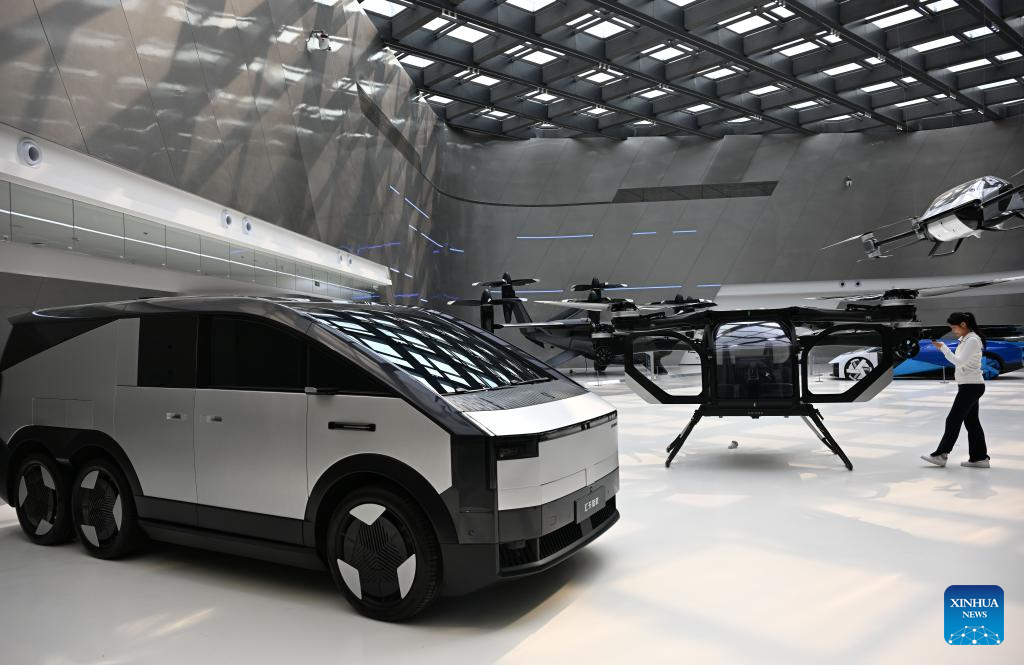
This photo taken on April 13, 2026 shows a "Land Aircraft Carrier," developed by ARIDGE, a pioneering developer of low-altitude mobility solutions, displayed at Xpeng Technology Park in Tianhe District of Guangzhou, south China's Guangdong Province.
Guangdong Province has emerged as a leading hub for robotics and AI in China, offering a highly autonomous industrial ecosystem, strong large-scale manufacturing capacity, and diverse real-world application scenarios. In recent years, it has accelerated technological breakthroughs and scenario applications in the field of future mobility including intelligent electric vehicles, autonomous driving and low-altitude economy. (Xinhua/Deng Hua)
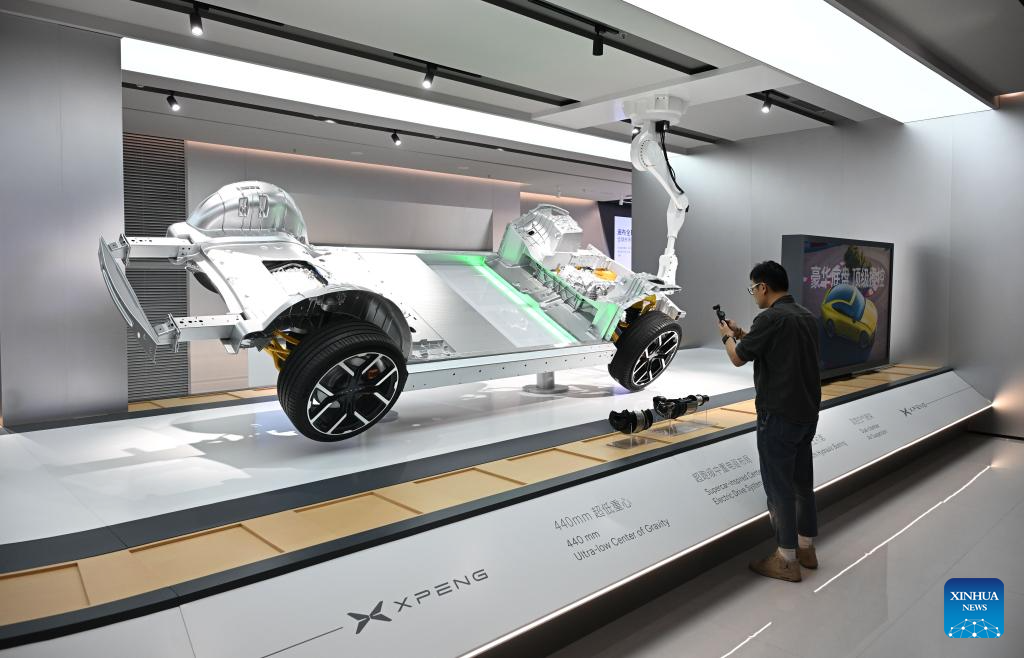
A visitor takes photos of a new energy vehicle chassis displayed at Xpeng Technology Park in Tianhe District of Guangzhou, south China's Guangdong Province on March 24, 2026.
Guangdong Province has emerged as a leading hub for robotics and AI in China, offering a highly autonomous industrial ecosystem, strong large-scale manufacturing capacity, and diverse real-world application scenarios. In recent years, it has accelerated technological breakthroughs and scenario applications in the field of future mobility including intelligent electric vehicles, autonomous driving and low-altitude economy. (Xinhua/Deng Hua)
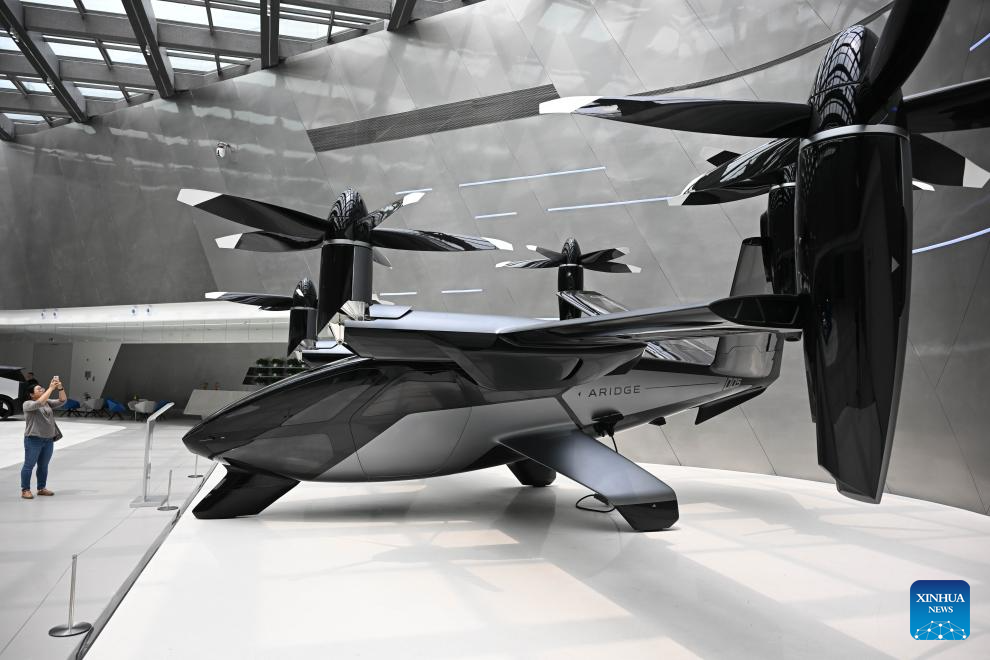
A visitor takes photos of a flying vehicle displayed at Xpeng Technology Park in Tianhe District of Guangzhou, south China's Guangdong Province on March 24, 2026.
Guangdong Province has emerged as a leading hub for robotics and AI in China, offering a highly autonomous industrial ecosystem, strong large-scale manufacturing capacity, and diverse real-world application scenarios. In recent years, it has accelerated technological breakthroughs and scenario applications in the field of future mobility including intelligent electric vehicles, autonomous driving and low-altitude economy. (Xinhua/Deng Hua)

A visitor experiences a new energy vehicle developed by Chinese EV maker XPeng at Xpeng Technology Park in Tianhe District of Guangzhou, south China's Guangdong Province on March 24, 2026.
Guangdong Province has emerged as a leading hub for robotics and AI in China, offering a highly autonomous industrial ecosystem, strong large-scale manufacturing capacity, and diverse real-world application scenarios. In recent years, it has accelerated technological breakthroughs and scenario applications in the field of future mobility including intelligent electric vehicles, autonomous driving and low-altitude economy. (Xinhua/Deng Hua)
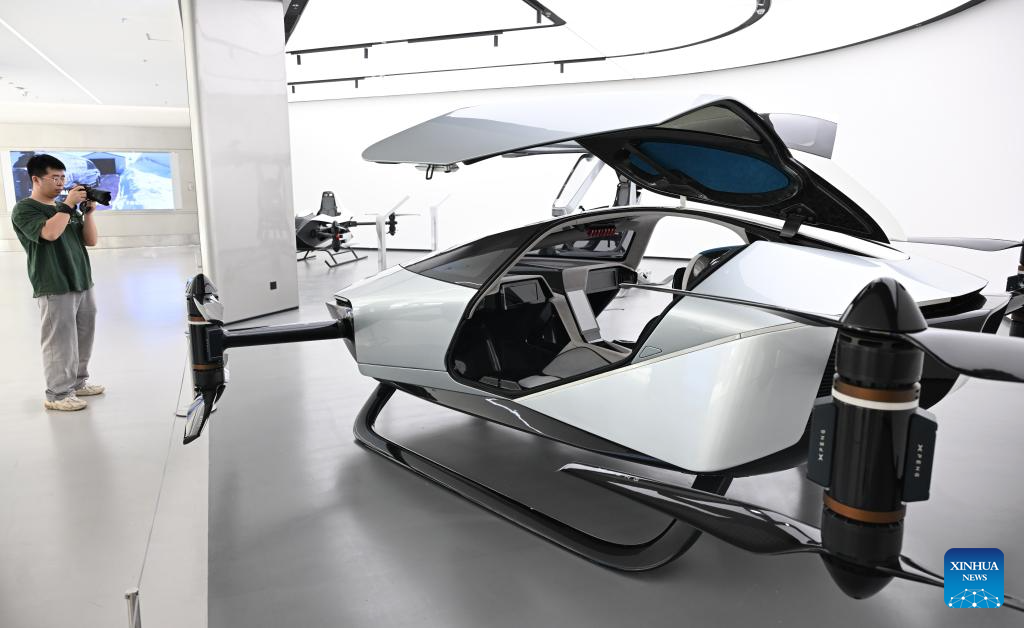
This photo taken on March 24, 2026 shows a flying vehicle displayed at Xpeng Technology Park in Tianhe District of Guangzhou, south China's Guangdong Province.
Guangdong Province has emerged as a leading hub for robotics and AI in China, offering a highly autonomous industrial ecosystem, strong large-scale manufacturing capacity, and diverse real-world application scenarios. In recent years, it has accelerated technological breakthroughs and scenario applications in the field of future mobility including intelligent electric vehicles, autonomous driving and low-altitude economy. (Xinhua/Deng Hua)
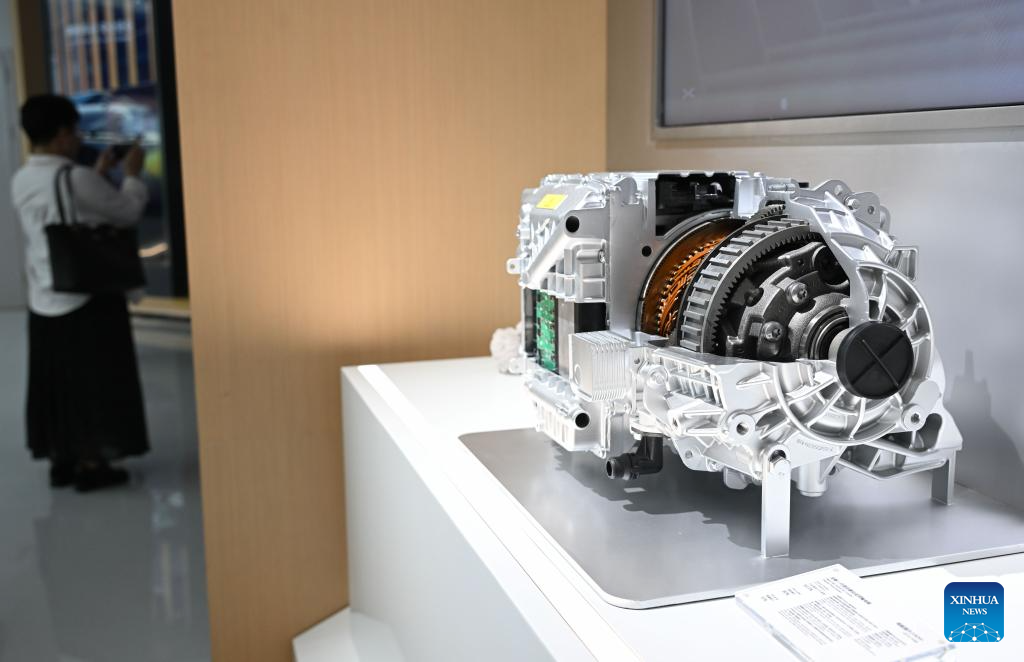
This photo taken on March 24, 2026 shows an electric drive system displayed at Xpeng Technology Park in Tianhe District of Guangzhou, south China's Guangdong Province.
Guangdong Province has emerged as a leading hub for robotics and AI in China, offering a highly autonomous industrial ecosystem, strong large-scale manufacturing capacity, and diverse real-world application scenarios. In recent years, it has accelerated technological breakthroughs and scenario applications in the field of future mobility including intelligent electric vehicles, autonomous driving and low-altitude economy. (Xinhua/Deng Hua)
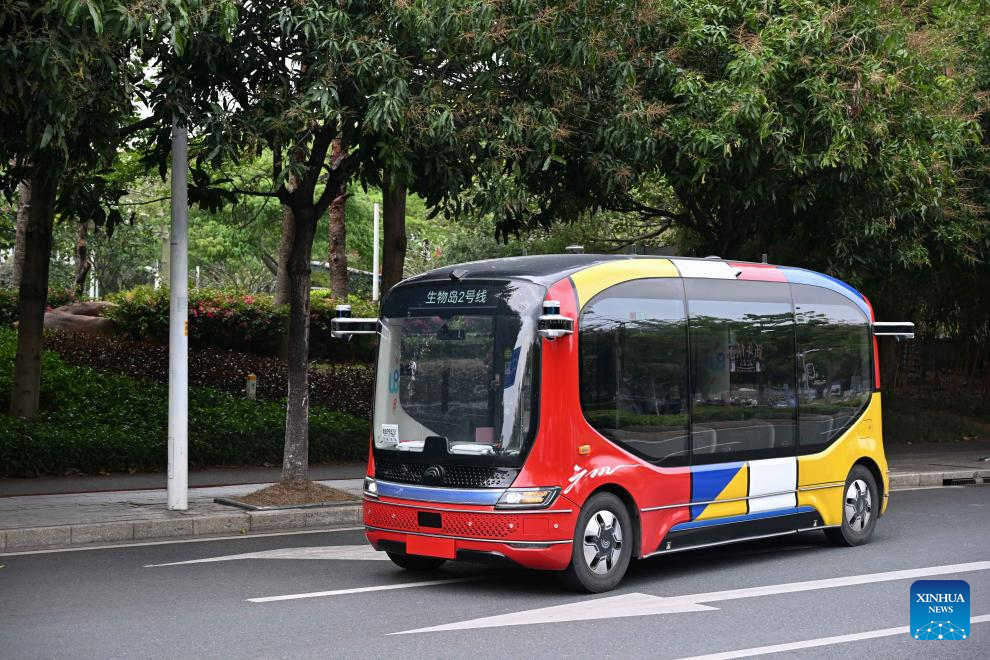
This photo taken on March 24, 2026 shows a self-driving bus on a road in Haizhu District of Guangzhou, south China's Guangdong Province.
Guangdong Province has emerged as a leading hub for robotics and AI in China, offering a highly autonomous industrial ecosystem, strong large-scale manufacturing capacity, and diverse real-world application scenarios. In recent years, it has accelerated technological breakthroughs and scenario applications in the field of future mobility including intelligent electric vehicles, autonomous driving and low-altitude economy. (Xinhua/Deng Hua)
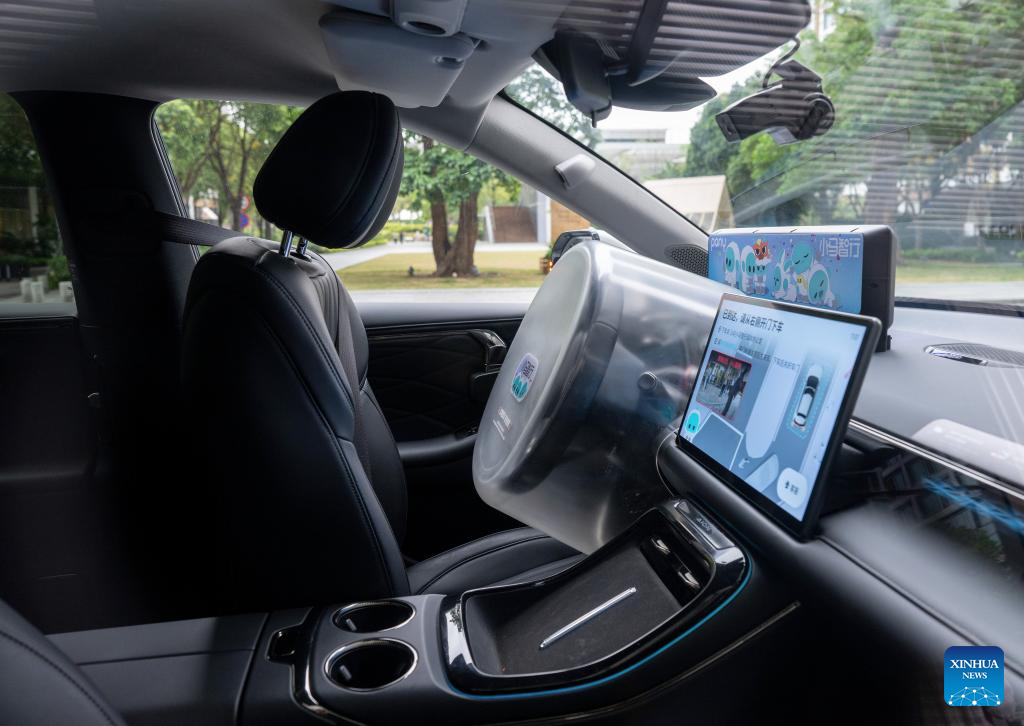
(260419) -- SHENZHEN, April 19, 2026 (Xinhua) -- This photo taken on March 28, 2026 shows a view inside a Pony.ai's self-driving taxi in Nanshan District of Shenzhen, south China's Guangdong Province.
Guangdong Province has emerged as a leading hub for robotics and AI in China, offering a highly autonomous industrial ecosystem, strong large-scale manufacturing capacity, and diverse real-world application scenarios. In recent years, it has accelerated technological breakthroughs and scenario applications in the field of future mobility including intelligent electric vehicles, autonomous driving and low-altitude economy. (Xinhua/Liu Mengqi)
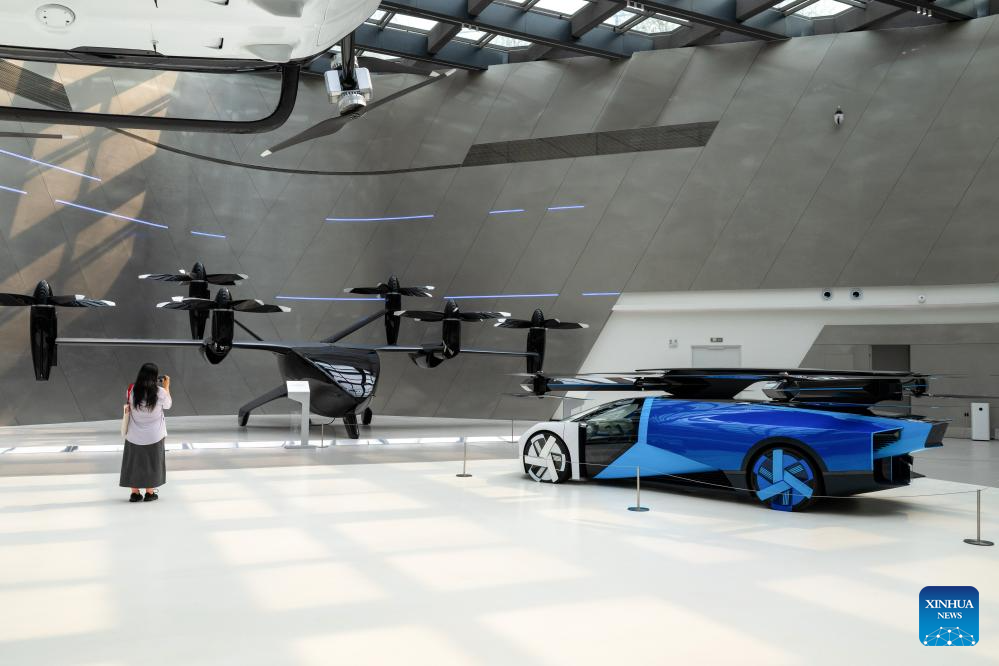
A visitor views a flying vehicle displayed at Xpeng Technology Park in Tianhe District of Guangzhou, south China's Guangdong Province on March 27, 2026.
Guangdong Province has emerged as a leading hub for robotics and AI in China, offering a highly autonomous industrial ecosystem, strong large-scale manufacturing capacity, and diverse real-world application scenarios. In recent years, it has accelerated technological breakthroughs and scenario applications in the field of future mobility including intelligent electric vehicles, autonomous driving and low-altitude economy. (Xinhua/Liu Mengqi)
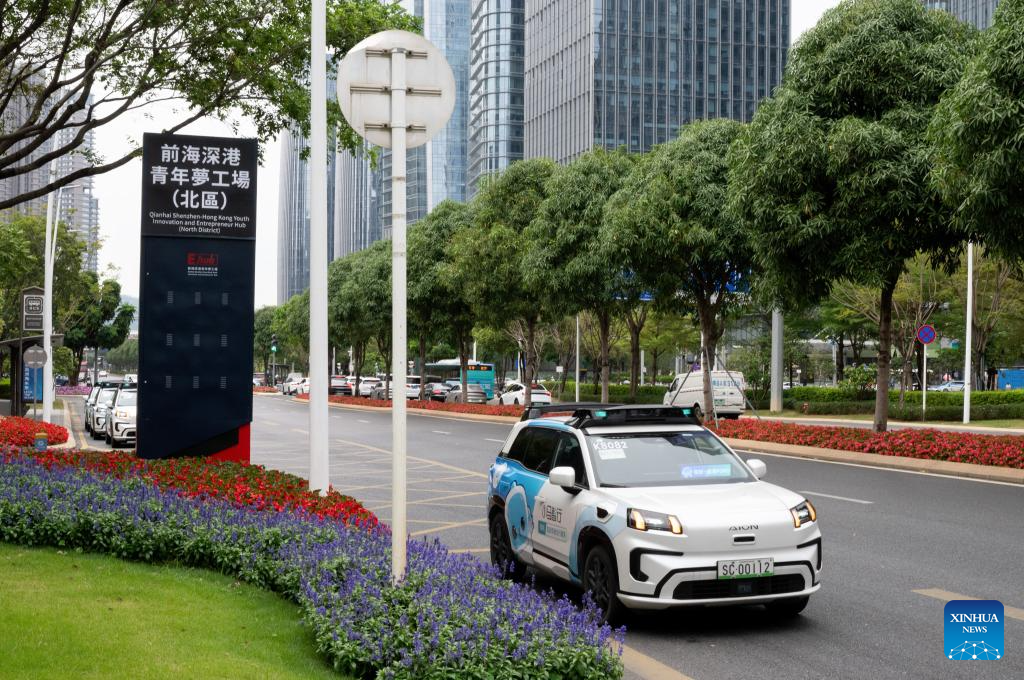
(260419) -- SHENZHEN, April 19, 2026 (Xinhua) -- A Pony.ai's self-driving taxi is pictured in Nanshan District of Shenzhen, south China's Guangdong Province, March 28, 2026.
Guangdong Province has emerged as a leading hub for robotics and AI in China, offering a highly autonomous industrial ecosystem, strong large-scale manufacturing capacity, and diverse real-world application scenarios. In recent years, it has accelerated technological breakthroughs and scenario applications in the field of future mobility including intelligent electric vehicles, autonomous driving and low-altitude economy. (Xinhua/Liu Mengqi)
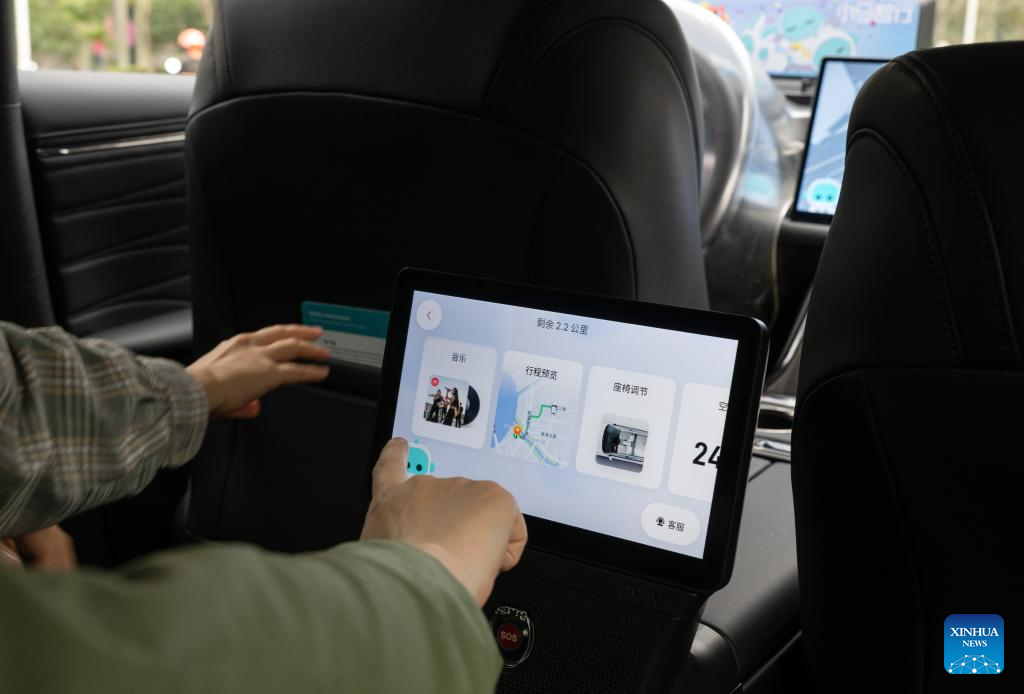
(260419) -- SHENZHEN, April 19, 2026 (Xinhua) -- A passenger checks the screen function inside a Pony.ai's self-driving taxi in Nanshan District of Shenzhen, south China's Guangdong Province, March 28, 2026.
Guangdong Province has emerged as a leading hub for robotics and AI in China, offering a highly autonomous industrial ecosystem, strong large-scale manufacturing capacity, and diverse real-world application scenarios. In recent years, it has accelerated technological breakthroughs and scenario applications in the field of future mobility including intelligent electric vehicles, autonomous driving and low-altitude economy. (Xinhua/Liu Mengqi)
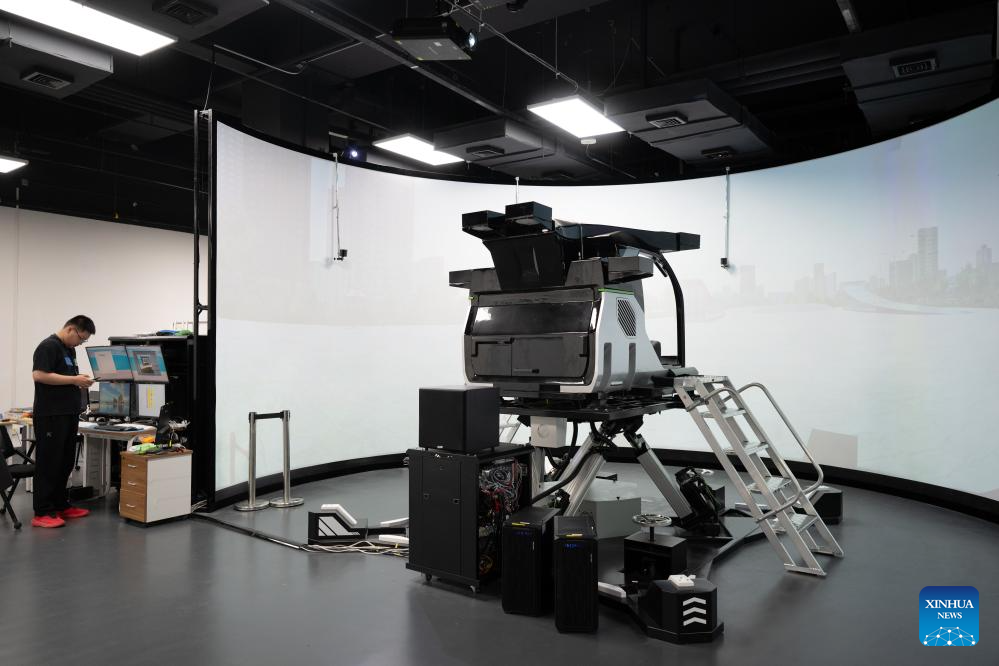
A staff member works at the flight simulator laboratory in Xpeng Technology Park in Tianhe District of Guangzhou, south China's Guangdong Province, March 27, 2026.
Guangdong Province has emerged as a leading hub for robotics and AI in China, offering a highly autonomous industrial ecosystem, strong large-scale manufacturing capacity, and diverse real-world application scenarios. In recent years, it has accelerated technological breakthroughs and scenario applications in the field of future mobility including intelligent electric vehicles, autonomous driving and low-altitude economy. (Xinhua/Liu Mengqi)


