

Leslie Dwight Mensah, an economist at the Institute for Fiscal Studies (IFS), a Ghanaian economic policy think tank speaks during an interview with Xinhua in Accra, Ghana, on April 15, 2026. (Photo by Seth/Xinhua)
by Justice Lee Adoboe
ACCRA, April 17 (Xinhua) -- As countries seek ways to moderate the impact of rising energy costs amid the Middle East crisis, a Ghanaian expert has identified changed energy consumption patterns as a sustainable way to reduce the impact.
In a recent interview with Xinhua, Leslie Dwight Mensah, an economist at the Institute for Fiscal Studies (IFS), a Ghanaian economic policy think tank, said that governments and individuals should learn the lessons presented by the crisis to manage resources and consumption patterns better "now and in the future."
Mensah observed that, with the spike in energy prices worldwide due to the Middle East conflict, welfare would decline and "people will be poorer than they otherwise would be without this crisis."
The situation, he said, is daunting because the emerging energy challenges are beginning to reflect in the higher cost of transportation and energy consumption for households and businesses.
He highlighted that energy consumption cost is second only to food expenditure for households and to wages for businesses, making the crisis a great source of worry for both households and businesses.
For countries where power generation depends partly or fully on fossil fuels, the cost of electricity generation is going to rise, with resultant higher energy tariffs for consumers, added the expert.
"In many industries, energy is the number two cost item, after the payroll expense, so it's going to hit production costs, and that's going to squeeze output and ultimately squeeze profits," Mensah projected.
In Ghana, for instance, the expert noted that pressure is mounting on the government to intervene, which poses a threat also to the public finances, "to the extent also that this may spark a surge in inflation, which will in turn put pressure on interest rates. Borrowing costs potentially could rise in this environment, which will affect the private sector."
"And should this persist for long, the impact will get bigger and persist for longer. For instance, a pickup in inflation is likely to affect interest rates; higher interest rates will undermine investment and private consumption, and this situation can ultimately be negative for economic growth," he added.
The expert described the decision by the Ghanaian government on Wednesday to absorb part of the increases in petroleum prices for a one-month period as prudent "since it is time-bound. Moreover, it will provide some purchasing-power relief to households and businesses."
He, however, added that such interventions need to be targeted to make them affordable for the government with efficient results, because "a well-designed targeted intervention would also serve as a blueprint for responding to such a crisis in the future."
"These crises and increasing prices should elicit a behavioral response from the consumer. It should tell you to be more efficient in your consumption. But when the government provides substantial protection, it mutes that response," the IFS official emphasized.
He also urged the Ghanaian government, particularly to use the current crisis as an incentive to redevelop domestic petroleum production capacity, which is critical for the long-term, "because it allows a country, at least in a crisis, to have supply security. It also makes it easier for you to accumulate reserves to deploy in a crisis like this."
According to him, any country with an adequate reserve of fuel is one with a typically strong domestic supply capacity. And although self-sufficiency does not guarantee better prices outside the international pressures, at least, it secures supplies, which can help stabilize the economy during global market fluctuations.
Another lesson countries must learn, Mensah highlighted, is the fact that the world cannot continue depending on fossil fuels all the time, urging more investments into renewable energy.
He urged Ghana to sustain its fiscal improvements so as to release resources for investments in renewable energy to match its stated commitment. ■
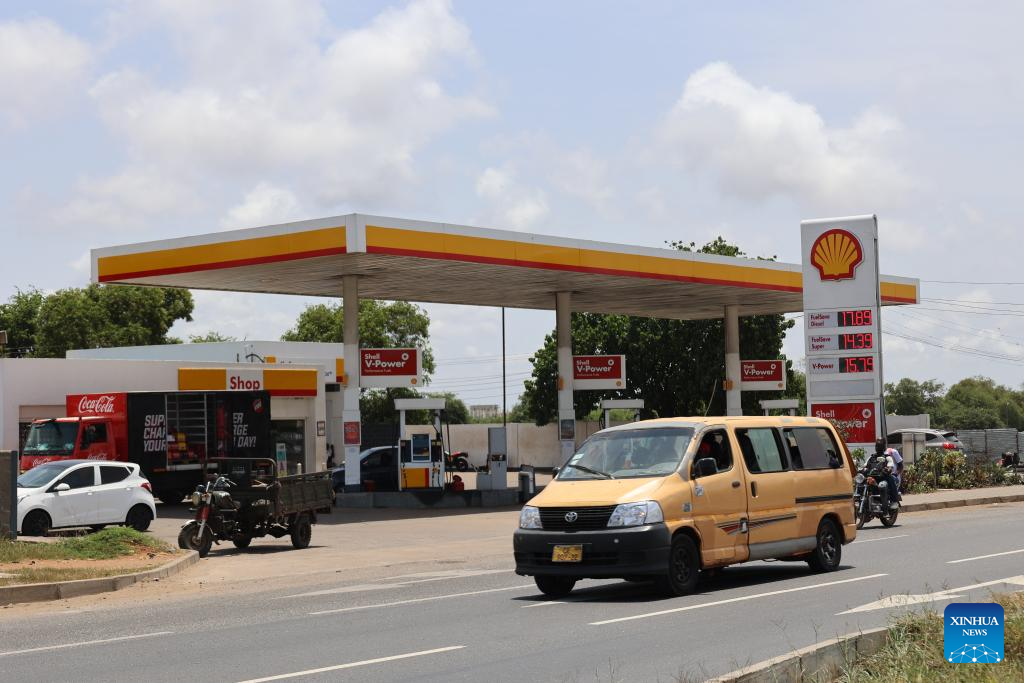
Photo taken on April 16, 2026 shows a petrol station in Accra, Ghana. (Photo by Seth/Xinhua)
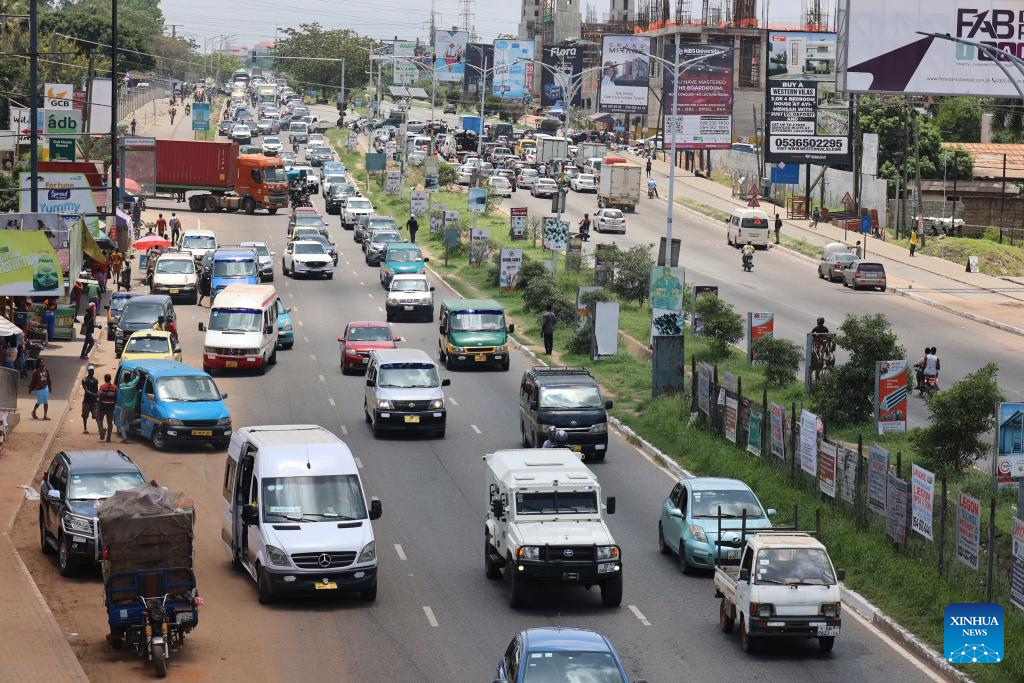
Vehicles run on the main road in Accra, Ghana, on April 16, 2026. (Photo by Seth/Xinhua)


