
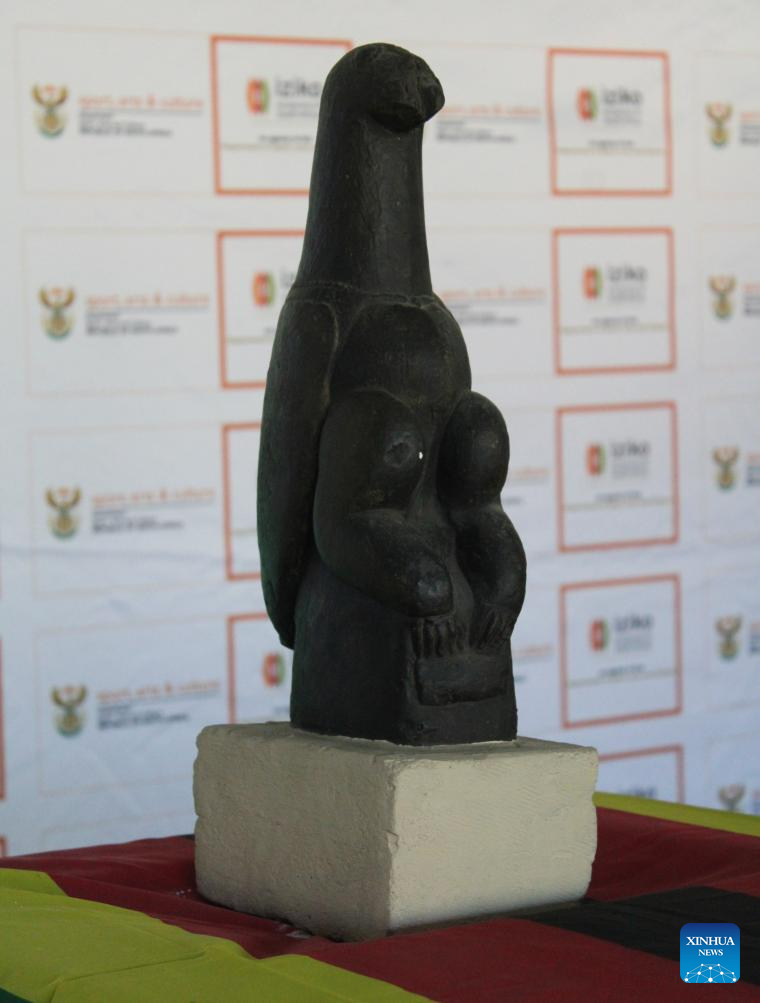
This photo taken on April 14, 2026 shows a stone sculpture of the Zimbabwe Bird during a handover ceremony to Zimbabwe at the Iziko South African Museum in Cape Town, South Africa. (Photo by Shakirah Thebus/Xinhua)
CAPE TOWN, April 15 (Xinhua) -- South Africa has formally handed back to Zimbabwe a centuries-old stone sculpture of its sacred national emblem, the Zimbabwe Bird, along with ancestral human remains.
The handover ceremony, presided over by South African Minister of Sport, Arts and Culture Gayton McKenzie and attended by high-level officials from both countries, took place at the Iziko South African Museum in Cape Town on Tuesday.
The Zimbabwe Bird, also known as Chapungu, is a national emblem featured on the country's national flag, coat of arms, banknotes and coins.
The returned soapstone bird was the first of several looted from the ruins of the ancient complex of Great Zimbabwe during the colonial era in the late 19th century. It was taken and sold to Cecil John Rhodes, the prime minister of the Cape Colony between 1890 and 1896.
The others that had been in South Africa were returned to Zimbabwe following the former British colony's independence in 1980.
The eight ancestral human remains were collected from Zimbabwe -- then known as Southern Rhodesia -- during the late 19th and early 20th centuries. They were acquired by colonial officials, medical practitioners and researchers, and donated to what became the Iziko South African Museum as scientific specimens.
At the ceremony, McKenzie underlined the importance of restoring African dignity through the return of heritage taken during the colonial era, calling the repatriation an act of "justice, memory, and healing."
"Today, history has been made. South Africa has wrongfully kept the Zimbabwean Soapstone Bird for 137 years," he said. "We are choosing to say something to every institution and every government still holding what should not be retained: the era of colonial collection is over. The time for return has come."
Zimbabwean Deputy Chief Secretary to the President and Cabinet Paul Bayethe Damasane expressed his appreciation for the South African government and the institutions involved in the repatriation process, describing the handover as a significant step toward ethical museum practices and restorative justice.
"To us, they are not artefacts, but part of our shared identity," he said, adding that the process would serve as a model for future repatriations, anchored on scientific rigour, cultural integrity and respect for heritage. ■
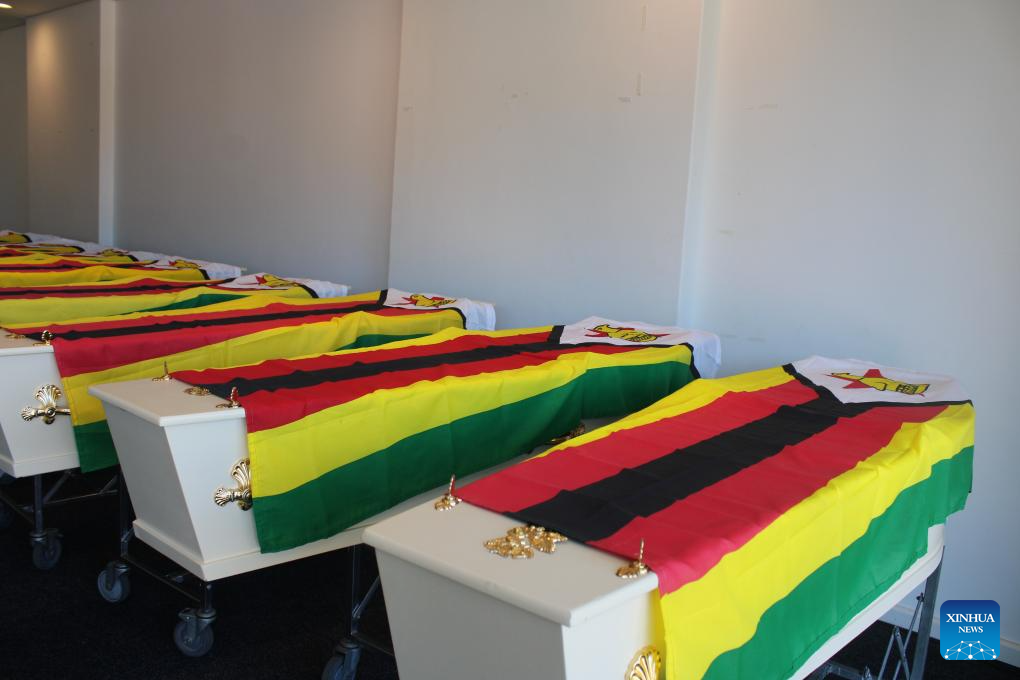
This photo taken on April 14, 2026 shows coffins containing ancestral human remains during a handover ceremony to Zimbabwe at the Iziko South African Museum in Cape Town, South Africa. (Photo by Shakirah Thebus/Xinhua)
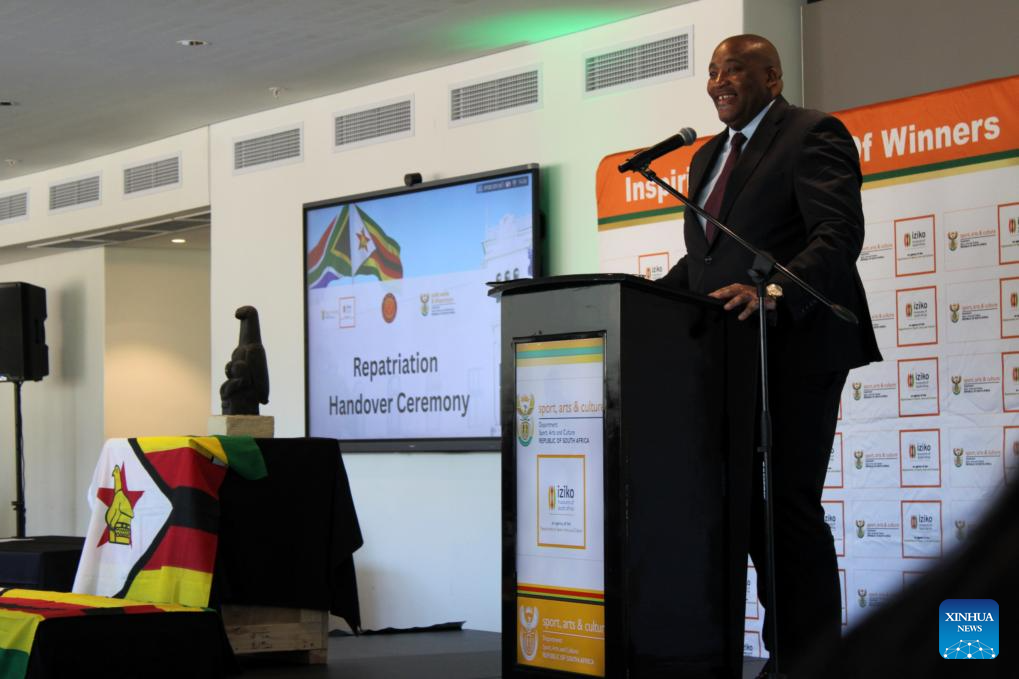
South African Minister of Sport, Arts and Culture Gayton McKenzie speaks during the handover ceremony of the Zimbabwe Bird stone sculpture and ancestral human remains to Zimbabwe at the Iziko South African Museum in Cape Town, South Africa, April 14, 2026. (Photo by Shakirah Thebus/Xinhua)


