
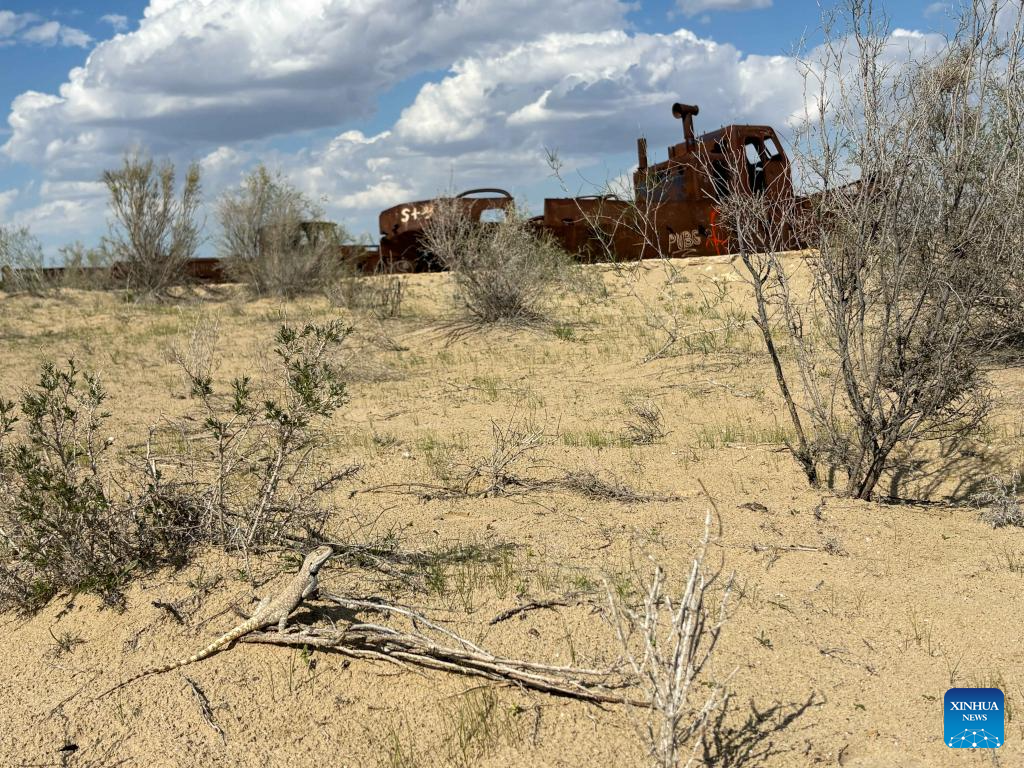
A lizard stands beside the "ship cemetery" in Moynaq, Uzbekistan, April 10, 2026.
The "ship cemetery" displays the wrecks of ships abandoned as a result of the Aral Sea crisis. Situated between Kazakhstan and Uzbekistan, the Aral Sea, once the world's fourth-largest lake, continues to shrink and has lost more than 90 percent of its original surface area since the 1960s, leaving behind vast stretches of desertified lakebed. (Xinhua/Jiang Hexuan)
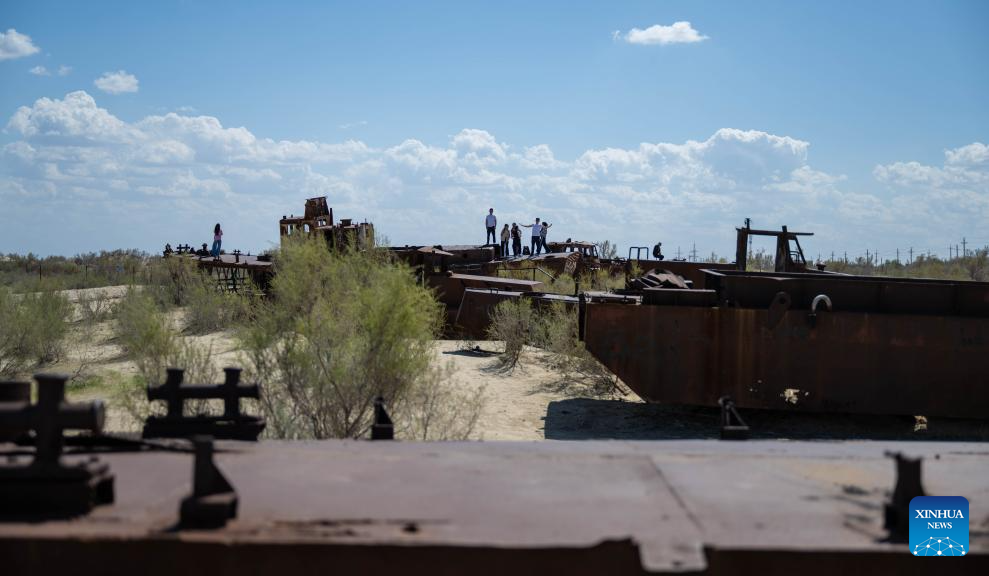
Tourists visit the "ship cemetery" in Moynaq, Uzbekistan, April 10, 2026.
The "ship cemetery" displays the wrecks of ships abandoned as a result of the Aral Sea crisis. Situated between Kazakhstan and Uzbekistan, the Aral Sea, once the world's fourth-largest lake, continues to shrink and has lost more than 90 percent of its original surface area since the 1960s, leaving behind vast stretches of desertified lakebed. (Xinhua/Li Renzi)
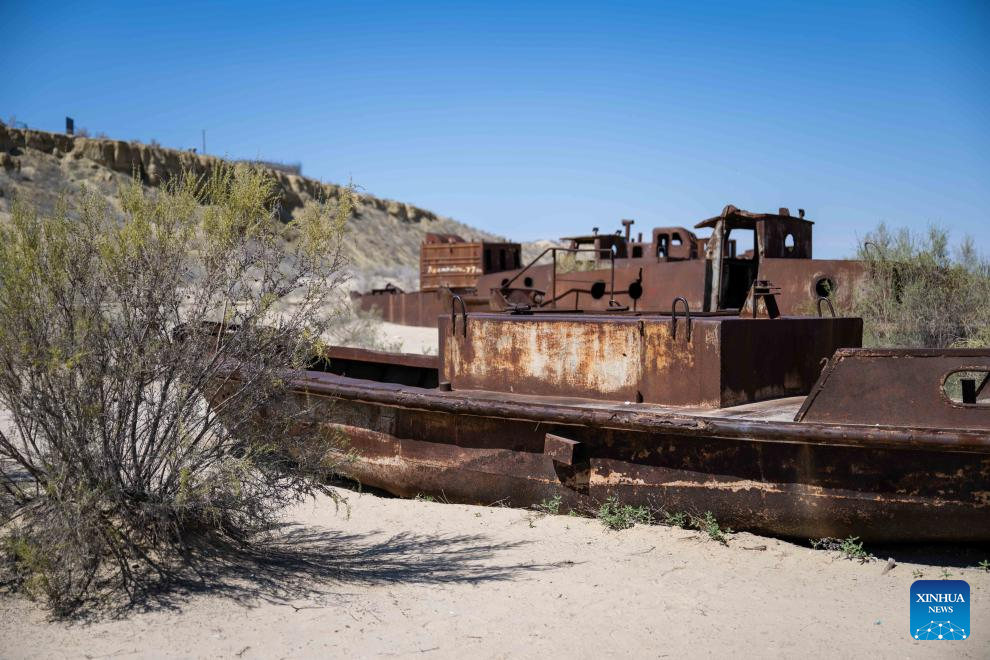
This photo taken on April 10, 2026 shows wrecks of ships at the "ship cemetery" in Moynaq, Uzbekistan.
The "ship cemetery" displays the wrecks of ships abandoned as a result of the Aral Sea crisis. Situated between Kazakhstan and Uzbekistan, the Aral Sea, once the world's fourth-largest lake, continues to shrink and has lost more than 90 percent of its original surface area since the 1960s, leaving behind vast stretches of desertified lakebed. (Xinhua/Li Renzi)
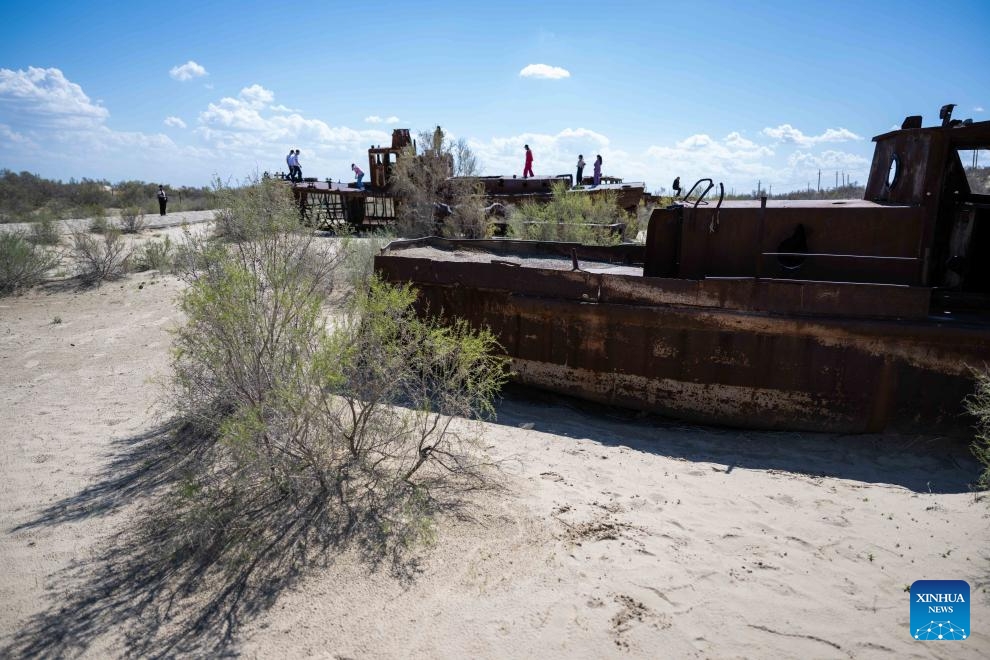
Tourists visit the "ship cemetery" in Moynaq, Uzbekistan, April 10, 2026.
The "ship cemetery" displays the wrecks of ships abandoned as a result of the Aral Sea crisis. Situated between Kazakhstan and Uzbekistan, the Aral Sea, once the world's fourth-largest lake, continues to shrink and has lost more than 90 percent of its original surface area since the 1960s, leaving behind vast stretches of desertified lakebed. (Xinhua/Li Renzi)
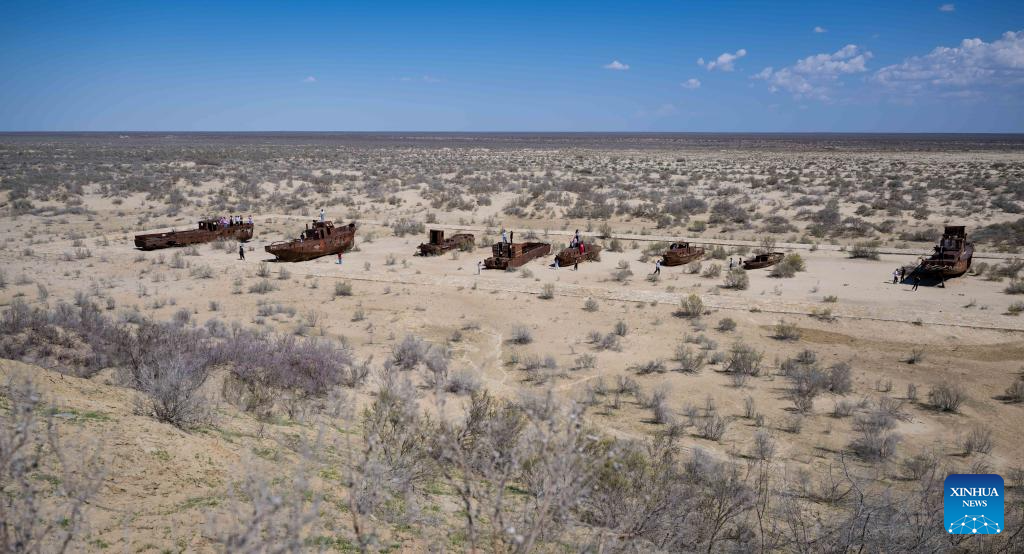
This photo taken on April 10, 2026 shows wrecks of ships at the "ship cemetery" in Moynaq, Uzbekistan.
The "ship cemetery" displays the wrecks of ships abandoned as a result of the Aral Sea crisis. Situated between Kazakhstan and Uzbekistan, the Aral Sea, once the world's fourth-largest lake, continues to shrink and has lost more than 90 percent of its original surface area since the 1960s, leaving behind vast stretches of desertified lakebed. (Xinhua/Li Renzi)
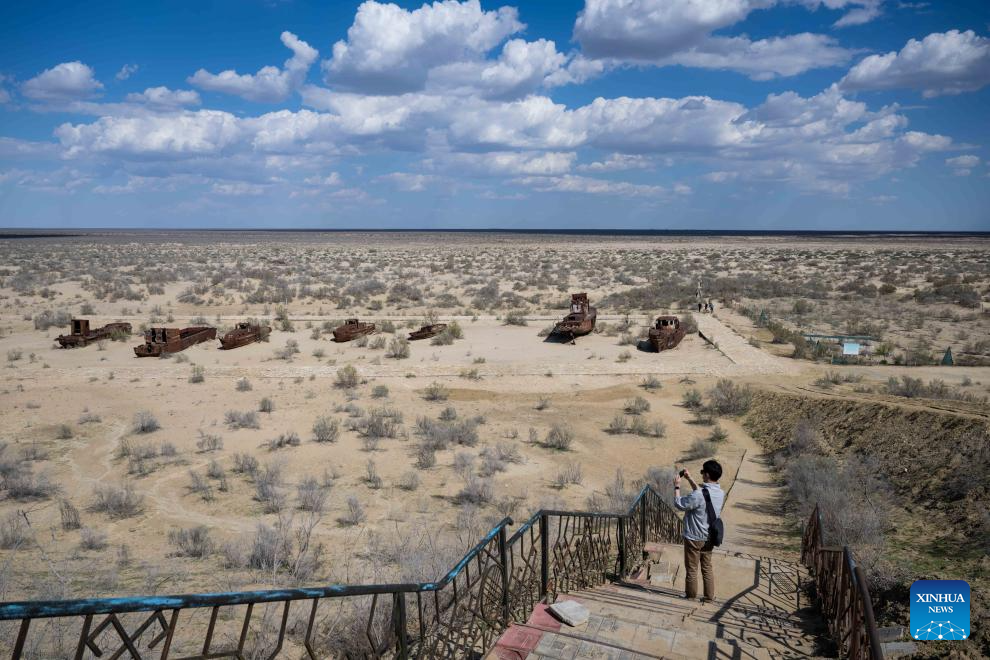
A tourist takes photos of the "ship cemetery" in Moynaq, Uzbekistan, April 10, 2026.
The "ship cemetery" displays the wrecks of ships abandoned as a result of the Aral Sea crisis. Situated between Kazakhstan and Uzbekistan, the Aral Sea, once the world's fourth-largest lake, continues to shrink and has lost more than 90 percent of its original surface area since the 1960s, leaving behind vast stretches of desertified lakebed. (Xinhua/Li Renzi)


