
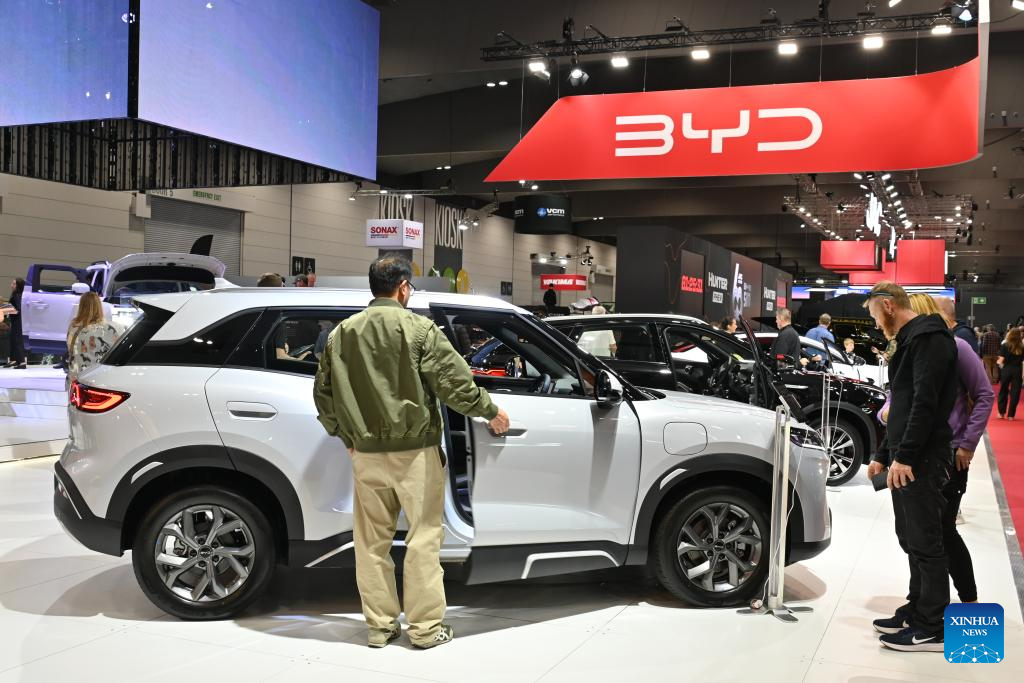
People visit the BYD stand during the 2026 Melbourne Motor Show in Melbourne, Australia, April 10, 2026. (Xinhua/Xu Haijing)
MELBOURNE, April 12 (Xinhua) -- Retired Australian Sandra drove three hours on Friday to the Melbourne Convention and Exhibition Centre for the 2026 Melbourne Motor Show.
At the Zeekr stand, she walked around a New Zeekr X again and again, studying the compact new energy vehicle she had already spent a long time researching online before coming to the show.
Asked why she wanted to buy a new energy vehicle and whether rising fuel prices was a factor, Sandra gave a simple answer.
"I'm not that anxious about fuel prices," she said. "I like the comfort and the features."
Her answer came as something of a surprise, but not to Li Xinlin, managing director of Zeekr Australia.
Li said that even before the latest Middle East tensions pushed fuel prices higher, Zeekr had already sensed growing enthusiasm among Australian consumers for new energy vehicles.
In his view, new energy vehicles appeal to consumers not only because of lower running costs, but also because of functions such as autonomous driving and automatic parking, as well as a driving experience that can exceed that of similarly priced petrol cars.
He said the latest oil price spike has given more consumers another reason to consider buying new energy vehicles and could signal a faster expansion phase for the sector in Australia.
That shift was visible across the show floor.
Chinese brands accounted for nearly half of the automakers exhibiting at the show, with most displaying new energy models ranging from compact cars and midsize SUVs to large pickups, and offering a wide mix of hybrid, plug-in hybrid and battery-electric options.
For car enthusiast Peter, the range of choices was what stood out most.
Looking around the show floor, he said Australian consumers were being "spoiled" for choice with so many Chinese new energy models now on offer.
But choice alone is not enough to sustain growth in a market like Australia, where long distances and relatively limited charging infrastructure still shape how people think about buying a vehicle.
Wang Shunsheng, deputy general manager of Guangzhou Automobile Group (GAC) International, said Chinese new energy vehicle makers should think not only about selling cars in Australia, but also about bringing over more mature energy-support systems developed in China.
These could include working with local partners to build charging stations, combining fast and slow charging, and even exploring battery-swapping projects, he said.
The goal, he added, is to improve convenience and deliver a better ownership experience for consumers.
Great Wall Motors (GWM) stressed a similar point from the perspective of long-term market development.
Gao Zhenfeng, general manager of GWM's Australian subsidiary, said the rapid overseas expansion of Chinese car brands is encouraging, but sales growth is only the first step.
The bigger priority, he said, is to serve customers well, deepen roots in the local market and remove buyers' concerns through stronger sales networks and better after-sales support.
The scenes at this year's Melbourne Motor Show suggested that for many Australian consumers, interest in Chinese new energy vehicles is being shaped by more than one factor.
Higher fuel prices may be drawing fresh attention to the sector, but comfort, features, technology, convenience and the growing breadth of choice are also becoming part of the calculation.
In Sandra's case, fuel prices may have helped shape the broader market mood, but what matters the most is something else: the product itself. ■
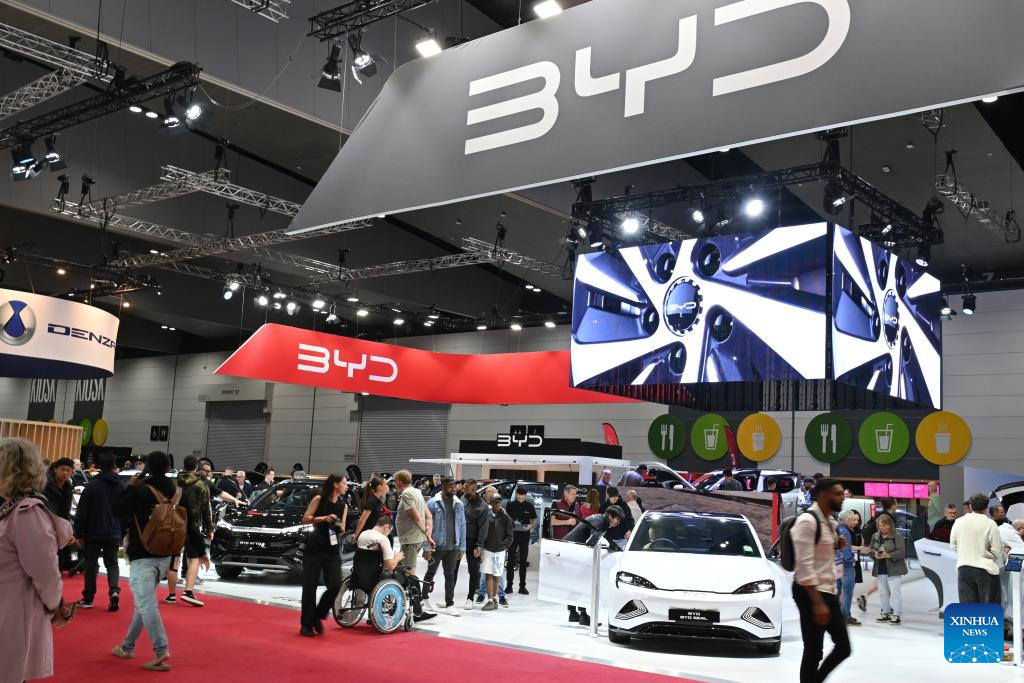
People visit the 2026 Melbourne Motor Show in Melbourne, Australia, April 10, 2026. (Xinhua/Xu Haijing)
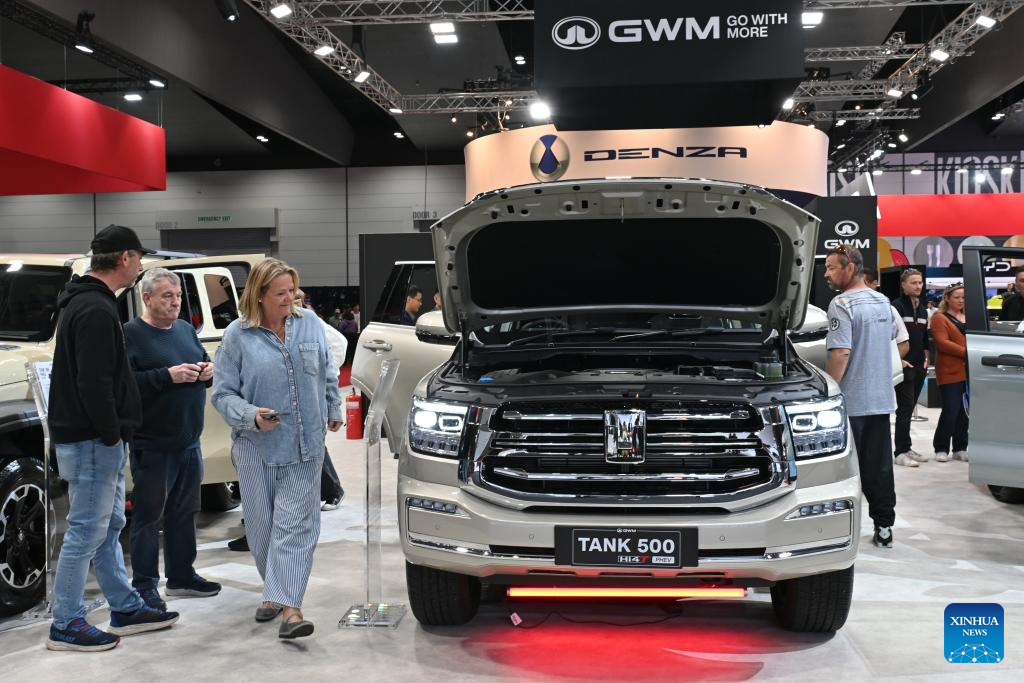
People visit the Great Wall Motor stand during the 2026 Melbourne Motor Show in Melbourne, Australia, April 10, 2026. (Xinhua/Xu Haijing)
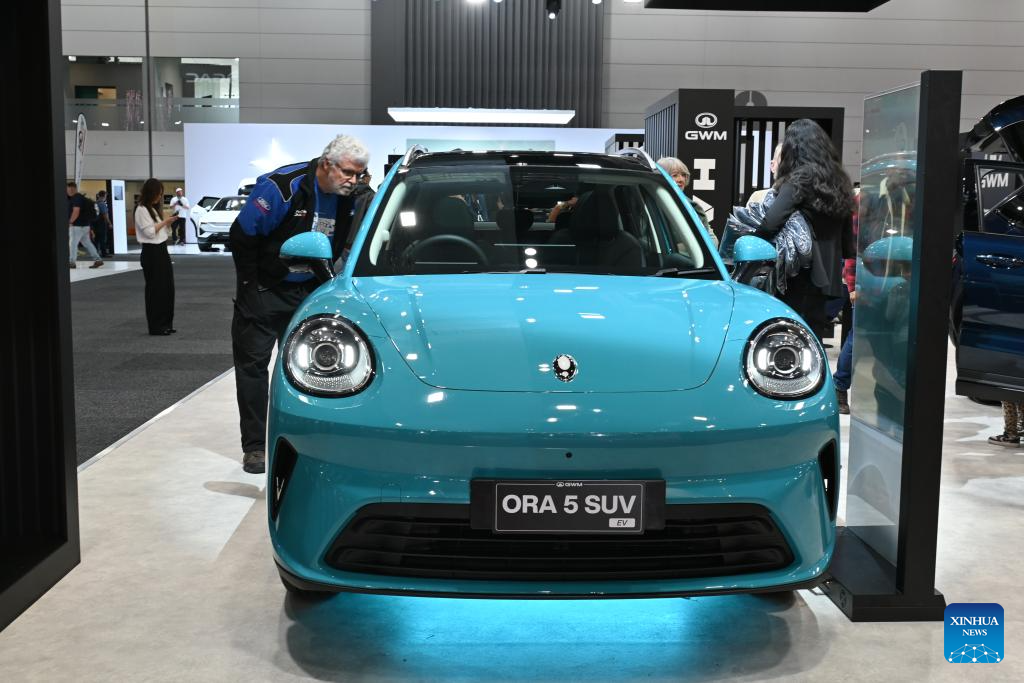
People visit the Great Wall Motor stand during the 2026 Melbourne Motor Show in Melbourne, Australia, April 10, 2026. (Xinhua/Xu Haijing)


