
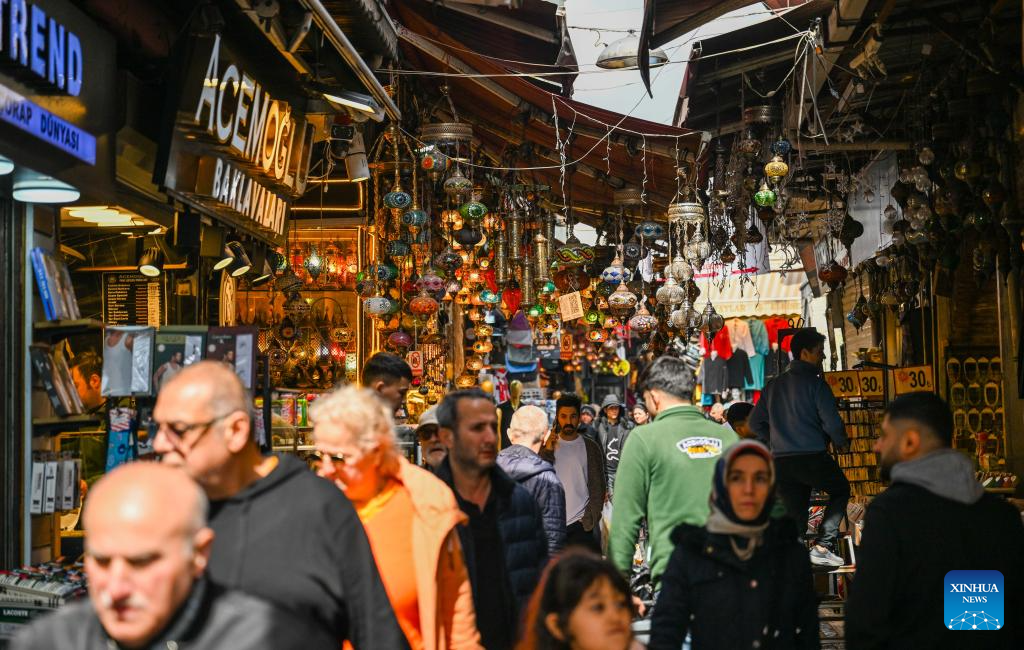
People visit Istanbul's Eminonu district, Türkiye, on April 11, 2026. (Xinhua/Liu Lei)
ISTANBUL, April 12 (Xinhua) -- Geopolitical tensions in the Middle East and disruptions to shipping through the Strait of Hormuz have triggered a new round of price increases that took effect in early April.
Türkiye's energy regulator announced that electricity prices for businesses and public services on low-voltage connections would rise by 17.5 percent, while household natural gas prices would increase by 25 percent.
For a typical food business in central Istanbul, that translates to monthly energy bills jumping from 18,000 liras to over 22,500 liras, roughly 504 U.S. dollars.
"Energy is one of the biggest costs for producers, and these increases show up on our shelves almost immediately," said Cihan Kani, a longtime merchant in Istanbul's Eminonu district. Once known for its affordable prices, the historic district is now a place where shop owners are struggling to stay afloat.
Kani noted that a kilogram of cheese has shot up from 380 to 510 liras (around 8.5 to 11.4 dollars) in just four months, as manufacturers pass higher energy costs directly on to consumers.
Istanbul-based economist Murat Tufan says food prices are rising even faster than energy costs, a pattern he describes as "cost-push inflation." In import-reliant countries like Türkiye, he explains, disruptions to global energy supply routes add a "risk premium" that ripples through the entire supply chain.
More worryingly, Tufan warns that conflict-driven inflation has become "sticky." Price increases are no longer temporary: businesses are now raising prices preemptively, ahead of expected future costs, creating a self-reinforcing cycle that is difficult to break.
That uncertainty is being felt across Istanbul's markets. Ercan Kurban, a merchant with 30 years of experience, says many traders have adopted a cautious wait-and-see approach, and some have frozen up entirely.
"Business owners are paralyzed. They can't see what's coming," he said. "Everyone is pulling back and avoiding buying on credit because they're afraid they won't be able to restock what they sell today. There are no winners in war. Everyone loses."
The situation is compounded by Türkiye's chronic inflation problem. Before tensions escalated in the Gulf, inflation was already running at around 30 percent, and the monthly minimum wage stands at roughly 28,000 liras (about 627 dollars), leaving low-income families especially vulnerable to even modest price increases.
Rising costs are also reshaping how people shop. In iconic markets like Istanbul's Spice Bazaar, fewer locals can afford to visit regularly.
"People who used to come from all over the city now just stop by for the atmosphere, grab a coffee, and leave," said merchant Talat Elmas. "The connection is fading."
Some merchants are sounding the alarm over public health as well. As purchasing power erodes, many consumers are turning to cheaper, lower-quality food out of necessity.
"That creates a health crisis," said Kani, who is calling on authorities to crack down on market exploitation. He sees little reason for optimism. "It feels like these problems will last another four or five years. No matter how much they talk about recovery, it just doesn't feel convincing."
Yet some veteran shopkeepers draw on decades of experience to find reason to persist.
"Trade must go on," said Elmas, "and the wheels of commerce must keep turning. As long as they do, we will find a way to survive." ■

A staff member prepares price tags at a food supermarket in Istanbul's Eminonu district, Türkiye, on April 11, 2026. (Xinhua/Liu Lei)
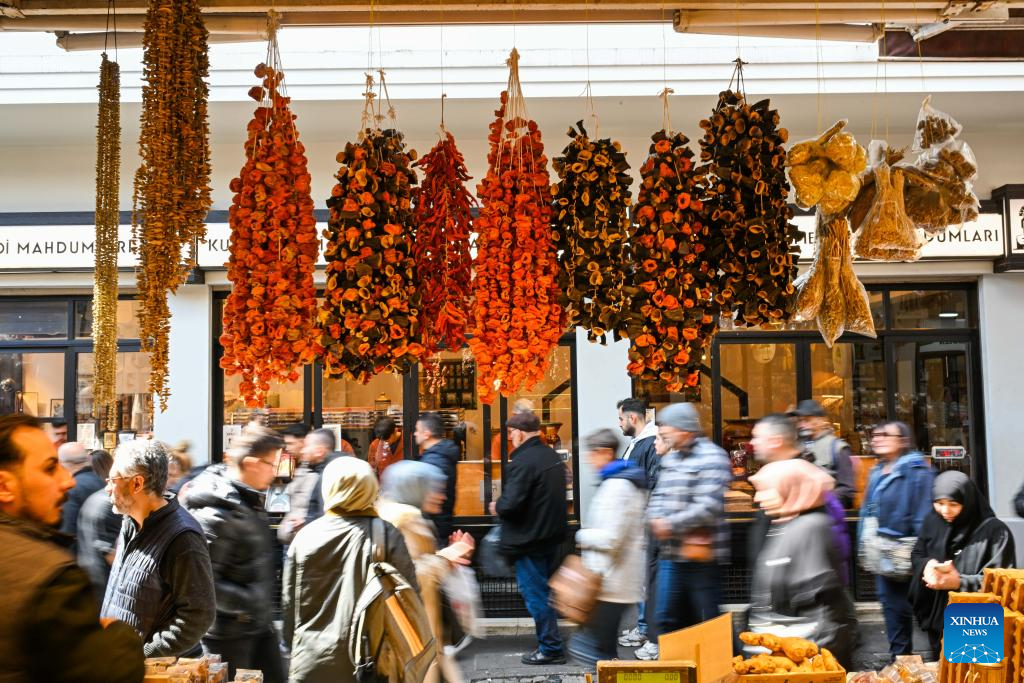
People walk past a dry goods store in Istanbul's Eminonu district, Türkiye, on April 11, 2026. (Xinhua/Liu Lei)


