
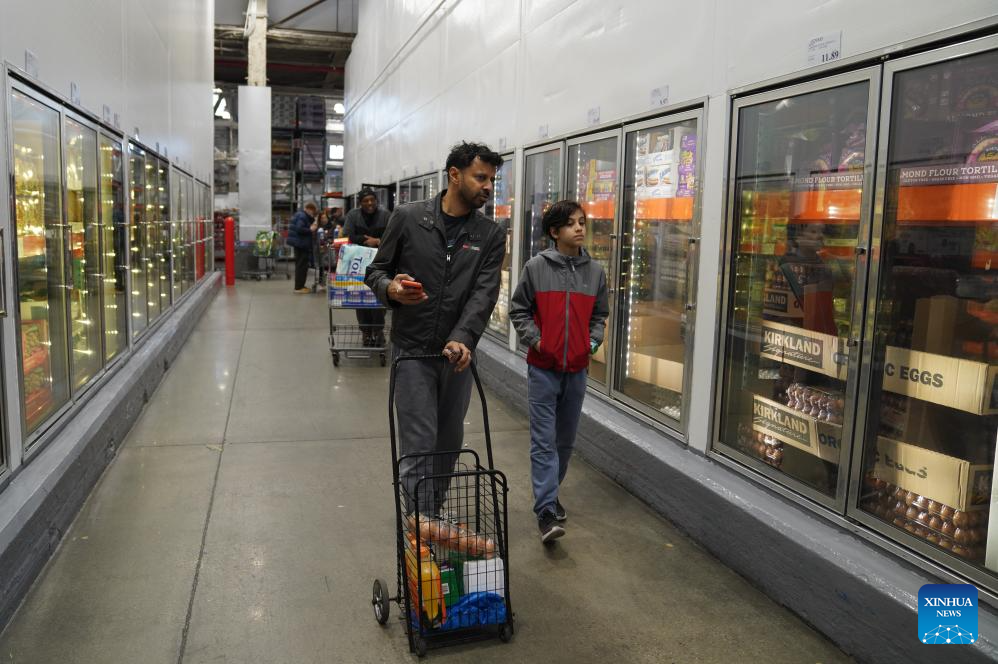
People shop at a supermarket in New York, the United States, on April 10, 2026. Earlier on Friday, the U.S. Bureau of Labor Statistics reported that the consumer price index in March rose 0.9 percent month on month and 3.3 percent year on year, with most of the increase coming from the surge in energy prices. (Xinhua/Zhang Fengguo)
NEW YORK, April 10 (Xinhua) -- The U.S. consumer price index (CPI) increased by 3.3 percent year on year in March as energy costs soared, registering the largest spike in nearly two years, according to data released by the Bureau of Labor Statistics on Friday.
The CPI growth rate in March from a year earlier represented nearly a full percentage point increase from February's annual pace, according to the Bureau of Labor Statistics. On a monthly basis, overall consumer prices rose 0.9 percent.
A spike in energy costs primarily drove the sharp acceleration. The energy index surged 10.9 percent in March, propelled by a 21.2-percent jump in gasoline prices, which alone accounted for nearly three-quarters of the monthly increase across all items.
Meanwhile, the core CPI, which excludes volatile food and energy components to measure underlying inflation, increased more modestly, rising 0.2 percent for the month and 2.6 percent on a year-over-year basis.
The data captured a period of rapidly escalating commodity prices that preceded a fragile, temporary ceasefire implemented this week. While the truce has provided some reprieve, energy costs remain significantly elevated compared to pre-war levels.
The 3.3-percent annual reading marks the highest inflation rate of U.S. President Donald Trump's second term in office, reaching a level not seen since May 2024. Michael Metcalfe, head of macro strategy at State Street, noted that the data would likely induce a "headline sticker shock."
The ripple effects of the energy surge are being felt widely by American consumers.
According to the American Automobile Association, gasoline prices have climbed approximately 40 percent since late February to a national average of 4.15 U.S. dollars per gallon. The mounting fuel costs have prompted shipping companies, airlines, and food delivery services to implement new surcharges. Additionally, disruptions in the natural gas market have driven up fertilizer prices, sparking concerns over future food inflation.
The renewed price pressures threaten to exacerbate an inflation dilemma for the Federal Reserve, as progress toward the central bank's 2-percent target had essentially stalled even before the war broke out. The data is expected to keep policymakers wary of resuming interest rate cuts after pressing pause on reductions earlier in January.
"The Fed has room to be patient, and every reason to do so. Today's number buys the Fed time, but the real test lies ahead," said Alexandra Wilson-Elizondo, global co-CIO of multi-asset solutions at Goldman Sachs Asset Management.
Despite the striking inflation figures, the immediate financial market reaction was relatively subdued on Friday morning. ■
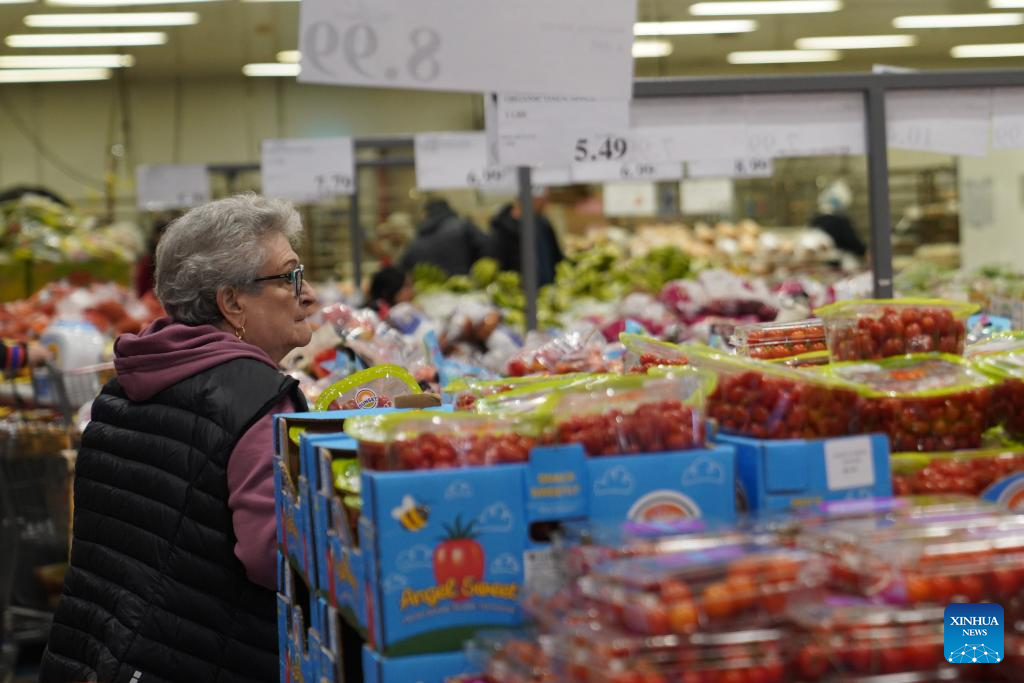
A woman shops at a supermarket in New York, the United States, on April 10, 2026. Earlier on Friday, the U.S. Bureau of Labor Statistics reported that the consumer price index in March rose 0.9 percent month on month and 3.3 percent year on year, with most of the increase coming from the surge in energy prices. (Xinhua/Zhang Fengguo)

A man shops at a supermarket in New York, the United States, on April 10, 2026. Earlier on Friday, the U.S. Bureau of Labor Statistics reported that the consumer price index in March rose 0.9 percent month on month and 3.3 percent year on year, with most of the increase coming from the surge in energy prices. (Xinhua/Zhang Fengguo)

People shop at a supermarket in New York, the United States, on April 10, 2026. Earlier on Friday, the U.S. Bureau of Labor Statistics reported that the consumer price index in March rose 0.9 percent month on month and 3.3 percent year on year, with most of the increase coming from the surge in energy prices. (Xinhua/Zhang Fengguo)
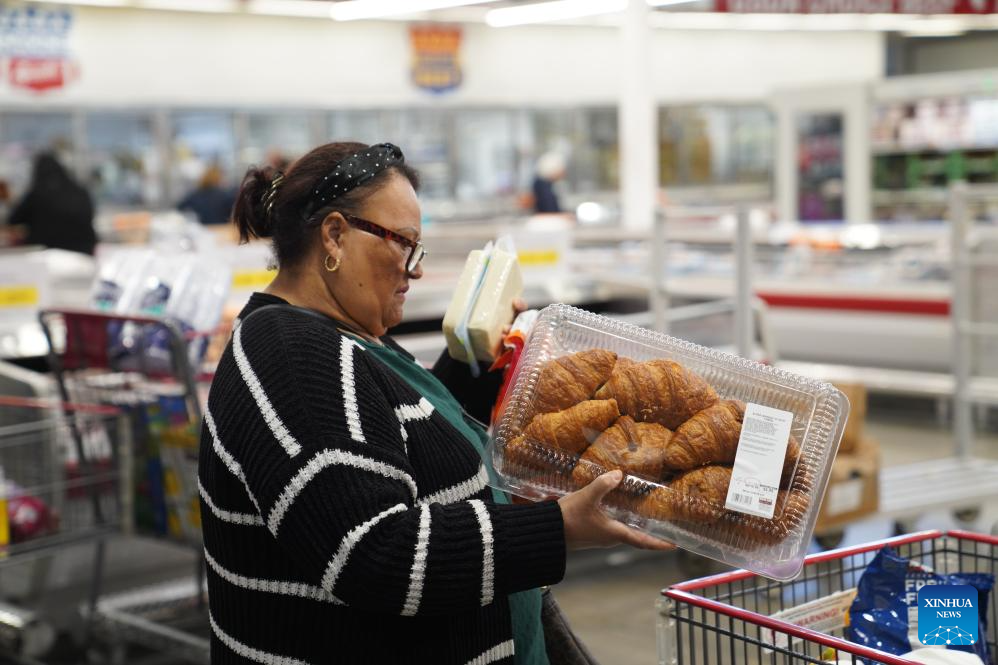
A woman shops at a supermarket in New York, the United States, on April 10, 2026. Earlier on Friday, the U.S. Bureau of Labor Statistics reported that the consumer price index in March rose 0.9 percent month on month and 3.3 percent year on year, with most of the increase coming from the surge in energy prices. (Xinhua/Zhang Fengguo)

People shop at a supermarket in New York, the United States, on April 10, 2026. Earlier on Friday, the U.S. Bureau of Labor Statistics reported that the consumer price index in March rose 0.9 percent month on month and 3.3 percent year on year, with most of the increase coming from the surge in energy prices. (Xinhua/Zhang Fengguo)

A woman shops at a supermarket in New York, the United States, on April 10, 2026. Earlier on Friday, the U.S. Bureau of Labor Statistics reported that the consumer price index in March rose 0.9 percent month on month and 3.3 percent year on year, with most of the increase coming from the surge in energy prices. (Xinhua/Zhang Fengguo)

A woman shops at a supermarket in New York, the United States, on April 10, 2026. Earlier on Friday, the U.S. Bureau of Labor Statistics reported that the consumer price index in March rose 0.9 percent month on month and 3.3 percent year on year, with most of the increase coming from the surge in energy prices. (Xinhua/Zhang Fengguo)


