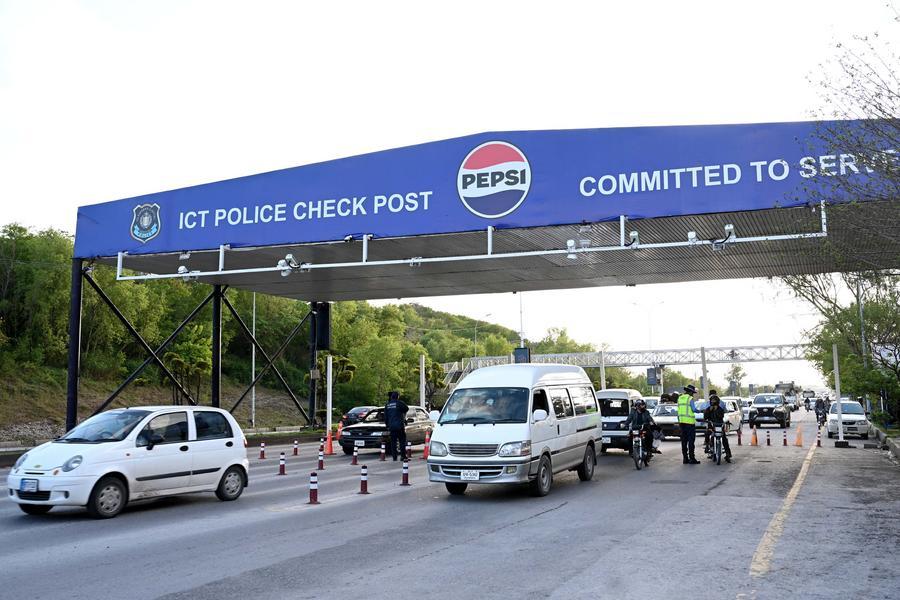
ISLAMABAD, April 9 (Xinhua) -- Pakistan's capital, Islamabad, is now a center of global attention. Here, long-awaited negotiations between the United States and Iran are set to take place, raising hopes of defusing the violent confrontations roiling the Middle East and beyond.
After more than one month of deadly clashes, the United States and Iran reached a two-week ceasefire less than two hours before the deadline set by U.S. President Donald Trump, agreeing to talk in Islamabad later this week.
Since last month, as tensions threatened to spiral out of control, Pakistan has emerged not merely as a bystander, but as a proactive diplomatic bridge between Washington and Tehran. Experts and regional officials describe Pakistan as a uniquely positioned mediator -- one with ties to both sides, urgent stakes in de-escalation, and a history of shuttle diplomacy that has positioned it to defuse the regional standoff with global impact.
Its rise raises a question: What makes Pakistan, a South Asian country, stand out to help end a conflict centered in the Middle East?
(Pakistan's Ministry of Foreign Affairs/Handout via Xinhua)
A MEDIATOR OUT OF NECESSITY
Pakistan's push to broker peace serves the country's development needs, analysts noted.
The country shares a nearly 900 km border with Iran, and already faces a resilient insurgency by Baloch separatists on its western flank. A wider conflict in Iran would almost certainly embolden militant groups across the frontier, further destabilizing Pakistan's already fragile security environment.
Economically, the stakes are even starker. Pakistan depends heavily on oil flowing through the Strait of Hormuz. The recent escalation has sent fuel prices soaring, dealing severe economic and energy shocks to the country.
Beyond security and economics, successful mediation offers Pakistan a chance to rebrand itself globally. A successful deal, analysts believe, would strengthen its ties with Washington, Tehran and Arab Gulf states alike, while elevating its standing among South Asian nations.
TIES WITH VARIOUS SIDES
What sets Pakistan apart is its ability to speak credibly to both sides.
Pakistan shares close ties with Iran, rooted in history, religious bonds and border cooperation. It is home to the world's second-largest Shiite population, giving it cultural and sectarian credibility in Tehran. At the same time, Pakistan has made efforts to rebuild security and diplomatic ties with the United States.
Pakistan also has strong partnerships with Saudi Arabia, the United Arab Emirates and Qatar. In 2025, it signed a strategic defense pact with Saudi Arabia, deepening its role as a security interlocutor across the Gulf.
Crucially, Pakistan has done this work before. Over the past decade, it has helped broker talks between Saudi Arabia and Iran and facilitated dialogue between Afghanistan and the United States.
WIDE INTERNATIONAL SUPPORT
Pakistan's mediation has also been reinforced by broader international support.
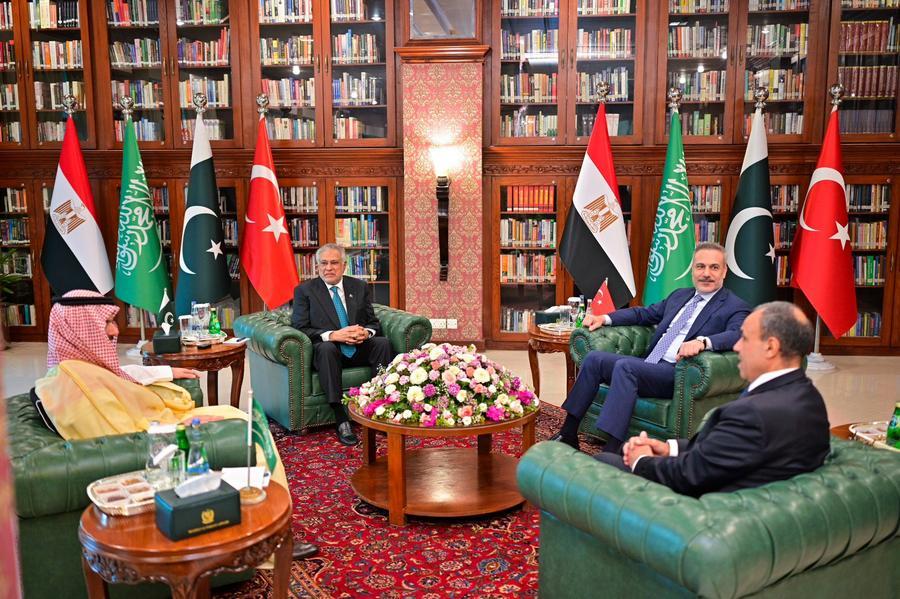
On March 29, Pakistan hosted a quadrilateral meeting with the foreign ministers of Saudi Arabia, Türkiye and Egypt, who expressed full support for Pakistan's initiative to host peace talks between the United States and Iran in Islamabad.
Just two days later, Chinese and Pakistani foreign ministers met in Beijing and issued a joint five-point proposal regarding the Middle East conflict, urging an immediate cessation of hostilities, the start of peace talks as soon as possible and the security of nonmilitary targets, a diplomatic push that has helped build global momentum for de-escalation.
Chinese Foreign Minister Wang Yi said China supports and looks forward to Pakistan playing a unique and important role in easing the situation and resuming peace talks. This process is no easy task, and Pakistan's mediation efforts are in line with the common interests of all parties, Wang added.
According to a statement attributable to the spokesperson for United Nations Secretary-General Antonio Guterres, the secretary-general underscores that an end to hostilities is urgently needed to protect civilian lives and alleviate human suffering. He expressed sincere appreciation for the efforts of Pakistan and other countries involved in facilitating the ceasefire.■