HEFEI, April 9 (Xinhua) -- One evening after 8 p.m., when Tan Shiwang arrived with medicine, 81-year-old Wu Wenhua clasped his hand before he could speak and said, "Tan, you're here, I've missed you," as 10-year-old Huanhuan ran over, eager to sing Uncle Tan a new song.
In Shitai County, deep in the mountains of southern Anhui Province in east China, Tan goes by many nicknames and almost everyone seems to know him. They wave when they see his van, and press sweet potatoes and eggs into it. They ask him to sit outside their homes and stay a while, talking about the small matters of family life.
"They all treat me like family," Tan said.
For 19 years, Tan, 56, has worked as a courier in the mountains, though the title barely captures what he does. When he delivers medicine, he reads the instructions aloud and carefully explains the dosage repeatedly. When he delivers an appliance, he helps install it. If a pipe is leaking or a light bulb has gone out, he fixes that too. Villagers ask him to bring back vegetables and daily necessities from the county seat, and leave him parcels to send to relatives working far away.
For years, what set him apart was not only how much he did. It was also the name written on the packages. Hundreds of parcels arrived with "Tan Shiwang" listed as the recipient.
Now his name is mostly gone. Early one morning, inside a delivery station in Shitai, the lights are already bright. Tan squats among piles of parcels, his rough, cracked fingers moving from one label to the next, checking each one with care. There are hundreds of packages, but he no longer finds his own name among them.
Years ago, half a truckload would have my name on it," he said, a smile deepening the lines around his eyes. "Now, I may not see a single one for days. That makes me very happy."
That happiness speaks to what has changed in the mountains around him.
Tan grew up in Shitai, a once nationally designated poor county described as "nine parts mountain, half part water, half part farmland." Life there was once defined by its isolation. "If people in the mountains wanted to sell tea or local produce outside, or buy things elsewhere and carry them back in, it took enormous effort," he said. "I wanted to serve as a bridge for them."
In 2007, Tan and his wife gave up a thriving restaurant in Ningbo, Zhejiang Province, and returned to their hometown in the mountains to open the county's first courier station. By then, many younger residents had already left to look for work elsewhere, leaving mostly the elderly and children behind. Roads were rough, addresses were vague, and delivery services went no farther than the county seat.
Chen Jinlu, a resident of Bitan Village in Xianyu Town, still remembers what that used to mean in practice. "Back then, if my child sent me something, I had to ride a bus for more than an hour just to get to the county town to pick it up," he said. "If I went on foot, it would take up most of the day."
Chen, whose glaucoma had left him nearly blind, recalls an afternoon more than a decade ago when he made the trip to collect a parcel and nearly stepped into the path of a speeding vehicle. Tan happened to be passing and pulled him back just in time.
That same day, Tan helped him collect the parcel and offered a simple promise. "From now on, just put my name on it -- Tan Shiwang," he said. "I'll make sure it gets to your home."
He made the same promise again and again, to villagers tucked away in the mountains, to migrant workers living far from home, and to the relatives waiting on the other end. For years, he kept it.
What started with a handful of deliveries grew into two or three hundred parcels a day. Tan drove the winding mountain roads across all eight townships in the county, carrying packages often addressed to no one more specific than himself.
His phone contact list became a kind of hand-drawn map, built from memory and shorthand. Liu lived in the second house past the big tree, Grandma Li in the sixth house by the village entrance and Chen in the tiled house on the left. He knew which elderly villagers were living with chronic illnesses and which families had sons or daughters working far from home.
"If there's a problem, find Tan" became a saying throughout the village.
Tan's commitment to his work and his readiness to help others have also brought him a string of honors at both the provincial and national levels. But he never wanted his own name to serve as everyone else's address. "What I hoped was to teach people to send and receive parcels under their own names," he said.
That required more patience than driving the mountain roads ever did. Tan went door to door, showing villagers how it worked. At all hours, he answered video calls and explained it again.
"I wasn't doing it just to make things easier for myself," he said. "Once people learned to send and receive parcels under their own names, they could track deliveries whenever they wanted. And in some cases, arranging a shipment themselves costs less."
Slowly, the name on the recipient line began to change. "Tan Shiwang" appeared less and less, even as more parcels found their way into the mountains.
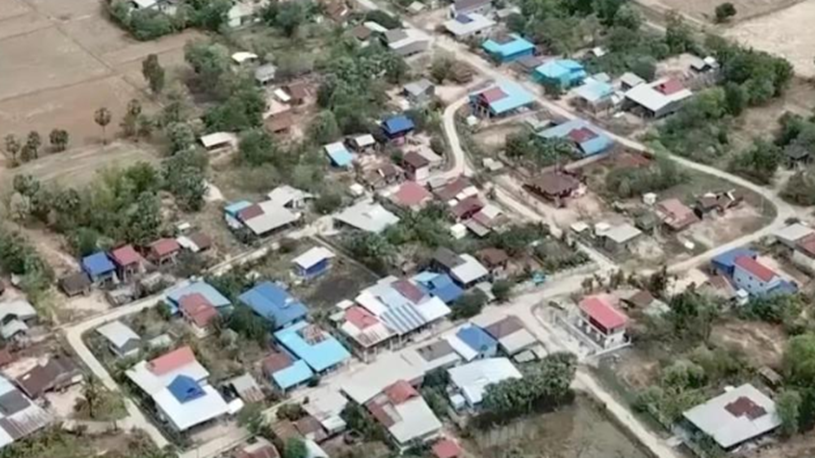
Tan is careful not to take too much credit. He said life in the mountains had been transformed by broader forces, from poverty alleviation to rural revitalization. Roads and other infrastructure improved, tourism expanded and villagers once scattered deep in the hills moved into new settlements, with guesthouses and viewing platforms appearing in some of the places they left behind. More young people also began returning to the mountains to start businesses, while village officials, volunteers and a growing network of e-commerce service stations helped older residents adapt to the digital world.
Tan is less of a local curiosity now than he once was, and he said that is exactly what he had hoped for.
His attachment to the mountains, though, has remained unchanged. He still insists on handing tourists their parcels himself. "We can't do anything that would hurt Shitai's image," he said. If an elderly villager has ordered medicine, he will deliver it no matter how late it is. And if a guesthouse perched high in the mountains cannot be reached by car, he will shoulder the parcels and carry them up himself.
"Every parcel I deliver makes me happy," he said. "It gives me a real sense of purpose."
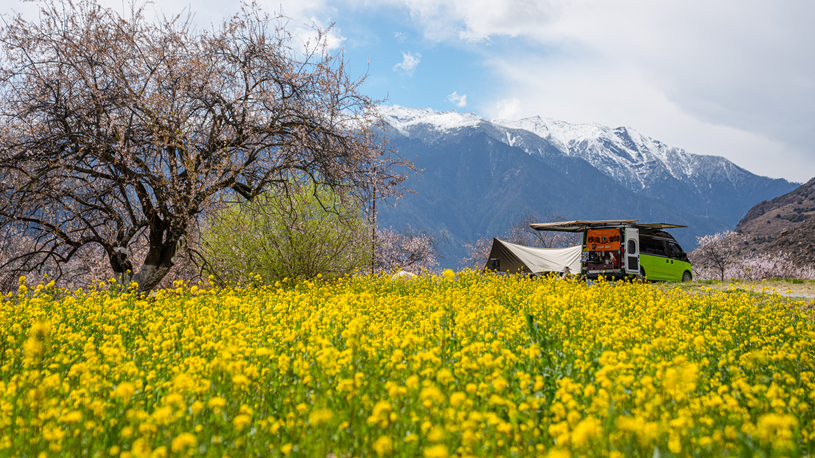
His 10-year-old van rolls on through the spring rain, pushing deeper into the mountains. As long as there are still people there who need him, Tan said, he will keep going. Enditem