BEIJING, April 8 (Xinhua) -- A selection of the best press photos from Xinhua.
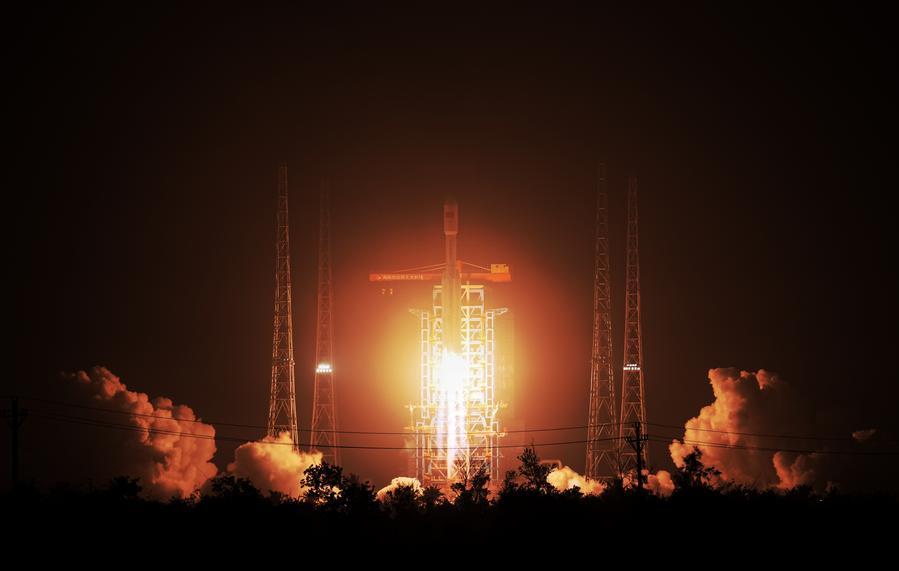
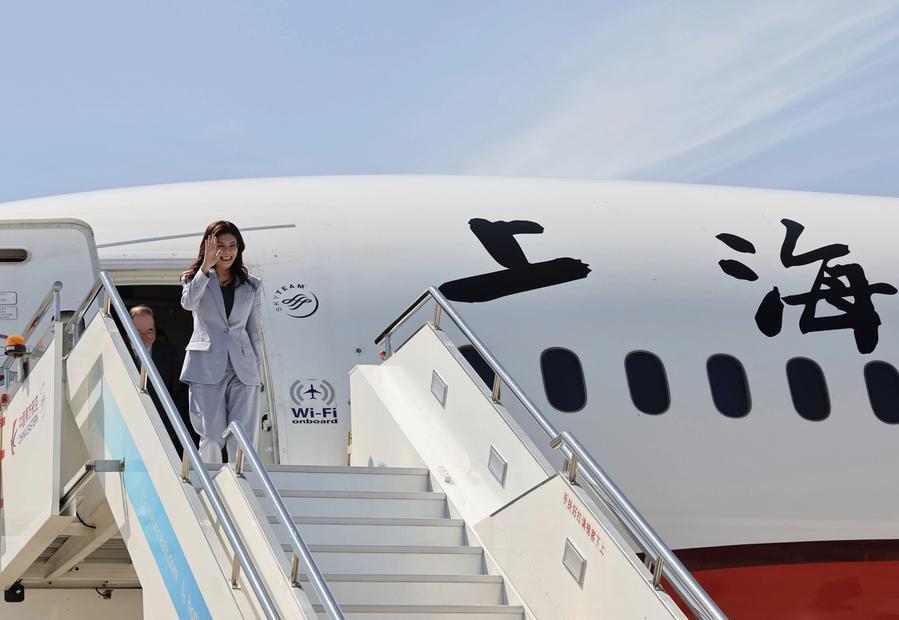
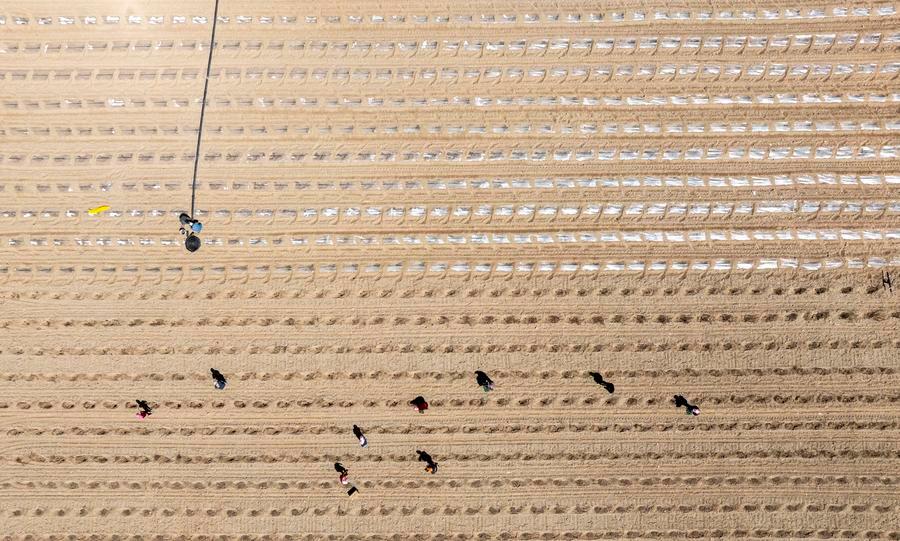
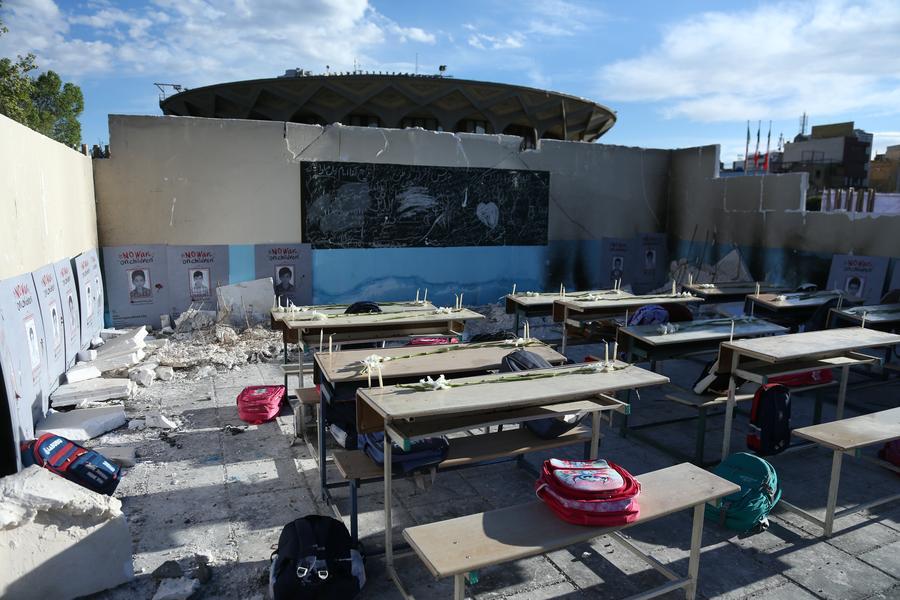
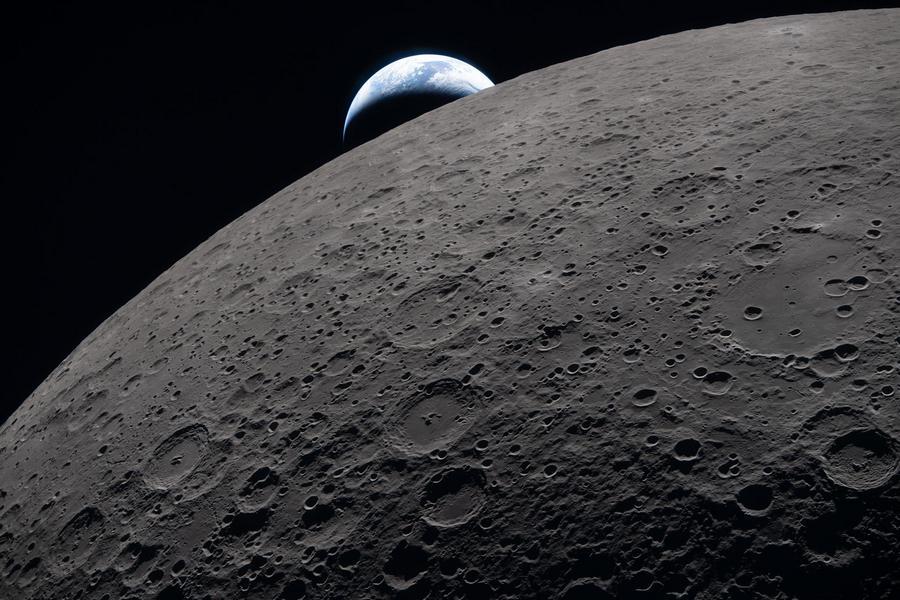
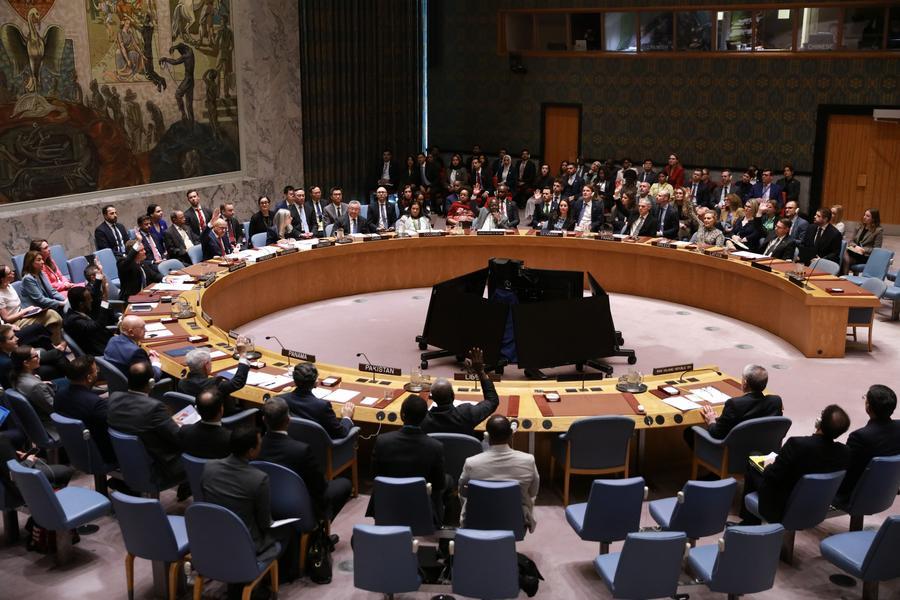
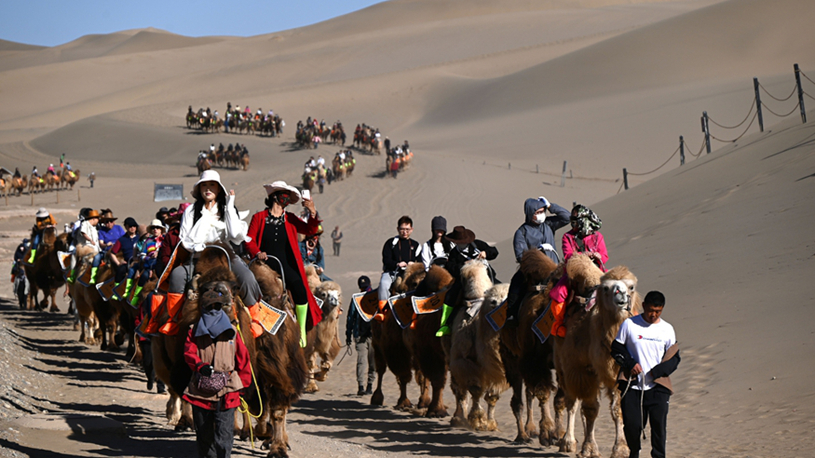
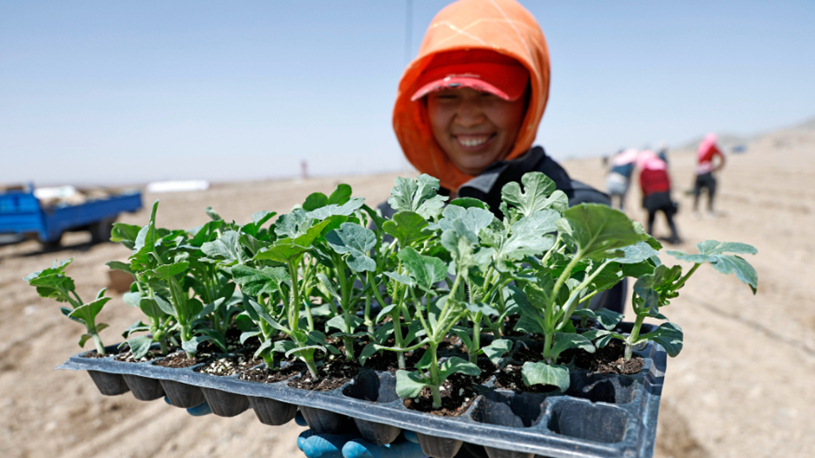
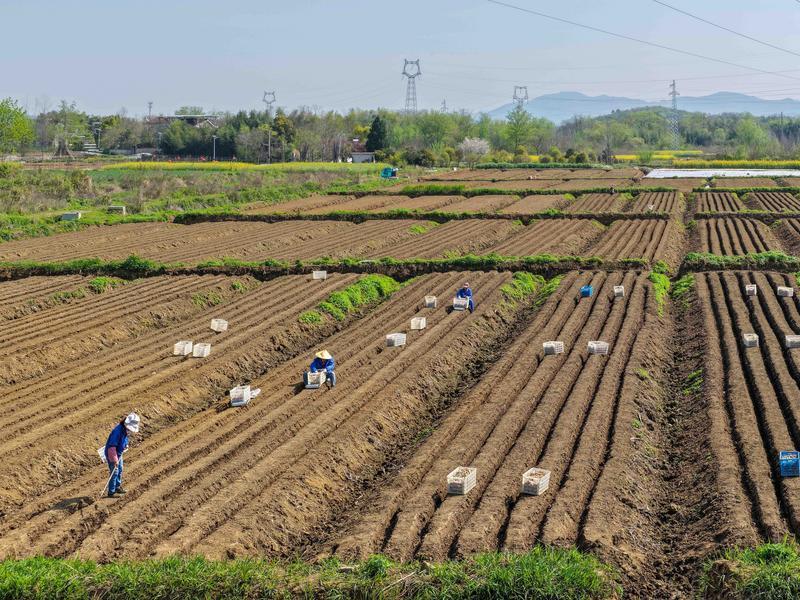
A Long March-8 carrier rocket carrying 18 internet satellites blasts off from the Hainan commercial spacecraft launch site in south China's Hainan Province, on April 7, 2026. China launched a Long March-8 carrier rocket on Tuesday in the southern island province of Hainan, sending 18 internet satellites into space. The rocket blasted off at 9:32 p.m. (Beijing Time) from the Hainan commercial spacecraft launch site. It successfully placed the payloads, the 7th batch of networking satellites for the Qianfan Constellation, into preset orbit. (Photo by Liu Jianqiu/Xinhua)A delegation of the Chinese Kuomintang (KMT) party, led by its chairwoman Cheng Li-wun for a mainland visit, arrives at Shanghai Hongqiao International Airport, in Shanghai, east China, April 7, 2026. The delegation arrived here on Tuesday for a mainland visit that will run through Sunday. (Xinhua/Xing Guangli)Tourists take bamboo rafts to enjoy the view on a river in Xuan'en County, central China's Hubei Province, on April 4, 2026. China recorded 135 million domestic tourist trips during the three-day Qingming Festival holiday, up 6.8 percent from a year earlier, while tourism spending rose 6.6 percent to nearly 61.37 billion yuan (8.9 billion U.S. dollars), according to the Ministry of Culture and Tourism on Tuesday. (Photo by Song Wen/Xinhua)An aerial drone photo taken on April 6, 2026 shows farmers planting Xisha watermelons in Xingren Town of Shapotou District, Zhongwei City, northwest China's Ningxia Hui Autonomous Region. The Xisha watermelon is a watermelon variety cultivated on sandy earth covered with stone gravels. It is known for its large size, crisp and juicy flesh, as well as rich sweetness. The fruit is often hailed as the "green gem of the Gobi Desert" owing to its great economic value. Zhongwei City, a major producer of Xisha watermelons, plans to plant 420,000 mu (28,000 hectares) of the watermelons this year. (Xinhua/Wang Peng)A staff member tends rice seedlings at an intelligent seedling factory in Guangshan County of Xinyang City, central China's Henan Province, April 6, 2026. (Photo by Xie Wanbo/Xinhua)This photo taken on April 6, 2026 shows a recreated scene of a classroom at a memorial event held to mourn the students of an elementary school who were killed in a missile strike in southern Iran, in Tehran, Iran. A missile strike on an elementary school in Minab, southern Iran on Feb. 28, 2026 killed at least 175 people, most of them schoolgirls. Increasing evidence has shown this tragedy was of the U.S. making. (Xinhua/Shadati)This photo taken on April 6, 2026 shows the Moon (front) and Earth seen from the Orion spacecraft. (NASA/Handout via Xinhua)Rwandan President Paul Kagame and first lady Jeannette Kagame light the "Flame of Remembrance" during a commemoration event of the 32nd anniversary of the 1994 genocide against the Tutsi in Kigali, Rwanda, on April 7, 2026. Paul Kagame on Tuesday emphasized the importance of confronting denial and preserving historical truth as the country began a week of national mourning and 100 days of commemoration to mark the 32nd anniversary of the 1994 genocide against the Tutsi. (Photo by Cyril Ndegeya/Xinhua)Representatives vote on a draft resolution on the Strait of Hormuz during a UN Security Council meeting at the UN headquarters in New York, on April 7, 2026. The UN Security Council on Tuesday failed to adopt a draft resolution that "strongly encourages" states interested in the use of commercial maritime routes in the Strait of Hormuz to coordinate efforts of a defensive nature to contribute to ensuring the safety and security of navigation across the Strait of Hormuz, including through the escort of merchant and commercial vessels. (Xinhua/Xie E)■