
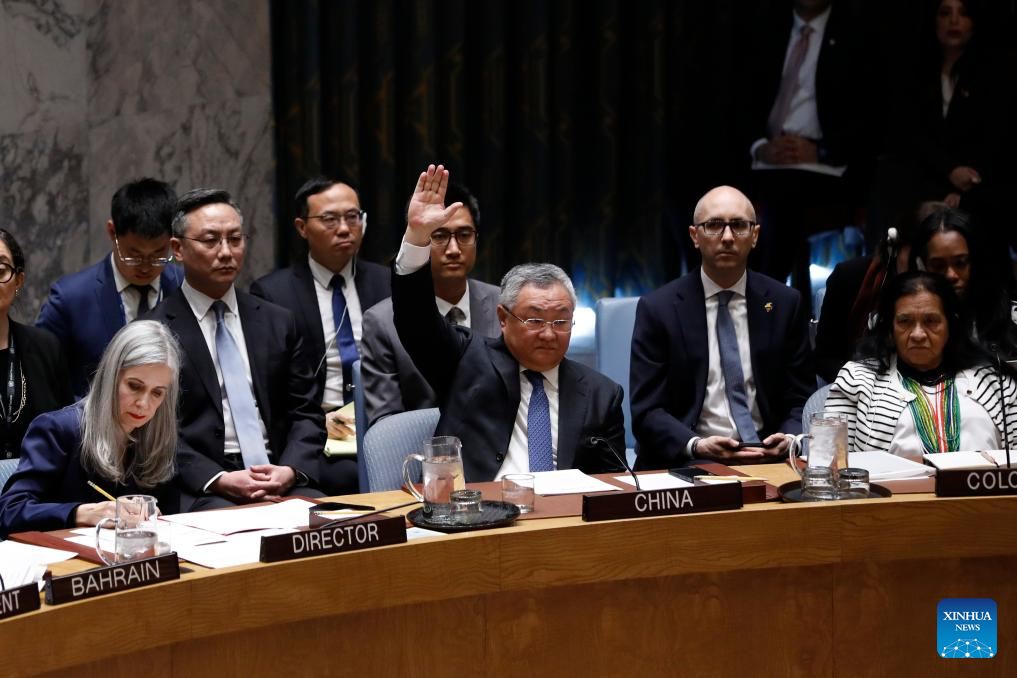
China's permanent representative to the United Nations Fu Cong (C, front) vetoes a UN Security Council draft resolution on the Strait of Hormuz at the UN headquarters in New York, on April 7, 2026. (Xinhua/Xie E)
UNITED NATIONS, April 7 (Xinhua) -- The UN Security Council on Tuesday failed to adopt a draft resolution that "strongly encourages" states interested in the use of commercial maritime routes in the Strait of Hormuz to coordinate efforts of a defensive nature to contribute to ensuring the safety and security of navigation across the Strait of Hormuz, including through the escort of merchant and commercial vessels.
Eleven members of the Security Council voted in favor of the draft resolution, China and Russia voted against it, while Colombia and Pakistan abstained.
The draft resolution was proposed by Bahrain in coordination with fellow Gulf Cooperation Council members Kuwait, Oman, Qatar, Saudi Arabia and the United Arab Emirates, as well as with Jordan.
In his explanation of the vote, China's permanent representative to the United Nations Fu Cong said the draft resolution failed to capture the root causes and the full picture of the conflict in a comprehensive and balanced manner.
"The Security Council should not rush to vote on a draft resolution when serious concerns have been raised by members," Fu said.
He expressed hope that peace and stability would be restored and affirmed China's commitment to addressing the situation properly by tackling its root causes.
"This war should never have happened," Fu said, urging the United States and Israel to halt their "illegal military actions."
"At a time when the United States is openly threatening the very survival of a civilization, when the current hostilities imposed on Iran are very likely to further escalate, the draft resolution, should it have been adopted, would send an extremely wrong message and have very serious consequences," Fu said.
Vassily Nebenzia, Russia's permanent representative to the United Nations, said the draft resolution presented Iranian actions as the sole source of regional tensions, while illegal attacks by the United States and Israel against Iran were "not mentioned at all."
Noting that the draft resolution "abounded with unbalanced, inaccurate and confrontational elements," he said it constituted a "fundamentally erroneous and dangerous approach" to the situation in the region and its implications are "clear to us."
Iran's permanent representative to the United Nations Amir Saeid Iravani said the draft seeks "to punish the victim for defending its sovereignty and vital national interests in the Persian Gulf and the Strait of Hormuz, while providing political and legal cover for further unlawful acts by the aggressors."
"In substance, this was a United States draft," he added, expressing appreciation to China and Russia for their responsible action in exercising the veto, as well as to Pakistan and Colombia for abstaining and recognizing the serious implications of the text, which would have normalized the use of force based on vague and unfounded allegations.
Iran has responded to the brutal war through proportionate measures to prevent the passage of vessels associated with the aggressors, and non-hostile vessels will be free to exercise their right of passage, he said. ■
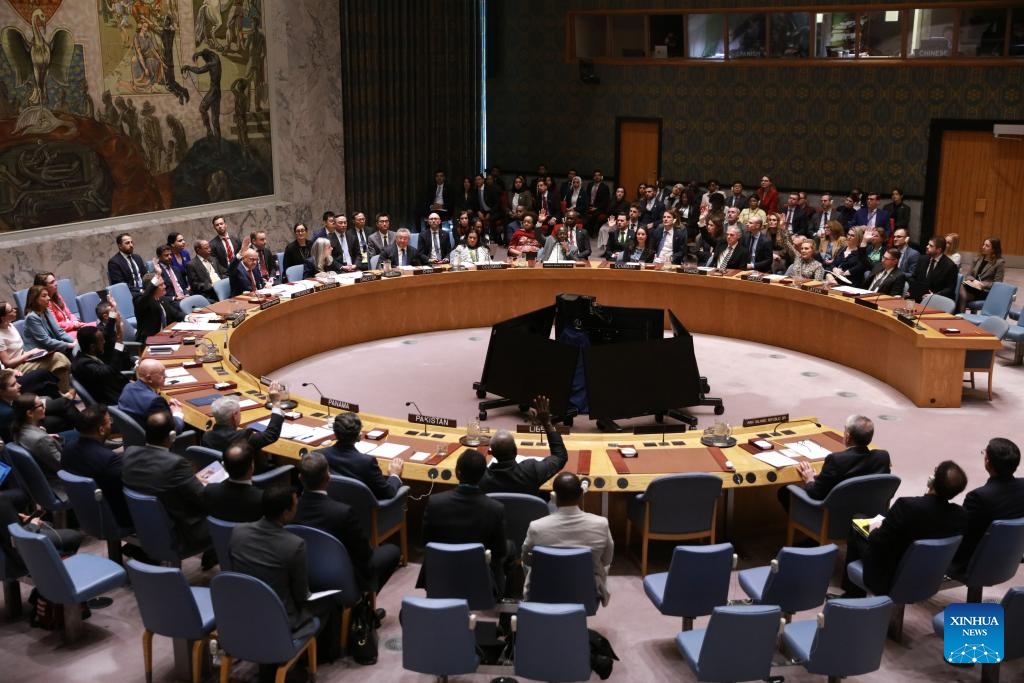
Representatives vote on a draft resolution on the Strait of Hormuz during a UN Security Council meeting at the UN headquarters in New York, on April 7, 2026. (Xinhua/Xie E)


