
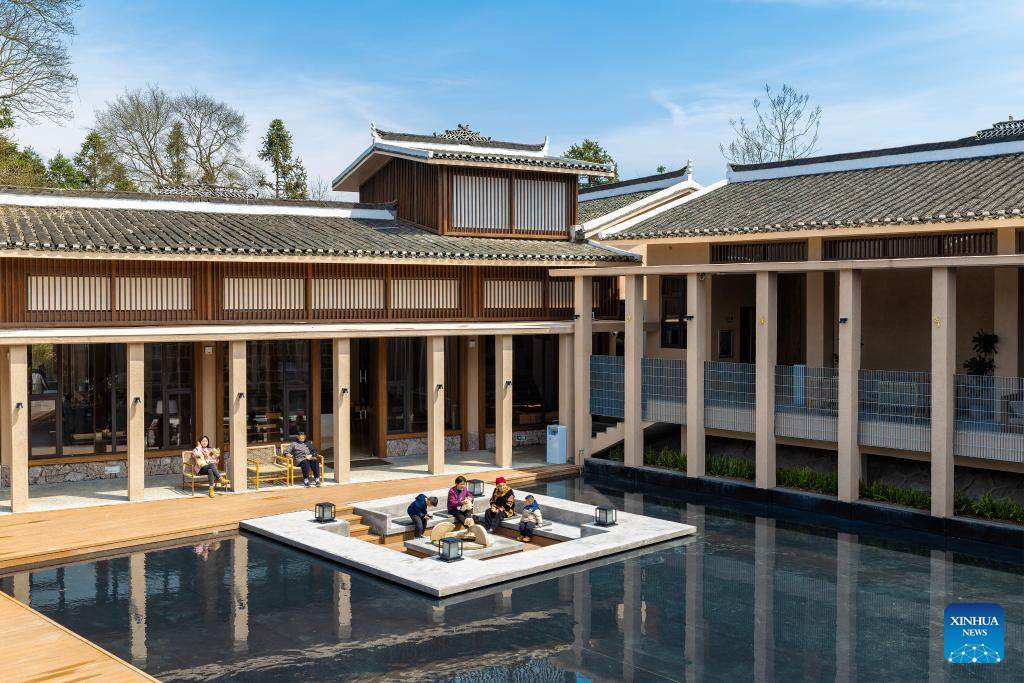
Tourists enjoy themselves at a homestay in an azalea scenic area in Bijie City, southwest China's Guizhou Province, March 29, 2026.
The azaleas in Bijie are currently in full bloom, drawing crowds of visitors and boosting local businesses such as hotels, restaurants, flower cultivation, and cultural and creative products.
In 2025, the area welcomed over 8 million tourists and generated over 10 million yuan (approximately 1.45 million U.S. dollars) from flower cultivation. It also supported over 900 food and accommodation establishments, and created over 25,000 jobs. (Photo by Li Hua/Xinhua)
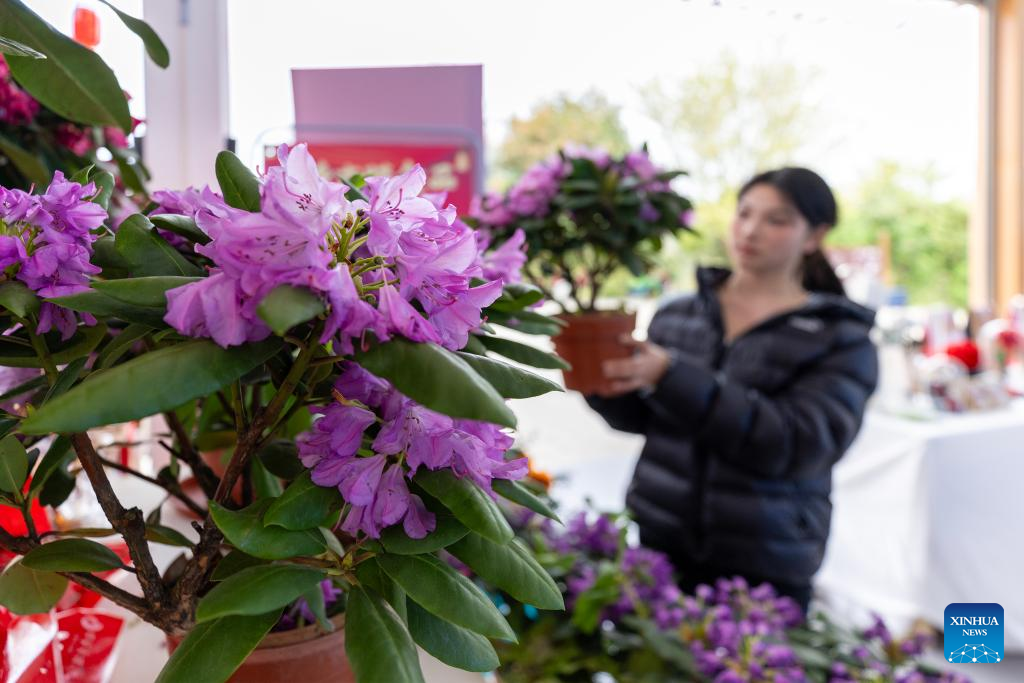
A tourist buys azalea flowers at an azalea scenic area in Bijie City, southwest China's Guizhou Province, March 29, 2026.
The azaleas in Bijie are currently in full bloom, drawing crowds of visitors and boosting local businesses such as hotels, restaurants, flower cultivation, and cultural and creative products.
In 2025, the area welcomed over 8 million tourists and generated over 10 million yuan (approximately 1.45 million U.S. dollars) from flower cultivation. It also supported over 900 food and accommodation establishments, and created over 25,000 jobs. (Photo by Li Hua/Xinhua)
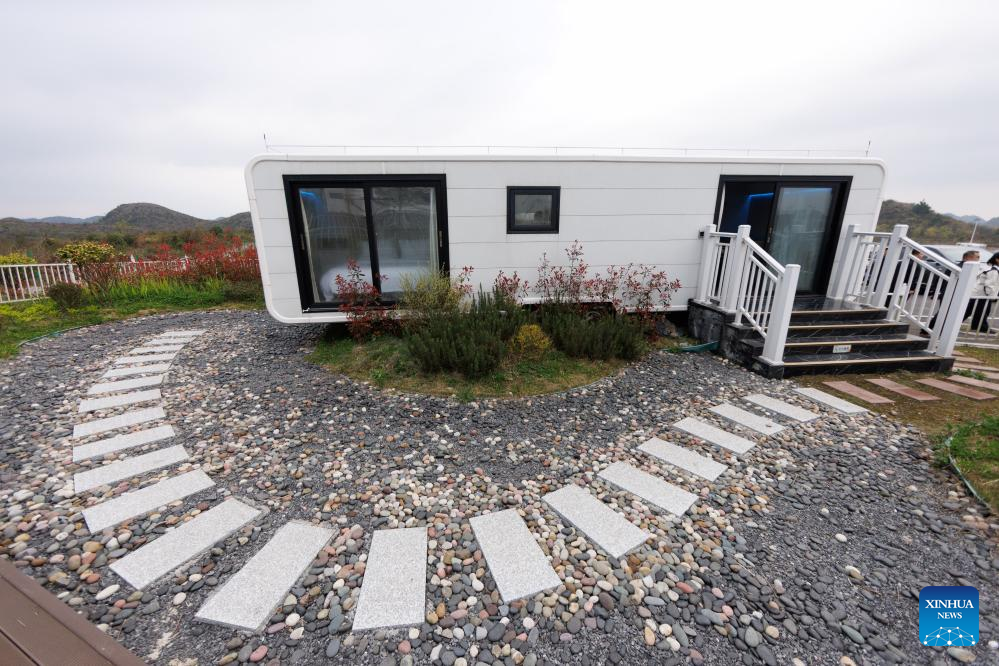
A hotel is pictured at an azalea scenic area in Bijie City, southwest China's Guizhou Province, April 1, 2026.
The azaleas in Bijie are currently in full bloom, drawing crowds of visitors and boosting local businesses such as hotels, restaurants, flower cultivation, and cultural and creative products.
In 2025, the area welcomed over 8 million tourists and generated over 10 million yuan (approximately 1.45 million U.S. dollars) from flower cultivation. It also supported over 900 food and accommodation establishments, and created over 25,000 jobs. (Xinhua/Liu Xu)
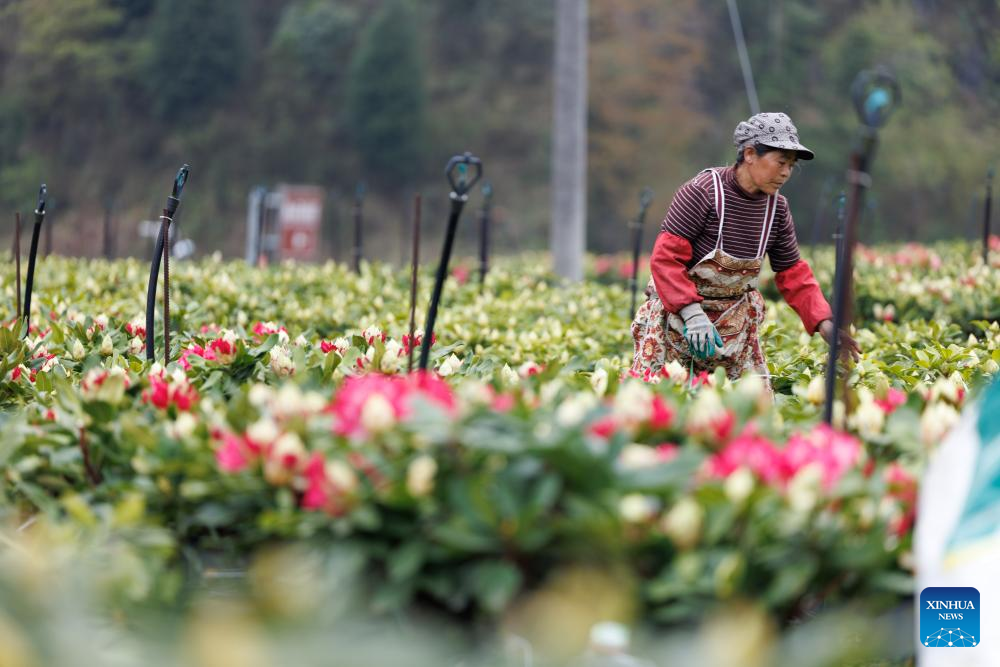
A staff member works at a flower science and technology park in Bijie City, southwest China's Guizhou Province, April 1, 2026.
The azaleas in Bijie are currently in full bloom, drawing crowds of visitors and boosting local businesses such as hotels, restaurants, flower cultivation, and cultural and creative products.
In 2025, the area welcomed over 8 million tourists and generated over 10 million yuan (approximately 1.45 million U.S. dollars) from flower cultivation. It also supported over 900 food and accommodation establishments, and created over 25,000 jobs. (Xinhua/Liu Xu)
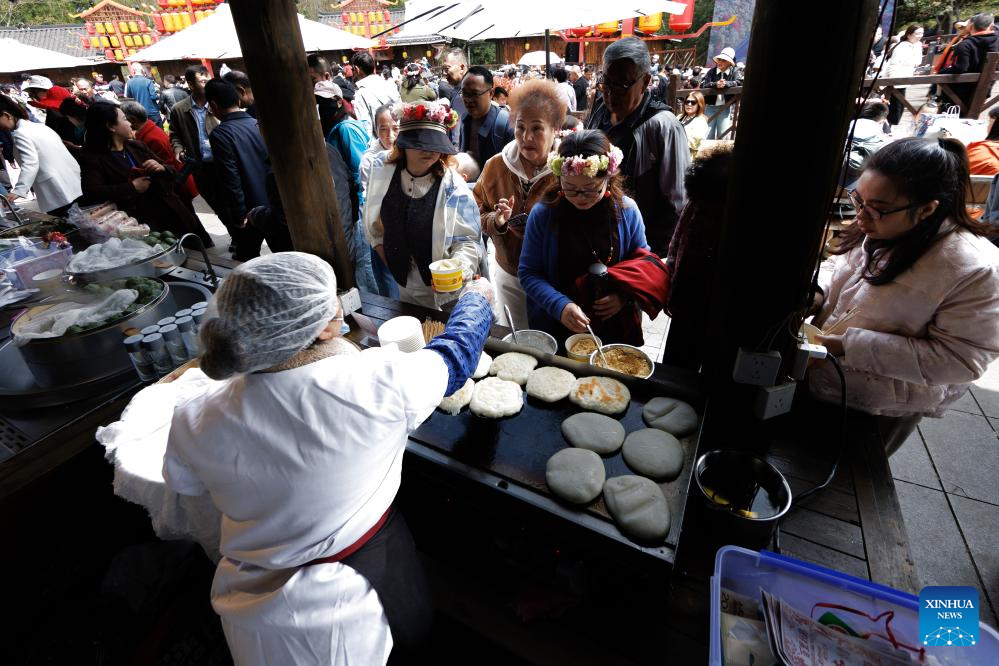
Tourists enjoy local cuisine at an azalea scenic area in Bijie City, southwest China's Guizhou Province, April 1, 2026.
The azaleas in Bijie are currently in full bloom, drawing crowds of visitors and boosting local businesses such as hotels, restaurants, flower cultivation, and cultural and creative products.
In 2025, the area welcomed over 8 million tourists and generated over 10 million yuan (approximately 1.45 million U.S. dollars) from flower cultivation. It also supported over 900 food and accommodation establishments, and created over 25,000 jobs. (Xinhua/Liu Xu)
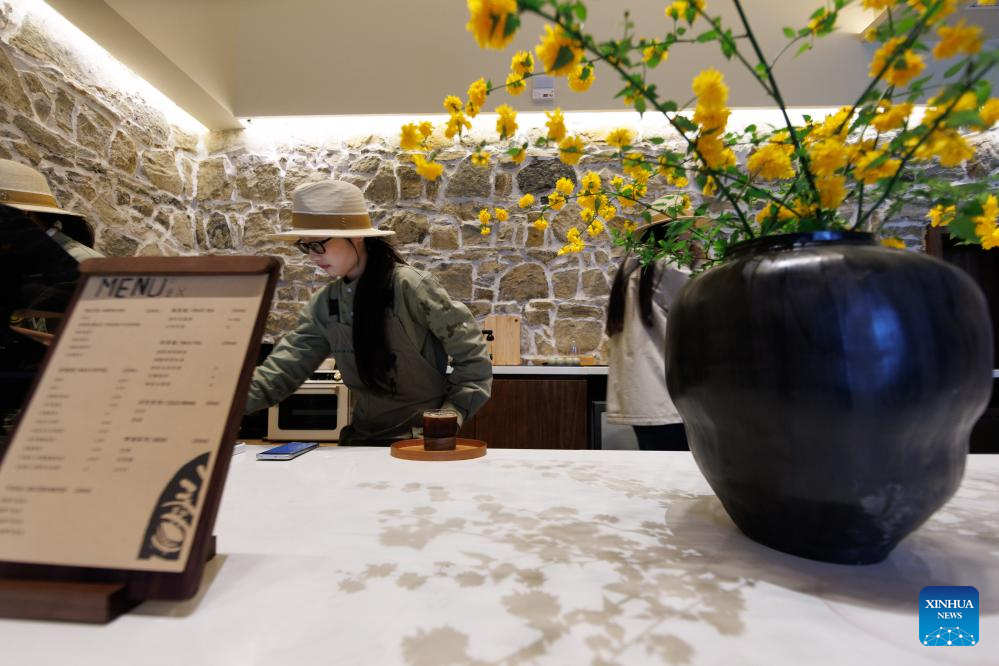
A staff member makes coffee at a homestay at an azalea scenic area in Bijie City, southwest China's Guizhou Province, April 2, 2026.
The azaleas in Bijie are currently in full bloom, drawing crowds of visitors and boosting local businesses such as hotels, restaurants, flower cultivation, and cultural and creative products.
In 2025, the area welcomed over 8 million tourists and generated over 10 million yuan (approximately 1.45 million U.S. dollars) from flower cultivation. It also supported over 900 food and accommodation establishments, and created over 25,000 jobs. (Xinhua/Liu Xu)
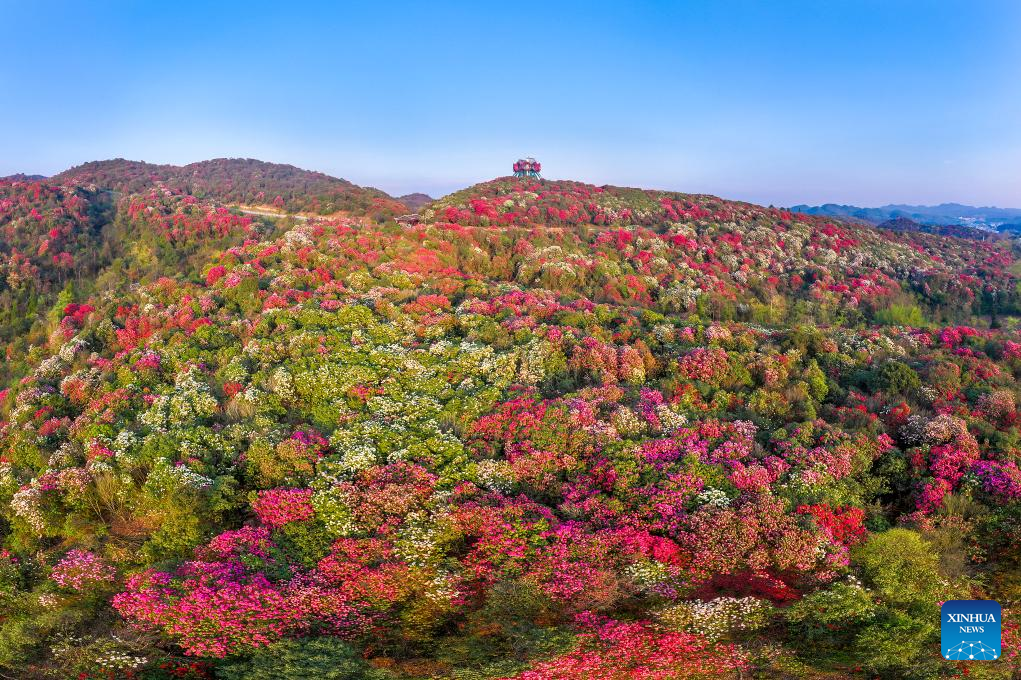
An aerial drone photo shows azaleas at an azalea scenic area in Bijie City, southwest China's Guizhou Province, March 29, 2026.
The azaleas in Bijie are currently in full bloom, drawing crowds of visitors and boosting local businesses such as hotels, restaurants, flower cultivation, and cultural and creative products.
In 2025, the area welcomed over 8 million tourists and generated over 10 million yuan (approximately 1.45 million U.S. dollars) from flower cultivation. It also supported over 900 food and accommodation establishments, and created over 25,000 jobs. (Photo by Li Hua/Xinhua)
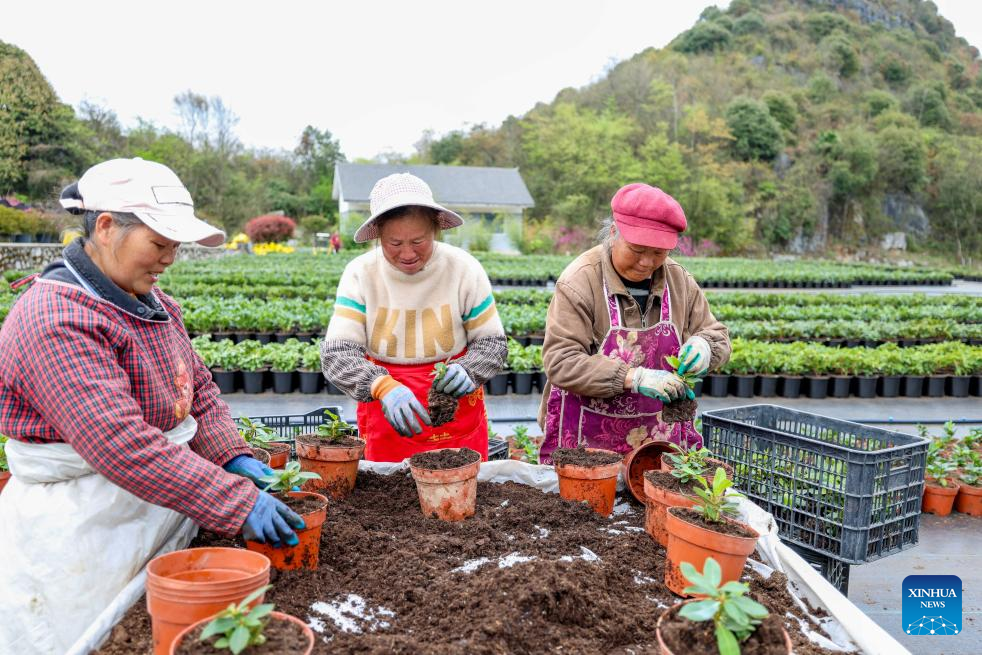
Staff members work at a flower science and technology park in Bijie City, southwest China's Guizhou Province, March 28, 2026.
The azaleas in Bijie are currently in full bloom, drawing crowds of visitors and boosting local businesses such as hotels, restaurants, flower cultivation, and cultural and creative products.
In 2025, the area welcomed over 8 million tourists and generated over 10 million yuan (approximately 1.45 million U.S. dollars) from flower cultivation. It also supported over 900 food and accommodation establishments, and created over 25,000 jobs. (Photo by Han Xianpu/Xinhua)
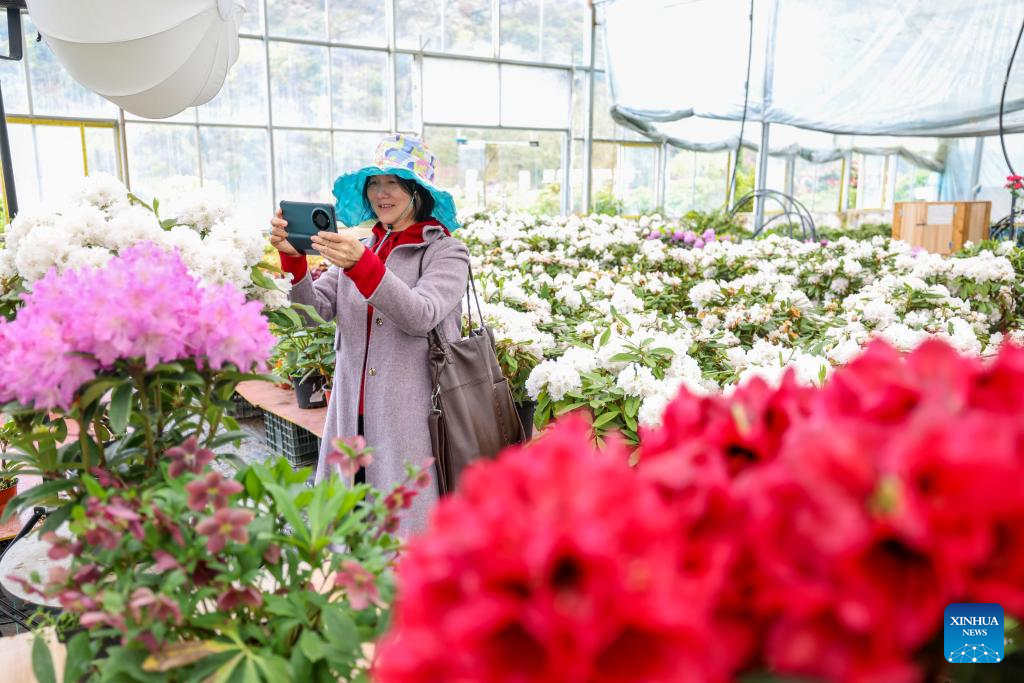
A tourist visits a flower science and technology park in Bijie City, southwest China's Guizhou Province, March 28, 2026.
The azaleas in Bijie are currently in full bloom, drawing crowds of visitors and boosting local businesses such as hotels, restaurants, flower cultivation, and cultural and creative products.
In 2025, the area welcomed over 8 million tourists and generated over 10 million yuan (approximately 1.45 million U.S. dollars) from flower cultivation. It also supported over 900 food and accommodation establishments, and created over 25,000 jobs. (Photo by Han Xianpu/Xinhua)
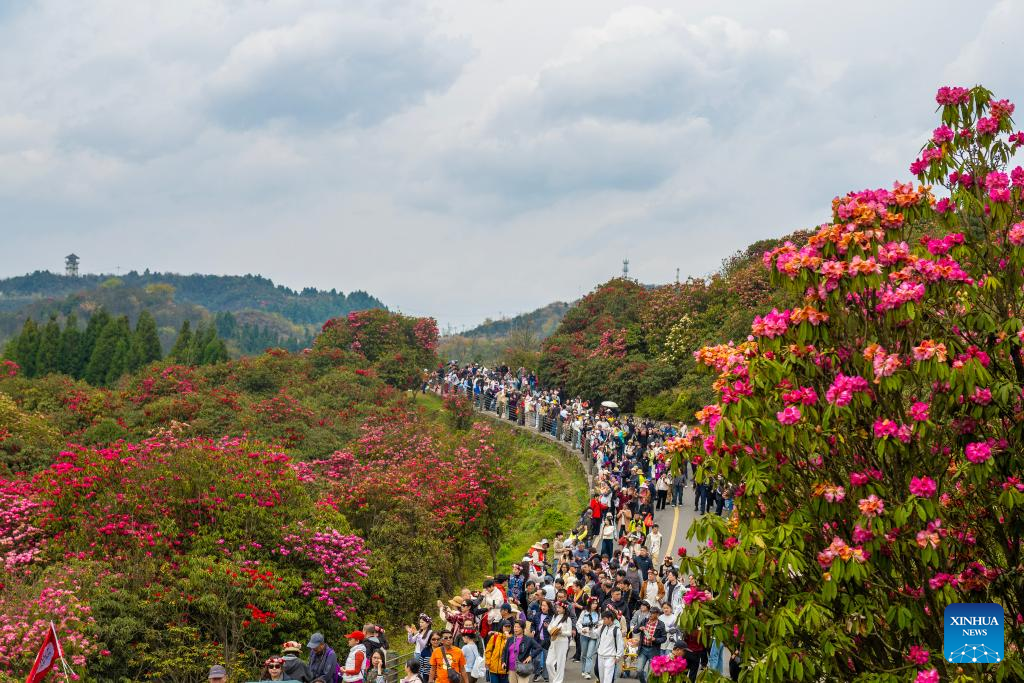
Tourists visit an azalea scenic area in Bijie City, southwest China's Guizhou Province, March 29, 2026.
The azaleas in Bijie are currently in full bloom, drawing crowds of visitors and boosting local businesses such as hotels, restaurants, flower cultivation, and cultural and creative products.
In 2025, the area welcomed over 8 million tourists and generated over 10 million yuan (approximately 1.45 million U.S. dollars) from flower cultivation. It also supported over 900 food and accommodation establishments, and created over 25,000 jobs. (Photo by Li Hua/Xinhua)


