OCHA said nearly 15 percent of Lebanon's territory has been affected by displacement orders over the past month. While many families have fled to collective shelters, relatives' homes or informal settlements, others have remained behind in affected areas and are in urgent need of assistance.
UNITED NATIONS, April 2 (Xinhua) -- UN humanitarians said Thursday the situation across the Middle East is deteriorating rapidly, with spreading displacement, mounting civilian casualties and severe constraints on aid operations.
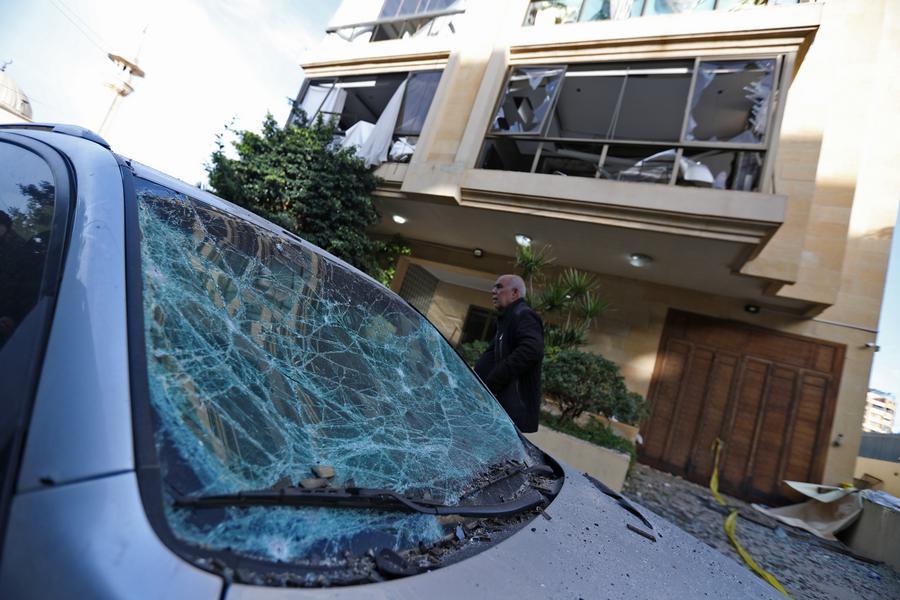
The UN Office for the Coordination of Humanitarian Affairs (OCHA) said that more than 1.1 million Lebanese have been displaced as displacement orders continue to affect new areas.
OCHA said nearly 15 percent of Lebanon's territory has been affected by displacement orders over the past month. While many families have fled to collective shelters, relatives' homes or informal settlements, others have remained behind in affected areas and are in urgent need of assistance.
Half of the healthcare facilities supported by the UN Population Fund (UNFPA) in affected conflict areas have been forced to close due to violence. Many healthcare workers themselves have been displaced. Hospitals and primary healthcare centers that remain operational are overwhelmed and understaffed.
Humanitarian partners are working to sustain essential services where possible. UNFPA has deployed nine mobile health units across Lebanon, providing maternal health services and emergency obstetric care in collective shelters. The units also offer psychosocial support, care for survivors of sexual violence and the distribution of dignity kits and essential supplies for pregnant women and new mothers.
However, OCHA said the humanitarian response is facing growing logistical constraints. Disruptions to major global transport routes are delaying the delivery of critical supplies. While aid agencies are attempting to reroute shipments and secure alternative supply lines, significant gaps remain as needs continue to rise sharply.
The office renewed its call on the international community for an immediate de-escalation of hostilities, the protection of civilians, healthcare facilities and humanitarian workers, full and unimpeded humanitarian access, particularly to southern Lebanon, and urgent funding to meet rapidly expanding needs.
UN peacekeepers along the Blue Line, known as UNIFIL, describe the situation as bleak and concerning.
UNIFIL said the Israel Defense Forces have expanded their incursion westward, with tanks and clashes reported in Sector West, roughly 12 km north of the Blue Line.
In Gaza, OCHA said humanitarian needs continue to far exceed what aid organizations can provide. Only one crossing is currently open for cargo to enter the Gaza Strip.
On food security, UN agencies and partners reported that distributions for March were completed, reaching every other family with rations covering half of minimum caloric requirements.
UN aid partners are also serving nearly 1.5 million meals daily and producing about 130,000 two-kilogram bread bundles daily. Still, OCHA said it is insufficient. Limited entry of commercial goods, particularly cooking gas, continues to constrain food preparation, forcing nearly half of households to rely on unsafe cooking methods such as burning trash.
On health, OCHA said that UN-supported emergency medical teams provided about 23,000 consultations across Gaza during the final week of March. However, persistent delays in clearing specialized medical and surgical equipment are limiting the ability to deliver complex care.
On shelter, the office said most of Gaza's population is still displaced, and assistance is largely confined to short-term solutions. More durable shelter support depends on the entry of materials that are difficult to approve, including equipment needed to clear debris and unexploded ordnance or repair damaged homes.
During the last week of March, humanitarian partners assisted nearly 14,000 families with tarpaulins and household items, prioritizing those affected by flooding from recent rainstorms.
In education, last week's rains damaged at least 15 temporary learning spaces, disrupting schooling for around 20,000 students. UNICEF and its partners continued setting up specialized learning tents and distributing stationery and recreational materials for children.
In the West Bank, OCHA data showed that violence has surged since the regional escalation began on Feb. 28. Two-thirds of Palestinian fatalities recorded in the first quarter of this year occurred after that date. Four Palestinians women were killed by falling munitions during an Iranian missile attack.
The office also reported more than 200 settler attacks in March that caused casualties or property damage, affecting over 100 Palestinian communities.
OCHA said that Palestinians must be protected, perpetrators of unlawful attacks must be held accountable, and policies driving displacement, insecurity and humanitarian needs must be reversed. ■