
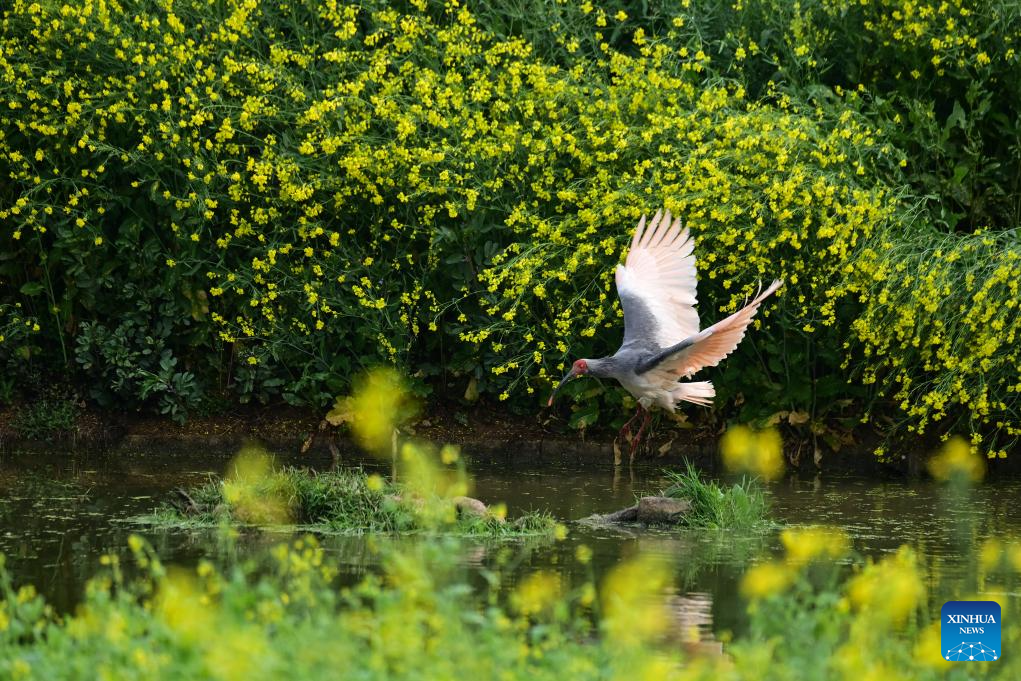
A crested ibis forages at a pond in Caoba Village, Yangxian County of northwest China's Shaanxi Province, March 30, 2026.
Crested ibises have recently entered their breeding season in Yangxian County of northwest China's Shaanxi Province.
The crested ibis, with its iconic red crest and long black beak, was in the past widely distributed across East Asia and Russia's Siberia. It was thought to be extinct in China until seven wild birds were observed in Yangxian County, Shaanxi, in 1981, a discovery that prompted captive breeding and enhanced protection of the species. (Xinhua/Zou Jingyi)
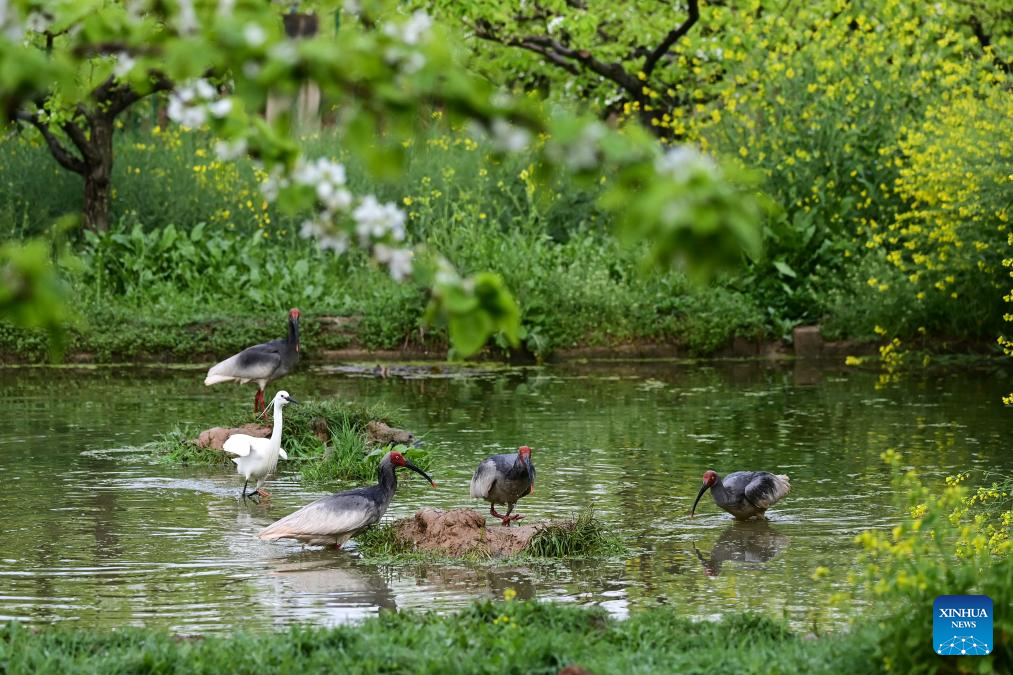
Crested ibises and other birds forage at a pond in Caoba Village, Yangxian County of northwest China's Shaanxi Province, March 30, 2026.
Crested ibises have recently entered their breeding season in Yangxian County of northwest China's Shaanxi Province.
The crested ibis, with its iconic red crest and long black beak, was in the past widely distributed across East Asia and Russia's Siberia. It was thought to be extinct in China until seven wild birds were observed in Yangxian County, Shaanxi, in 1981, a discovery that prompted captive breeding and enhanced protection of the species. (Xinhua/Zou Jingyi)
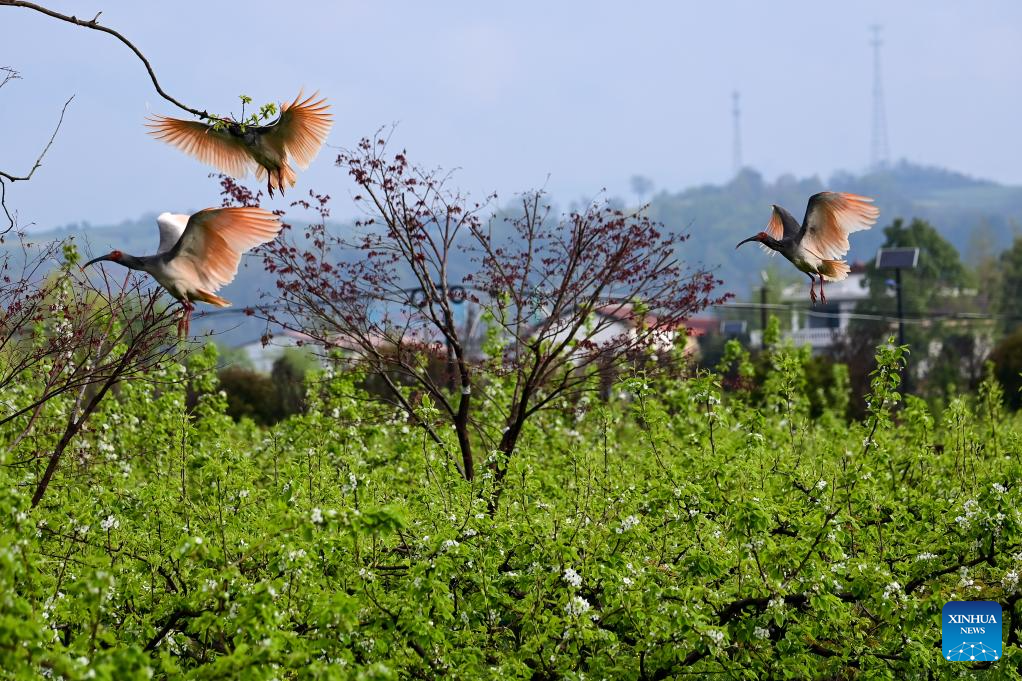
Crested ibises fly over pear trees in Caoba Village, Yangxian County of northwest China's Shaanxi Province, March 30, 2026.
Crested ibises have recently entered their breeding season in Yangxian County of northwest China's Shaanxi Province.
The crested ibis, with its iconic red crest and long black beak, was in the past widely distributed across East Asia and Russia's Siberia. It was thought to be extinct in China until seven wild birds were observed in Yangxian County, Shaanxi, in 1981, a discovery that prompted captive breeding and enhanced protection of the species. (Xinhua/Zou Jingyi)
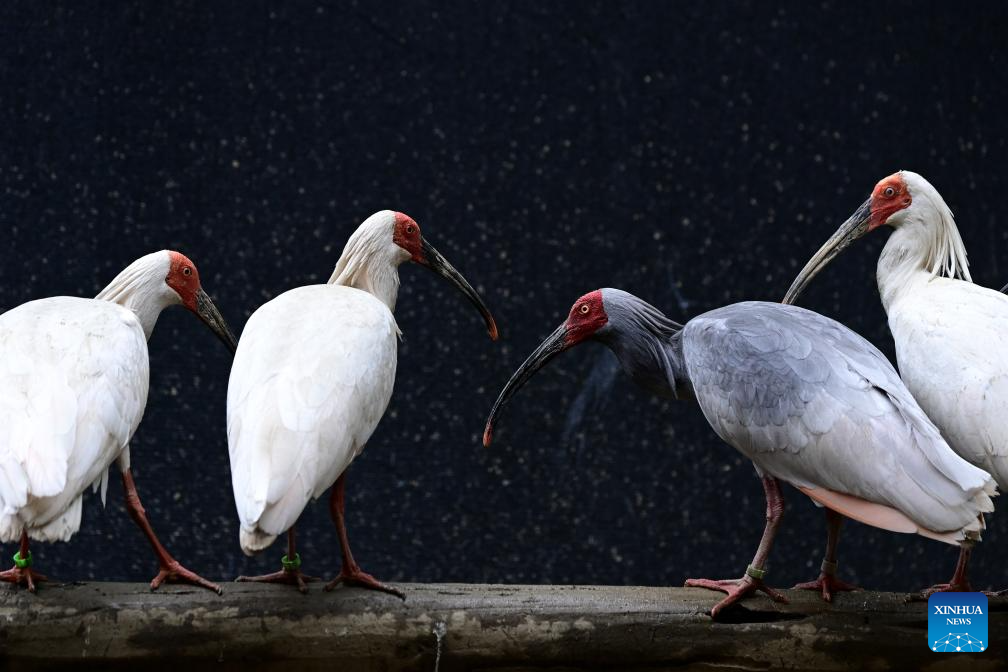
Crested ibises rescued from wild rest at an artificial breeding center of Shaanxi Hanzhong Crested Ibis National Nature Reserve in Yangxian County of northwest China's Shaanxi Province, March 30, 2026.
Crested ibises have recently entered their breeding season in Yangxian County of northwest China's Shaanxi Province.
The crested ibis, with its iconic red crest and long black beak, was in the past widely distributed across East Asia and Russia's Siberia. It was thought to be extinct in China until seven wild birds were observed in Yangxian County, Shaanxi, in 1981, a discovery that prompted captive breeding and enhanced protection of the species. (Xinhua/Zou Jingyi)
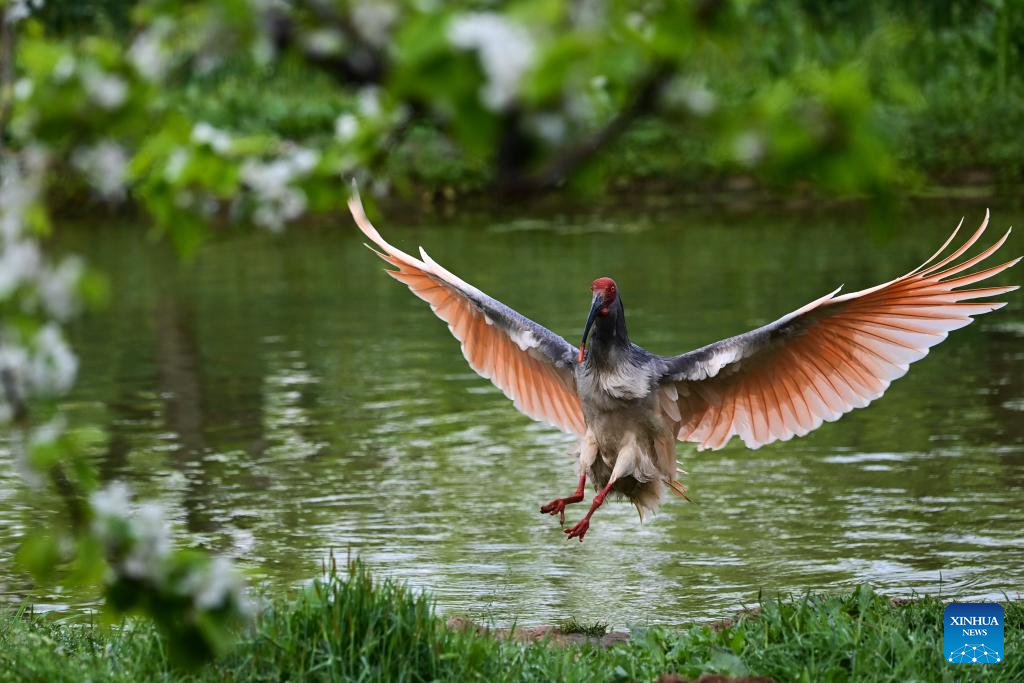
A crested ibis forages at a pond in Caoba Village, Yangxian County of northwest China's Shaanxi Province, March 30, 2026.
Crested ibises have recently entered their breeding season in Yangxian County of northwest China's Shaanxi Province.
The crested ibis, with its iconic red crest and long black beak, was in the past widely distributed across East Asia and Russia's Siberia. It was thought to be extinct in China until seven wild birds were observed in Yangxian County, Shaanxi, in 1981, a discovery that prompted captive breeding and enhanced protection of the species. (Xinhua/Zou Jingyi)
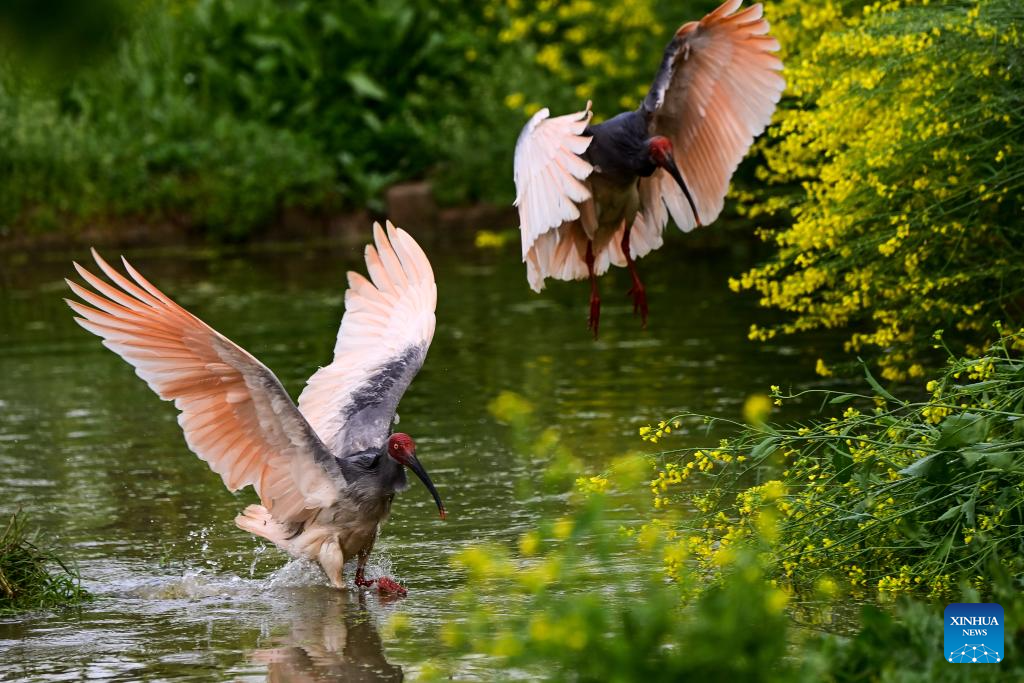
Crested ibises forage at a pond in Caoba Village, Yangxian County of northwest China's Shaanxi Province, March 30, 2026.
Crested ibises have recently entered their breeding season in Yangxian County of northwest China's Shaanxi Province.
The crested ibis, with its iconic red crest and long black beak, was in the past widely distributed across East Asia and Russia's Siberia. It was thought to be extinct in China until seven wild birds were observed in Yangxian County, Shaanxi, in 1981, a discovery that prompted captive breeding and enhanced protection of the species. (Xinhua/Zou Jingyi)
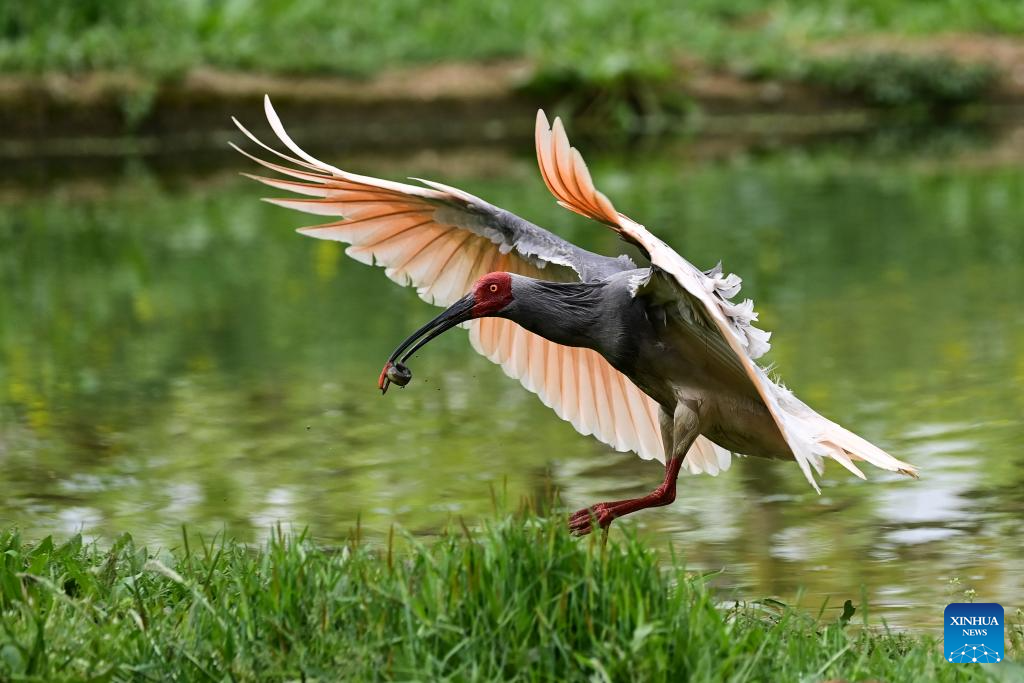
A crested ibis forages at a pond in Caoba Village, Yangxian County of northwest China's Shaanxi Province, March 30, 2026.
Crested ibises have recently entered their breeding season in Yangxian County of northwest China's Shaanxi Province.
The crested ibis, with its iconic red crest and long black beak, was in the past widely distributed across East Asia and Russia's Siberia. It was thought to be extinct in China until seven wild birds were observed in Yangxian County, Shaanxi, in 1981, a discovery that prompted captive breeding and enhanced protection of the species. (Xinhua/Zou Jingyi)
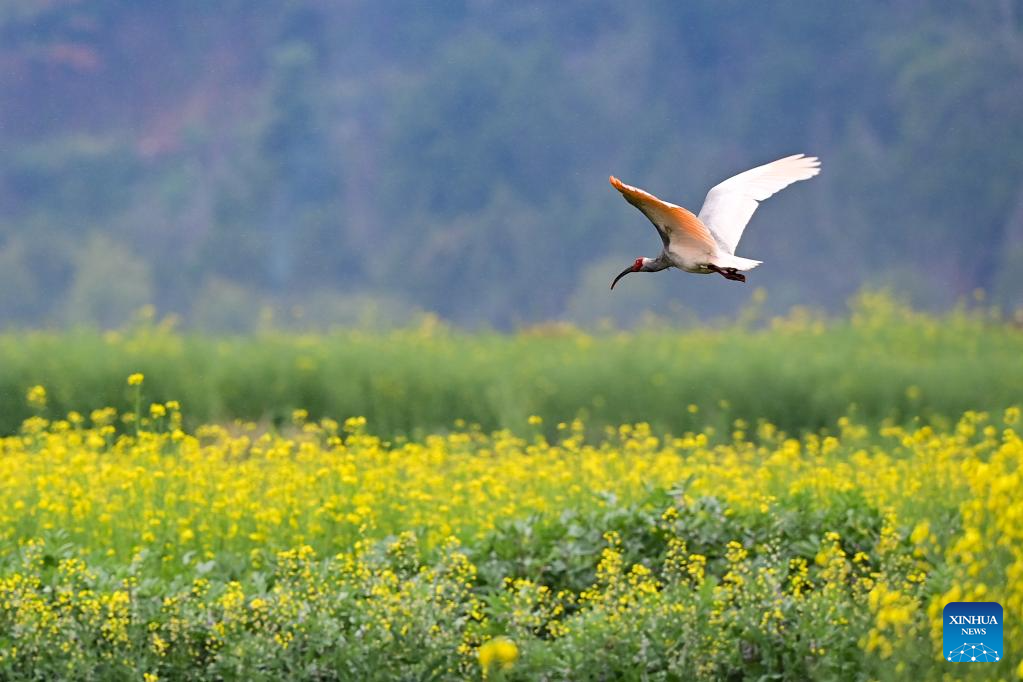
A crested ibis flies over cole flower fields in Caoba Village, Yangxian County of northwest China's Shaanxi Province, March 29, 2026.
Crested ibises have recently entered their breeding season in Yangxian County of northwest China's Shaanxi Province.
The crested ibis, with its iconic red crest and long black beak, was in the past widely distributed across East Asia and Russia's Siberia. It was thought to be extinct in China until seven wild birds were observed in Yangxian County, Shaanxi, in 1981, a discovery that prompted captive breeding and enhanced protection of the species. (Xinhua/Zou Jingyi)
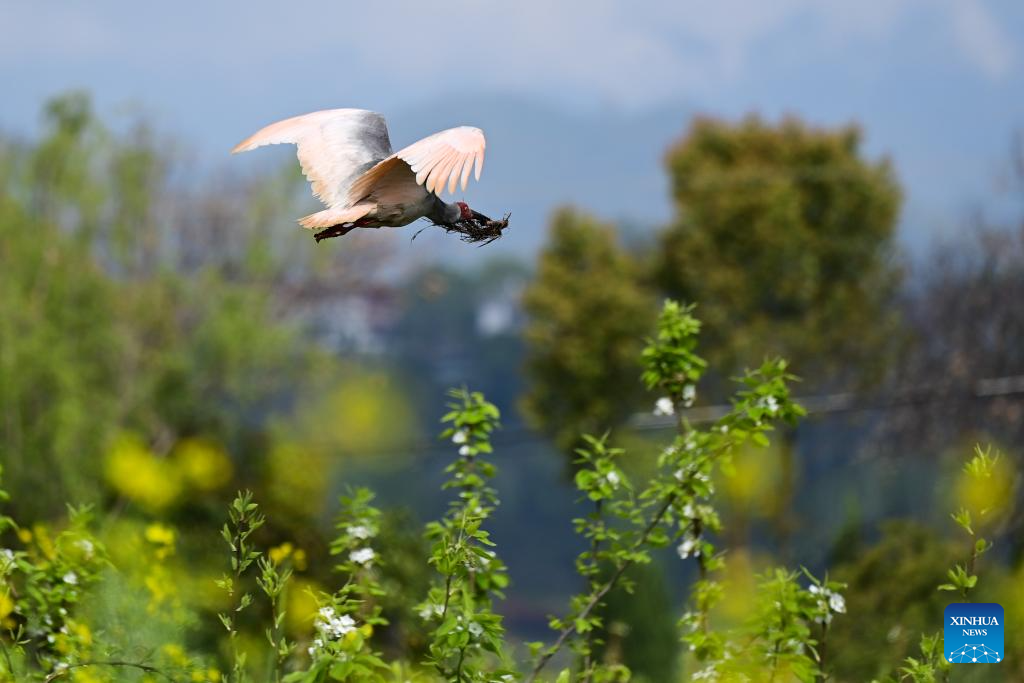
A crested ibis carries branches to make a nest in Caoba Village, Yangxian County of northwest China's Shaanxi Province, March 30, 2026.
Crested ibises have recently entered their breeding season in Yangxian County of northwest China's Shaanxi Province.
The crested ibis, with its iconic red crest and long black beak, was in the past widely distributed across East Asia and Russia's Siberia. It was thought to be extinct in China until seven wild birds were observed in Yangxian County, Shaanxi, in 1981, a discovery that prompted captive breeding and enhanced protection of the species. (Xinhua/Zou Jingyi)
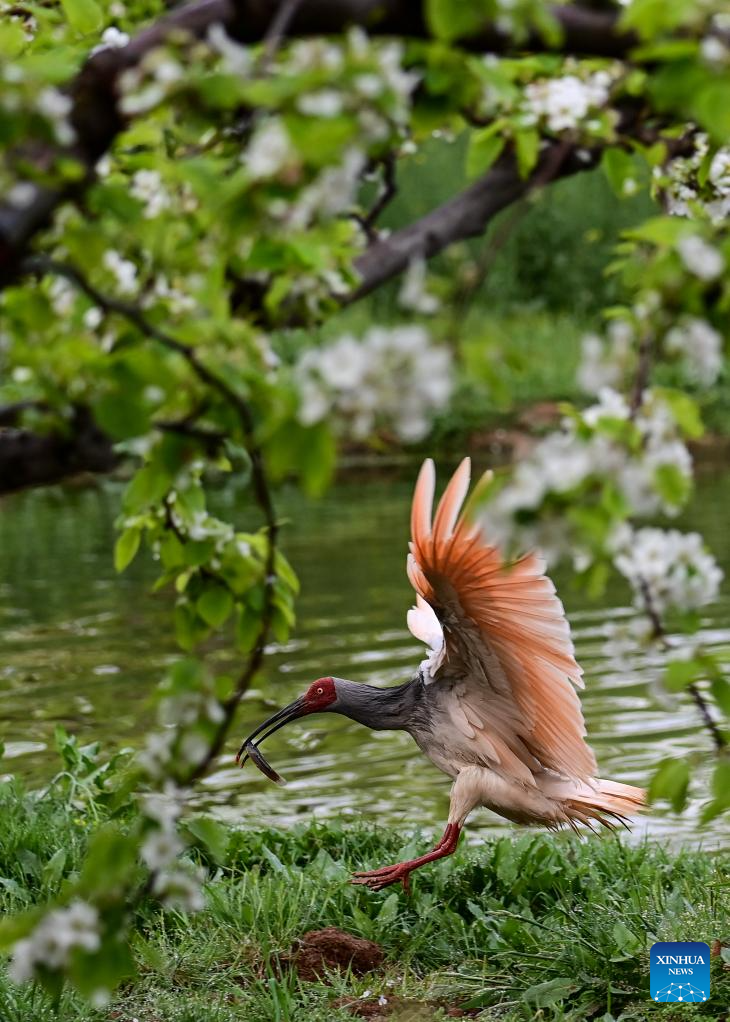
A crested ibis forages at a pond in Caoba Village, Yangxian County of northwest China's Shaanxi Province, March 30, 2026.
Crested ibises have recently entered their breeding season in Yangxian County of northwest China's Shaanxi Province.
The crested ibis, with its iconic red crest and long black beak, was in the past widely distributed across East Asia and Russia's Siberia. It was thought to be extinct in China until seven wild birds were observed in Yangxian County, Shaanxi, in 1981, a discovery that prompted captive breeding and enhanced protection of the species. (Xinhua/Zou Jingyi)
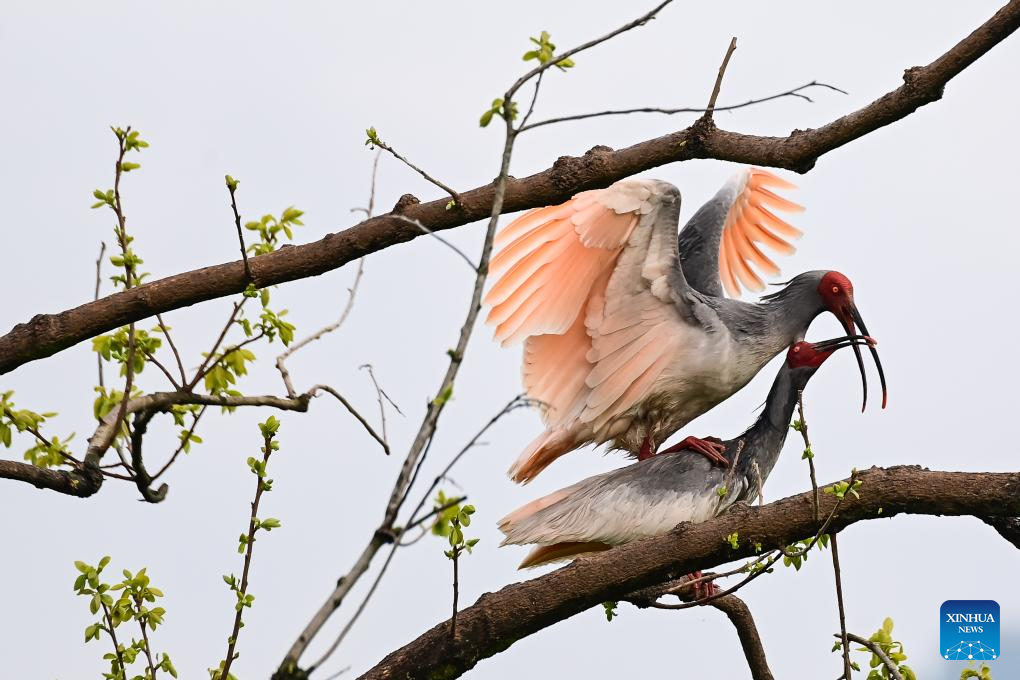
A couple of crested ibises are seen on a branch in Caoba Village, Yangxian County of northwest China's Shaanxi Province, March 30, 2026.
Crested ibises have recently entered their breeding season in Yangxian County of northwest China's Shaanxi Province.
The crested ibis, with its iconic red crest and long black beak, was in the past widely distributed across East Asia and Russia's Siberia. It was thought to be extinct in China until seven wild birds were observed in Yangxian County, Shaanxi, in 1981, a discovery that prompted captive breeding and enhanced protection of the species. (Xinhua/Zou Jingyi)
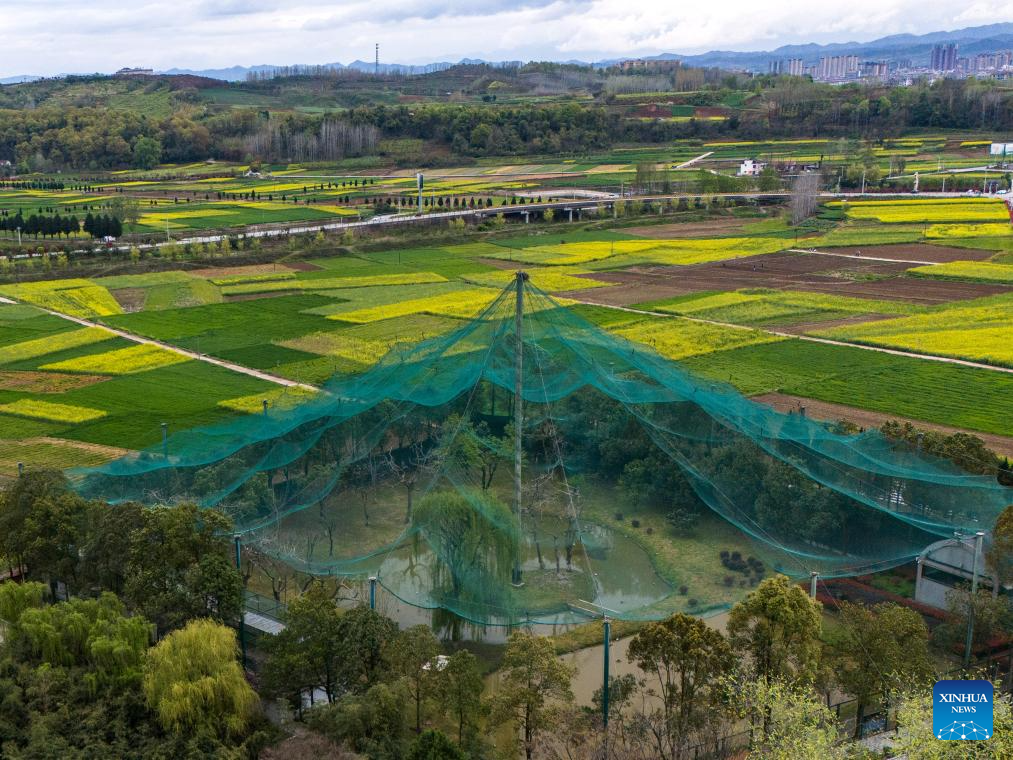
An aerial drone photo taken on March 30, 2026 shows a net cage for the wild training of crested ibises at an artificial breeding center of Shaanxi Hanzhong Crested Ibis National Nature Reserve in northwest China's Shaanxi Province.
Crested ibises have recently entered their breeding season in Yangxian County of northwest China's Shaanxi Province.
The crested ibis, with its iconic red crest and long black beak, was in the past widely distributed across East Asia and Russia's Siberia. It was thought to be extinct in China until seven wild birds were observed in Yangxian County, Shaanxi, in 1981, a discovery that prompted captive breeding and enhanced protection of the species. (Xinhua/Zou Jingyi)

A staff member watches the breeding of crested ibises at an artificial breeding center of Shaanxi Hanzhong Crested Ibis National Nature Reserve in northwest China's Shaanxi Province, March 30, 2026.
Crested ibises have recently entered their breeding season in Yangxian County of northwest China's Shaanxi Province.
The crested ibis, with its iconic red crest and long black beak, was in the past widely distributed across East Asia and Russia's Siberia. It was thought to be extinct in China until seven wild birds were observed in Yangxian County, Shaanxi, in 1981, a discovery that prompted captive breeding and enhanced protection of the species. (Xinhua/Zou Jingyi)
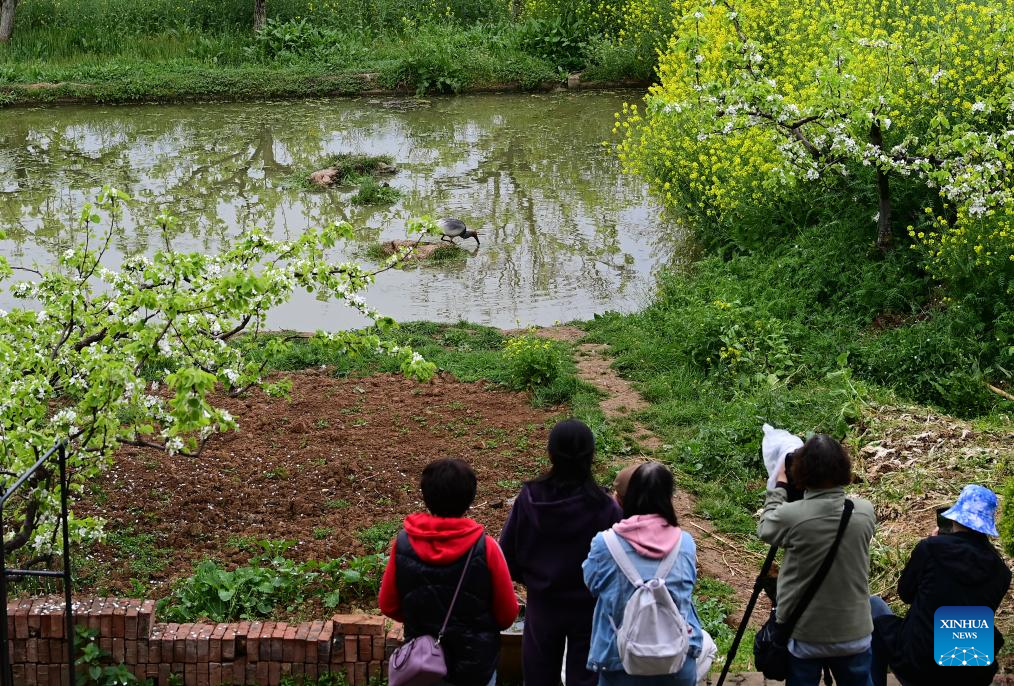
People watch a crested ibis foraging at a pond in Caoba Village, Yangxian County of northwest China's Shaanxi Province, March 29, 2026.
Crested ibises have recently entered their breeding season in Yangxian County of northwest China's Shaanxi Province.
The crested ibis, with its iconic red crest and long black beak, was in the past widely distributed across East Asia and Russia's Siberia. It was thought to be extinct in China until seven wild birds were observed in Yangxian County, Shaanxi, in 1981, a discovery that prompted captive breeding and enhanced protection of the species. (Xinhua/Zou Jingyi)

An aerial drone photo taken on March 31, 2026 shows a high-speed train running past sculptures of crested ibises near Hejia Village, Yangxian County of northwest China's Shaanxi Province.
Crested ibises have recently entered their breeding season in Yangxian County of northwest China's Shaanxi Province.
The crested ibis, with its iconic red crest and long black beak, was in the past widely distributed across East Asia and Russia's Siberia. It was thought to be extinct in China until seven wild birds were observed in Yangxian County, Shaanxi, in 1981, a discovery that prompted captive breeding and enhanced protection of the species. (Xinhua/Zou Jingyi)
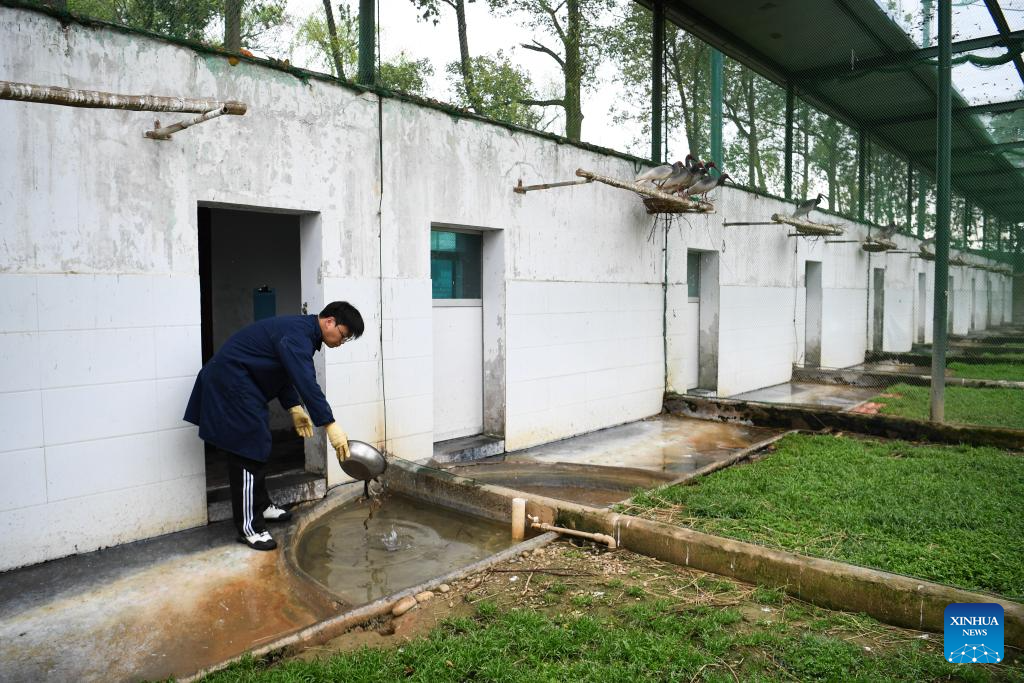
A staff member feeds crested ibises at an artificial breeding center of Shaanxi Hanzhong Crested Ibis National Nature Reserve in northwest China's Shaanxi Province, March 30, 2026.
Crested ibises have recently entered their breeding season in Yangxian County of northwest China's Shaanxi Province.
The crested ibis, with its iconic red crest and long black beak, was in the past widely distributed across East Asia and Russia's Siberia. It was thought to be extinct in China until seven wild birds were observed in Yangxian County, Shaanxi, in 1981, a discovery that prompted captive breeding and enhanced protection of the species. (Xinhua/Zou Jingyi)
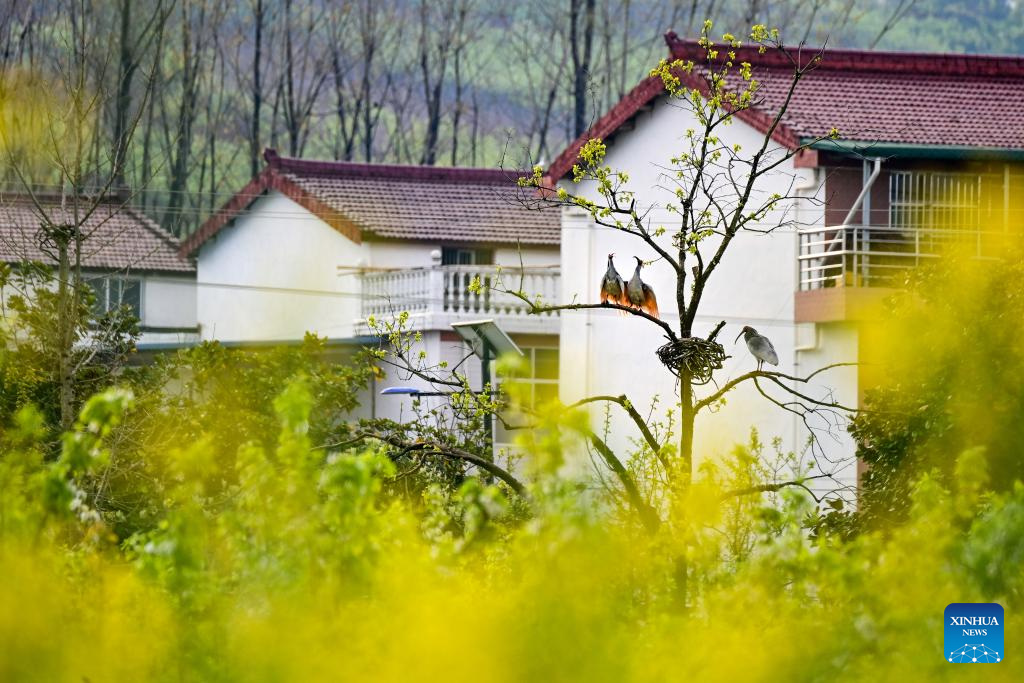
Crested ibises rest on a tree in Caoba Village, Yangxian County of northwest China's Shaanxi Province, March 30, 2026.
Crested ibises have recently entered their breeding season in Yangxian County of northwest China's Shaanxi Province.
The crested ibis, with its iconic red crest and long black beak, was in the past widely distributed across East Asia and Russia's Siberia. It was thought to be extinct in China until seven wild birds were observed in Yangxian County, Shaanxi, in 1981, a discovery that prompted captive breeding and enhanced protection of the species. (Xinhua/Zou Jingyi)


