
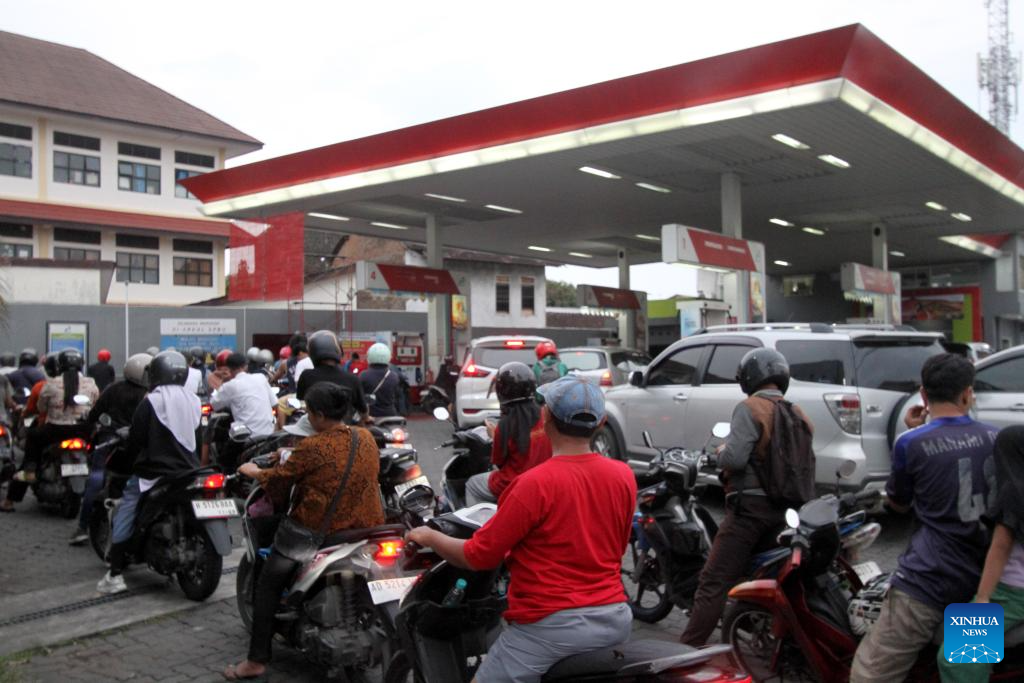
Vehicles wait in line to refuel at a gas station in Surakarta, Central Java, Indonesia, March 31, 2026. Indonesia is pushing a series of energy-saving measures to reduce fuel consumption and strengthen fiscal resilience amid rising global uncertainty triggered by the ongoing Middle East conflict, Coordinating Minister for Economic Affairs Airlangga Hartarto said on Tuesday. (Xinhua/Bram Selo)
JAKARTA, March 31 (Xinhua) -- Indonesia is pushing a series of energy-saving measures to reduce fuel consumption and strengthen fiscal resilience amid rising global uncertainty triggered by the ongoing Middle East conflict, Coordinating Minister for Economic Affairs Airlangga Hartarto said on Tuesday.
Speaking at a press conference, Airlangga said one of the key measures was the implementation of a work-from-home (WFH) scheme for civil servants in central and regional government agencies for one working day per week, every Friday.
"This policy encourages energy and mobility efficiency in response to global dynamics, including the Middle East conflict, while maintaining economic stability," he said.
Airlangga said the WFH policy aimed to promote a digital-based government work system and reduce mobility, including limiting the use of official vehicles except for operational and electric vehicles, while encouraging the use of public transportation.
"Through this WFH policy, we expect direct savings to the state budget to reach around 6.2 trillion rupiahs (about 365.4 million U.S. dollars)," he said, adding that domestic official travel would also be reduced by 50 to 70 percent.
The government is also encouraging the private sector to adopt energy-saving practices in workplaces based on the needs of each industry, while urging the public to develop daily energy-saving habits at home and at work.
"We encourage the private sector to move energy-saving efforts in the workplace and ask the public to use energy more efficiently, including increasing the use of public transportation," Airlangga said, noting that the policy would be evaluated after two months of implementation.
To further reduce dependence on fossil fuels, the government will implement the B50 biodiesel policy starting July 1, 2026, which is expected to cut fossil fuel use by around 4 million kiloliters with an estimated economic value of 48 trillion rupiahs.
B50 is an Indonesian biodiesel mandate requiring a 50 percent blend of palm oil-based biofuel with fossil diesel to reduce fuel imports and enhance energy security.
"The implementation of B50 is part of the government's effort to strengthen energy security and reduce fossil fuel consumption," Airlangga said.
In addition, starting April 1, 2026, the government will impose restrictions on subsidized fuel purchases, limiting private vehicles to a maximum of 50 liters per day to ensure more targeted distribution.
"This restriction aims to improve efficiency and ensure subsidized fuel is distributed more appropriately," said Indonesian Minister of Energy and Mineral Resources Bahlil Lahadalia at the press conference. He emphasized that the overall policy package is designed to maintain energy sustainability and economic stability amid global geopolitical pressures. ■
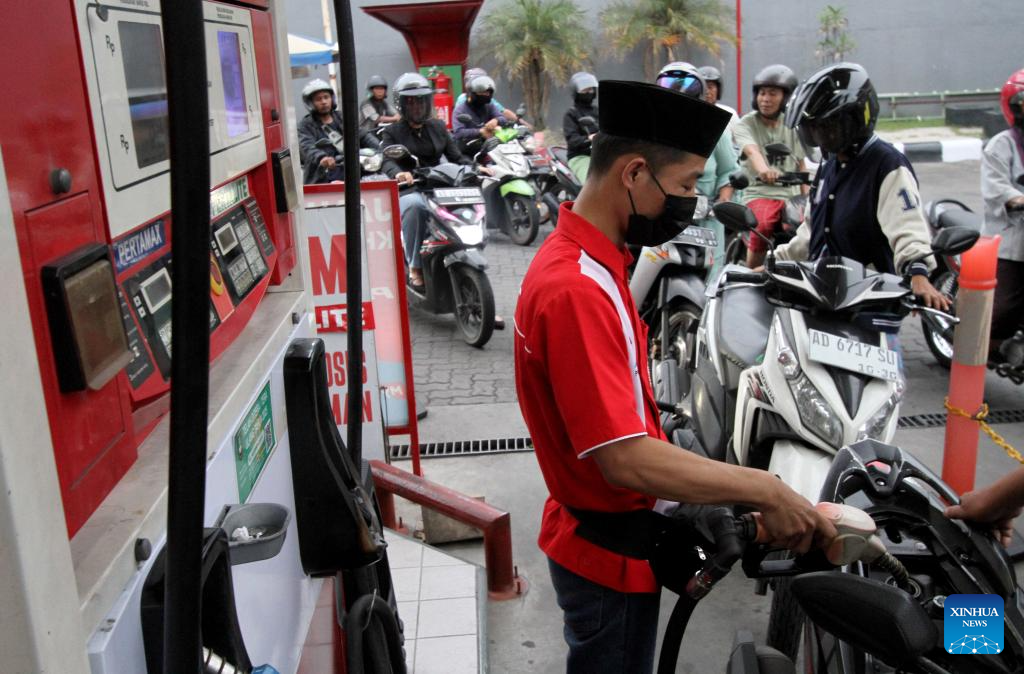
A staff member refuels a motorbike at a gas station in Surakarta, Central Java, Indonesia, March 31, 2026. Indonesia is pushing a series of energy-saving measures to reduce fuel consumption and strengthen fiscal resilience amid rising global uncertainty triggered by the ongoing Middle East conflict, Coordinating Minister for Economic Affairs Airlangga Hartarto said on Tuesday. (Xinhua/Bram Selo)


