Following a series of policy changes introduced since late 2025, China's marathon boom is entering a new phase, with fewer races, tougher entry rules and rising demand reshaping the sport.
by sportswriters Yue Wenwan and Wang Hengzhi
WUHAN, March 31 (Xinhua) -- China's marathon boom is entering a new phase, with fewer races, tougher entry rules and rising demand reshaping the sport.
As the spring racing season gets underway, the contrast is clear: fewer races, but surging demand and higher standards. According to the Chinese Athletics Association, 39 marathons were held nationwide over the past two weekends, down from 57 during the same period last year.
Yet enthusiasm has not cooled. Instead, participation has intensified, with major races drawing record numbers of applications and increasingly slim odds of entry.
The shift follows a series of policy changes issued since late 2025, including stricter guidelines on race organization and a pilot framework for mass road-running events. The measures aim to rein in years of rapid, sometimes unordered expansion.
FEWER RACES, HIGHER STANDARDS
Marathons spread quickly across China in recent years, often driven by local governments eager to boost tourism and visibility. But the surge also exposed gaps in organization, safety and resource allocation.
Under the new rules, accountability has been tightened. Organizers must now operate under a clearer responsibility structure led by local authorities, reinforcing the principle that "whoever hosts is responsible."
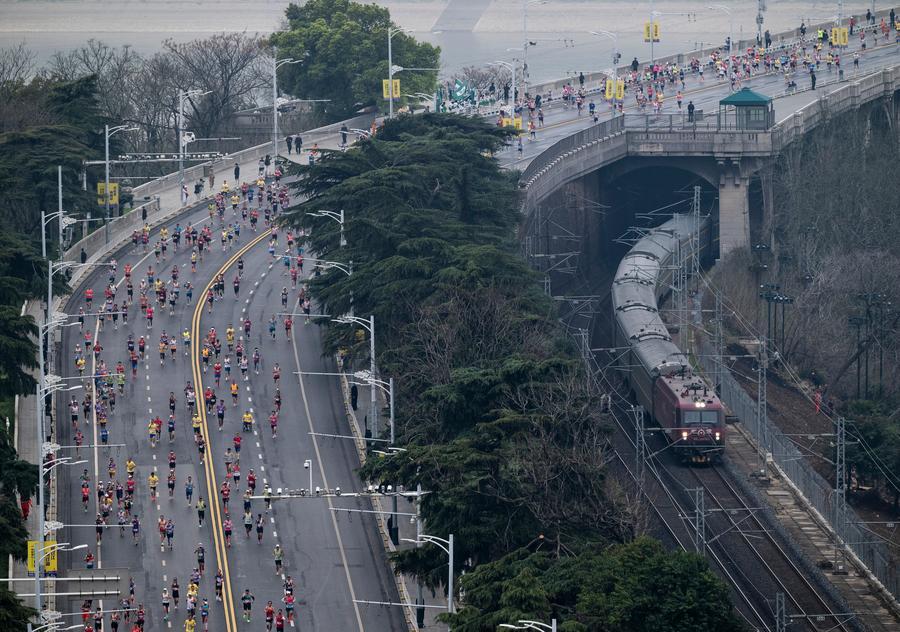
The impact is already visible. In central China's Hubei Province, the number of approved races is expected to fall to 22 this year, down from 31 in 2025. "Most of the cuts are at the county level," said Zhang Hua, head of the provincial athletics association. "Events without sufficient financial or organizational capacity have been scaled back."
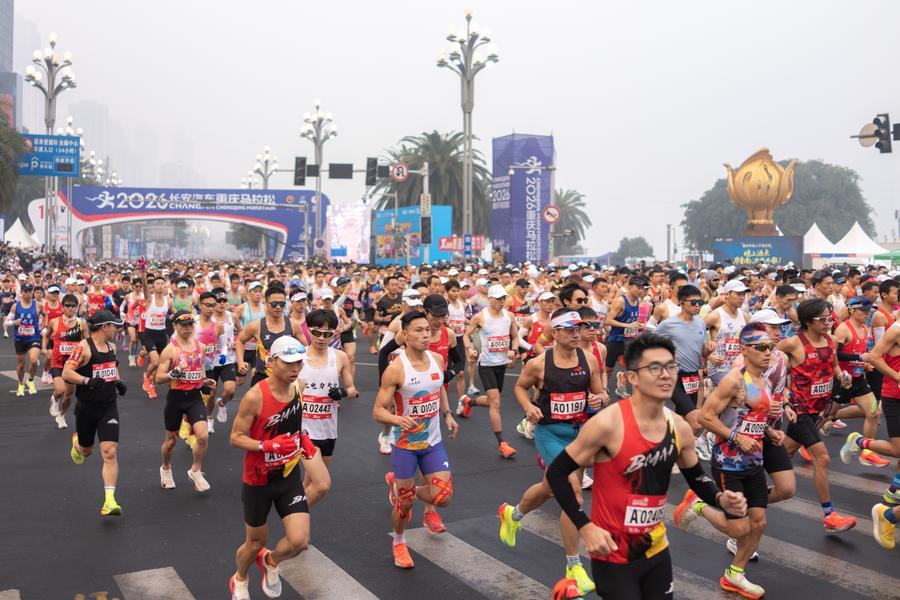
For runners, however, fewer races have not dampened interest. The 2026 Wuxi Marathon drew nearly 500,000 applicants, underscoring the surge in demand, with the half-marathon entry rate as low as 2.9 percent. The Wuhan Marathon recorded more than 450,000 registrations, while several other races, including those in Lanzhou, Chongqing and Xiamen, also saw more than 200,000 applicants.
Behind the reduction in race numbers lies a broader goal: improving quality.
"The core of the new policies is not to limit races, but to improve them," said sports consultant Zhang Qing. "They address long-standing issues and aim to make events fairer, safer and more professional."
Fairness begins with entry systems. In the past, a portion of entries was reserved for invited runners, sponsors and other stakeholders, reducing the number of spots available through the public lottery. Now, regulations require that at least 90 percent of entries be allocated to the public.
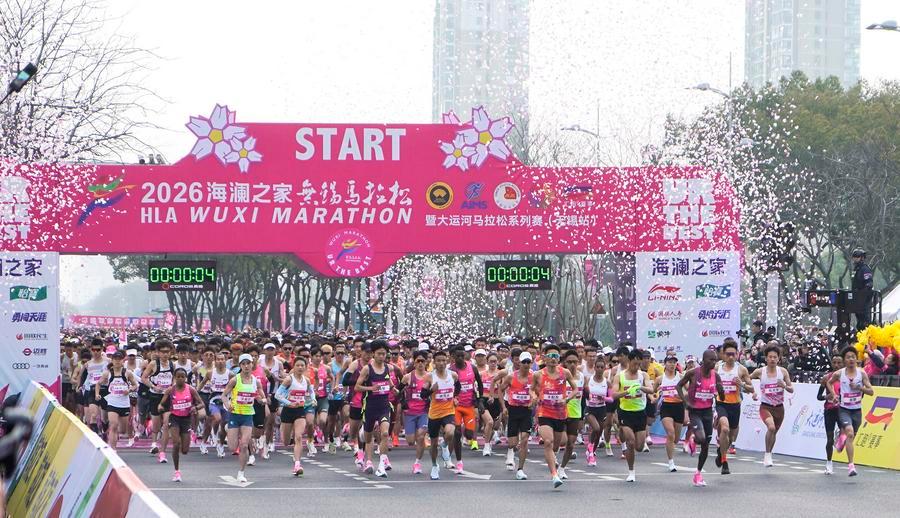
At the Wuxi Marathon, known for its cherry blossoms, elite and invited runners accounted for just over nine percent of total slots, the lowest share in five years.
Safety has become a central focus under the new rules. Organizers are required to strengthen risk management, while runners are encouraged to adopt a more measured approach and prioritize completion over performance.
Under the new entry thresholds, full marathon participants are generally required to be at least 20 years old, and some events ask runners to provide proof of prior race experience, such as one full marathon or two half marathons completed within the past two years. Half-marathon entrants may also need certified results from at least two races of 10 kilometers or longer.
"Raising the bar is about protecting runners' lives," Zhang Hua noted. "For amateur runners, the purpose of running a marathon is keeping fit, not blindly chasing personal bests or pushing limits."
Speaking of the new policies, veteran runner Chen Weixin said, "These rules offer necessary protection to beginners."
The 56-year-old recalled collapsing during his first marathon a decade ago due to a lack of proper training.
"I fainted during the race and was transferred to hospital for emergency treatment," he said. "Without proper training, beginners are at high risk of accidents. Stricter rules can push participants to take the sport more seriously."
ROAD RUNNING SHIFTS TO NEW PHASE
Industry observers say the new framework marks the transition of China's marathon boom from rapid expansion to more structured growth.
Top-tier races remain powerful economic drivers. The Wuxi Marathon attracted more than 90 percent of its participants from outside the city, generating an estimated 510 million yuan (73.7 million U.S. dollars) in spending across tourism, hospitality and transportation.
"Reducing quantity is about breaking the cycle of low-quality, repetitive events," said Wang Xiangfei, a professor at Wuhan Sports University. "Poorly organized races and low-standard participation would ultimately harm the entire industry."
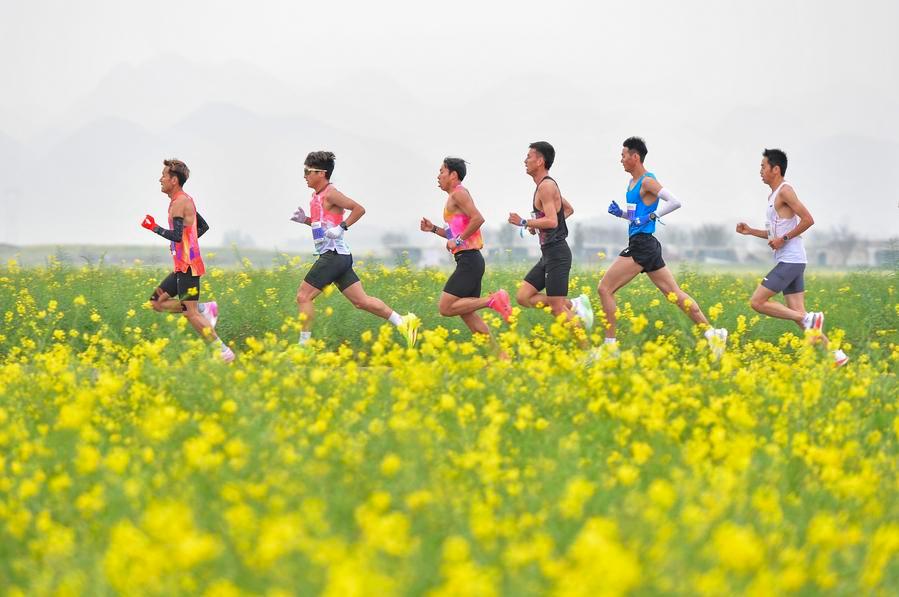
Meanwhile, opportunities are emerging for smaller and more specialized events. Shorter-distance races, once bundled into major marathon events, are now being separated and encouraged as standalone competitions, a move aimed at better matching supply with different levels of demand.
In Wuxi, the Yangshan Half Marathon, known for its peach blossoms, has been restructured into a 10-kilometer elite race while maintaining high certification standards. Organizers said the shift allowed them to refine the event while continuing to promote local tourism.
"I believe more people will take part in road running events in a safer manner in the future. Meanwhile, better regulated road races will also better showcase Chinese cities on the global stage," Zhang Hua said. ■