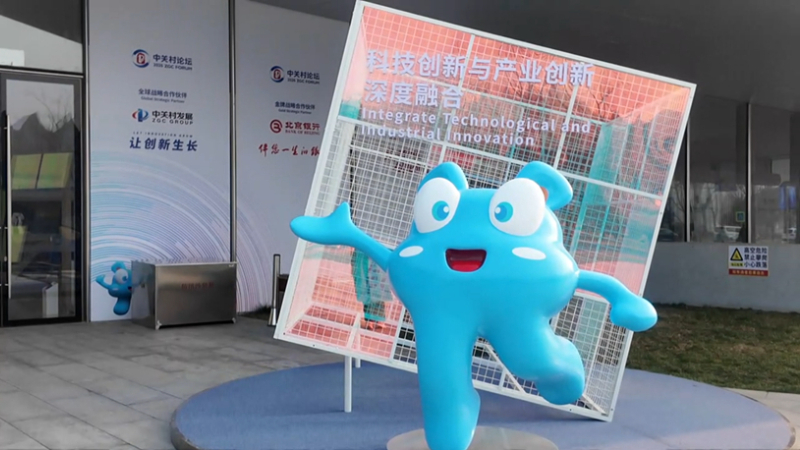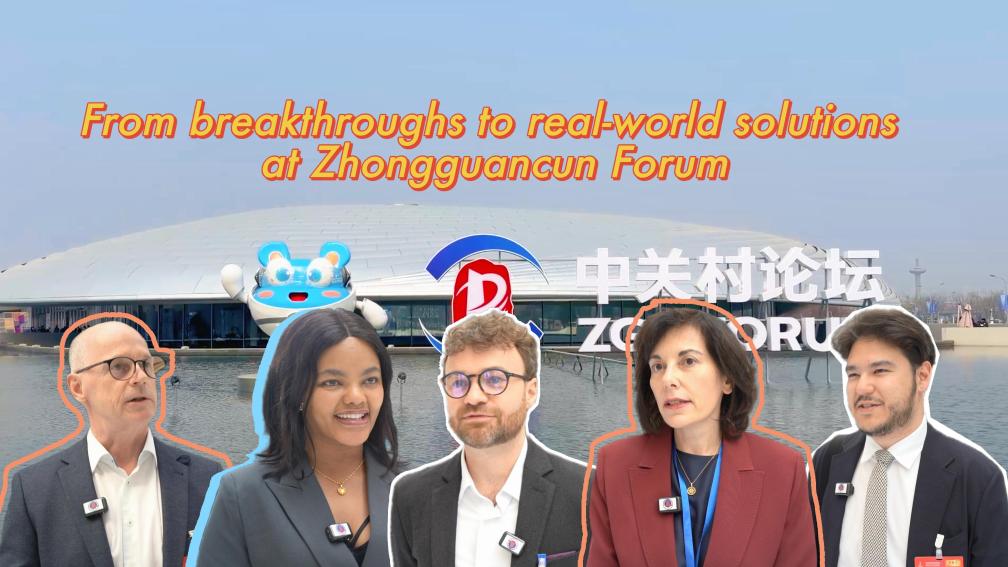
* The 2026 ZGC Forum Annual Conference, themed "Full Integration Between Technological and Industrial Innovation," concluded on Sunday, having attracted thousands of participants from more than 100 countries and regions to explore the latest trends in China's technological development.
* From real-time translation glasses to brain-computer interface (BCI) technologies, a wide range of cutting-edge innovations converged at the annual event, showcasing China's ever-growing innovation vitality.
* China has placed innovativeness at the core of its development strategy and is promoting the deep integration of technological and industrial innovation, creating vast opportunities for global cooperation and opening new space for foreign enterprises.
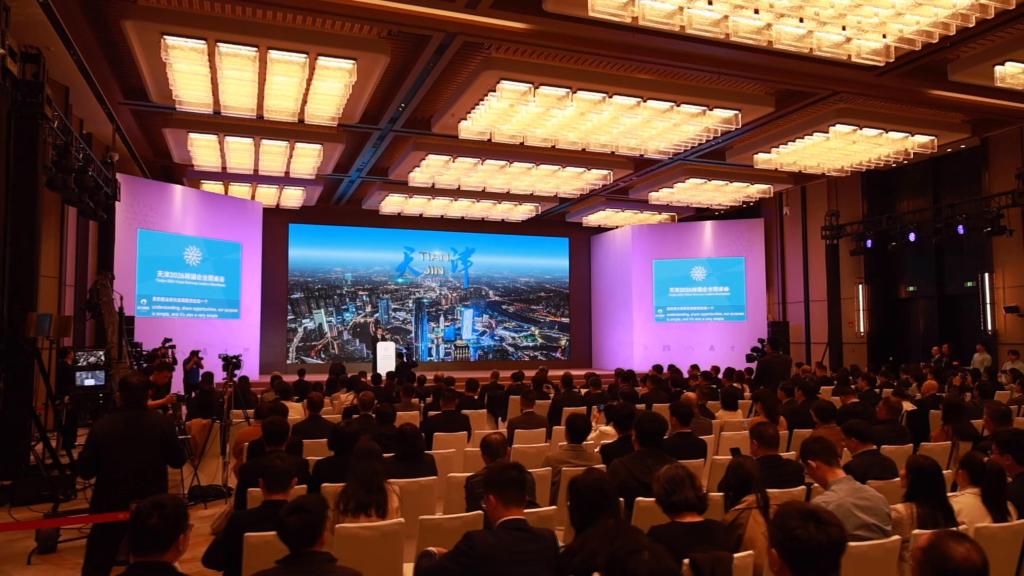
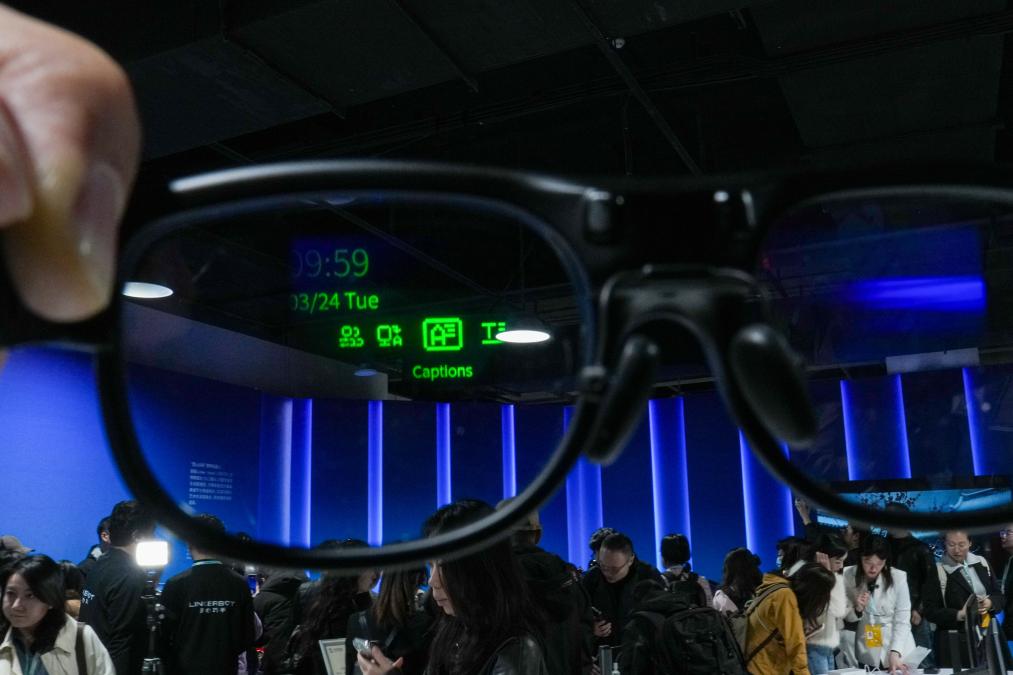
BEIJING, March 29 (Xinhua) -- At the opening ceremony of the 2026 Zhongguancun Forum (ZGC Forum) Annual Conference held in Beijing on March 25, many international guests were drawn to the AR & AI-powered translation glasses showcased at the event.
After putting on the glasses and selecting their preferred language, users could see forum speeches instantly converted from audio into lines of clear subtitles displayed before their eyes.
This is just one of the technological achievements presented at this year's forum.
The 2026 ZGC Forum Annual Conference, themed "Full Integration Between Technological and Industrial Innovation," concluded on Sunday, having attracted thousands of participants from more than 100 countries and regions to explore the latest trends in China's technological development.
From real-time translation glasses to brain-computer interface (BCI) technologies, a wide range of cutting-edge innovations converged at the annual event, showcasing China's ever-growing innovation vitality.
AI INNOVATION GAINING MOMENTUM
At this year's forum, "AI" has become the defining keyword for many exhibits, including the translation glasses.
"These glasses are powered by large AI models capable of pre-learning specialized terminology. They currently support translation in eight languages, including Chinese, English, Spanish and Russian, while the commercial version can cover more than 100 languages," said Ma Qingyang, marketing manager of Beijing LLVision Technology Co., Ltd., the developer of the AR & AI translation glasses.
"Our main customers include international business professionals, executives of foreign companies, overseas students and travelers. The glasses can also improve the quality of life for people with hearing impairments," he added.
Ma noted that the company hopes to find upstream and downstream partners in AR and AI at the forum to jointly conduct R&D and further expand application scenarios.
"China's rapidly evolving AI technologies are empowering our translation glasses with greater efficiency and accuracy," Ma said, adding that, supported by China's fast-growing AI sector and mature manufacturing capabilities, the product has undergone multiple iterations, becoming more portable with longer battery life.
China's industrial advantages have also benefited the development of healthcare AI products by Ping An Insurance (Group) Company of China, Ltd.
Wang Xiaohang, the company's chief technology officer, said its multimodal early disease screening technology helps grassroots doctors identify high-risk patients at an early stage and has been applied in 1,500 medical institutions.
According to Wang, the company's medical AI large model is continuously evolving through feedback from tens of millions of users and over 100,000 daily diagnostic interactions, rapidly improving its accuracy.
As China steadily advances high-quality development, its vast market and well-established industrial system are providing broad prospects for AI applications.
In August 2025, the State Council released guidelines to advance the "AI+" initiative, calling for the accelerated development of new quality productive forces and ensuring that the benefits of AI are shared by all, thereby better supporting Chinese modernization.
By 2030, AI is expected to comprehensively empower high-quality development in China, with the penetration rate of next-generation intelligent terminals and agents exceeding 90 percent, making the intelligent economy a key growth driver.
Official data show that China's core AI industry exceeded 1.2 trillion yuan (about 173.56 billion U.S. dollars) in 2025, with more than 6,200 related enterprises. Authorities estimate that by the end of the 15th Five-Year Plan period (2026-2030), the scale of AI-related industries will surpass 10 trillion yuan.
FUTURE INDUSTRIES BECOMING REALITY
At the forum, the deep integration of technological innovation and industrial foundations is unleashing new momentum across sectors beyond AI.
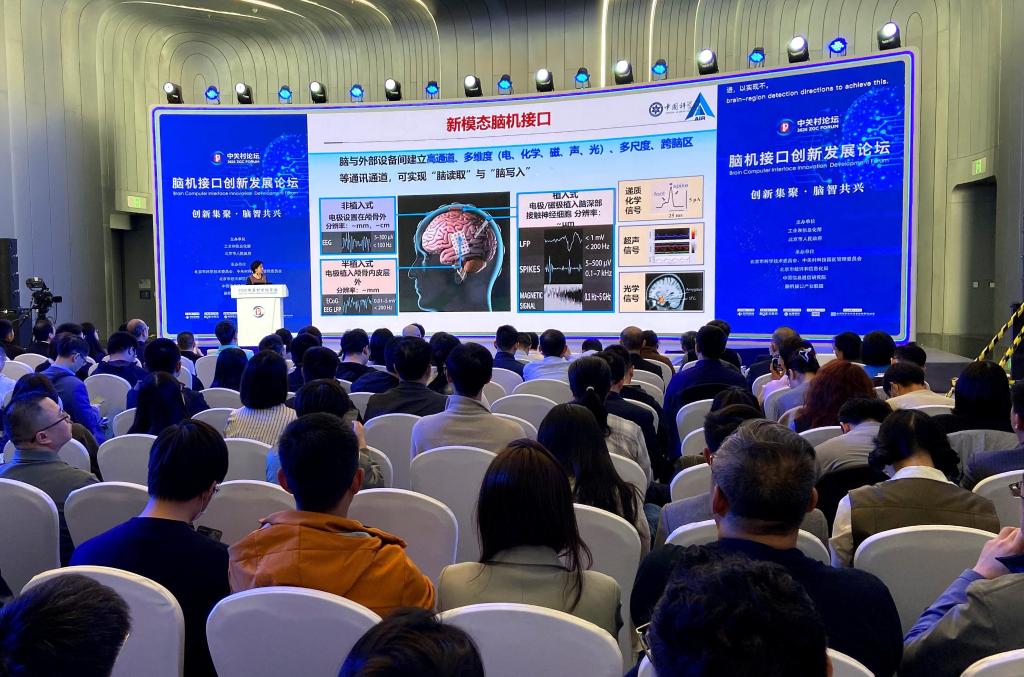
At the newly upgraded Zhongguancun permanent exhibition, technologies and products in future industries such as BCI, 6G, and quantum technology attracted large crowds.
At one BCI booth, a matchbox-sized device was shown embedded in a simulated brain model. Under a microscope, images of electrodes inside the device were magnified on a computer screen into circular patterns.
"This is our core technology -- stretchable flexible electrodes, which address the issues of displacement and detachment common in traditional linear electrodes, providing solid support for long-term use of high-throughput invasive BCI systems by patients with paralysis or spinal cord injuries," said Mu Yesha, marketing manager of BCIFlex Medical Technology Co., Ltd.
Mu said the development of such systems has taken over two decades and required sustained investment in scientific research. Thanks to national and Beijing-level industrial funds and policy support, the product has now entered the approval process for market launch.
"Policy support has provided strong confidence for enterprise development. In the future, we aim to further integrate BCI with AI to achieve transformative progress in human-machine collaboration," Mu added.
China's government work report this year proposed establishing mechanisms for investment growth and risk-sharing in future industries, including future energy, quantum technology, biomanufacturing, embodied intelligence, BCI, and 6G.
To seize development opportunities, Beijing Municipality took the lead in issuing a dedicated action plan in 2025 to build a global hub for BCI innovation and industrial development.
In recent years, an increasing number of government-backed funds have acted as patient capital, not only helping startups grow into industry leaders but also boosting confidence across the sector.
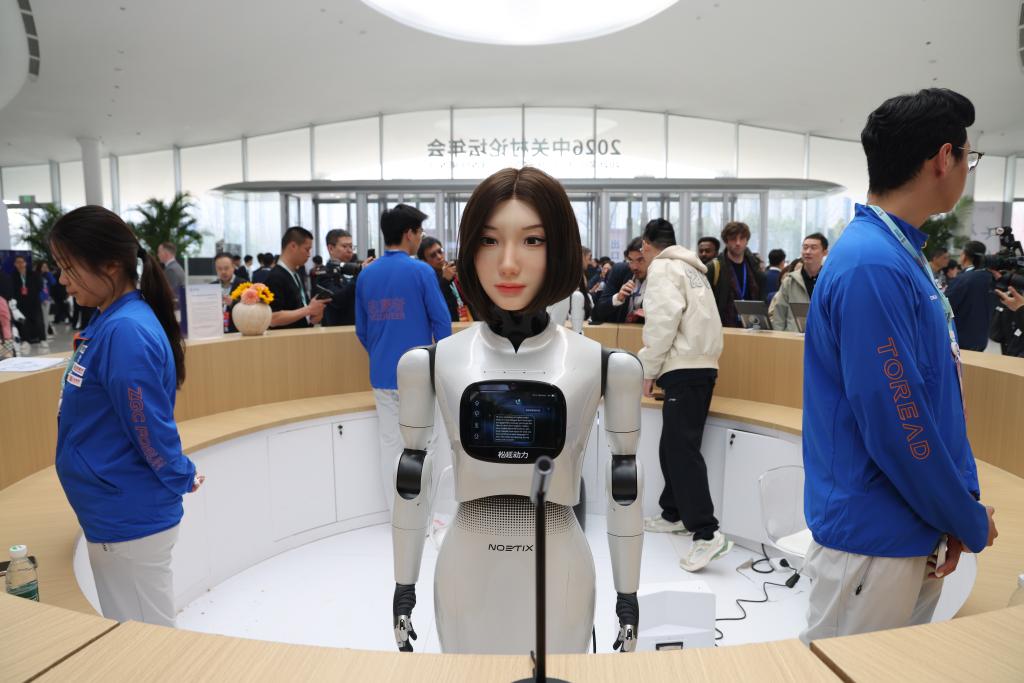
Zuo Jiaping, co-founder of Linkerbot Beijing Technology Co., Ltd., said the company is expanding application scenarios for dexterous robotic hands and collaborating with firms in the automotive and consumer electronics sectors, with some products exported to the United States, Japan, the Republic of Korea and European countries.
The outline of the 15th Five-Year Plan identifies embodied intelligence as a new growth driver, further strengthening the company's confidence, Zuo said.
At this year's forum, joint efforts by the tech and industrial sectors are shaping the future of emerging industries.
A series of specialized forums focused on frontier fields such as 6G, BCI, and cell and gene therapy, exploring technological innovation and industrial applications.
Meanwhile, frontier tech competitions and technology trading events provided platforms for commercialization, attracting a record number of participating investment institutions.
CHINESE CREATIONS GOING GLOBAL
With the continuous emergence and application of technological achievements, products created in China are expanding from Zhongguancun to the global stage, reshaping the innovation ecosystem.
At the forum, even users without music production experience could create personalized compositions using prompts and the AI model Mureka V9.
"This is our latest AI music model, which reduces the cost of producing a song from around 100,000 yuan using traditional methods to just one yuan," said Yao Hui, head of marketing and public relations at Kunlun Tech Co., Ltd.
Yao noted that the company's business portfolio also includes AI games, AI video and AI assistants, with overseas services covering more than 100 countries and regions. Its global average monthly active users have reached nearly 400 million, with overseas revenue accounting for 92 percent.
She added that the company's overseas short drama platform, DramaWave, has seen rapid revenue growth since 2025, demonstrating strong market competitiveness.
By deeply integrating AI technologies, the platform is bringing structural changes to the creative industry.
AI-powered multilingual dubbing and subtitles, automated content generation, and recommendation algorithms have improved user engagement, shortened production cycles, and earned positive feedback overseas.
Some creators have dubbed DramaWave the "Netflix of short dramas," providing strong support for its scalable growth, Yao said.
Autonomous driving is also emerging as a key example of the sprawling "Created in China" trend.
Recently, the Chinese-made autonomous bus MOGOBUS entered Singapore and is expected to begin regular operations in the second half of 2026. This marks the first time a Chinese autonomous bus has been integrated into a developed country's core public transport network, helping reduce the cost of building smart transportation systems worldwide.
In traditional manufacturing, the integration of technology and industry is also bringing China's achievements in transformation to the global stage.
Li Fenghui, chief engineer of Beijing Shougang Cold Rolling Co., Ltd., said the company has undergone digital transformation in recent years by applying big data and AI to optimize production processes and improve product quality.
In 2025, it was recognized as a "Lighthouse Factory" by the World Economic Forum. Its products are now exported to Europe and Southeast Asia, supplying high-quality automotive steel sheets to major domestic and international car brands.
In recent years, the proportion of foreign participants -- including international organizations and multinational corporations -- at the ZGC Forum has continued to rise, reflecting China's increasingly open approach to innovation.
Hoffman Cheong, EY China North Managing Partner, said that as 2026 marks the beginning of the 15th Five-Year Plan period, China has placed innovativeness at the core of its development strategy and is promoting the deep integration of technological and industrial innovation, creating vast opportunities for global cooperation and opening new space for foreign enterprises.
Beyond the "scenario dividends" of a vast market and the "access dividends" brought by institutional opening-up, China is also offering "co-creation dividends" driven by its innovation ecosystem, he said.
"China's complete industrial chains, efficient policy coordination, and dynamic local tech enterprises are building a globally leading environment for innovations. More and more multinational companies are upgrading China into a global innovation hub for localized R&D and global output," Cheong added.
The Chinese market has become not only a "must-have" in the strategic layout of foreign companies, but also a "key lever" for gaining a competitive edge globally, Cheong said. ■