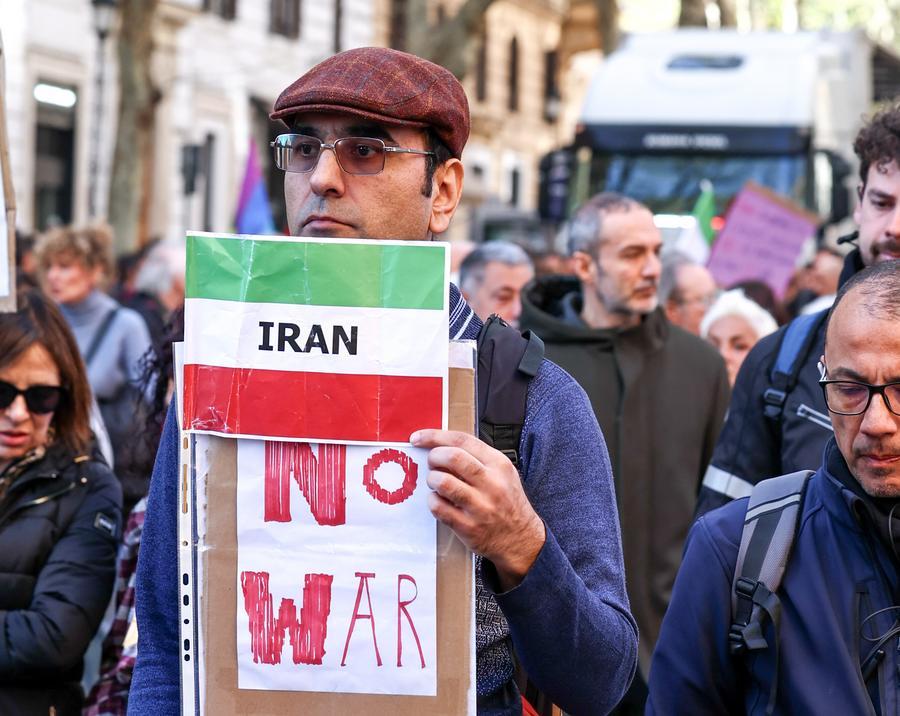
The ongoing U.S.-Israeli war on Iran, marked by assassinations, regional retaliation, and economic disruption, has failed to achieve its stated objectives, intensified regional conflict, strained international alliances, and threatened global stability.
by Rifaat Ibrahim Al-Badawi
The illegal joint U.S.-Israeli war on Iran has now entered its second month without achieving the key objectives the White House promised.
The war began at a time when the Middle East and West Asia were witnessing a political breakthrough followed by relative economic stability, especially after Oman, acting as a mediator, announced tangible progress in U.S.-Iran negotiations.
But Washington carried out its usual deception against Iran and other regional countries in the same manner it did in June 2025, when, in cooperation with Israel, the United States launched violent airstrikes on Iran's nuclear facilities. What became known as "the 12-day war" also resulted in the assassination of many top-tier leadership figures and scientists in Iran.
This time, Iran's Supreme Leader Ali Khamenei was assassinated. This bold move prompted Khamenei's supporters in the region -- Hezbollah in Lebanon, the Popular Mobilization Forces in Iraq and the Houthis in Yemen -- to enter the war, albeit to varying degrees, therefore causing a major shift in its course.
For example, Hezbollah announced its involvement in the war to retaliate for Khamenei's death, and also to liberate areas occupied by Israel. This led to the disruption of an Israeli plan to establish a buffer zone 10 km deep inside southern Lebanon, and made the Israeli army suffer much from resistance attacks on the southern Lebanon front.
But this front also resulted in the displacement of over 1.5 million residents from southern Lebanon toward the interior, including Beirut and other areas.
Meanwhile, Iran's response has expanded to Gulf countries allied with the United States. It struck U.S. military and economic bases in the region and closed the Strait of Hormuz, a vital artery of global oil and gas trade. The military operations of both sides led to a noticeable rise in oil prices, caused turmoil in stock markets, and further created a political and economic crisis between the United States and its traditional European allies.
In fact, a rift was already there as Europeans believe the White House launched the war unilaterally without consulting NATO, and thus consider the war illegal and unjustified. This partly explains why they refused the U.S. request to help forcibly open the Strait of Hormuz.
In Europe, those traditional U.S. allies show no interest at all in joining a war whose outcomes are uncertain. Britain, Germany, France and Italy all voiced sharp criticism, calling the war immoral and against international law.
It would simply be wrong to believe the United States and Israel started the war to prevent Iran from obtaining nuclear weapons or long-range missiles, as they declared. The U.S. main objective is to control global oil and gas routes and sources, especially in the Middle East, the Gulf and West Asia, as these regions represent a reservoir of oil and natural gas wealth.
Trump's wish to overthrow the "Iranian regime" is still a wish: Iran did not fall, and the state remains cohesive enough. Trump's calculation on controlling oil and gas sources and routes in the region didn't work out either, nor did his promise to assign Israel the role of regional policeman.
Nevertheless, this war has indeed undermined trust between nations, changed international alliances, and created regional fractures that may lead to a radical shift in the post-World War II global order at the military, economic and political levels.
Editor's note: Rifaat Ibrahim Al-Badawi is a researcher and academic in regional affairs and an advisor to former Lebanese Prime Minister Salim Hoss.
The views expressed in this article are those of the author and do not necessarily reflect those of Xinhua News Agency.■