Experts are of one mind that China's tech boom has bolstered its resilience against external headwinds, with its growing technological leadership set to give it a competitive edge in future industries and drive global economic growth.
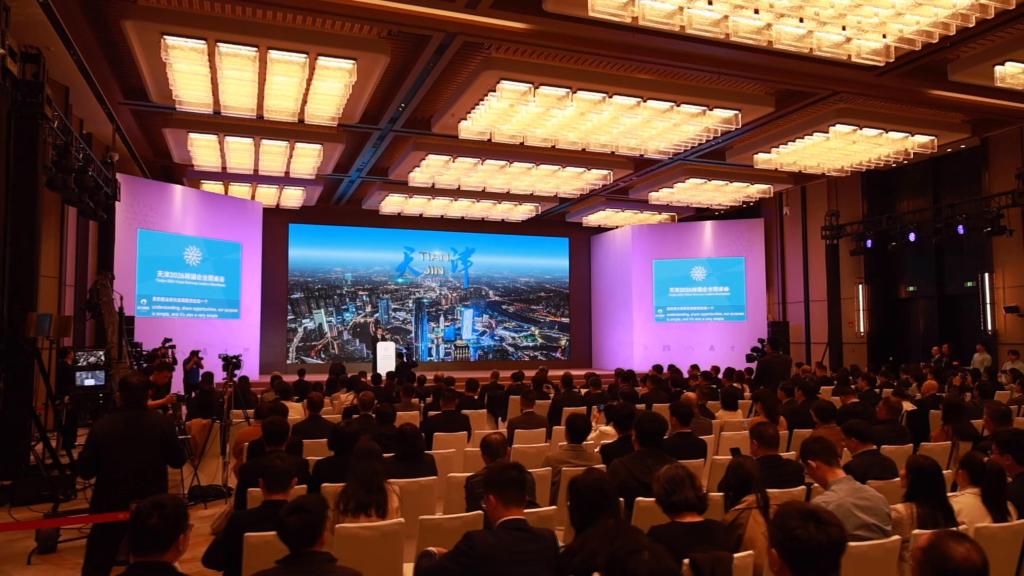
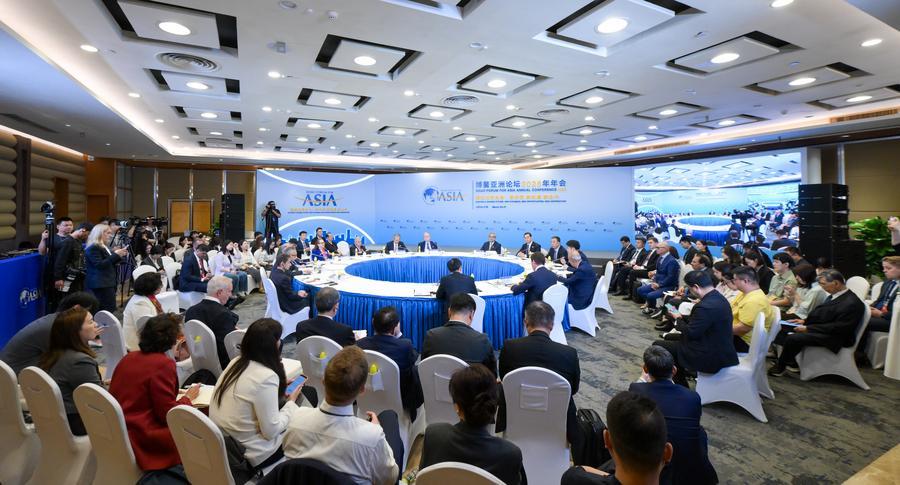
BOAO, China, March 27 (Xinhua) -- As the Boao Forum for Asia Annual Conference 2026 draws to a close on Friday in Boao, a coastal town in south China's Hainan province, it leaves behind a legacy of shared insights and renewed commitment to cooperation in tackling global challenges.
Amid mounting geopolitical rifts, uneven growth and rising uncertainty in the international landscape, the four-day global gathering has offered the world a glimpse into how China is navigating turbulence, upgrading from within, and engaging with a global system hungry for stability and development.
A STABILIZING BALLAST
The global economic outlook remains precarious. The United States has imposed sweeping tariffs on economies worldwide, disrupting established supply chains; many developing nations grapple with sluggish export demand; cross-border investment stays cautious amid market uncertainty; and protectionist sentiment continues to erode the rules-based global trading system.
In the face of this volatility, China has stood out as a stabilizing force delivering much-needed confidence and predictability to the global economy, said the attendees of the forum.
Despite escalating global trade uncertainties -- ranging from geopolitical tensions and rising protectionism to supply chain "de-risking" -- the foundations of intra-regional trade integration in Asia remain resilient. Within this landscape, China and ASEAN continue to serve as the region's twin "anchors of stability," according to the Asian Economic Outlook and Integration Progress Annual Report 2026 released on Tuesday, the opening day of the forum.
Early data for the first two months of 2026, the first year of the 15th Five-Year Plan period (2026-2030), already shows meaningful momentum: China's value-added industrial output rose 6.3 percent year on year in the first two months of 2026, while the service sector expanded fast with the service production index growing 5.2 percent year on year, according to data released by the National Bureau of Statistics (NBS) of China.
China's contribution to global growth has remained at a consistent level, no matter how the global landscape evolves, making it the biggest certainty amid the widespread uncertainty in the world, said Lin Yifu, former chief economist of the World Bank.
This was echoed by Denis Depoux, global managing director at Munich-based consultancy Roland Berger, who said that the resilience of China's economy has underpinned its steady growth, injecting valuable strategic stability and predictability into an international system plagued by market volatility and rising protectionism.
The sustained growth and stability have made China a favored destination for long-term global investors seeking sustainable returns, said Jack Perry, chairman of The 48 Group. "For those seeking wealth creation over generations, the Chinese mainland remains a key destination for long-term investment."
This stability carries profound weight for Asia and the wider world. In 2024, China was the largest trading partner for 23 Asian economies, while ASEAN and China remained each other's top trading partner for the fifth consecutive year, said the Asian Economic Outlook and Integration Progress Annual Report 2026.
China's vast market will remain a critical engine for regional growth, with its 15th Five-Year Plan set to unlock more development opportunities across Asia and bolster regional stability and prosperity, said Wong Kan Seng, former deputy prime minister of Singapore.
A GROWTH ENGINE
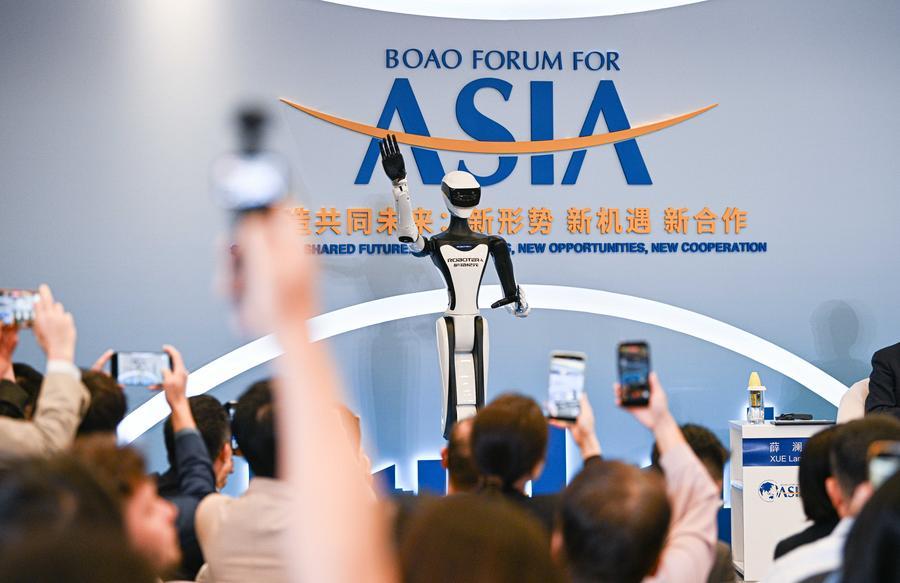
From custom cocktail-making bartender robots to zero-emission autonomous street cleaners patrolling Boao's streets, a story of the Chinese economy reshaped by fast-growing innovative technologies was unfolding on the island.
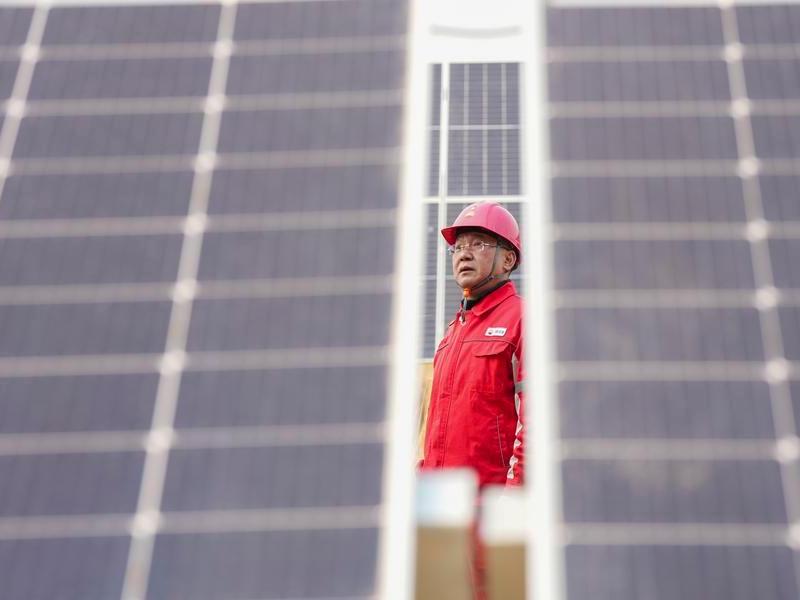
China has become a global leader in robotics, electric vehicles and green energy, which are not isolated industries but foundational layers for every sector of the future economy, said Perry, chairman of The 48 Group.
Experts are of one mind that China's tech boom has bolstered its resilience against external headwinds, with its growing technological leadership set to give it a competitive edge in future industries and drive global economic growth.
Wang Xiaogang, Co-founder of SenseTime, a major Chinese tech firm and an AI solution provider, said that China can leverage its technological and industrial strengths to deliver mature solutions to its Asian partners, build cooperation platforms, and carry out collaborative talent training, thus effectively bridging the intelligence divide across the region.
This cooperation, he said, will drive the intelligent upgrading of Asia's manufacturing and service sectors, build an integrated cross-border AI industrial chain, and inject lasting momentum into regional high-quality development.
This tech-driven shift is redefining China's position in the global economy. Moving beyond its legacy as the "world's factory" for low-cost goods, the nation is rapidly evolving into a premier hub for advanced manufacturing, technological collaboration, and green supply chains.
For foreign businesses, the opportunity is no longer only in selling to China, but in innovating with China, attendees observed.
From once being a latecomer in high-tech fields to now emerging as a global front-runner, China has achieved remarkable progress and is reshaping the global innovation landscape, said Perry.
The notion of "made in China" is evolving into "created in China, cultivated in China, sold by China," giving China stronger control over end markets and global supply chains, he said.
A MULTILATERAL PILLAR
In a turbulent world where tariffs are increasingly weaponized, "a worrying trend has emerged: global trade is increasingly shaped by force and coercion, rather than rules," said Paolo Gentiloni, former prime minister of Italy, who called for urgent actions to restore a world order based on international laws.
Against this backdrop, there is an urgent need to improve the global governance system. The Global South nations, with their growing economic clout, demand a stronger, more representative voice in global rule-making.
With its growing contribution to the global economy, the Global South is no longer a bystander, but an active maker of global development, said Sardor Umurzakov, advisor to the president of Uzbekistan on strategic development.
As multilateral mechanisms, notably the UN and the WTO, suffered impacts resulting from exacerbating conflicts and resurgent unilateralism, the Global South has emerged as a force with both the will and capacity to uphold multilateralism, said Shahid Khaqan Abbasi, former prime minister of Pakistan.
Amid global appeal for fostering a fairer, more equitable and just global governance system, the China-proposed Global Governance Initiative (GGI) offers a viable and actionable solution to address the setbacks and bottlenecks in today's global governance, said participants at the forum.
The GGI is designed to uphold the purposes and principles of the UN Charter and the basic norms governing international relations, and the initiative carries significance as it expands opportunities and representation for the Global South in international bodies, said Roman Sklyar, first deputy prime minister of Kazakhstan. ■