

A tourist walks out of a homestay in Baiwu Village of Huize County, southwest China's Yunnan Province, March 24, 2026.
Baiwu Village once served as a major hub for south-to-north copper transport during the Ming and Qing dynasties (1368-1911), giving birth to many ancient dwellings and copper transport heritage.
In recent years, local authorities have endeavored to boost cultural tourism in the village by preserving and utilizing its traditional architecture, while introducing new businesses including bookstores, coffee shops, and homestays.
In 2025, the village received about 245,000 visitors, with 188 households involved in the local tourism industry. (Xinhua/Peng Yikai)
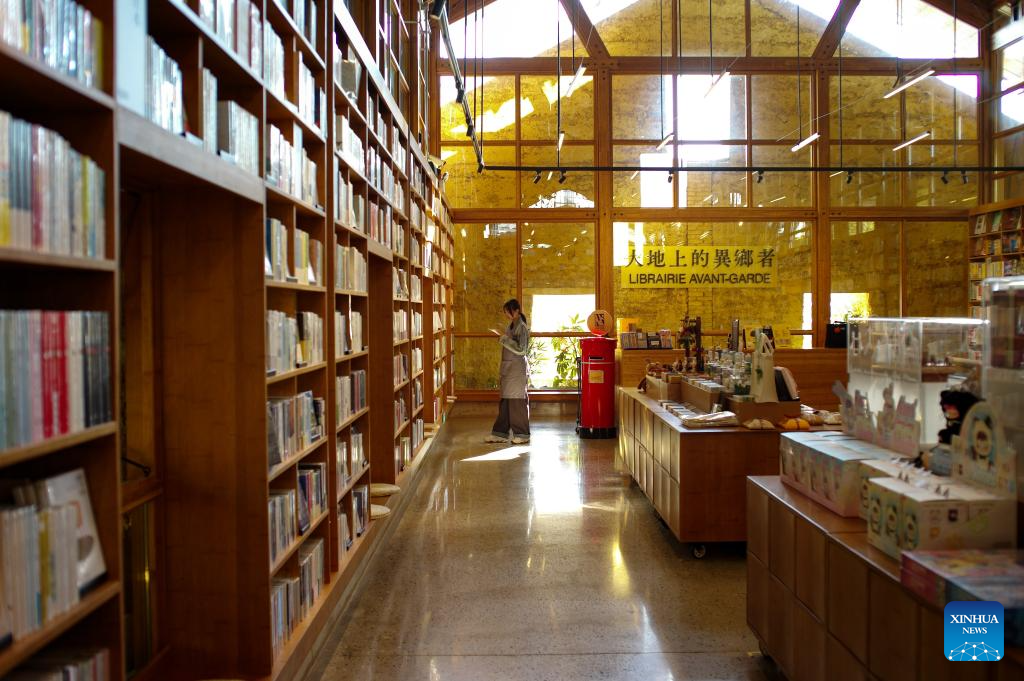
A staff member arranges books at Huize rural bookstore of Librairie Avant-Garde in Baiwu Village of Huize County, southwest China's Yunnan Province, March 24, 2026.
Baiwu Village once served as a major hub for south-to-north copper transport during the Ming and Qing dynasties (1368-1911), giving birth to many ancient dwellings and copper transport heritage.
In recent years, local authorities have endeavored to boost cultural tourism in the village by preserving and utilizing its traditional architecture, while introducing new businesses including bookstores, coffee shops, and homestays.
In 2025, the village received about 245,000 visitors, with 188 households involved in the local tourism industry. (Xinhua/Zhang Cheng)
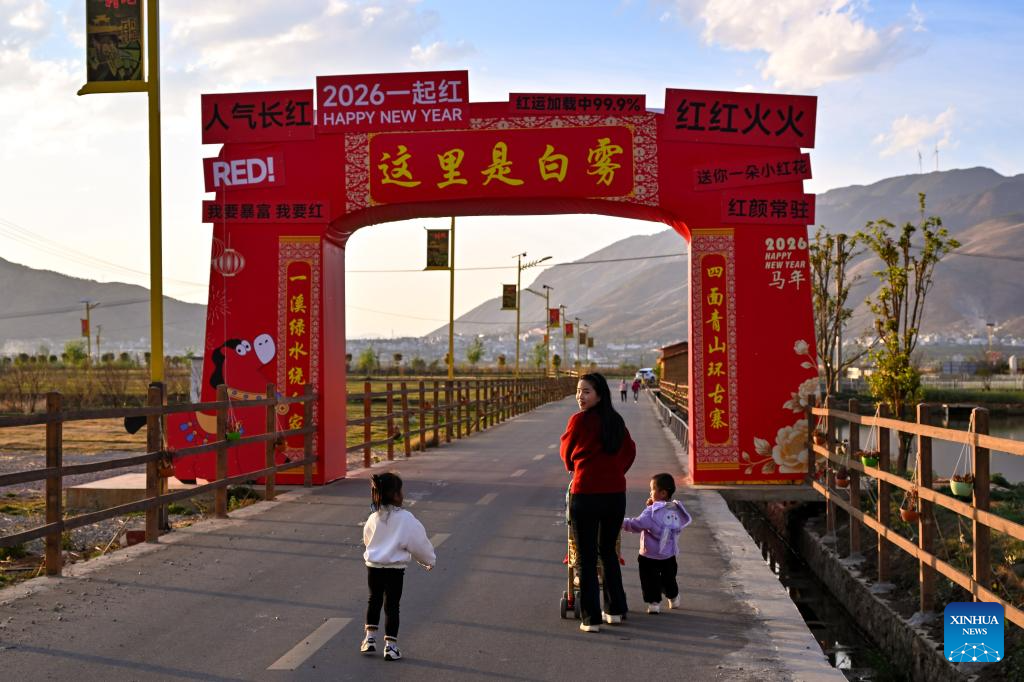
Villagers stroll in Baiwu Village of Huize County, southwest China's Yunnan Province, March 24, 2026.
Baiwu Village once served as a major hub for south-to-north copper transport during the Ming and Qing dynasties (1368-1911), giving birth to many ancient dwellings and copper transport heritage.
In recent years, local authorities have endeavored to boost cultural tourism in the village by preserving and utilizing its traditional architecture, while introducing new businesses including bookstores, coffee shops, and homestays.
In 2025, the village received about 245,000 visitors, with 188 households involved in the local tourism industry. (Xinhua/Zhang Cheng)

Tourists take photos in Baiwu Village of Huize County, southwest China's Yunnan Province, March 24, 2026.
Baiwu Village once served as a major hub for south-to-north copper transport during the Ming and Qing dynasties (1368-1911), giving birth to many ancient dwellings and copper transport heritage.
In recent years, local authorities have endeavored to boost cultural tourism in the village by preserving and utilizing its traditional architecture, while introducing new businesses including bookstores, coffee shops, and homestays.
In 2025, the village received about 245,000 visitors, with 188 households involved in the local tourism industry. (Xinhua/Zhang Cheng)

A villager serves cold bean jelly noodles in Baiwu Village of Huize County, southwest China's Yunnan Province, March 24, 2026.
Baiwu Village once served as a major hub for south-to-north copper transport during the Ming and Qing dynasties (1368-1911), giving birth to many ancient dwellings and copper transport heritage.
In recent years, local authorities have endeavored to boost cultural tourism in the village by preserving and utilizing its traditional architecture, while introducing new businesses including bookstores, coffee shops, and homestays.
In 2025, the village received about 245,000 visitors, with 188 households involved in the local tourism industry. (Xinhua/Huang Xiaoyong)

Tourists have fun in Baiwu Village of Huize County, southwest China's Yunnan Province, March 24, 2026.
Baiwu Village once served as a major hub for south-to-north copper transport during the Ming and Qing dynasties (1368-1911), giving birth to many ancient dwellings and copper transport heritage.
In recent years, local authorities have endeavored to boost cultural tourism in the village by preserving and utilizing its traditional architecture, while introducing new businesses including bookstores, coffee shops, and homestays.
In 2025, the village received about 245,000 visitors, with 188 households involved in the local tourism industry. (Xinhua/Huang Xiaoyong)

People take a walk in Baiwu Village of Huize County, southwest China's Yunnan Province, March 24, 2026.
Baiwu Village once served as a major hub for south-to-north copper transport during the Ming and Qing dynasties (1368-1911), giving birth to many ancient dwellings and copper transport heritage.
In recent years, local authorities have endeavored to boost cultural tourism in the village by preserving and utilizing its traditional architecture, while introducing new businesses including bookstores, coffee shops, and homestays.
In 2025, the village received about 245,000 visitors, with 188 households involved in the local tourism industry. (Xinhua/Peng Yikai)

An aerial drone photo taken on March 24, 2026 shows a view of Baiwu Village of Huize County, southwest China's Yunnan Province.
Baiwu Village once served as a major hub for south-to-north copper transport during the Ming and Qing dynasties (1368-1911), giving birth to many ancient dwellings and copper transport heritage.
In recent years, local authorities have endeavored to boost cultural tourism in the village by preserving and utilizing its traditional architecture, while introducing new businesses including bookstores, coffee shops, and homestays.
In 2025, the village received about 245,000 visitors, with 188 households involved in the local tourism industry. (Xinhua/Peng Yikai)

A child has fun in Baiwu Village of Huize County, southwest China's Yunnan Province, March 24, 2026.
Baiwu Village once served as a major hub for south-to-north copper transport during the Ming and Qing dynasties (1368-1911), giving birth to many ancient dwellings and copper transport heritage.
In recent years, local authorities have endeavored to boost cultural tourism in the village by preserving and utilizing its traditional architecture, while introducing new businesses including bookstores, coffee shops, and homestays.
In 2025, the village received about 245,000 visitors, with 188 households involved in the local tourism industry. (Xinhua/Peng Yikai)
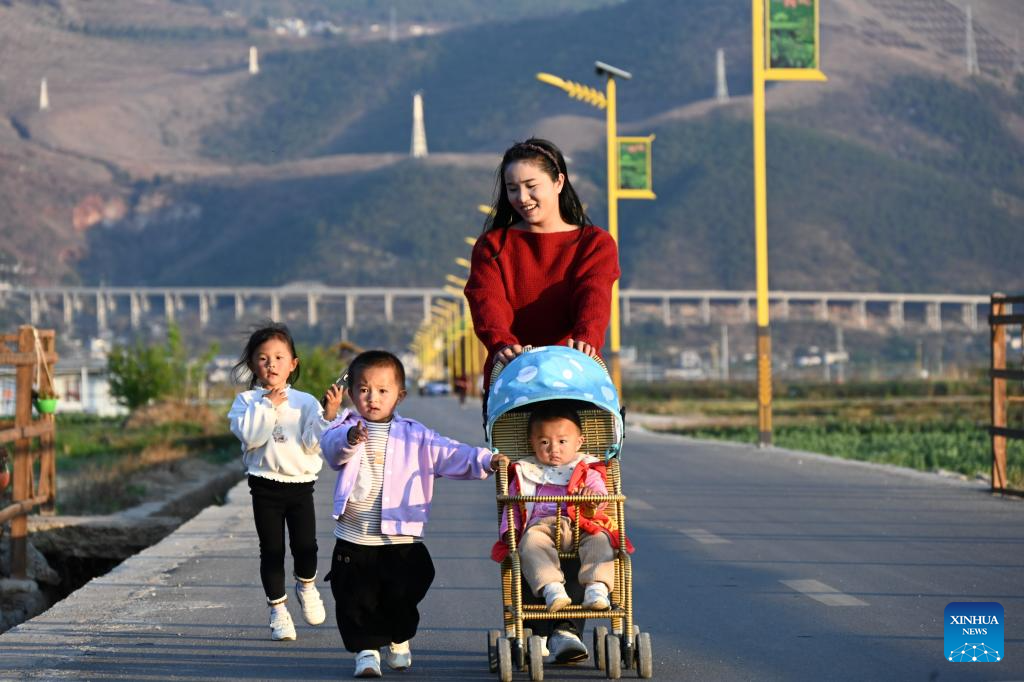
Villagers stroll in Baiwu Village of Huize County, southwest China's Yunnan Province, March 24, 2026.
Baiwu Village once served as a major hub for south-to-north copper transport during the Ming and Qing dynasties (1368-1911), giving birth to many ancient dwellings and copper transport heritage.
In recent years, local authorities have endeavored to boost cultural tourism in the village by preserving and utilizing its traditional architecture, while introducing new businesses including bookstores, coffee shops, and homestays.
In 2025, the village received about 245,000 visitors, with 188 households involved in the local tourism industry. (Xinhua/Huang Xiaoyong)

Tourists visit Baiwu Village of Huize County, southwest China's Yunnan Province, March 24, 2026.
Baiwu Village once served as a major hub for south-to-north copper transport during the Ming and Qing dynasties (1368-1911), giving birth to many ancient dwellings and copper transport heritage.
In recent years, local authorities have endeavored to boost cultural tourism in the village by preserving and utilizing its traditional architecture, while introducing new businesses including bookstores, coffee shops, and homestays.
In 2025, the village received about 245,000 visitors, with 188 households involved in the local tourism industry. (Xinhua/Zhang Cheng)

Villagers ride past a household in Baiwu Village of Huize County, southwest China's Yunnan Province, March 24, 2026.
Baiwu Village once served as a major hub for south-to-north copper transport during the Ming and Qing dynasties (1368-1911), giving birth to many ancient dwellings and copper transport heritage.
In recent years, local authorities have endeavored to boost cultural tourism in the village by preserving and utilizing its traditional architecture, while introducing new businesses including bookstores, coffee shops, and homestays.
In 2025, the village received about 245,000 visitors, with 188 households involved in the local tourism industry. (Xinhua/Huang Xiaoyong)

An aerial drone photo taken on March 24, 2026 shows ancient dwellings in Baiwu Village of Huize County, southwest China's Yunnan Province.
Baiwu Village once served as a major hub for south-to-north copper transport during the Ming and Qing dynasties (1368-1911), giving birth to many ancient dwellings and copper transport heritage.
In recent years, local authorities have endeavored to boost cultural tourism in the village by preserving and utilizing its traditional architecture, while introducing new businesses including bookstores, coffee shops, and homestays.
In 2025, the village received about 245,000 visitors, with 188 households involved in the local tourism industry. (Xinhua/Peng Yikai)

People enjoy cold bean jelly noodles in Baiwu Village of Huize County, southwest China's Yunnan Province, March 24, 2026.
Baiwu Village once served as a major hub for south-to-north copper transport during the Ming and Qing dynasties (1368-1911), giving birth to many ancient dwellings and copper transport heritage.
In recent years, local authorities have endeavored to boost cultural tourism in the village by preserving and utilizing its traditional architecture, while introducing new businesses including bookstores, coffee shops, and homestays.
In 2025, the village received about 245,000 visitors, with 188 households involved in the local tourism industry. (Xinhua/Lin Liping)

This photo taken on March 24, 2026 shows a view of Baiwu Village of Huize County, southwest China's Yunnan Province.
Baiwu Village once served as a major hub for south-to-north copper transport during the Ming and Qing dynasties (1368-1911), giving birth to many ancient dwellings and copper transport heritage.
In recent years, local authorities have endeavored to boost cultural tourism in the village by preserving and utilizing its traditional architecture, while introducing new businesses including bookstores, coffee shops, and homestays.
In 2025, the village received about 245,000 visitors, with 188 households involved in the local tourism industry. (Xinhua/Huang Xiaoyong)

A staff member does the cleaning at a homestay in Baiwu Village of Huize County, southwest China's Yunnan Province, March 24, 2026.
Baiwu Village once served as a major hub for south-to-north copper transport during the Ming and Qing dynasties (1368-1911), giving birth to many ancient dwellings and copper transport heritage.
In recent years, local authorities have endeavored to boost cultural tourism in the village by preserving and utilizing its traditional architecture, while introducing new businesses including bookstores, coffee shops, and homestays.
In 2025, the village received about 245,000 visitors, with 188 households involved in the local tourism industry. (Xinhua/Lin Liping)
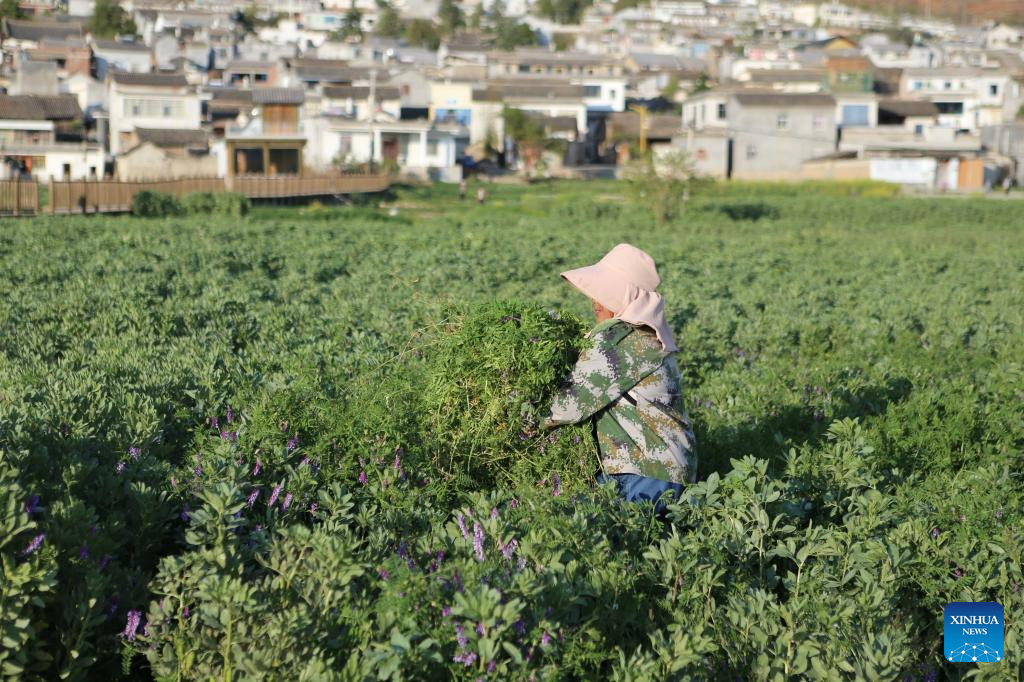
A villager weeds in a field in Baiwu Village of Huize County, southwest China's Yunnan Province, March 24, 2026.
Baiwu Village once served as a major hub for south-to-north copper transport during the Ming and Qing dynasties (1368-1911), giving birth to many ancient dwellings and copper transport heritage.
In recent years, local authorities have endeavored to boost cultural tourism in the village by preserving and utilizing its traditional architecture, while introducing new businesses including bookstores, coffee shops, and homestays.
In 2025, the village received about 245,000 visitors, with 188 households involved in the local tourism industry. (Xinhua/Lin Liping)

A villager shows a local beverage in Baiwu Village of Huize County, southwest China's Yunnan Province, March 24, 2026.
Baiwu Village once served as a major hub for south-to-north copper transport during the Ming and Qing dynasties (1368-1911), giving birth to many ancient dwellings and copper transport heritage.
In recent years, local authorities have endeavored to boost cultural tourism in the village by preserving and utilizing its traditional architecture, while introducing new businesses including bookstores, coffee shops, and homestays.
In 2025, the village received about 245,000 visitors, with 188 households involved in the local tourism industry. (Xinhua/Zhang Cheng)
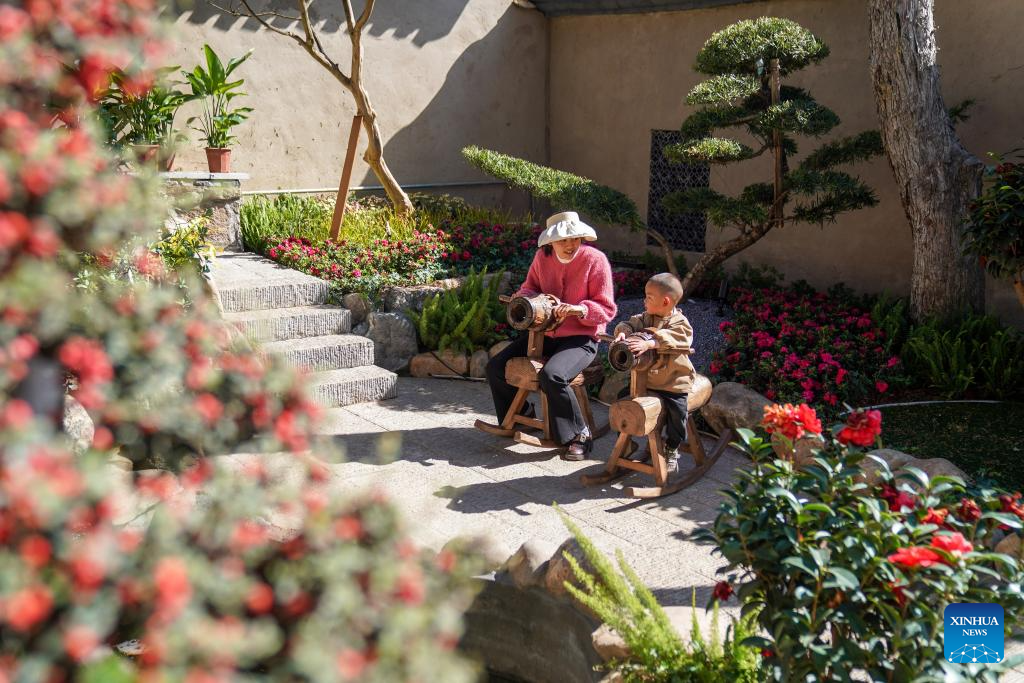
Tourists have fun in Baiwu Village of Huize County, southwest China's Yunnan Province, March 24, 2026.
Baiwu Village once served as a major hub for south-to-north copper transport during the Ming and Qing dynasties (1368-1911), giving birth to many ancient dwellings and copper transport heritage.
In recent years, local authorities have endeavored to boost cultural tourism in the village by preserving and utilizing its traditional architecture, while introducing new businesses including bookstores, coffee shops, and homestays.
In 2025, the village received about 245,000 visitors, with 188 households involved in the local tourism industry. (Xinhua/Peng Yikai)


