* As spring unfolds across China, cities are rolling out activities to attract tourists.
* Beyond tourism, the flower industry is expanding along the value chain.
* Experts say China's blooming flower economy shows strong economic vitality at the start of the year.
WUHAN/JINAN, March 20 (Xinhua) -- Amidst a gentle breeze and a light drizzle, tourist Deng Deng found herself seated in a cart on an elevated railway in Wuhan, capital of central China's Hubei Province. Gazing through the glass floor beneath her, she marveled at the springtime spectacle of white and pink cherry blossoms below.
"Viewing the blossoms from an aerial perspective is a truly unique experience," said the visitor from south China's Guangdong Province, about 1,000 kilometers away.
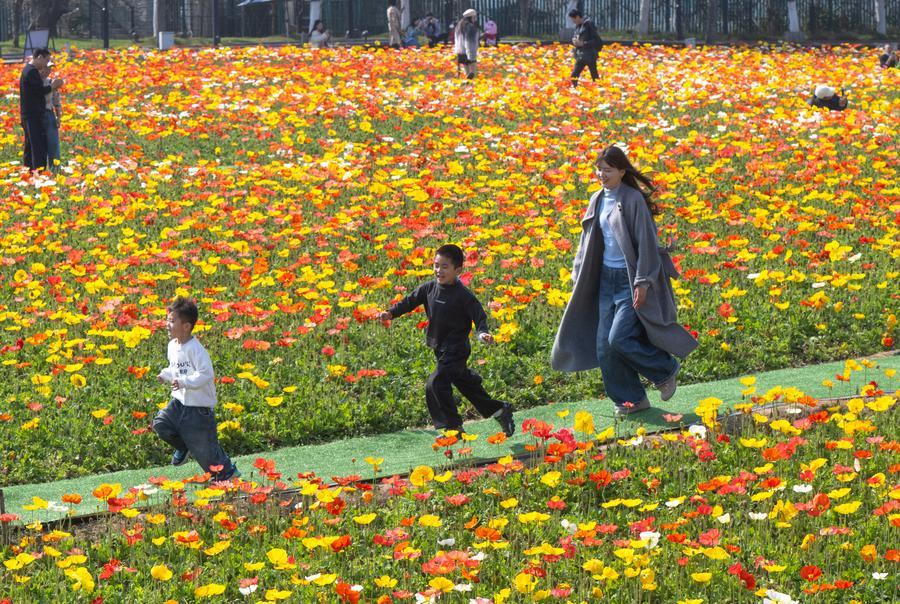
As spring unfolds across China, flowers such as cherry and peach blossoms, tulips and poppies are bursting into bloom nationwide, bringing color and life to the season. This floral explosion is giving a nice boost to the spring economy.
But this year, something is different.
In previous years, Deng's spring trips, from cherry blossoms in Wuxi, Jiangsu Province, to peonies in Luoyang, Henan Province, were often limited to brief weekend getaways. This time, however, she planned a week-long stay in Wuhan, combining flower viewing with cheering for the Chinese basketball team at a FIBA Women's World Cup qualifier and tasting local delicacies.
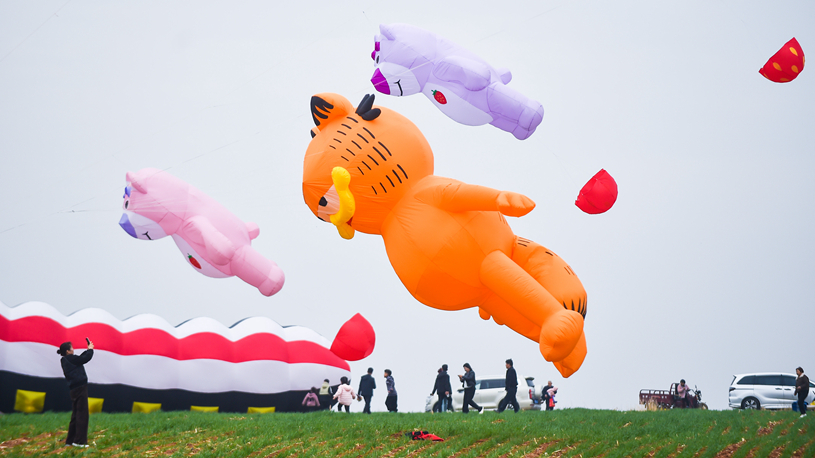
Her experience reflects the evolving landscape of China's spring economy. Cities are introducing fun activities like aerial flower viewing, flower-field hot pots, cozy tea ceremonies by the stove, immersive performances, and international sports events. All of these aim to enhance visitor experiences, encourage longer stays, and increase spending.
ENHANCED FLOWER VIEWING EXPERIENCE
Last week, the Hubei provincial government announced plans to host about 400 events, including concerts and sports competitions, throughout the flower-viewing season, which is expected to last until May.
Deng spent more than 5,000 yuan (about 724.6 U.S. dollars) on her Wuhan trip, covering transportation, accommodation and tickets -- an expense she considers to be worth every penny.
"The breathtaking blooms, thrilling matches, and delicious food all helped me relax," she said. "I feel recharged and ready to get back to work with renewed vigor."
Data from online travel platform Fliggy showed that since March, searches for "spring outing," "flower viewing" and "spring travel" have surged 380 percent from the previous period. Meanwhile, Qunar reported a more than 60 percent increase in flower-viewing searches over the March 14-15 weekend, with traditional destinations such as Hangzhou, Chengdu, Wuhan and Kunming ranking among the top 15 nationwide.
China's tradition of flower viewing dates back centuries. As early as the Tang Dynasty (618-907), people traveled to the countryside with friends and family to admire blossoms, leaving behind a rich legacy of poetry celebrating spring.
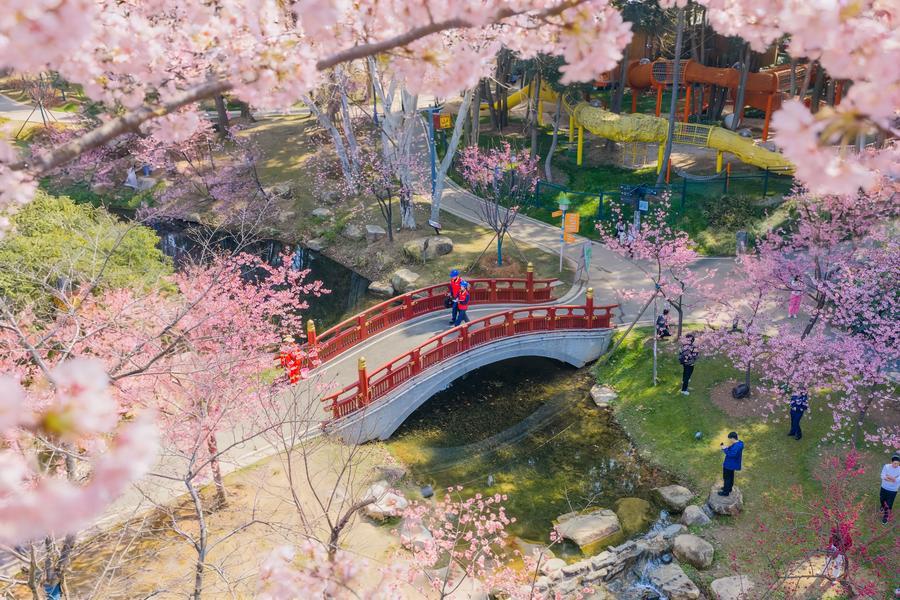
Cherry blossoms have become a calling card for Wuhan. The number of cherry trees in the city has grown fivefold, from roughly 100,000 in 2012 to 500,000 today. The number of cherry blossom viewing spots has risen to 221 citywide, extending the viewing season to nearly two months.
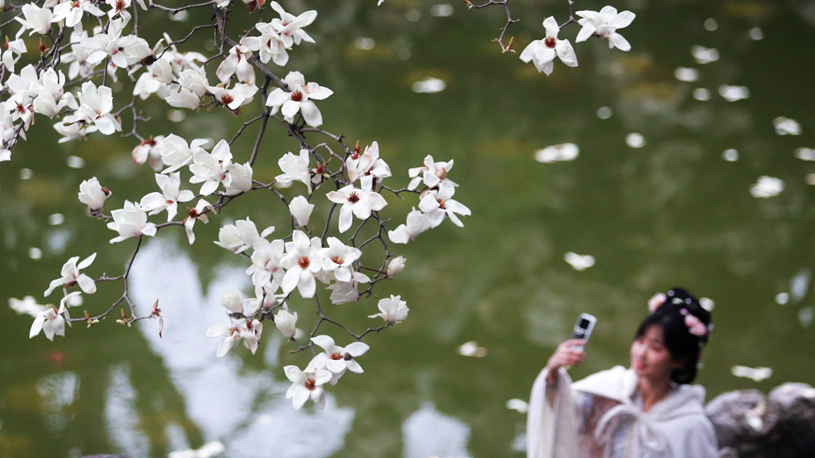
Since March 1, the iconic East Lake Cherry Blossom Garden alone has received 212,000 visitors, including 72,000 on a single day last Saturday. Tourists dressed in various styles of Hanfu -- traditional Chinese attire adorned with intricate embroidery -- pose for photos beneath the blooming trees.
Photographer Chen Songlin has been busy capturing such moments.
"During the blossom season, I work from around 9 a.m. to 4 p.m. and can earn nearly 1,000 yuan a day," he said. "With the season expected to last longer this year, I'm hopeful for more orders."
MORE THAN SIGHTSEEING
Beyond tourism, the value of flowers is expanding along the industrial chain, bringing new opportunities to businesses and local households.
In Wuhan, coffee chain Starbucks has launched the cherry-blossom-colored strawberry Frappuccino unique to the city. The drink has sold over 10,000 cups within a week, and has quickly become a hot trend on Dianping, a popular review platform in China similar to Yelp.
In Heze, eastern Shandong Province, peonies are at the center of a growing industry. With a cultivation history spanning over 1,500 years and a rich cultural legacy surrounding the flower, the city, known as China's "peony capital," attracted 9.92 million visitors during its peony festival last year, up 14.8 percent from a year earlier.
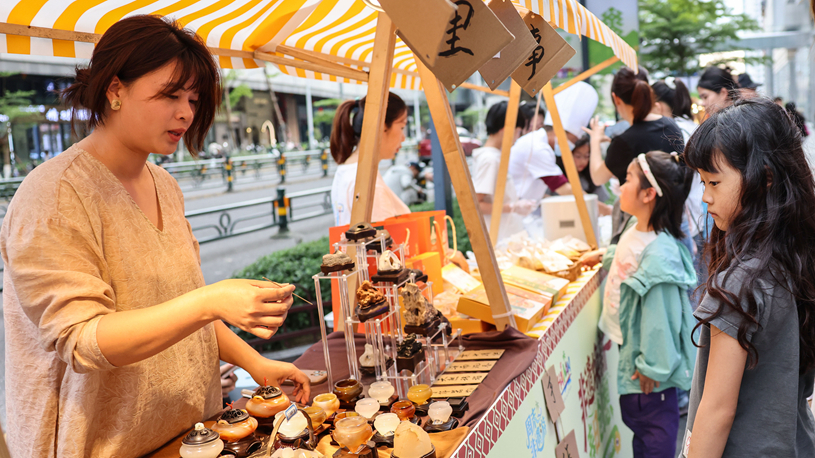
Even before the flowers bloom this year, a variety of peony-themed products, from bags and magnets to paper-cuttings, embroidery, ceramics and silk items, have already been popping up in stores.
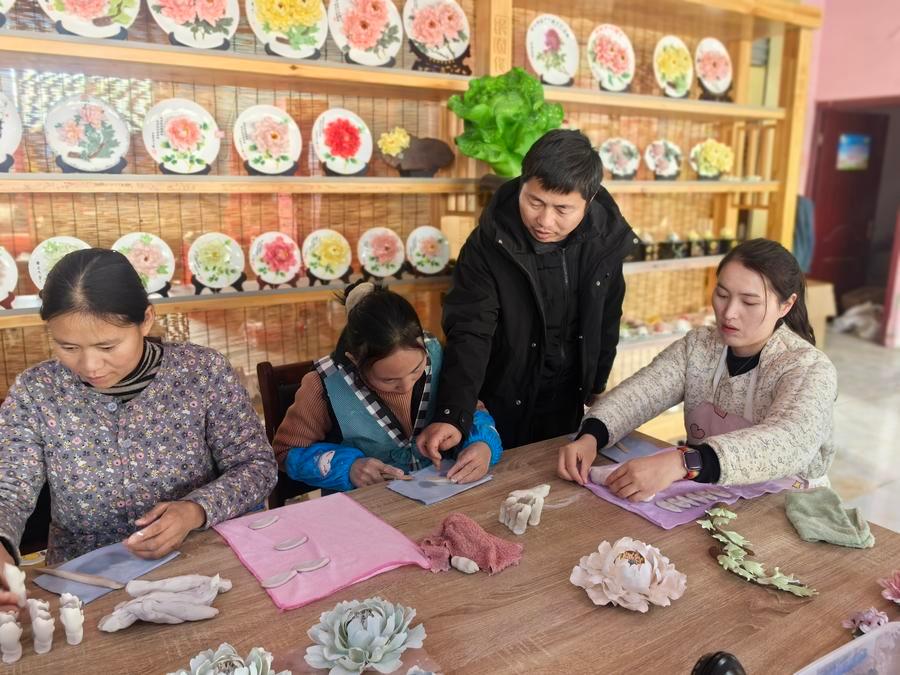
In one workshop, artisan Li Changsuo teaches apprentices how to craft porcelain pieces shaped like peonies. "Heze's peony porcelain combines centuries-old ceramic craftsmanship with local floral culture," Li said, adding that an array of products has been launched for the blooming season.
The city has also been promoting a "peony plus" initiative, expanding the industry beyond ornamental use. Peony roots are used in traditional medicine, seeds for oil extraction, and stamens for tea production. Products ranging from pastries to skincare items have further boosted the flower's economic value.
Currently, more than 120 local enterprises are engaged in producing and exporting peony-related products, developing over 260 varieties sold to more than 30 countries and regions, including the United States, France, Germany and Japan. The industry's total output value exceeded 13 billion yuan in 2025.
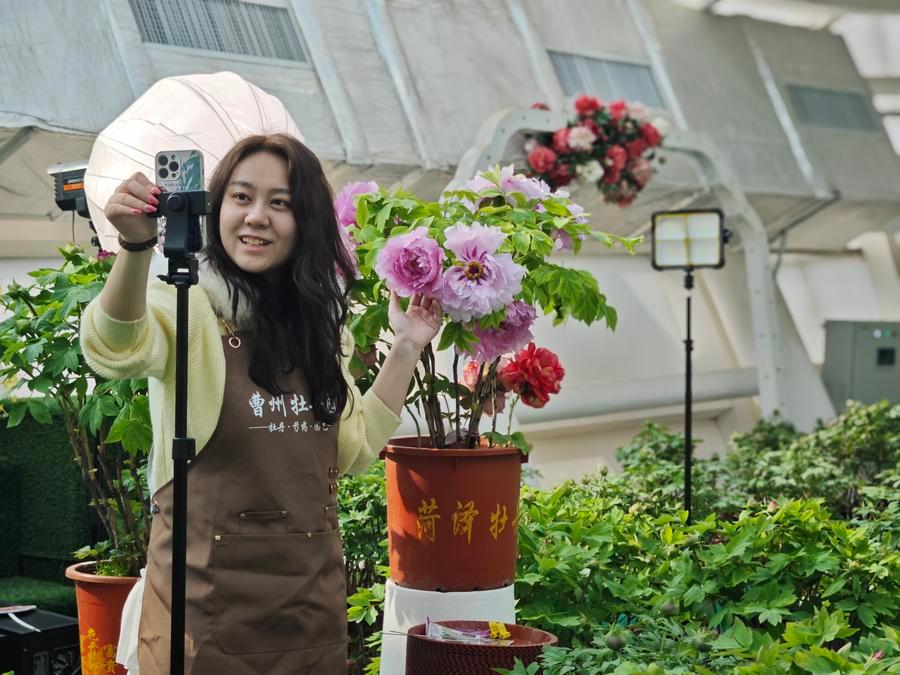
Peonies have also been a game-changer for local livelihoods. In Mudan District, literally meaning peony, more than half of local farmers are involved in the peony-related industry, working in areas such as greenhouse cultivation, essential oil extraction, handicrafts and livestreaming sales.
Inside a greenhouse filled with the scent of spring, farmer Li Xueshan was busy packing freshly cut peonies into temperature-controlled boxes. "In the past, annual income per mu was about 10,000 yuan. Now, with greenhouse cultivation, it has risen to 40,000 yuan," he said with a smile. "Orders for March are already fully booked."
China will implement initiatives to upgrade services to the benefit of consumers, develop a number of new, high-profile consumption scenarios with broad appeal, and move faster to nurture new areas of consumption growth, according to the country's government work report this year.
Pang Zhiyong, an expert with the Chinese Society for Horticultural Science, said China's blooming flower economy not only reflects the country's commitment to green development, but also demonstrates its strong economic vitality at the start of the year.
With continued policy support and technological innovation, the sector is expected to unlock further growth potential, he added.
"Ecologically the flower economy fosters ecological restoration and encourages green planting, while economically it propels the integration of agriculture, culture, and tourism, stimulates rural development and county-level employment, and facilitates consumption enhancement and high-quality growth," said Professor Deng Aimin with the Jiangxi University of Finance and Economics. ■
(Reporting by Bai Xu, Cheng Lu, Yue Wenwan, Xiong Xianghe, Tian Zhongquan, Zhang Xinyi and Li Aoqiu; Video reporters: Wang Huan and Pan Zhiwei; Video editors: Hong Ling, Zhu Cong and Wang Han)