
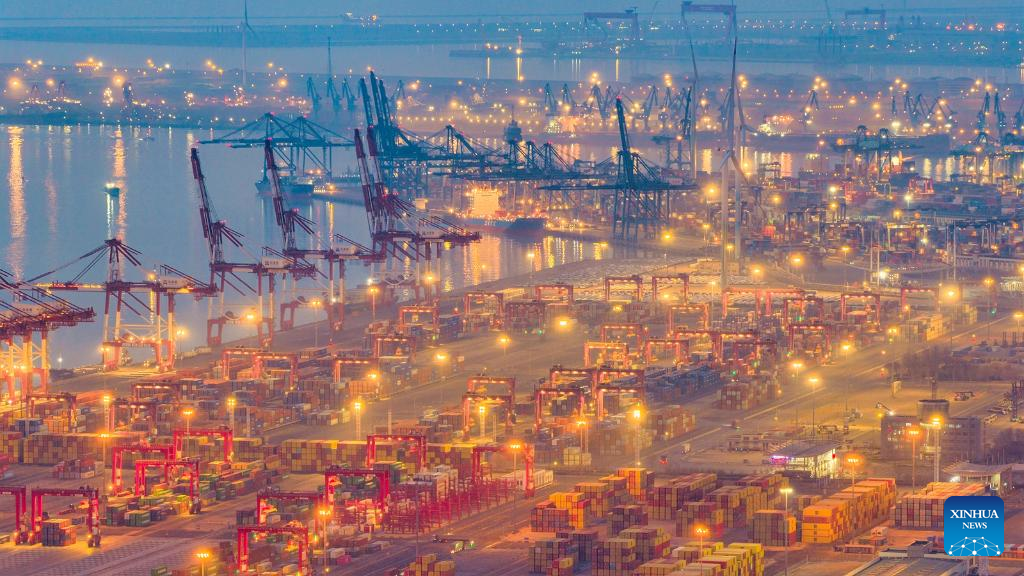
A drone photo taken on March 16, 2026 shows a view of the Tianjin Port in Binhai New Area, north China's Tianjin. (Photo by Du Penghui/Xinhua)
BEIJING, March 16 (Xinhua) -- China's value-added industrial output, an important economic indicator, went up 6.3 percent year on year in the first two months of 2026, data from the National Bureau of Statistics (NBS) showed on Monday.
The pace was 1.1 percentage points faster than the level in December last year, according to the NBS. In February alone, the industrial output grew 0.83 percent from January.
The industrial output is used to measure the activity of large enterprises, each with an annual main business turnover of at least 20 million yuan (about 2.9 million U.S. dollars).
A breakdown of the data showed that the mining sector's value-added output increased by 6.1 percent year on year in the two-month period, while that of the manufacturing sector grew by 6.6 percent. The value-added output of the electricity, heat, gas, water production and supply sectors rose by 4.7 percent.
NBS spokesperson Fu Linghui attributed the growth to improving domestic demand, stronger export momentum, and the increasingly visible effects of macroeconomic policies.
The equipment manufacturing sector has been a particularly strong contributor to overall industrial growth, according to Fu. In the first two months of the year, value-added output in that sector rose 9.3 percent, accounting for 47.4 percent of total growth.
Innovation has played a greater leading role, with emerging sectors increasingly supporting production growth, he said. Value-added output of high-tech manufacturing enterprises grew 13.1 percent year on year in the January-February period, while the digital product manufacturing sector expanded 8.8 percent, both considerably outpacing overall growth.
Fu said the green economy also provided fresh momentum for industrial upgrading. In the first two months, output of wind turbines surged 28.7 percent year on year, while energy storage lithium-ion batteries soared 84 percent.
"Years of progress in green energy transition have yielded prominent results," Fu said, noting that the development of wind and photovoltaic power has driven demand for energy storage and fueled the sharp expansion of related products.
At the same time, Fu cautioned about the evolving impact of international geopolitical conflicts and external uncertainties. With domestic demand yet to keep pace with supply, industrial production still faces considerable pressure.
Looking ahead, Fu said the priority will be building a strong domestic market and a unified national market. Key actions also include fostering integration between sci-tech and industrial innovation, upgrading traditional industries, nurturing emerging and future industries, and accelerating the development of a modern industrial system. ■
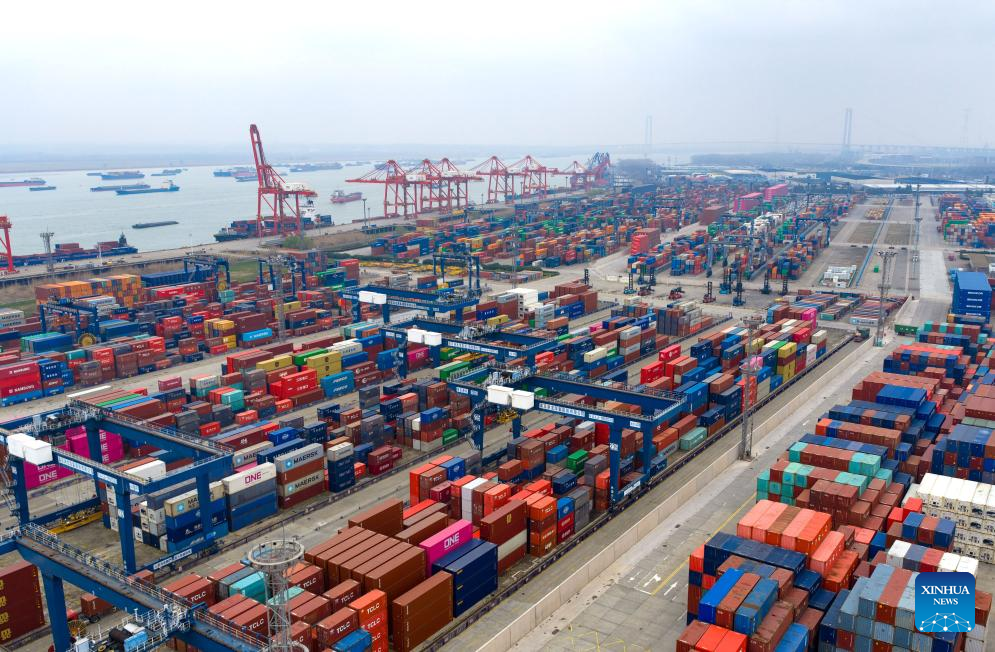
A drone photo taken on March 15, 2026 shows a view of the Longtan Container Terminal at Nanjing Port, east China's Jiangsu Province. (Photo by Yang Suping/Xinhua)
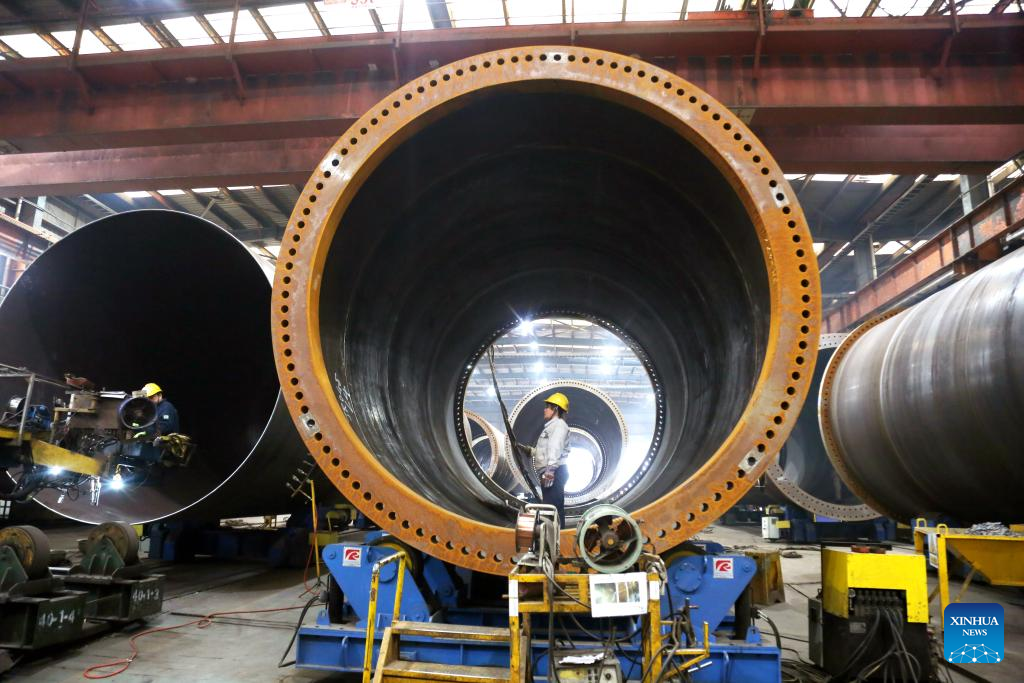
Workers work on a production line of a wind power equipment company at an economic and technological development zone in Lianyungang, east China's Jiangsu Province, on March 16, 2026. (Photo by Wang Chun/Xinhua)
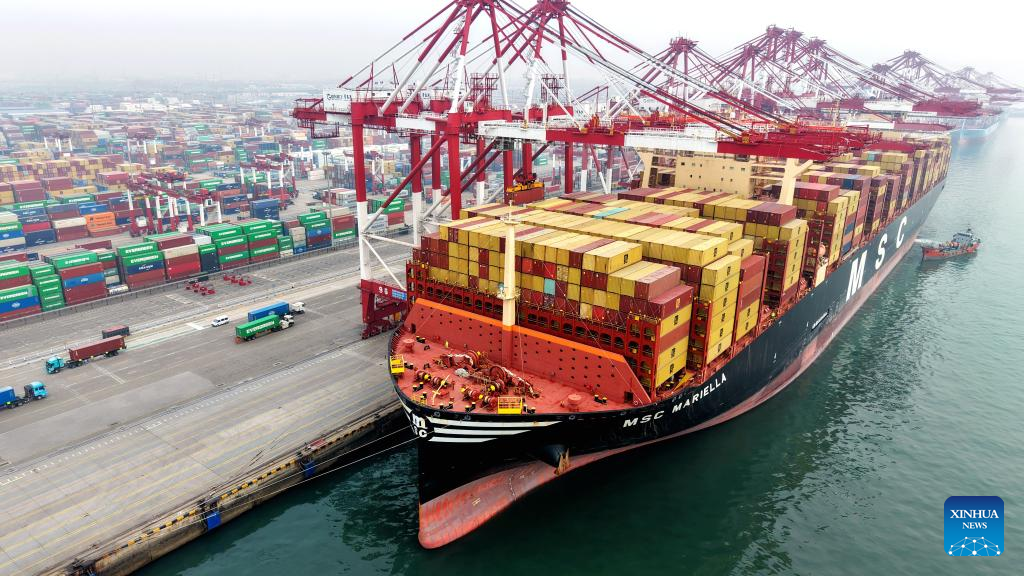
A drone photo taken on March 16, 2026 shows a tanker docking at Qingdao Port in Qingdao, east China's Shandong Province. (Photo by Yu Fangping/Xinhua)
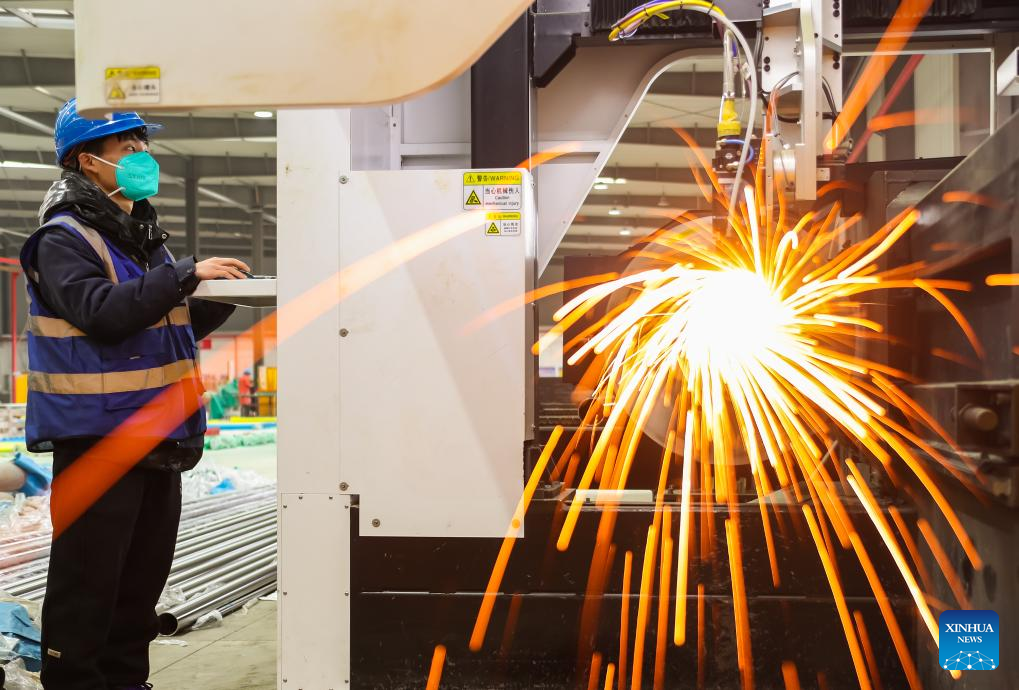
A worker operates a machine at a workshop in an economic development zone in Jurong, east China's Jiangsu Province, on March 16, 2026. (Photo by Zhong Xueman/Xinhua)

A drone photo taken on March 16, 2026 shows a view of the Tianjin Port in Binhai New Area, north China's Tianjin. (Photo by Du Penghui/Xinhua)
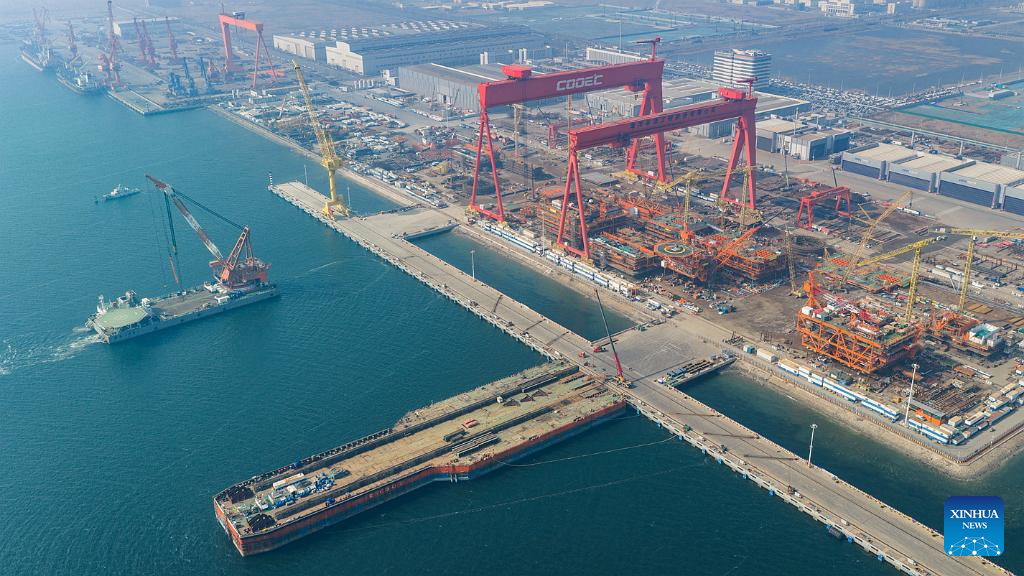
A drone photo taken on March 16, 2026 shows the construction site of an offshore oil and gas platform project in Binhai New Area, north China's Tianjin. (Photo by Du Penghui/Xinhua)
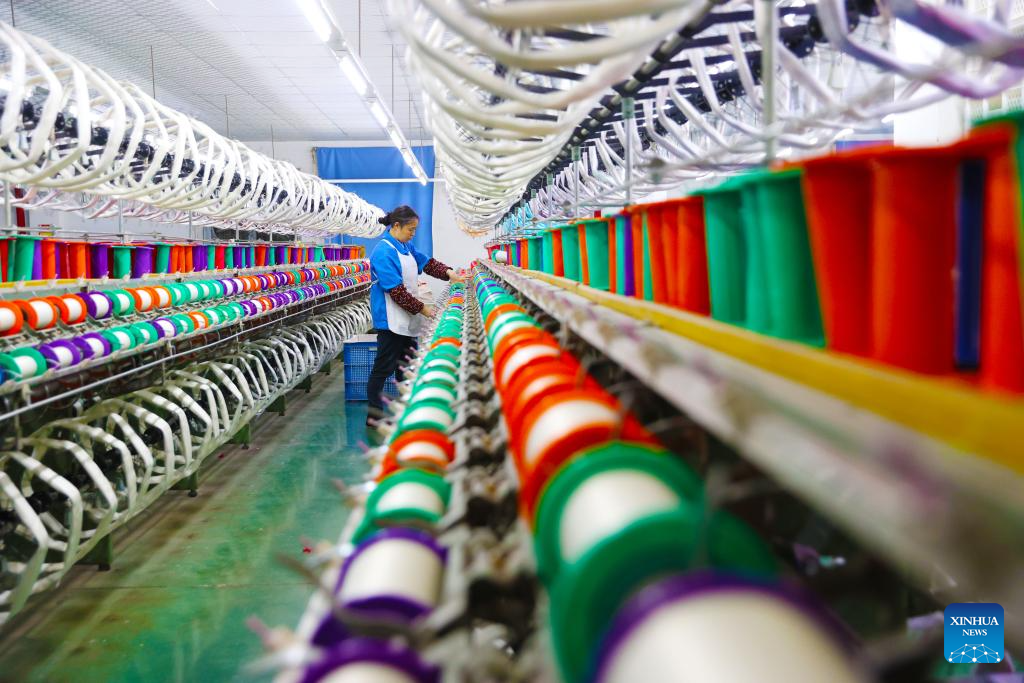
A worker works at a silk company's workshop in a high-tech zone in Qianjiang District of Chongqing, southwest China, on March 16, 2026. China's value-added industrial output, an important economic indicator, went up 6.3 percent year on year in the first two months of 2026, data from the National Bureau of Statistics (NBS) showed on Monday.
The pace was 1.1 percentage points faster than the level in December last year, according to the NBS. In February alone, the industrial output grew 0.83 percent from January. (Photo by Yang Min/Xinhua)
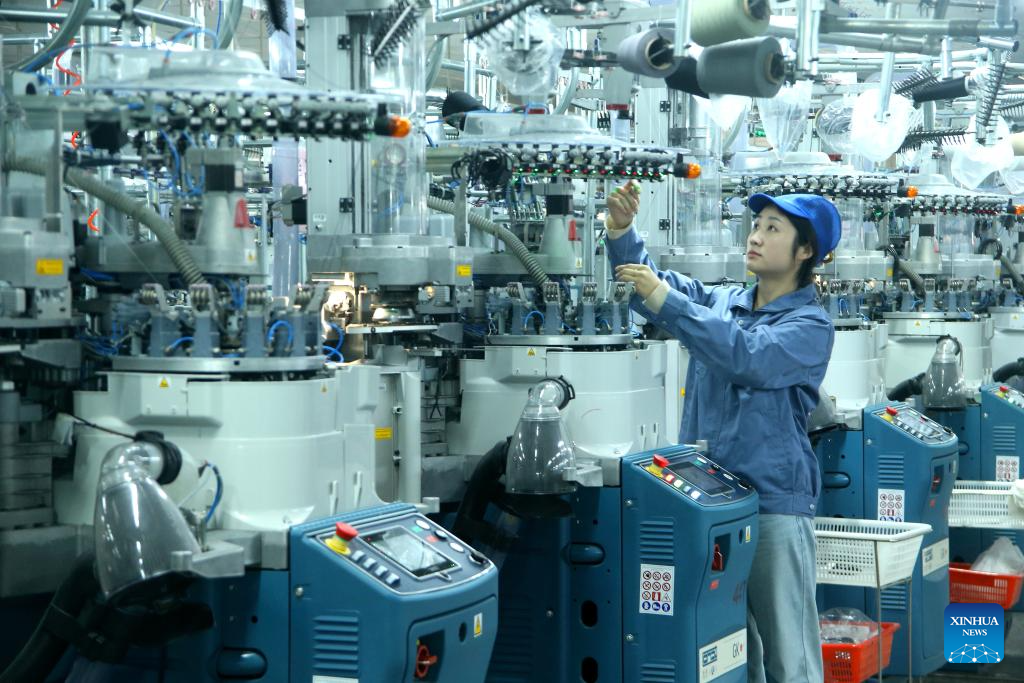
A worker works on a production line of a sock company in Qingdao, east China's Shandong Province, on March 16, 2026. China's value-added industrial output, an important economic indicator, went up 6.3 percent year on year in the first two months of 2026, data from the National Bureau of Statistics (NBS) showed on Monday.
The pace was 1.1 percentage points faster than the level in December last year, according to the NBS. In February alone, the industrial output grew 0.83 percent from January. (Photo by Liang Xiaopeng/Xinhua)

A worker welds at a steel company in an economic development zone in Hengshan County of Hengyang, central China's Hunan Province, on March 16, 2026. China's value-added industrial output, an important economic indicator, went up 6.3 percent year on year in the first two months of 2026, data from the National Bureau of Statistics (NBS) showed on Monday.
The pace was 1.1 percentage points faster than the level in December last year, according to the NBS. In February alone, the industrial output grew 0.83 percent from January. (Photo by Cao Zhengping/Xinhua)
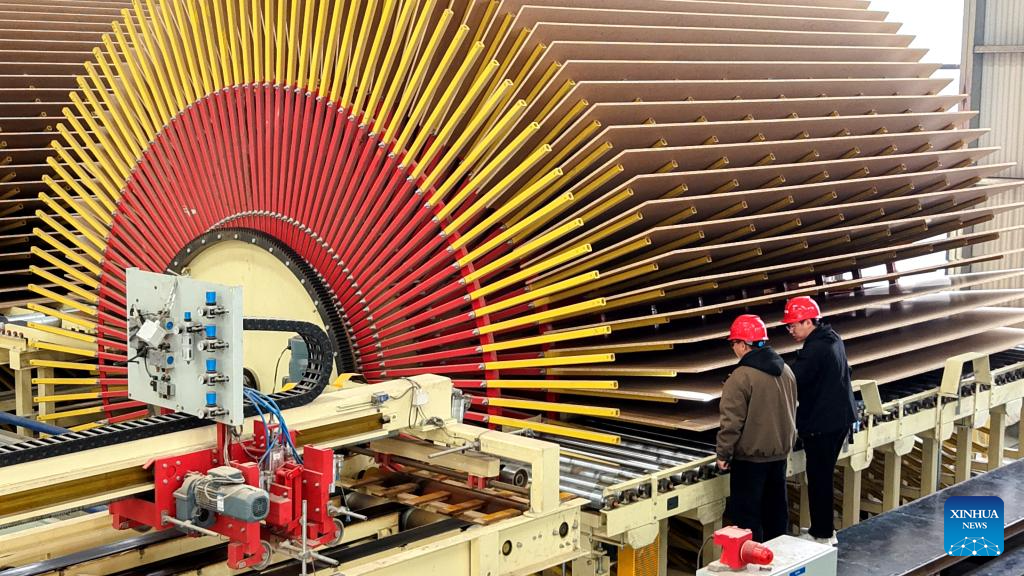
Workers work on a board production line of a wood products company in Pingyi County of Linyi City, east China's Shandong Province, on March 16, 2026. China's value-added industrial output, an important economic indicator, went up 6.3 percent year on year in the first two months of 2026, data from the National Bureau of Statistics (NBS) showed on Monday.
The pace was 1.1 percentage points faster than the level in December last year, according to the NBS. In February alone, the industrial output grew 0.83 percent from January. (Photo by Wu Jiquan/Xinhua)


