
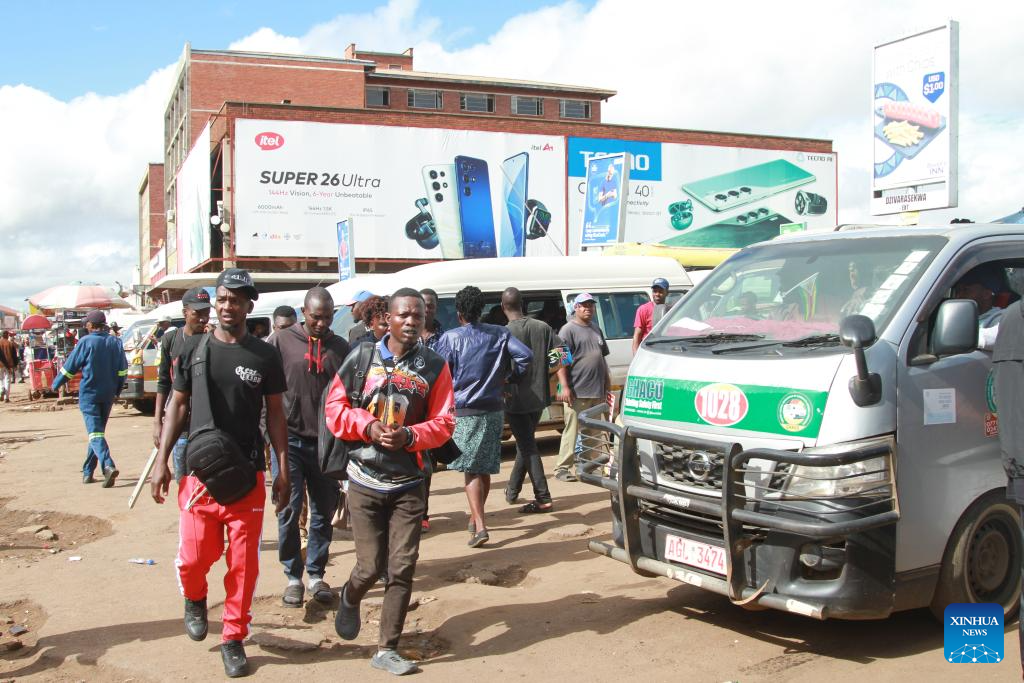
People walk past parked public transport vehicles at a station in Harare, Zimbabwe, on March 11, 2026. Amid rising crude oil prices due to the conflict in the Middle East, Zimbabweans are already feeling the squeeze at the fuel pump. Commuters in Harare, Zimbabwe's capital, are bearing the brunt of higher transportation costs, as fuel price hikes have forced some public transport operators to raise fares.(Photo by Tafara Mugwara/Xinhua)
HARARE, March 12 (Xinhua) -- Amid rising crude oil prices due to the conflict in the Middle East, Zimbabweans are already feeling the squeeze at the fuel pump.
On Wednesday, the Zimbabwe Energy Regulatory Authority, the national energy regulator, announced fuel hikes amid the supply turmoil in global energy markets. Diesel soared to 1.77 U.S. dollars per liter from 1.52 dollars, while blended petrol rose to 1.71 dollars per liter from 1.56 dollars.
Commuters in Harare, Zimbabwe's capital, are bearing the brunt of higher transportation costs, as fuel price hikes have forced some public transport operators to raise fares.
At Copacabana, one of the biggest intra-city public transport ranks in Harare, business was usual on Thursday, with people going on with their daily business despite the increased cost.
Munyaradzi Gamba, a staff member at the rank, said despite the distance between Zimbabwe and the battlefield, the impact of the conflict is being felt closer to home, with commuters suffering the heat.
"We never thought that the conflict in the Middle East would also affect us here; it is something that we just saw on television and in the papers," said Gamba.
Tafadzwa Goliati, the national coordinator for the Passengers Association of Zimbabwe, an advocacy for passenger welfare, said both commuters and transporters have adjusted to the fuel increases.
"There is nothing we can do as passengers but to adjust to the situation that is prevailing in the transport sector. Here in Zimbabwe, we do not manufacture fuel, but we import it. We have to adjust to this price. But we are just calling on the transport sector not to put a big margin on profits," he said.
He noted that while many long-distance public transport operators have not increased prices yet, some intra-city transport operators are hiking prices during peak hours.
Lloyd Kosi, a public transport driver, told Xinhua that transporters are now bearing the cost of the conflict, as price hikes are mounting additional economic pressure.
"It is difficult to operate, to remain profitable, so we end up adding 50 cents (to) a dollar during peak hours to cushion ourselves from increased fuel costs," he said.
Commuter transport in Zimbabwe is primarily operated by private, informal operators and pirate taxis. While informal transport operators mostly offer flexible and low-cost transportation, a large number of pirate operators often result in unregulated fares.
For commuters who depend on public transport, the increase in fares now means walking long distances or spending more on transport costs.
While the government has assured that fuel stocks are available, the public faces increased financial pressure, said Edgar Chikoore, a transporter running a truck-hiring business in Harare.
He said that due to the increased operating costs, some transporters have adjusted their fares from 1.50 dollars per km to 1.75 dollars to reflect the increased costs.
"We hope that diplomacy will prevail so that the battling sides stop fighting. They should find a diplomatic solution rather than fighting, as it also affects us economically here," said Chikoore. ■
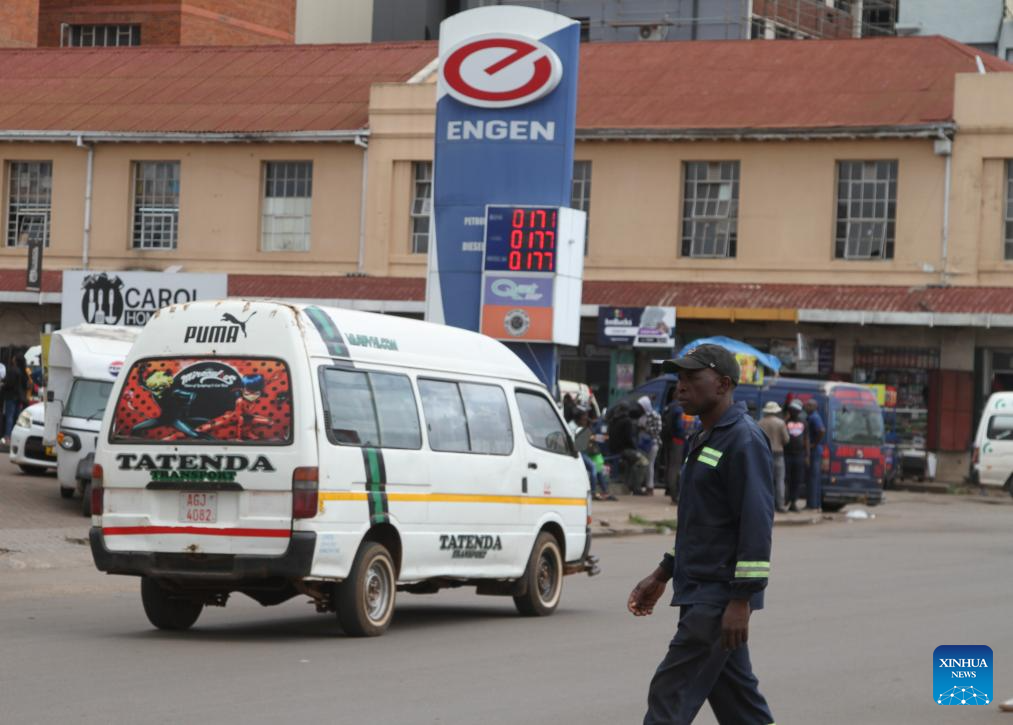
A van moves past a fuel station in Harare, Zimbabwe, on March 11, 2026. Amid rising crude oil prices due to the conflict in the Middle East, Zimbabweans are already feeling the squeeze at the fuel pump.
Commuters in Harare, Zimbabwe's capital, are bearing the brunt of higher transportation costs, as fuel price hikes have forced some public transport operators to raise fares.(Photo by Tafara Mugwara/Xinhua)
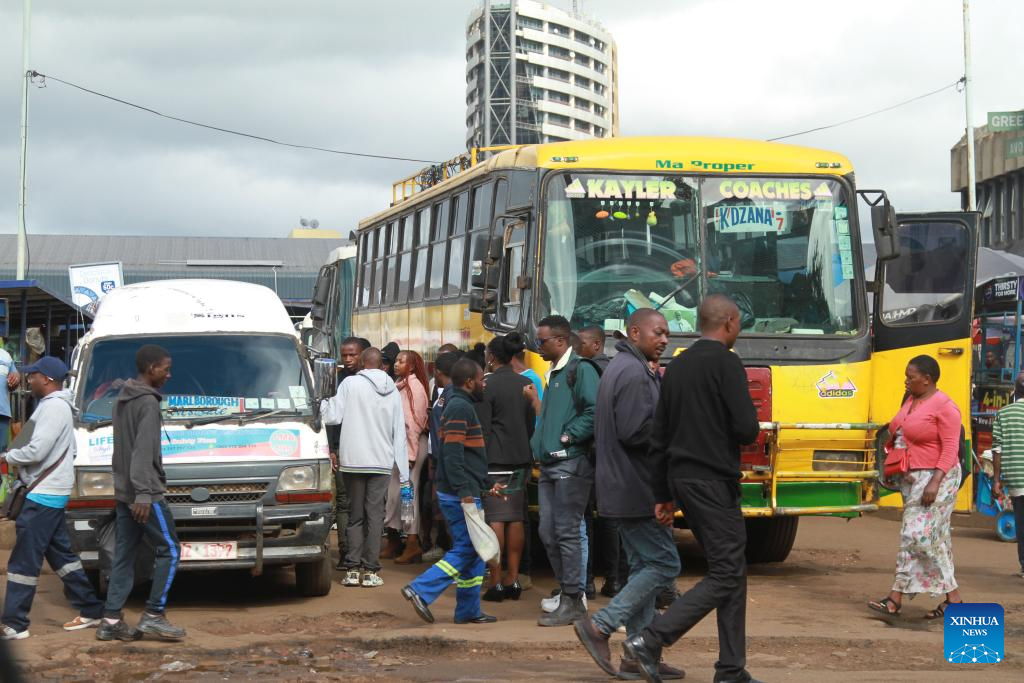
People are seen in front of parked public transport vehicles at a station in Harare, Zimbabwe, on March 11, 2026. Amid rising crude oil prices due to the conflict in the Middle East, Zimbabweans are already feeling the squeeze at the fuel pump.
Commuters in Harare, Zimbabwe's capital, are bearing the brunt of higher transportation costs, as fuel price hikes have forced some public transport operators to raise fares.(Photo by Tafara Mugwara/Xinhua)


