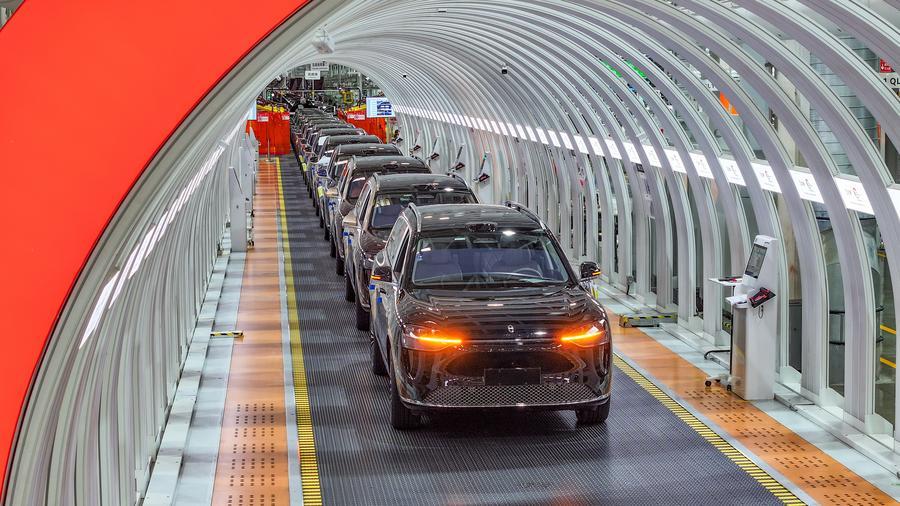
BEIJING, March 11 (Xinhua) -- While tourists thronged to Heilongjiang Province -- a former industrial base in northeast China reborn as an ice-and-snow tourism hotspot -- this winter, Seres, a Chongqing-based automaker in the country's southwest, rolled its one-millionth intelligent electric vehicle off the production line.
Cargo ships and freight trains, meanwhile, crisscrossed global trade routes, helping push China's foreign trade back into double-digit growth in the first two months of 2026.
These early signs point to an economy that has entered the year with notable resilience.
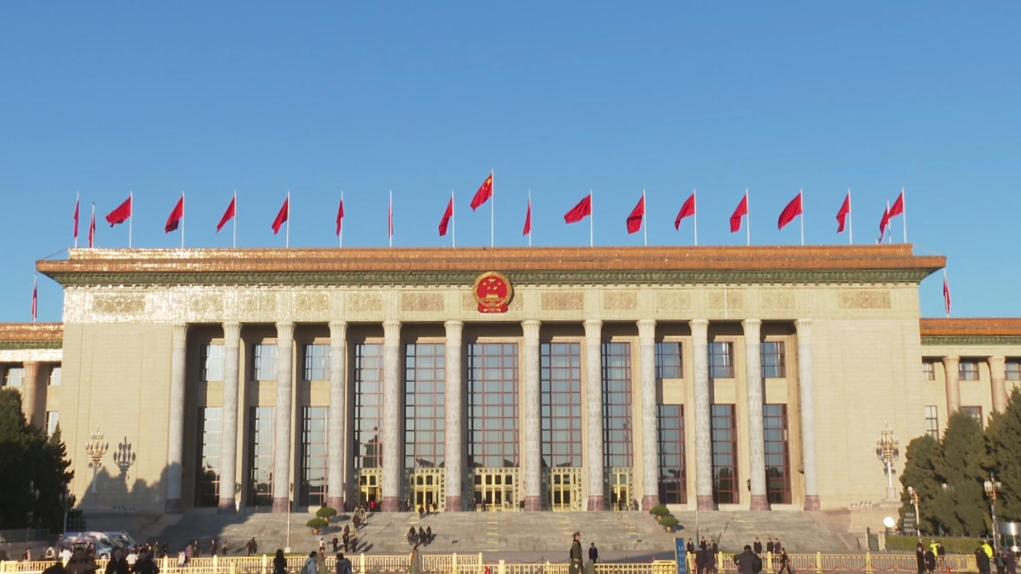
At the ongoing national legislative session, Chinese policymakers are moving to lock in this early momentum. A raft of measures are taking shape, from building a robust domestic market to accelerating technological innovation and expanding high-standard opening up, all aimed at empowering the economy to cope with mounting uncertainties abroad and challenges at home, while sustaining high-quality development.
Despite rising geopolitical risks, a sluggish global economy and weak domestic demand, China still signaled firm confidence in maintaining its economic resilience.
"The conditions underpinning China's long-term growth and its underlying trend remain unchanged. More and more, China is demonstrating the strengths of its system and the strengths it has as a big country," said the government work report being deliberated by lawmakers.
CONSTRUCTING ROBUST MARKET
"Building a robust domestic market" will be a top priority among this year's major tasks, according to the report.
Focused on expanding domestic demand, planned policy steps include an income growth plan for urban and rural residents, a special fiscal-financial coordination fund of 100 billion yuan (14.5 billion U.S. dollars), and the issuance of ultra-long special treasury bonds worth 250 billion yuan to support consumer goods trade-ins.
"Given rising uncertainty in the external environment, prioritizing domestic demand is crucial to China's economic policy," said Huang Qunhui, a national political advisor and a researcher with the Chinese Academy of Social Sciences.
As China currently faces an imbalance between strong supply and weak demand, the report offers a range of remedies, such as boosting the earnings of low-income groups, increasing property income, and refining the remuneration and social security systems.
These measures are designed to "fundamentally enhance consumers' purchasing power," said Quan Heng, a national lawmaker from the Shanghai Academy of Social Sciences in east China.
China will also foster new drivers in consumption. Measures in the pipeline include creating new consumption scenarios, promoting the sports economy, launching an "artificial intelligence (AI) plus consumption" initiative, and encouraging spending on culture and tourism.
Experts believe these policies are aligned with evolving consumer demand and could help expand employment, accelerate industrial upgrading and create a virtuous cycle between supply and demand.
Looking ahead, China aims to achieve a notable increase in household consumption as a share of gross domestic product (GDP), make domestic demand play an increasingly greater role as the principal economic driver, and fully unleash the growth potential, according to a draft outline of the 15th Five-Year Plan (2026-2030) that is expected to be adopted at the national legislative session.
NEW GROWTH MOMENTUM
In the face of faltering global growth, China is making a major push to harness technological innovation in its pursuit of new drivers of growth.
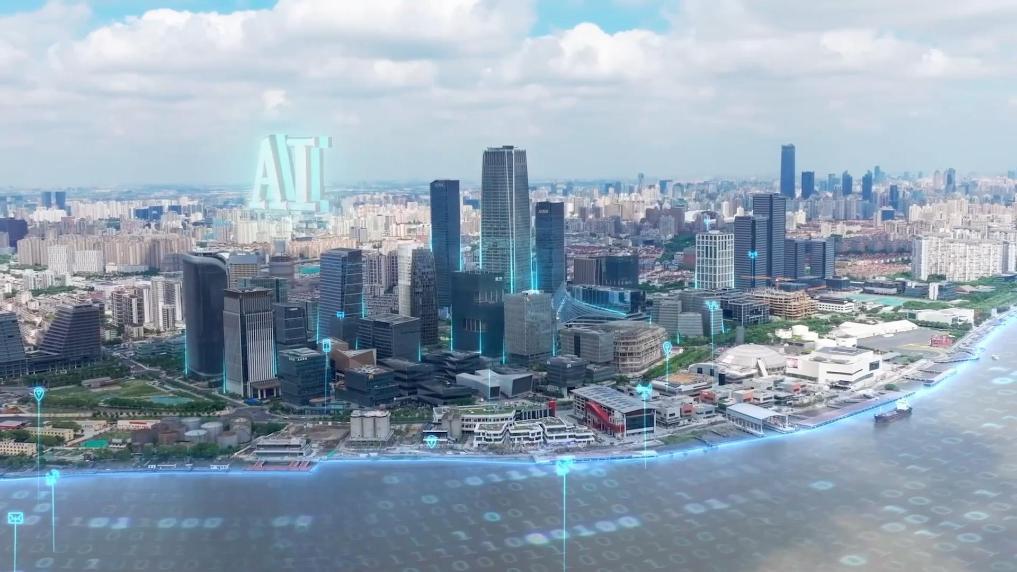
A broad set of steps will be taken, including deploying the AI technology to upgrade traditional industries, bolstering emerging pillar sectors such as integrated circuits and the low-altitude economy, and mapping out future industries, like quantum technology and embodied AI.
Notably, "creating new forms of smart economy," a phrase for the first time written into the government work report, has drawn particular attention.
"It goes beyond the application of a single technology, but represents the deep integration of AI with the real economy, digital infrastructure and industrial ecosystems, marking a new step in AI's reshaping of the underlying logic of the Chinese economy," said Chen Jun, a national lawmaker and executive vice president of Nankai University in Tianjin.
China has already laid a solid foundation for the development of the smart economy. The country owns about 60 percent of global AI patents, with its intelligent computing capacity surpassing 1,590 EFLOPS and industrial internet applications covering all 41 major industrial categories.
Zheng Shanjie, head of the National Development and Reform Commission (NDRC), predicts China's AI-related sectors will see their combined scale top 10 trillion yuan by 2030.
In the next five years, a range of high-growth sectors are also expected to emerge, Zheng said, adding that several trillion-yuan-level markets are poised to take shape in the future to create new engines for high-quality development.
China is constructing an industrial ladder stretching from strategic emerging sectors to future industries, to advance new quality productive forces and promote the steady transformation of economic drivers, said Huang Maoxing, a national lawmaker and vice president of the Fujian Academy of Social Sciences.
UNWAVERING OPENING UP
Even amid increasing turbulence in the global landscape, China has remained steadfast in its commitment to opening up. Experts attribute this stance to a deeply held conviction that engagement with the world, rather than withdrawal from it, is fundamental to advancing the nation's development.
This year's government work report pledged to expand high-standard opening up to pursue mutually beneficial cooperation.
Specific measures include broader market access and more opening-up areas, particularly in the service sector, as well as expanded trials for value-added telecom services, biotechnology and wholly foreign-owned hospitals. There will also be further opening up in the digital sector and a shortened negative list for cross-border trade in services.
At a time when some countries are turning to protectionism, China is proactively opening its vast market and turning it into opportunities for cooperation, Minister of Commerce Wang Wentao said.
China will promote balanced trade growth this year, stabilizing exports while sharing more opportunities in its domestic market, the minister noted.
"Exports and imports are like two wheels on a car. The more balanced they are, the more steadily it runs, and the farther it goes," Wang said, adding that China will import more agricultural products, premium consumer goods, advanced equipment, and key components.
China is a major trading partner for more than 160 countries and regions. It is already the world's second-largest import market, and its growing middle-income group means demand still has considerable room to expand.
During the 15th Five-Year Plan period (2026-2030), China will continue to improve its business environment by expanding market access and fully implementing national treatment for foreign enterprises, according to the NDRC.
Multinationals and major international institutions have expressed optimism about China's markets. The International Monetary Fund has revised its growth forecast for the country upward, while Wall Street heavyweights including JPMorgan and BlackRock have been building up their China holdings.
"'The next China' is still China," Wang said. "We welcome more foreign companies to invest and develop in China." ■