
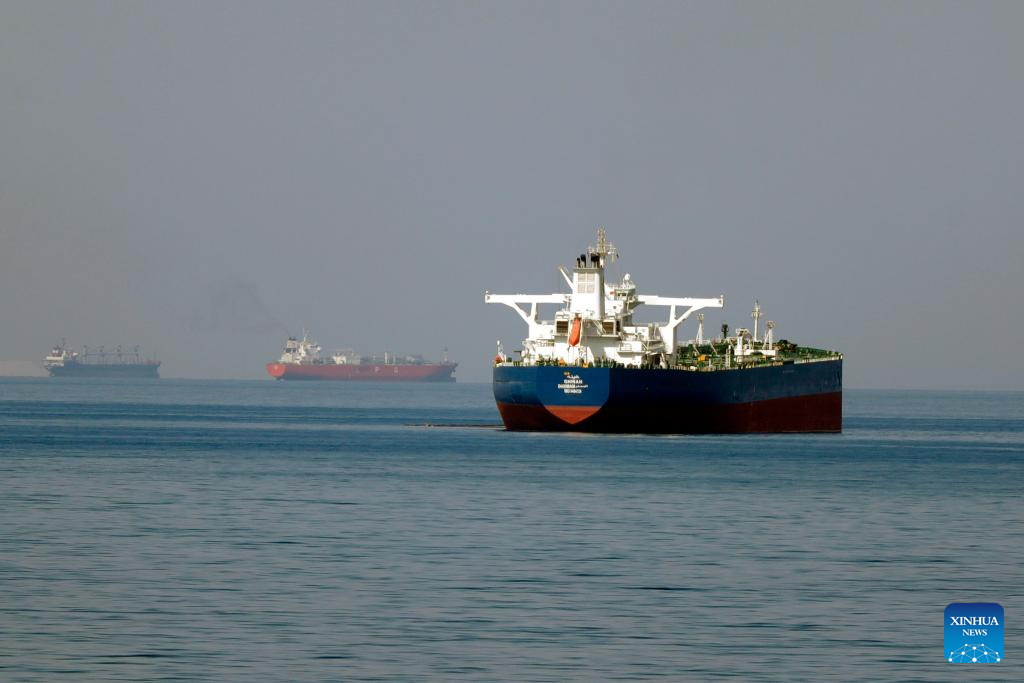
Ships are pictured in the Gulf of Suez, Egypt, on March 11, 2026. (Xinhua/Ahmed Gomaa)
CAIRO, March 11 (Xinhua) -- Samira Abdo, a 61-year-old cleaner, woke up early on Tuesday to begin what she expected to be another ordinary commute across the Egyptian capital. Instead, she was greeted with an unwelcome surprise: higher transportation fares.
The increase followed a government decision to raise fuel prices earlier in the day as part of austerity measures aimed at coping with the economic repercussions of the ongoing U.S.-Israeli war on Iran.
"This morning, the minibus fare went from 18 Egyptian pounds (about 0.35 U.S. dollars) to 20 pounds, and the microbus jumped from 9 to 10 pounds," Abdo told Xinhua. "I take at least four rides every day."
For Abdo, the change means spending six additional pounds daily just to travel between home and work, a seemingly small amount that adds up quickly for someone living on a modest income.
"I'm bracing for higher electricity and gas bills, and more expensive food," she said with concern. "We see missile strikes and attacks on TV, while the effects of the war are reaching us here."
Food prices are also beginning to climb. Tomatoes, a staple in Egyptian kitchens, have risen to between 20 and 25 pounds per kilogram from around 18 pounds. Yogurt now costs about 12 pounds per cup. "What are we supposed to do? Everything is getting more expensive," Abdo said in frustration.
For many Egyptians, the economic impact is immediate and tangible. Khaled Fekry, head of the General Bakeries Division at the Federation of Egyptian Chambers of Commerce, warned that the price of unsubsidized "tourist bread" is likely to rise significantly.
"Fuel price increases directly affect transportation, labor costs, and production expenses," Fekry said, adding that the price of an 80-gram loaf of the popular bread could increase by around 25 percent-a significant change for a staple consumed daily by millions of Egyptians.
On Feb. 28, the United States and Israel launched strikes on Iran, prompting Iran to respond with missile and drone attacks targeting U.S. and Israeli assets across the region.
The conflict quickly escalated into a broader regional crisis. The effective closure of the Strait of Hormuz, a vital energy corridor through which about 20 percent of the world's oil supply passes, has pushed global energy prices higher and raised fears of wider instability, sending economic shockwaves far beyond the battlefield.
SHOCKWAVES FROM DISTANT FRONT
Egypt raised domestic fuel prices by between 14 percent and 17 percent across key petroleum products early Tuesday, the country's Ministry of Petroleum and Mineral Resources said.
The ministry attributed the increase to "the exceptional situation resulting from geopolitical developments in the Middle East and their direct impact on global energy markets," noting that rising import and production costs had made the adjustment "unavoidable."
The economic turbulence has also affected financial markets. Waleed Gaballah, an Egyptian economic analyst, said more than 3 billion U.S. dollars in foreign portfolio investments, commonly known as "hot money," fled the country in recent days.
The outflows contributed to a sharp depreciation of the Egyptian pound, which weakened to about 51.5 pounds per U.S. dollar on Tuesday from around 47.9 pounds before the outbreak of the conflict.
The repercussions have also reached the Suez Canal, one of Egypt's most important sources of foreign currency. The waterway had begun recovering from disruptions caused by the war in Gaza and attacks on Red Sea shipping. However, the conflict involving Iran has again rattled the maritime industry.
Several major shipping companies, including Maersk and CMA CGM, announced plans to reroute some vessels around the Cape of Good Hope, bypassing both the Suez Canal and the Bab El-Mandeb Strait due to rising security concerns.
Osama Rabie, chairman of the Suez Canal Authority, described the shift last week as "temporary" and dependent on developments in the regional security situation.
PRESSURE ON TOURISM
The tourism industry, another pillar of Egypt's economy, is beginning to feel the strain.
After a strong recovery in 2025 driven by improved security conditions, favorable exchange rates, and the opening of the Grand Egyptian Museum, the sector had been expecting to welcome about 21 million visitors in 2026, up from 19 million the previous year.
Now, those expectations face growing uncertainty.
Mohamed Abdelrazek, a Japanese-speaking tour guide in Cairo, said tour groups from Japan have already begun canceling or postponing trips due to disruptions at major Gulf transit hubs.
"Most Asian tourists reach Egypt through Doha, Dubai, or Abu Dhabi," he explained, noting that direct EgyptAir flights from East Asia are relatively limited and expensive.
Although flights in some Gulf countries are gradually resuming, concerns among travelers remain. "Restoring confidence will take time," Abdelrazek said.
GOVERNMENT MEASURES
In response to the crisis, the Egyptian government has introduced a series of measures aimed at reducing public spending and conserving energy.
Prime Minister Mostafa Madbouly announced Monday that authorities will cancel certain government events, reduce official travel, and limit training programs to cut expenditures. Additional measures include tightening fuel consumption across sectors and accelerating the conversion of vehicles to natural gas.
President Abdel-Fattah al-Sisi also warned on Friday that individuals found manipulating prices during the crisis could face referral to military courts. He described the current economic climate as a "state of near emergency" and urged businesses not to exploit the situation.
Abu Bakr Al-Deeb, an adviser at the Cairo-based Arab Center for Research and Studies, said Egypt's economy depends heavily on foreign currency inflows from tourism, the Suez Canal, and foreign investment sectors that are highly sensitive to geopolitical instability.
However, he noted that Egypt has accumulated experience in managing external shocks in recent years. These include the economic fallout from disruptions to Red Sea shipping caused by Houthi attacks and the ongoing war in Gaza.
"Such crises have pushed Egypt to develop response mechanisms," Al-Deeb said, particularly in securing food supplies and expanding social protection programs to shield citizens from rising inflation. ■
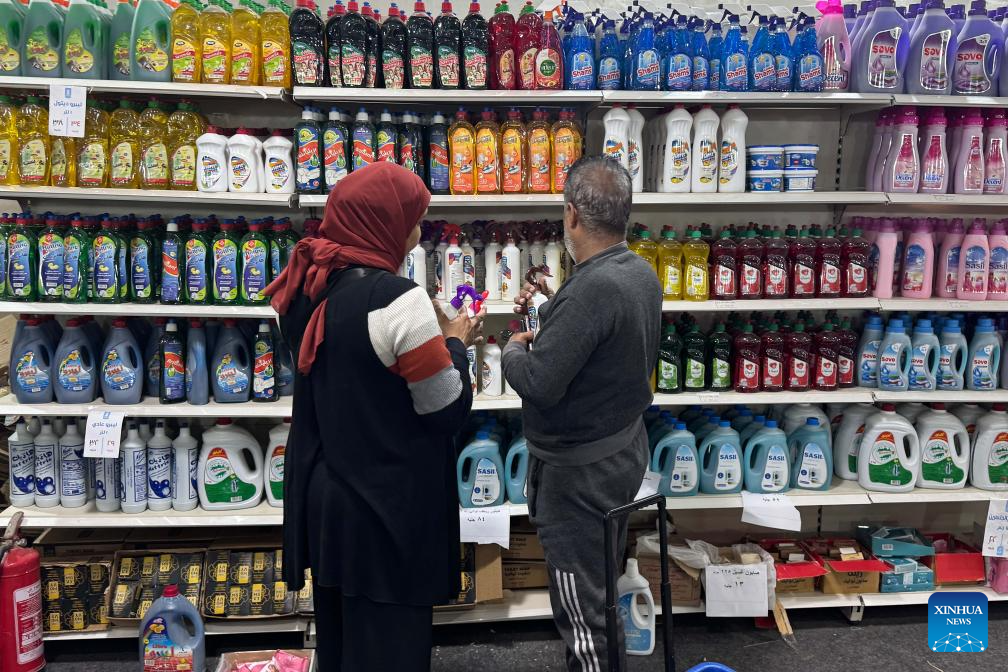
People shop at a market in Cairo, Egypt, on March 11, 2026. (Xinhua/Ahmed Gomaa)


