
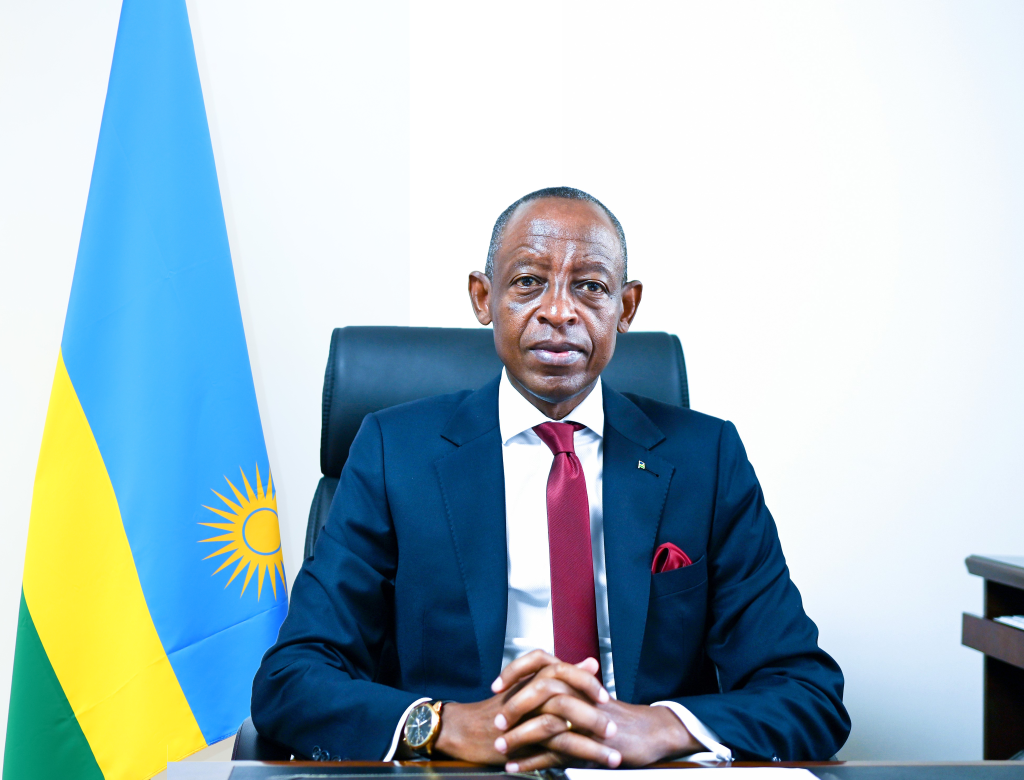
Rwandan Ambassador to China James Kimonyo. Photo provided by the Rwandan Embassy in China.
BEIJING, March 7 (Xinhuanet) -- In a recent interview with Xinhuanet, Rwandan Ambassador to China James Kimonyo shared his views on China's "two sessions," the annual meetings of China's top legislature and top political advisory body, highlighting China's strong commitment to high-standard opening-up.
Having been invited to the "two sessions" seven times, the ambassador pointed out that the event provides insights into China's policy priorities and strategic direction and that discussions on issues such as high-quality development, technological innovation, green transformation and opening-up carry important implications for Rwanda and the wider global community.
He also emphasized the consultative nature of the event, noting that representatives from diverse sectors come together to deliberate on national priorities.
2026 marks the inaugural year of China's 15th Five-Year Plan period (2026-2030). He said the plan signals a strong commitment to deepening reform and advancing high-standard opening-up. Measures aimed at liberalizing market access, enhancing regulatory transparency and improving the business environment demonstrate China's continued integration with the global economy, he said.
In over 50 years of diplomatic relations, China and Rwanda have deepened their traditional friendship, strengthened political mutual trust, achieved fruitful results from practical cooperation, and closely coordinated on international affairs, benefiting both countries and the two peoples significantly.
During the 2024 Beijing Summit of the Forum on China-Africa Cooperation (FOCAC), both sides decided to elevate the bilateral relationship to a comprehensive strategic partnership.
The ambassador lauded the close and comprehensive cooperation across various sectors. China has become one of Rwanda's largest sources of foreign direct investment and a key partner in infrastructure development, as well as an important market for Rwandan exports such as coffee, tea, chili and minerals.
According to official data, bilateral trade between China and Rwanda reached 669 million U.S. dollars in 2024, up 21.4 percent year on year, including 160 million dollars in Chinese imports from Rwanda, an increase of 22.5 percent.
Alongside deepening economic cooperation, people-to-people exchanges between the two countries have also continued to expand. Projects such as the Confucius Institute and the Luban Workshop in Rwanda have provided important support for enhancing employment skills among local youth.
He added that frequent high-level exchanges and growing people-to-people exchanges, including civil servants traveling to China for knowledge-sharing and capacity-building programs, have further strengthened bilateral ties.
Kimonyo also stressed the importance of multilateral coordination, noting that the two countries maintain close coordination within frameworks such as the United Nations, the Forum on China–Africa Cooperation and the African Union.
By aligning their positions on issues including peace and security, climate action, development financing and global governance reform, the two sides can advance the shared interests of developing countries and promote a more inclusive international system, he said.
China's major global initiatives also provide important platforms for collaboration in sustainable development, stability and people-to-people exchanges, he added.


