
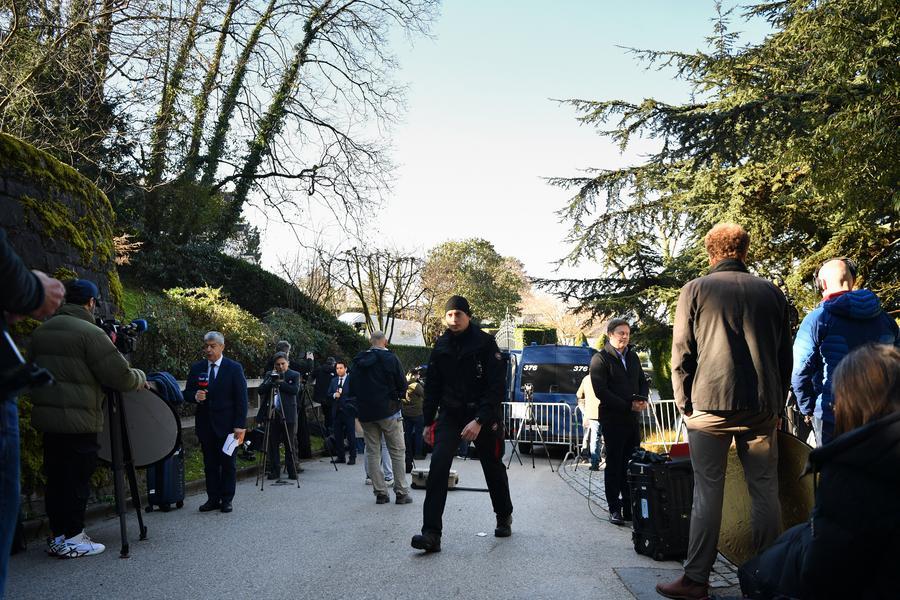
CAIRO, Feb. 26 (Xinhua) -- Iranian and U.S. delegations held their third round of indirect talks in Geneva on Thursday.
While Tehran has signaled tactical flexibility on uranium enrichment, Washington has insisted on sweeping concessions that would effectively dismantle Iran's nuclear program and curb its regional influence.
Experts warned that although the indirect talks have achieved "significant" and "good progress" as Iran mediator Oman reported, the fundamental rift between Tehran and Washington remains unbridgeable, keeping the risk of military confrontation dangerously high.
GOOD PROGRESS ON TABLE, BUT NO HANDSHAKE YET
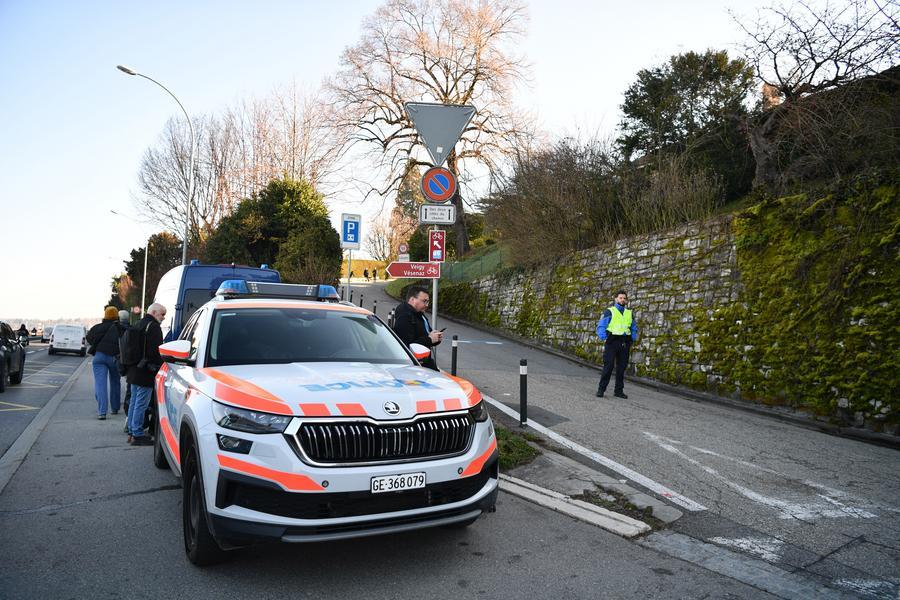
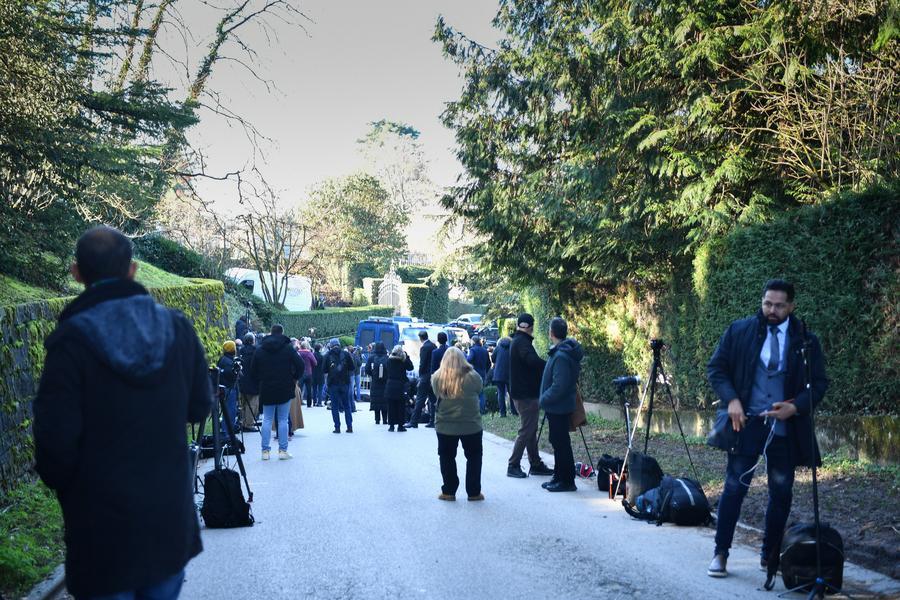
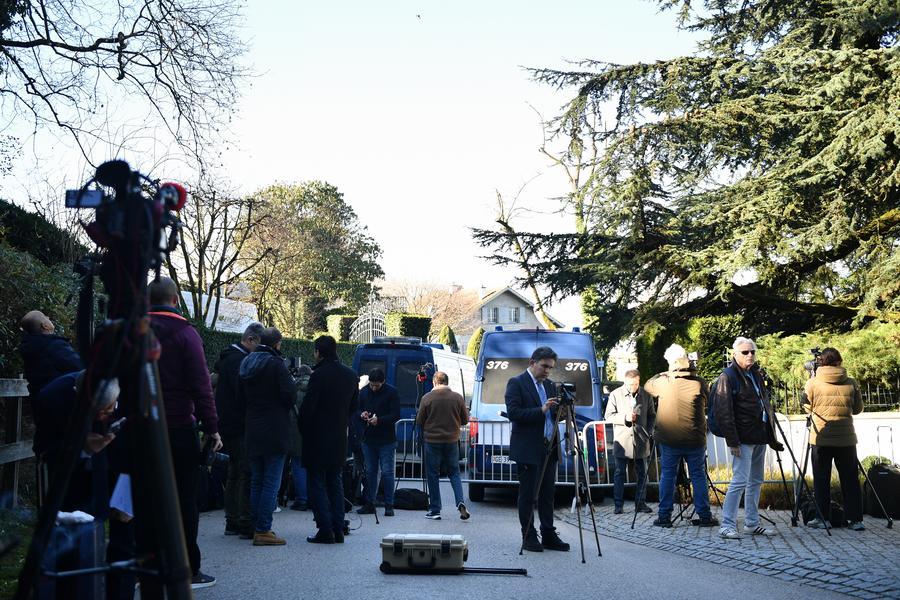
The Geneva talks, headed respectively by Iran's Foreign Minister Seyed Abbas Araghchi and U.S. president's special envoy Steve Witkoff, and mediated by Oman, were held on Thursday with both sides presenting what Iranian Foreign Ministry spokesman Esmaeil Baghaei called "very important and practical proposals" on the nuclear file and sanctions relief.
According to Iran's official news agency IRNA, after three hours of intensive negotiations, delegations from both sides took a break for "internal consultations" before resuming their talks later in the day. The IRNA said the second stage lasted two hours.
Araghchi said good progress was achieved with Washington in the talks, and the two sides agreed to begin technical reviews in Vienna next Monday.
He added that it was also decided that the Iranian and U.S. delegations would hold the fourth round of talks very soon, perhaps in less than a week.
Following the first stage of the talks, Oman's Foreign Ministry described the atmosphere as demonstrating "unprecedented openness to new and creative ideas and solutions."
A report by The Wall Street Journal, citing U.S. officials, said Washington is demanding that Iran accept a deal with no expiration date, setting tough terms including shutting down Iran's three main nuclear facilities of Fordow, Natanz and Isfahan, and transferring all remaining enriched uranium to the United States.
The United States is offering only limited sanctions relief at the outset of any agreement, with the possibility of further easing if Iran complies over time, said the report.
Meanwhile, Iran's state-run IRIB TV reported that the Iranian delegation has completely rejected transferring Iran's enriched uranium abroad in the indirect talks, and is also insistent on the termination of U.S. sanctions against the country.
Ali Shamkhani, a senior advisor to Iran's Supreme Leader Ali Khamenei, posted on social media platform X that if the main issue is Iran not making nuclear weapons, "an immediate agreement is within reach," citing a religious decree against such weapons. Tehran has been firm in securing its right to enrichment on its own soil.
Palestinian political analyst Samer Anabtawi told Xinhua that the Iranian move to prepare a draft agreement shows its "clear seriousness" in the negotiation process.
"But Washington's acceptance of it remains another matter linked to broader political calculations," Anabtawi noted.
Akram Atallah, a Gaza-based analyst, told Xinhua that Israel, though not at the table, is "the most influential actor" shaping the "dynamics" of the talks.
"It plays a significant role in preventing the negotiations from reaching a meaningful outcome," Atallah said, adding, "many of the conditions being raised in this diplomatic process are, in essence, Israeli conditions reflected in American demands."
DUAL-TRACK STRATEGY
"What is currently happening can be described as a 'finger-biting' phase, in which each side is flexing its military and political muscle in an attempt to impose its negotiating terms," Anabtawi noted.
Both Washington and Tehran are pursuing a dual-track strategy: negotiating while visibly preparing for possible conflict. The United States has amassed two aircraft carrier strike groups, over 150 combat aircraft, including F-35 stealth fighters, and has reinforced its bases in Jordan and Israel. It has also evacuated non-essential staff from its embassy in Beirut.
U.S. President Donald Trump has warned of "phase two" if such indirect talks fail, and The New York Times reported he is considering initial limited strikes to pressure Tehran at the negotiation table, which could later turn into a far larger campaign.
Iran, for its part, conducted live-fire drills in the Strait of Hormuz last week, temporarily closing the strategic waterway in a show of its ability to disrupt global oil shipments. Tehran has repeatedly stressed readiness to retaliate forcefully against any attack.
Mohammed Nader al-Omari, a Syrian writer and researcher specializing in crisis and conflict management, described the scale of the U.S. mobilization as "not routine" and sending "a clear signal that military options are being prepared." Another Syrian analyst, Sinan Hassan, called it "coercive diplomacy," by "applying pressure through military signaling while keeping negotiations alive."
Yet Amer Sabaileh, a Jordanian political analyst, argued that the size and nature of the buildup suggest Washington is not merely posturing.
"The military preparations and reinforcements the United States is carrying out in the region suggest that the possibility of war and U.S. strikes against Iran is highly likely," Sabaileh said.
Meanwhile, Charbel Barakat, international editor at Kuwait's Al-Jarida newspaper, noted Iran's tactical flexibility, as Tehran has signaled willingness to cap enrichment at 3.67 percent, accept an international consortium for fuel supply, and place its 60-percent stockpile under continuous monitoring of the International Atomic Energy Agency, all while keeping the missile program and regional allies off the table.
"This flexibility does not mean a willingness to alter its strategic doctrine," Mohamed Mohsen Abo El-Nour, head of the Arab Forum for Analyzing Iranian Policies and an expert on Iranian affairs, told Xinhua.
Ahed Ferwana, a Gaza-based analyst, observed that the U.S. military moves "exert significant pressure on Iran" and are meant to push Tehran toward compromise. But he cautioned that if Washington rejects Iran's proposals, "tensions are likely to continue or even escalate."
POSSIBLE TECHNICAL UNDERSTANDING AMID PERSISTENT CORE CONFLICT
Despite the tactical maneuvers, experts agreed that the core conflict is far from resolved. Iran's red lines, including its right to a civilian nuclear program, its missile deterrent, and its regional influence, are seen as non-negotiable.
In the eyes of Atallah, U.S. objectives may extend to altering Iran's domestic trajectory, possibly through regime change, which is a "maximalist" goal Tehran would never accept.
El-Nour pointed out that Washington's goal "goes beyond the narrow nuclear file to recalibrating the security environment surrounding Iran."
Amid heated debate on whether a full-scale war will break out between the two sides, Omani analyst Khalfan al-Touqi cautioned that any conflict would be far more destructive than the 12-day war in June last year. "The strikes will not be limited, as some expect, but will be far more dangerous, with dire consequences not just for Iran, but for the entire region."
Still, some experts believe in a possible interim outcome, with both sides reaching a technical understanding, which could reduce imminent confrontation.
"Both sides are aware of the high cost of military escalation and therefore prefer managing tensions through negotiation," said Abdulaziz Alshaabani, researcher at Al Riyadh Center for Political and Strategic Studies, noting that a full-scale explosion "remains a less probable outcome."
For al-Omari, Trump now faces a narrowing set of choices. On one hand, he is under pressure from Washington hawks not to accept terms that could be portrayed as a watered-down version of the earlier nuclear deal signed in 2015.
On the other hand, military action carries its own dangers, he noted. "There are serious fears about the consequences of war and the scale of losses U.S. forces could suffer if Iran absorbs the first strike and is able to respond."
Thair Abu Ras, director of Palestinian Programs at the Van Leer Jerusalem Institute, questioned whether Washington is truly prepared to pull the trigger.
Washington "is not politically prepared and lacks sufficient legal grounds, and most of its regional allies do not appear to be keen on a war of this nature," Ras said.
Still, he acknowledged that after such a massive buildup, Trump faces "two main options: either launching a strike or extracting an agreement that is presented to the American public as an achievement."■