by Xinhua writers Li Ang and Yang Kai
KABUL/ISLAMABAD, Feb. 27 (Xinhua) -- Over the past week, Afghanistan and Pakistan, both observing the holy month of Ramadan, have seen no peace.
What began as scattered exchanges of fire along the border escalated into intensive fighting and, ultimately, Pakistani airstrikes on military targets in Kabul, the capital of Afghanistan.
On Friday, Pakistani Defense Minister Khawaja Asif announced that Pakistan had entered an "open war" with Afghanistan.
Why did the current round of fighting erupt? Why did it escalate so rapidly? And is there room for de-escalation?
ESCALATING CROSS-BORDER TERRORISM
Analysts believe the core issue behind the latest fighting remains cross-border militancy. On Feb. 22, Pakistani authorities said a series of recent suicide bombings inside Pakistan, including an explosion at a mosque in Islamabad and blasts in Bajaur and Bannu, were carried out by the Tehreek-e-Taliban Pakistan (TTP) and Islamic State Khorasan Province (ISKP).
Pakistan has long insisted that members of the TTP operate from Afghan territory. From Islamabad's perspective, as long as such groups and individuals continue to exist, border conflicts are almost inevitable. Kabul, however, views Pakistan's actions as violations of Afghan sovereignty.
Secondly, long-standing historical issues surrounding the Afghan-Pakistani border remain unresolved and are repeatedly reignited. The border, known as the Durand Line, was drawn by British colonial authorities and stretches over 2,000 km. Afghanistan's current government does not recognize it.
As a result, minor clashes are often imbued with symbolic meaning, fueling nationalist sentiment on both sides. Once conflicts escalate to the use of artillery and airpower, public opinion in both countries becomes even harder to manage.
In addition, there is a widespread perception within Pakistan that hostile forces are exploiting the prolonged Afghan-Pakistani tensions to stir up trouble.
COMPETING NARRATIVES
The latest clashes between Afghanistan and Pakistan from Sunday to Friday can be divided into three stages: sporadic border skirmishes, intensive mutual attacks along the border, and Pakistani airstrikes deep into Afghan territory, including the capital Kabul.
In the early hours of Sunday, Pakistan's Ministry of Information and Broadcasting said on social media that the Pakistani military had launched airstrikes, precisely targeting seven terrorist camps and hideouts along the Pakistan-Afghanistan border.
Pakistani military sources later told Xinhua that more than 80 militants were killed in the strikes. Afghanistan, however, said the airstrikes resulted in the deaths of 18 people, including women and children.
On Tuesday, Pakistani military sources said that forces from both sides exchanged fire at multiple locations along the border overnight.
On Thursday evening, Afghan government spokesman Zabihullah Mujahid said on social media that Afghan forces had struck Pakistani military facilities in border areas in response to what he called Pakistani "provocations."
Starting at 8 p.m. on Thursday, Afghanistan's Ministry of Defense launched a new round of military operations along the border, claiming that 55 Pakistani soldiers had been killed and that two military bases and 19 outposts had been captured.

In the early hours of Friday, Pakistani forces carried out airstrikes on key military facilities in Kabul, Kandahar province and Paktia province. Pakistani military sources said that after the strikes on Kabul, Afghan forces requested a ceasefire, but Pakistan decided to continue air operations until its objectives were fully achieved.
By midday on Friday local time, Kabul gradually returned to calm, with both sides appearing to enter a brief lull in fighting.
CALL FOR DE-ESCALATION
Military clashes between Afghanistan and Pakistan have increased over the past six months.
Last year, under mediation by Qatar and Türkiye, the two sides agreed to a ceasefire and subsequently held several rounds of talks in Doha, Istanbul and Riyadh on ensuring its sustainability, but without tangible results.
As the current conflict unfolded, the United Nations and neighboring countries issued calls for a diplomatic and peaceful resolution.
On Tuesday, UN Secretary-General Antonio Guterres' spokesman Stephane Dujarric said the secretary-general urges the parties to continue to seek to resolve any differences through diplomacy. On Friday, Chinese Foreign Ministry spokesperson Mao Ning said at a regular press briefing that China is closely monitoring related developments.
Iran's Foreign Minister Abbas Araghchi called on Afghanistan and Pakistan to manage and resolve their differences through dialogue within the framework of good neighborly relations. Afghan media also reported that Qatar has contacted Afghanistan and proposed facilitating efforts to ease the growing tensions between Afghanistan and Pakistan.
Analysts believe that, in practical terms, neither side intends to allow the conflict to spiral out of control.
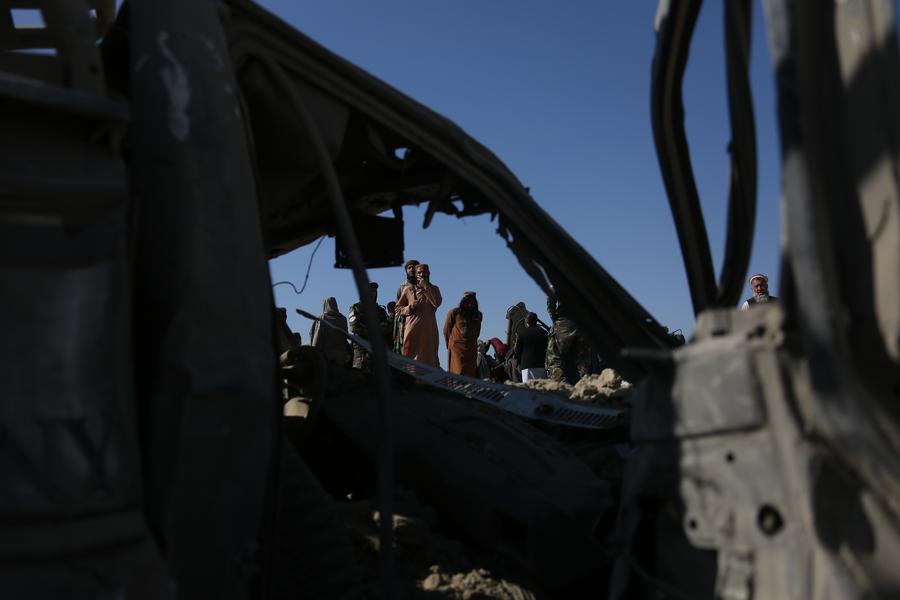
Mujahid said on Friday during a press conference on border tensions that the Afghan government has consistently emphasized peaceful solutions and continues to advocate for a constructive, non-violent approach to resolving the situation.
Saudi Arabia's Foreign Minister Prince Faisal said he had received a phone call from Pakistan's Deputy Prime Minister and Foreign Minister Mohammad Ishaq Dar. The two discussed regional developments and ways to reduce tensions to preserve regional security and stability.
"What we are witnessing is the result of accumulated distrust and unresolved security concerns," said Dr. Tughral Yamin, a Pakistani defense analyst and retired brigadier. "A fragile peace is better than open war, and sustained peace is the only path to progress," he said, noting that the region is already burdened by poverty and underdevelopment.
"Military confrontation will only deepen misery; dialogue, verification mechanisms and responsible statecraft are the way forward," he added.■