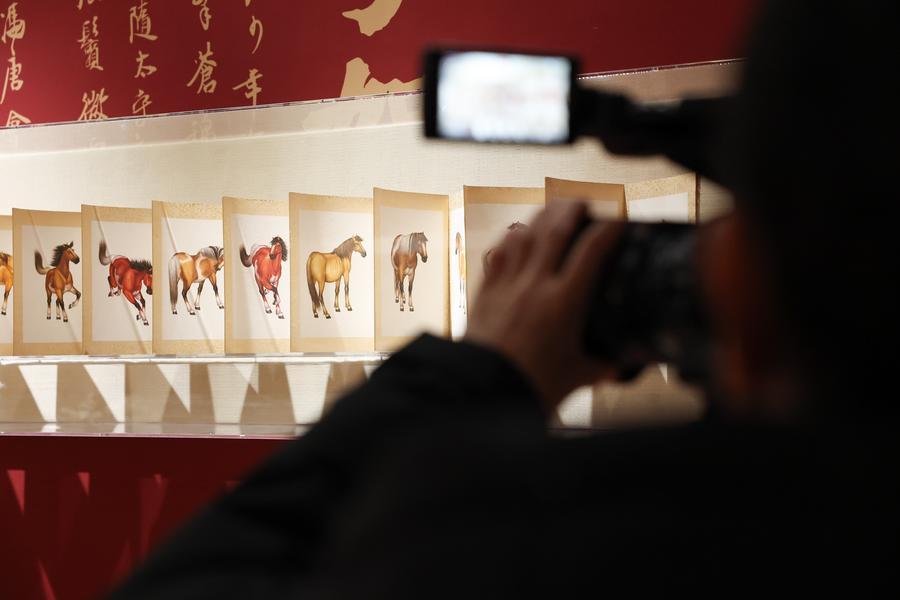
As the flame of the Milan-Cortina Winter Olympics went out, China House in Milan closed after 19 days, welcoming global visitors with culture, tech and heritage displays while showcasing exchange beyond sport.
MILAN, Feb. 25 (Xinhua) -- As the flame of the Milan-Cortina Winter Olympics was extinguished on Sunday, "China House" in Milan also wrapped up its role on the world stage.
During its 19 days of operation, this platform, established and run by the Chinese Olympic Committee to support the Chinese sports delegation, served not only as a logistical base but also as a cultural showcase open to international visitors.
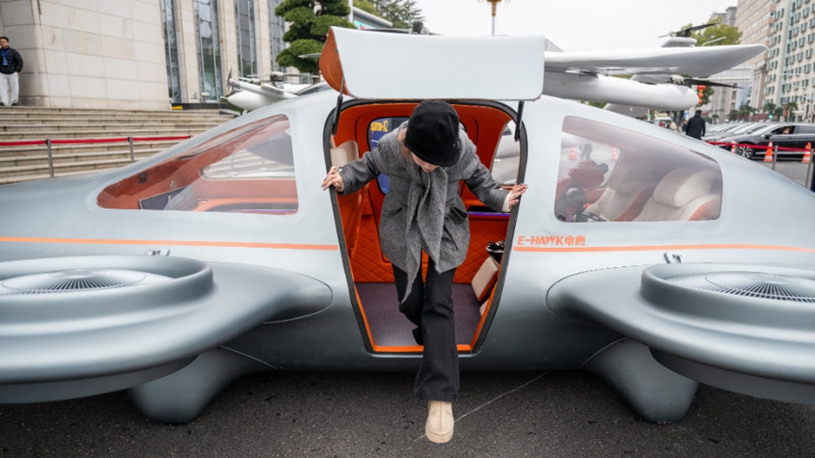
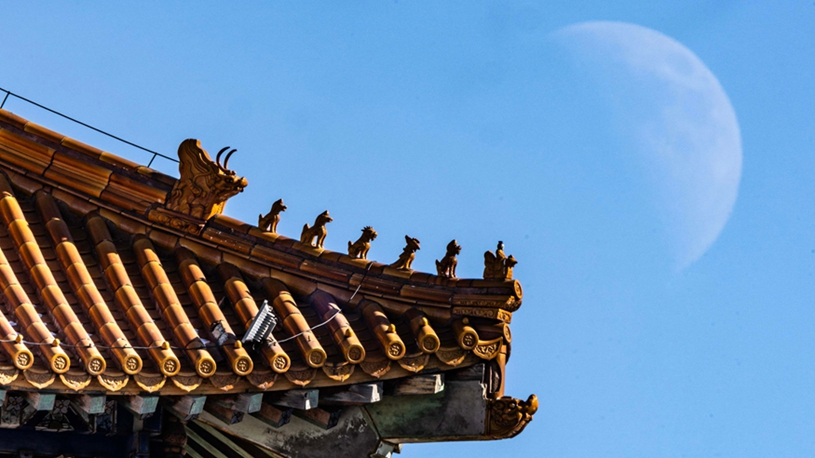
From priceless artifacts to cutting-edge modern technology, from a long and storied sports history to hands-on displays of intangible cultural heritage, the cultural hub drew visitors from across the globe.
Yu Jianyong, director of the Sports Equipment Center of the General Administration of Sport of China, told reporters that this marked the fourth appearance of "China House" at a Winter Olympics. Preliminary figures show the number of visitors far exceeded that of the previous three editions, with most coming from overseas, including Olympic officials, figures from the sports world, and athlete representatives from various countries and regions.
Beyond the Olympic venues, "China House" offered foreign visitors a place to observe, experience and better understand China. Everyday interactions and conversations also shaped new impressions of the country among international guests.
A CULTURAL WINDOW: DISCOVERING CHINA IN MILAN
This edition of "China House" featured several themed exhibition areas.
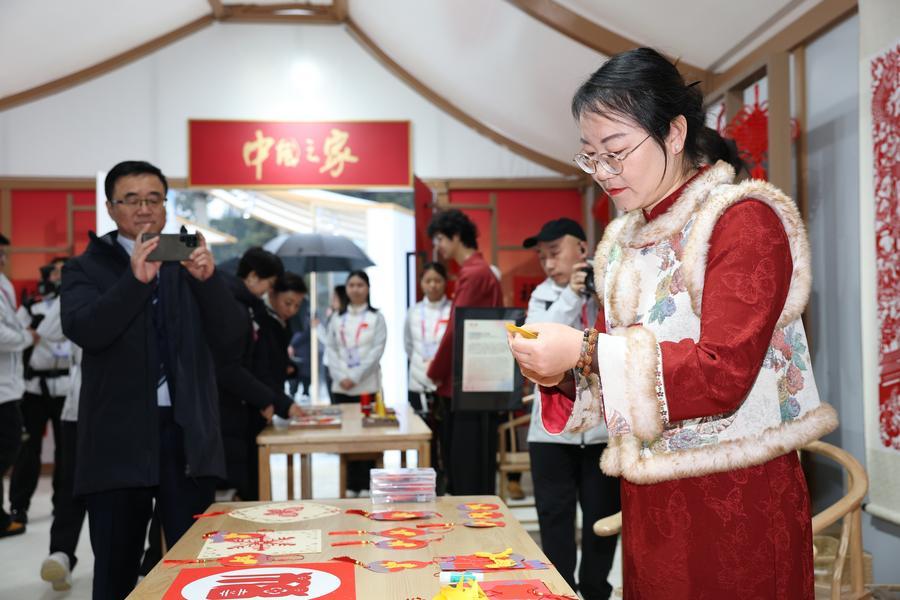
At the Chinese Sports Culture Exhibition, 67 sets of artifacts from the China Sports Museum traced the deep roots of traditional Chinese sport. Nearby, an interactive sports zone showcased domestically developed intelligent robots and AI-powered fitness equipment, allowing visitors to experience emerging technologies first-hand. In the intangible cultural heritage exhibition area, demonstrations of sugar sculpture, paper-cutting and decorative knot-tying drew long queues of visitors eager to try traditional crafts.
Brazilian visitor Rochelle, viewing the artifacts, expressed surprise and asked: "Are they real? Were they really transported from China to Italy? I've never seen such an exquisite exhibition."
Huang Jin, director of the China Sports Museum, said transporting the exhibits to Milan required significant effort. "Despite numerous challenges, we were eager to foster resonance between Chinese and international audiences, and to present the finest elements of Chinese culture to the world."
In the exhibition guestbook, Italian visitor Nicolo wrote: "Thank you for bringing such a wonderful exhibition, so excellently organized. We sincerely appreciate the opportunity to admire these artworks and experience Chinese culture."
Through these exchanges, China became less abstract for some visitors and more a culture they could see, feel and engage with directly.
A WINDOW OF EXCHANGE: UNDERSTANDING CHINA THROUGH ENCOUNTER
"China House" also became the setting for small but meaningful moments of connection.
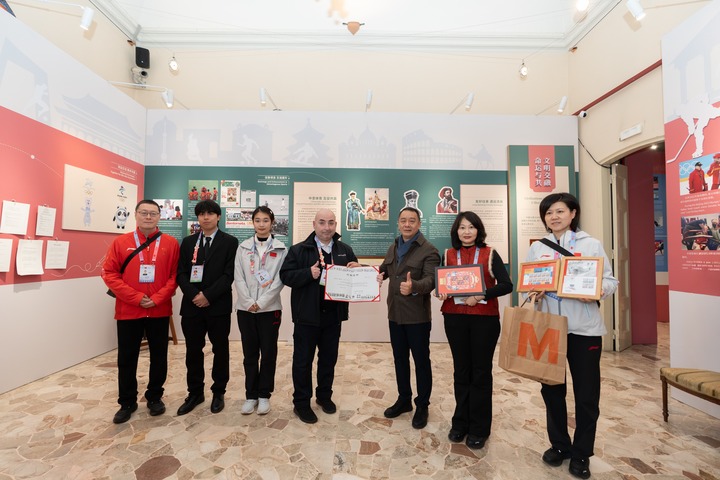
One such moment came during a donation ceremony last week. Matteo, an Italian security officer working at "China House", developed an interest in Chinese culture after repeatedly visiting the exhibition. As a gesture of goodwill, he donated items from his personal collection to the China Sports Museum, including commemorative coins of the Milan-Cortina Winter Olympics.
Monica Sciacco, an Italian volunteer for the Winter Olympics, told reporters she came to visit upon the recommendation of a Chinese colleague. Here she tried Chinese paper-cutting and calligraphy for the first time, and learned about her Chinese zodiac sign. "These traditional Chinese cultural experiences are so interesting! I've visited other countries' houses, but 'China House' gave me the best experience," she said.
In the exhibition area, one of the most eye-catching spots was the sugar sculpture stand. Artisan Lu Liqing skillfully blew air into molten sugar to make vivid figures while explaining the cultural meanings behind the zodiac signs.
Gerardo Contursi, an Italian who took part in the activity, said he had studied Chinese and grew fond of Chinese culture. "I was born in 1990, and this happens to be my zodiac year!" he said. "I feel that in recent years, more and more Italians have fallen in love with Chinese culture."
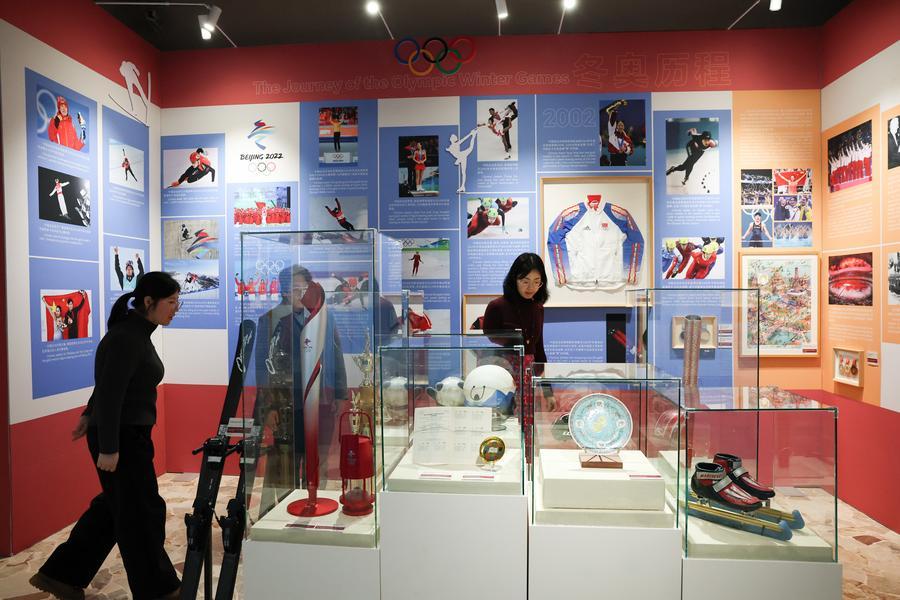
A WINDOW THROUGH SPORT: EMBRACING CHINA THROUGH THE OLYMPICS
For some visitors, "China House" was more than an exhibition space. It also served as a bridge for cultural exchange through sport. Sport has long been a universal language transcending cultural and political barriers, from the historic "ping-pong diplomacy" to today's Olympic stage.
Yu said sport is no longer only about winning medals. He said it has also become a platform for cultural exchange, business cooperation and people-to-people ties, and described "China House" as an example of that broader role.
Italian visitor Daniele said he had never been to China, but after visiting "China House", he now hoped to travel to such a fascinating country one day.
For some visitors, the venue offered a chance to consider a simple question: "what is China like today?"
In that sense, it served not only as a support center for the Chinese delegation but also as a platform for presenting Chinese culture to international audiences beyond the Olympic spotlight. ■