
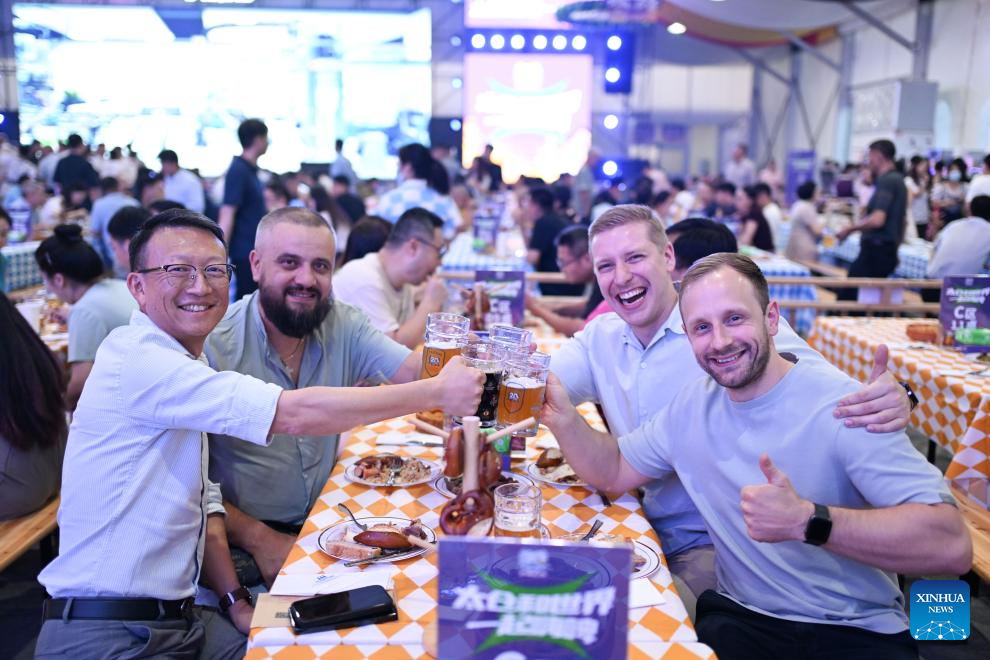
People cheers at a beer carnival in Taicang, east China's Jiangsu Province, Aug. 26, 2025. Taicang, with its permanent resident population of less than one million, is a small city on the south bank of Yangtze River estuary. Known as the "hometown of German enterprises" in China, Taicang has gathered over 560 German-funded enterprises so far since the first German company Kern-Liebers settled here in 1993, with the total investment exceeding six billion U.S. dollars and an annual industrial output value of over 67 billion yuan (about 9.76 billion U.S. dollars).
It took 14 years for the first 100 German companies to gather in Taicang, but only two years for the 400th to the 500th. Behind this acceleration lies the result of the local government's continuous proactive guidance and precise empowerment over the years.
The city of Taicang has been encouraging German enterprises to continuously increase investment and expand production by holding "Taicang Day" events in Germany and providing green channel for German-funded companies. China's first Sino-German dual system vocational education industrial park built in Taicang has cultivated over ten thousand highly skilled professional talents.
Besides industrial collaboration, people-to-people exchanges between China and Germany are also growing closer and closer in Taicang. German-style living scenarios could be found easily here. A beer carnival has been held in Taicang for two decades. More and more German living in Taicang could enjoy the feeling of home here. (Photo by Wang Xuzhong/Xinhua)
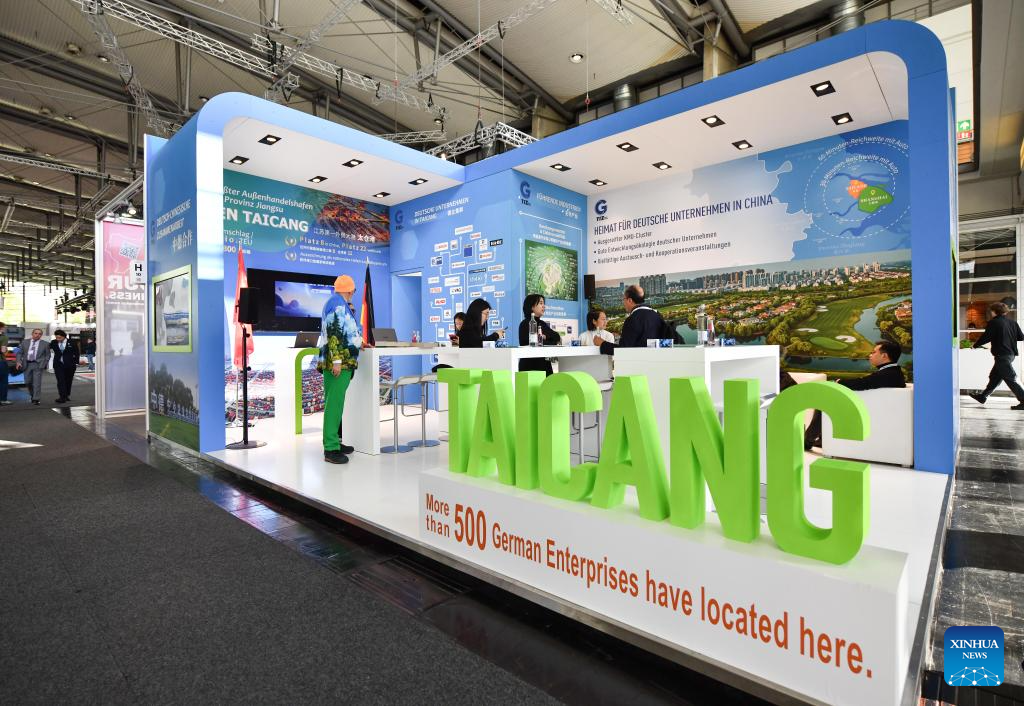
This photo taken on April 22, 2024 shows the Taicang exhibition booth at Hannover Messe in Hannover, Germany. Taicang, with its permanent resident population of less than one million, is a small city on the south bank of Yangtze River estuary. Known as the "hometown of German enterprises" in China, Taicang has gathered over 560 German-funded enterprises so far since the first German company Kern-Liebers settled here in 1993, with the total investment exceeding six billion U.S. dollars and an annual industrial output value of over 67 billion yuan (about 9.76 billion U.S. dollars). (Xinhua/Ren Pengfei)
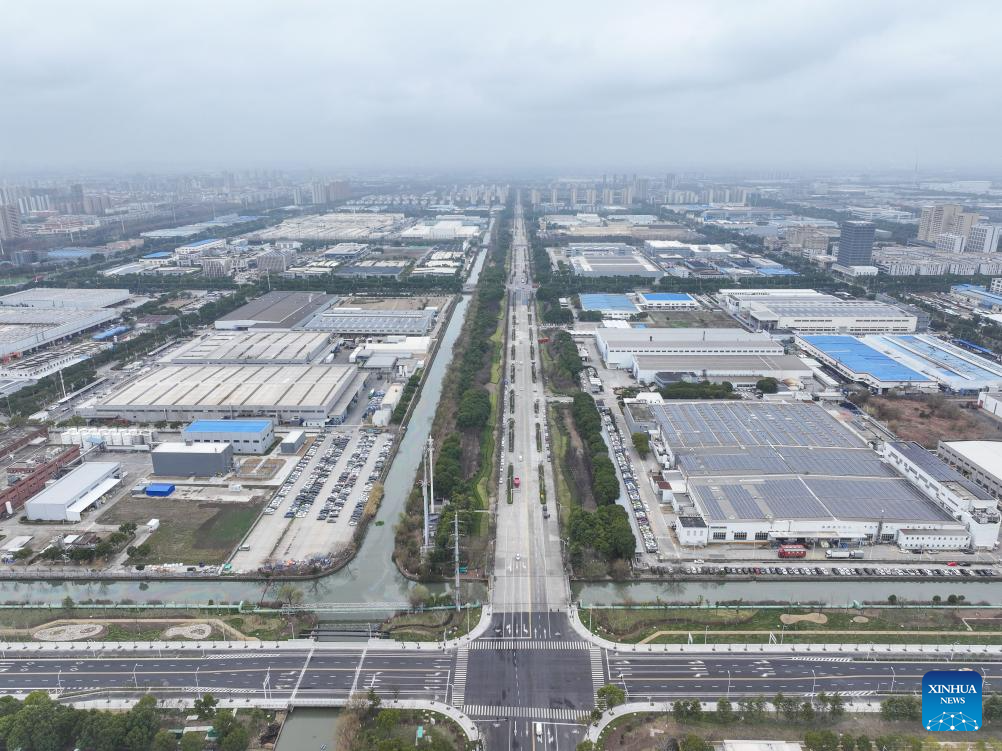
An aerial drone photo taken on Feb. 25, 2026 shows a view of the German enterprise cluster area in Taicang, east China's Jiangsu Province. Taicang, with its permanent resident population of less than one million, is a small city on the south bank of Yangtze River estuary. Known as the "hometown of German enterprises" in China, Taicang has gathered over 560 German-funded enterprises so far since the first German company Kern-Liebers settled here in 1993, with the total investment exceeding six billion U.S. dollars and an annual industrial output value of over 67 billion yuan (about 9.76 billion U.S. dollars). (Xinhua/Ji Chunpeng)
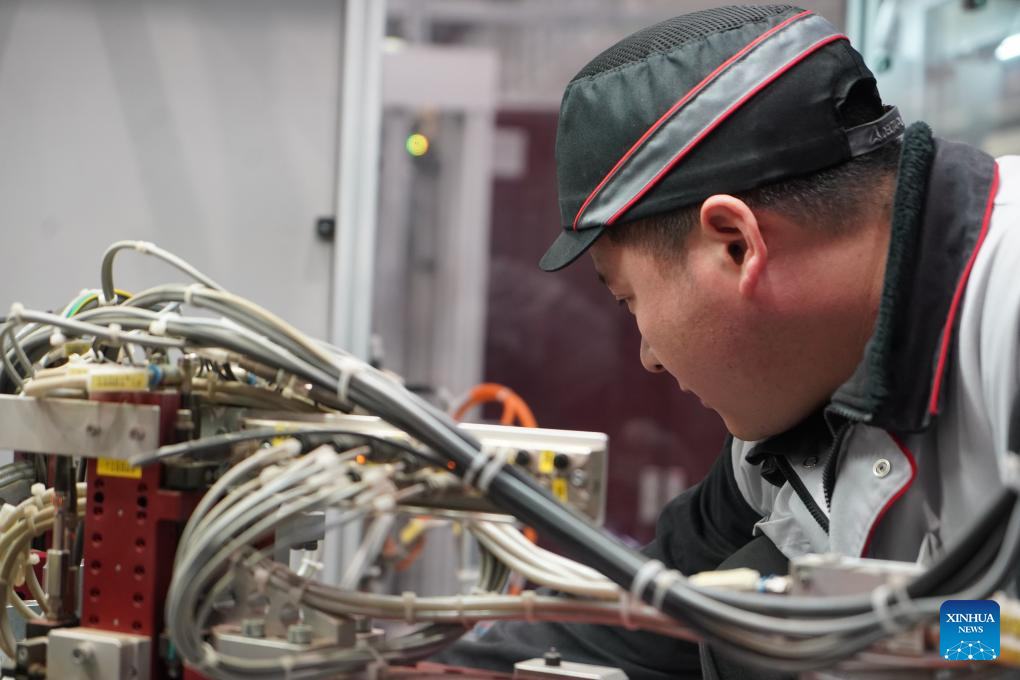
A worker operates at a workshop of Brose automotive technology enterprise management company in Taicang, east China's Jiangsu Province, Feb. 25, 2026. Taicang, with its permanent resident population of less than one million, is a small city on the south bank of Yangtze River estuary. Known as the "hometown of German enterprises" in China, Taicang has gathered over 560 German-funded enterprises so far since the first German company Kern-Liebers settled here in 1993, with the total investment exceeding six billion U.S. dollars and an annual industrial output value of over 67 billion yuan (about 9.76 billion U.S. dollars). (Photo by Liu Zhenrui/Xinhua)
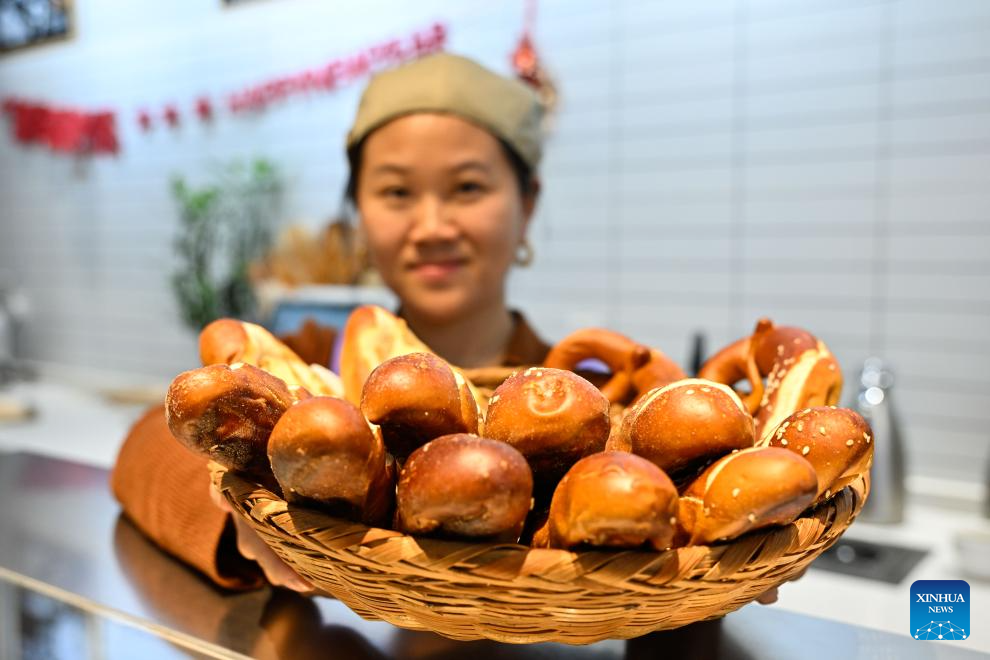
A waitress demonstrates German-style buns at a German bakery in Taicang, east China's Jiangsu Province, Feb. 24, 2026. Taicang, with its permanent resident population of less than one million, is a small city on the south bank of Yangtze River estuary. Known as the "hometown of German enterprises" in China, Taicang has gathered over 560 German-funded enterprises so far since the first German company Kern-Liebers settled here in 1993, with the total investment exceeding six billion U.S. dollars and an annual industrial output value of over 67 billion yuan (about 9.76 billion U.S. dollars). (Xinhua/Ji Chunpeng)
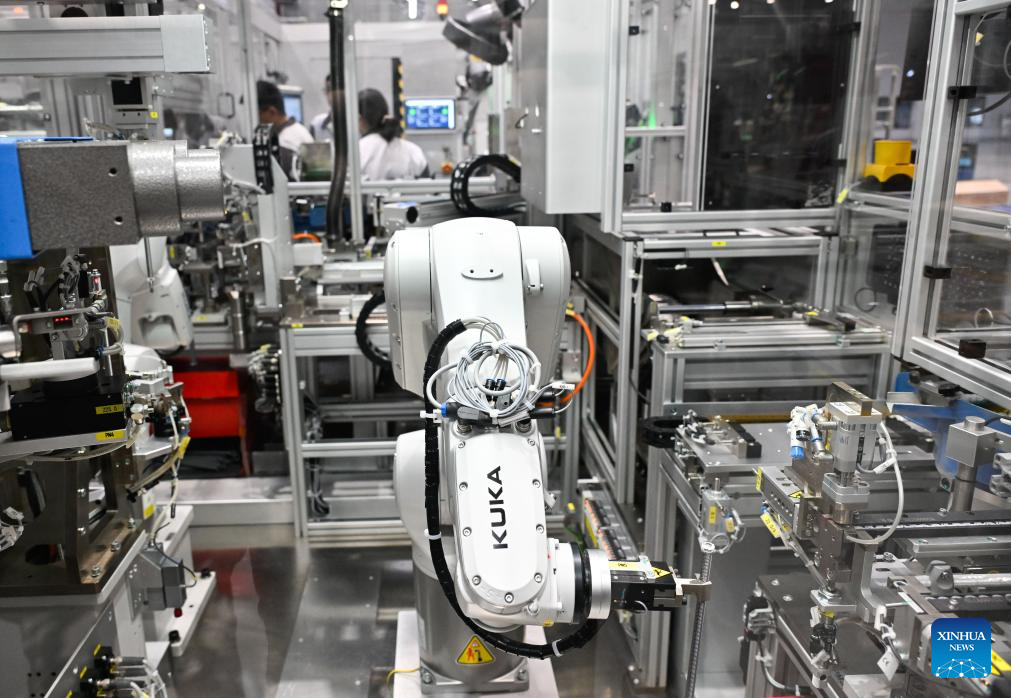
A robotic arm works at the workshop of Brose automotive technology enterprise management company in Taicang, east China's Jiangsu Province, Feb. 25, 2026. Taicang, with its permanent resident population of less than one million, is a small city on the south bank of Yangtze River estuary. Known as the "hometown of German enterprises" in China, Taicang has gathered over 560 German-funded enterprises so far since the first German company Kern-Liebers settled here in 1993, with the total investment exceeding six billion U.S. dollars and an annual industrial output value of over 67 billion yuan (about 9.76 billion U.S. dollars). (Xinhua/Ji Chunpeng)
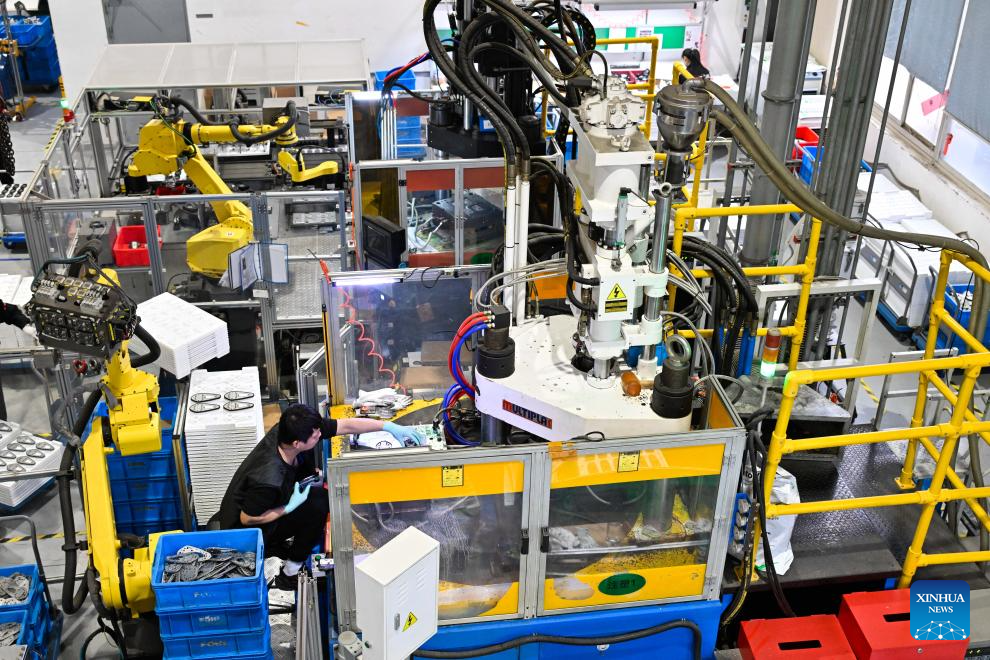
A worker operates on a production line of IKD Fule Precision Technology (Jiangsu) Co., Ltd. in Taicang, east China's Jiangsu Province, Feb. 24, 2026. Taicang, with its permanent resident population of less than one million, is a small city on the south bank of Yangtze River estuary. Known as the "hometown of German enterprises" in China, Taicang has gathered over 560 German-funded enterprises so far since the first German company Kern-Liebers settled here in 1993, with the total investment exceeding six billion U.S. dollars and an annual industrial output value of over 67 billion yuan (about 9.76 billion U.S. dollars). (Xinhua/Ji Chunpeng)
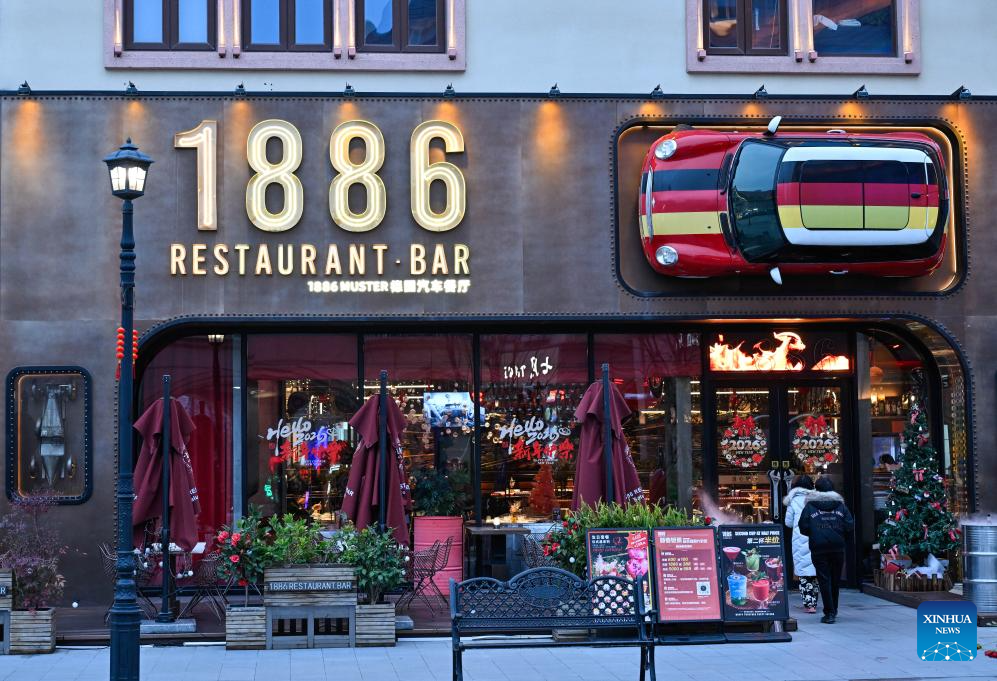
Customers walk into a German restaurant in Taicang, east China's Jiangsu Province, Feb. 24, 2026. Taicang, with its permanent resident population of less than one million, is a small city on the south bank of Yangtze River estuary. Known as the "hometown of German enterprises" in China, Taicang has gathered over 560 German-funded enterprises so far since the first German company Kern-Liebers settled here in 1993, with the total investment exceeding six billion U.S. dollars and an annual industrial output value of over 67 billion yuan (about 9.76 billion U.S. dollars). (Xinhua/Ji Chunpeng)
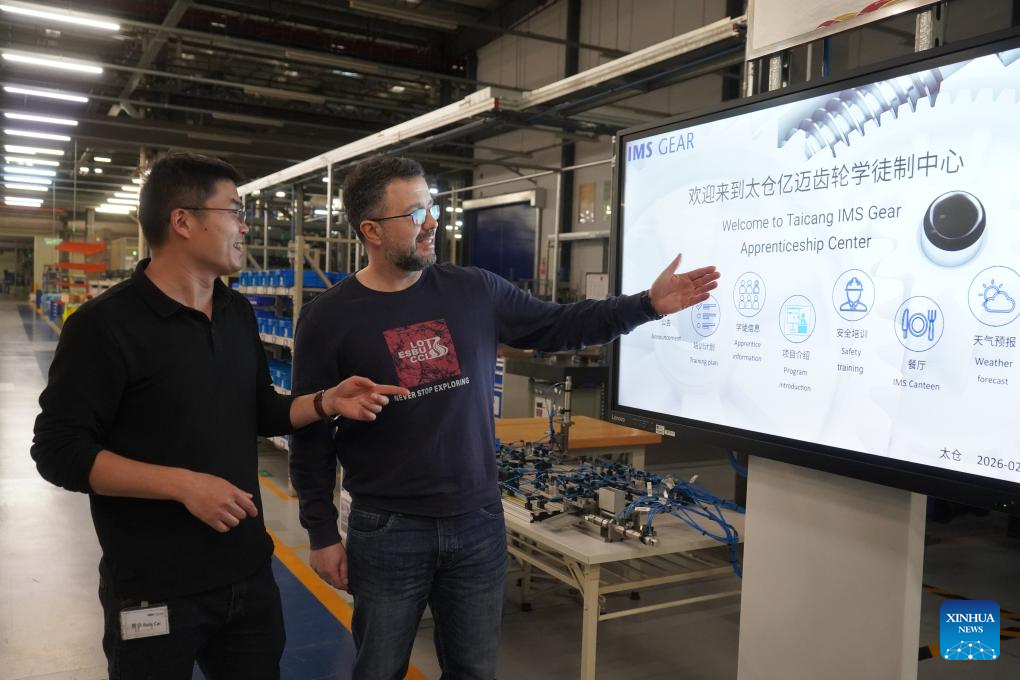
Trainer Thomas Pastore (R) explains dual system training at Taicang IMS Gear in Taicang, east China's Jiangsu Province, Feb. 24, 2026. Taicang, with its permanent resident population of less than one million, is a small city on the south bank of Yangtze River estuary. Known as the "hometown of German enterprises" in China, Taicang has gathered over 560 German-funded enterprises so far since the first German company Kern-Liebers settled here in 1993, with the total investment exceeding six billion U.S. dollars and an annual industrial output value of over 67 billion yuan (about 9.76 billion U.S. dollars). (Photo by Liu Zhenrui/Xinhua)
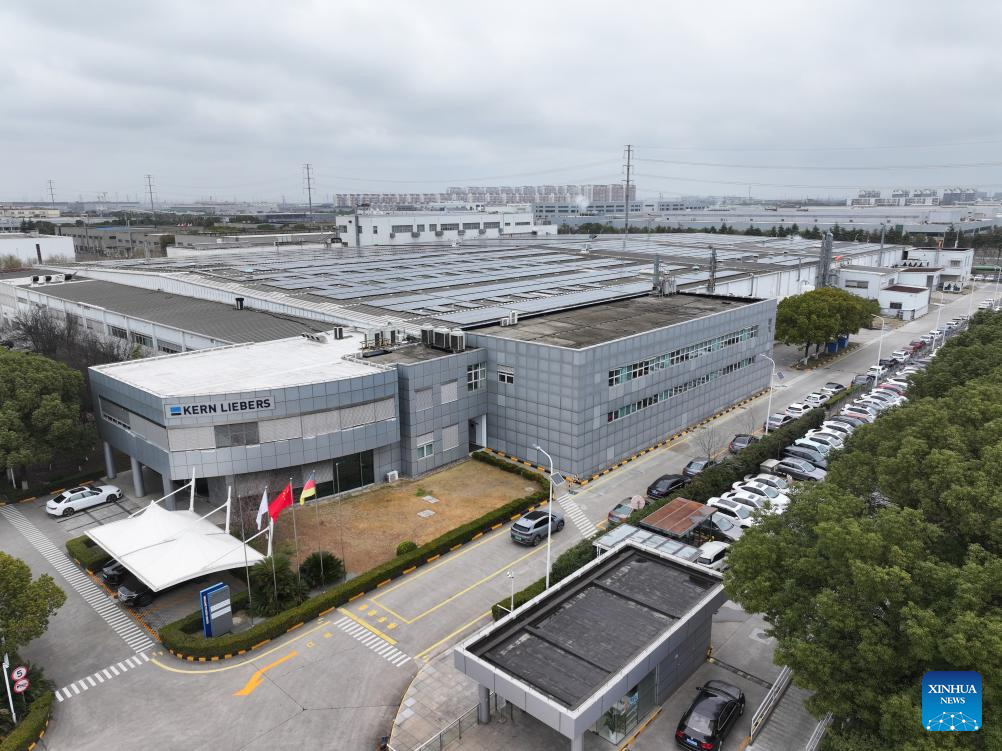
An aerial drone photo taken on Feb. 25, 2026 shows a scene of Kern-Liebers in Taicang, east China's Jiangsu Province. Taicang, with its permanent resident population of less than one million, is a small city on the south bank of Yangtze River estuary. Known as the "hometown of German enterprises" in China, Taicang has gathered over 560 German-funded enterprises so far since the first German company Kern-Liebers settled here in 1993, with the total investment exceeding six billion U.S. dollars and an annual industrial output value of over 67 billion yuan (about 9.76 billion U.S. dollars). (Xinhua/Ji Chunpeng)

A staff member handles the residence permit extension business for a German employee (L) at Taicang foreigners service center in Taicang, east China's Jiangsu Province, Feb. 25, 2026. Taicang, with its permanent resident population of less than one million, is a small city on the south bank of Yangtze River estuary. Known as the "hometown of German enterprises" in China, Taicang has gathered over 560 German-funded enterprises so far since the first German company Kern-Liebers settled here in 1993, with the total investment exceeding six billion U.S. dollars and an annual industrial output value of over 67 billion yuan (about 9.76 billion U.S. dollars). (Photo by Liu Zhenrui/Xinhua)


