
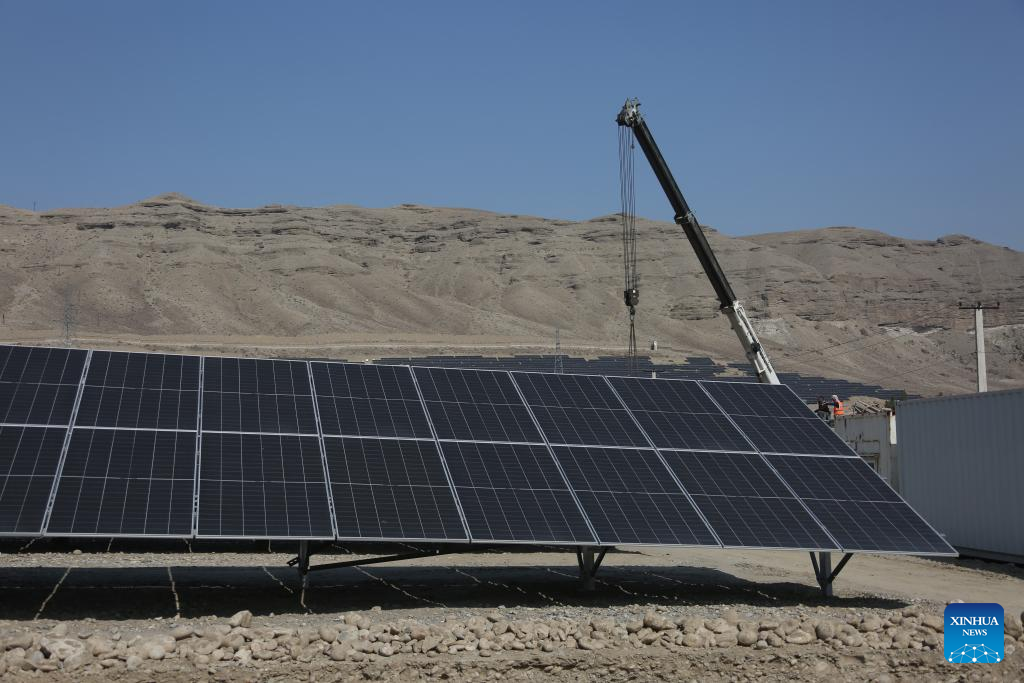
Workers carry out maintenance work at a solar power plant in Surobi district of Kabul, Afghanistan, Feb. 17, 2026. (Photo by Saifurahman Safi/Xinhua)
SUROBI/QARGHAYI, Feb. 24 (Xinhua) -- In Afghanistan, a land rich with untapped natural bounty, vast reserves of coal, gas, wind-swept valleys, cascading rivers, and relentless sunshine, millions of citizens continue to light their homes with kerosene lamps, power their businesses with expensive generators, or simply adapt to darkness.
In the rugged terrain of Qarghayi district, Laghman province, nestled adjacent to Kabul, residents like Rohullah endure a life perpetually dimmed by power outages. For years, this tailor has grappled with the absence of electricity in his modest home and workshop, where the hum of sewing machines falls silent far too often.
"With a large population, our electricity supply remains woefully inadequate," Rohullah told Xinhua. "I run a tailoring shop, yet there is no electricity. We would be delighted if solar power generation were significantly expanded."
Across the district, residents share similar complaints. The absence of reliable power forces families to adapt their daily routines around darkness, limiting children's study hours and constraining economic activity after sunset.
Amidst the crisis, private companies have invested in solar power generation, yielding promising and tangible results. One such facility in Surobi district has been operational for the past year, demonstrating the potential of renewable energy in a country blessed with exceptional solar resources.
Ali Reza Yosufi, an electrical engineer at the facility, highlights Afghanistan's unique advantage. "Afghanistan is a nation blessed with far more sunny days than most countries," Yosufi explained. "Solar power projects are immensely beneficial and can effectively bridge the prevailing electricity shortages."
The scale of the operation is impressive. "This initiative incorporates 32,400 solar panels, successfully providing clean, renewable electricity to thousands of households," Yosufi told Xinhua, adding that the project generates approximately 22.75 megawatts of power, sufficient to supply electricity to between 15,000 and 18,000 families.
According to Yosufi, all equipment for the project was sourced from China at competitive prices while maintaining superior quality standards.
"All components utilized here are Chinese-made, featuring high quality from globally recognized standard brands," he noted, adding that procurement from China proves significantly more cost-effective than from other countries, with considerable advantages in transportation logistics and ease of supply.
Officials emphasize that heightened focus is being placed on solar power generation nationwide, with the goal of achieving energy self-sufficiency in the near future.
Qari Mohammad Sadeq Haqparast, spokesman for Afghanistan's state-owned power company, Da Afghanistan Breshna Sherkat (DABS), outlined ambitious plans. "DABS has initiated work on 15 solar power generation projects with a combined capacity of 721 MW. The completion of these projects will substantially alleviate the country's acute electricity shortages."
According to survey reports cited by Haqparast, Afghanistan possesses immense solar energy potential, capable of generating up to 222,000 MW, far exceeding current and projected national needs.
DABS currently manages approximately 750 MW of electricity within its system, the majority imported from neighboring countries, he noted. However, achieving comprehensive national self-sufficiency would require an estimated 4,000 MW of reliable power generation capacity -- a target that remains distant without significant private sector participation and international partnership. ■
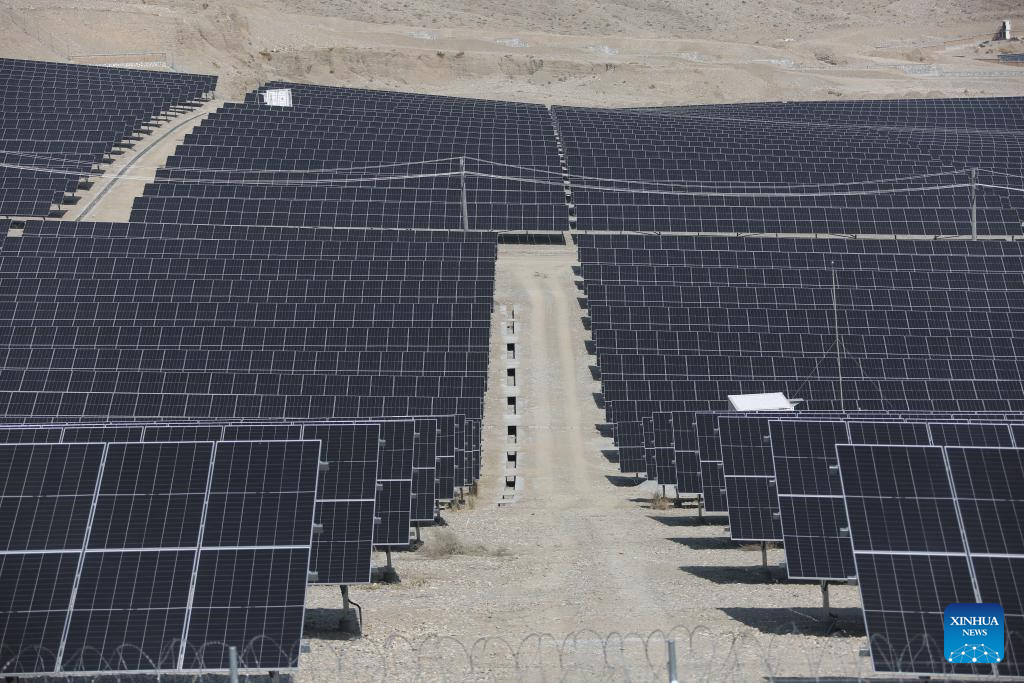
This photo taken on Feb. 17, 2026 shows solar panels at a solar power plant in Surobi district of Kabul, Afghanistan. (Photo by Saifurahman Safi/Xinhua)
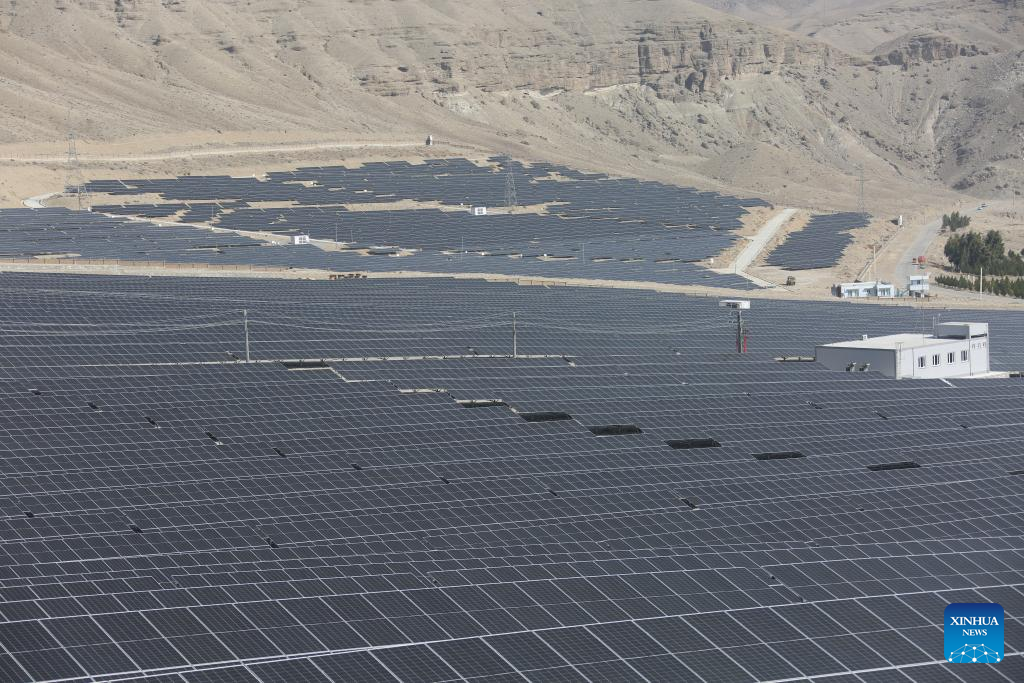
This photo taken on Feb. 17, 2026 shows a solar power plant in Surobi district of Kabul, Afghanistan. (Photo by Saifurahman Safi/Xinhua)
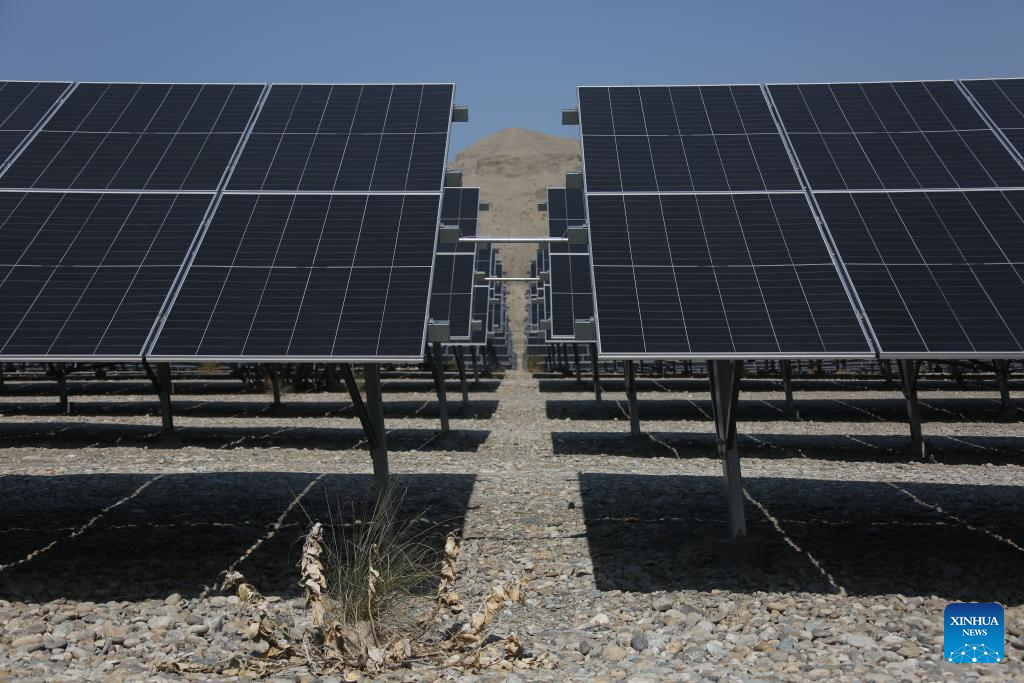
This photo taken on Feb. 17, 2026 shows solar panels at a solar power plant in Surobi district of Kabul, Afghanistan. (Photo by Saifurahman Safi/Xinhua)
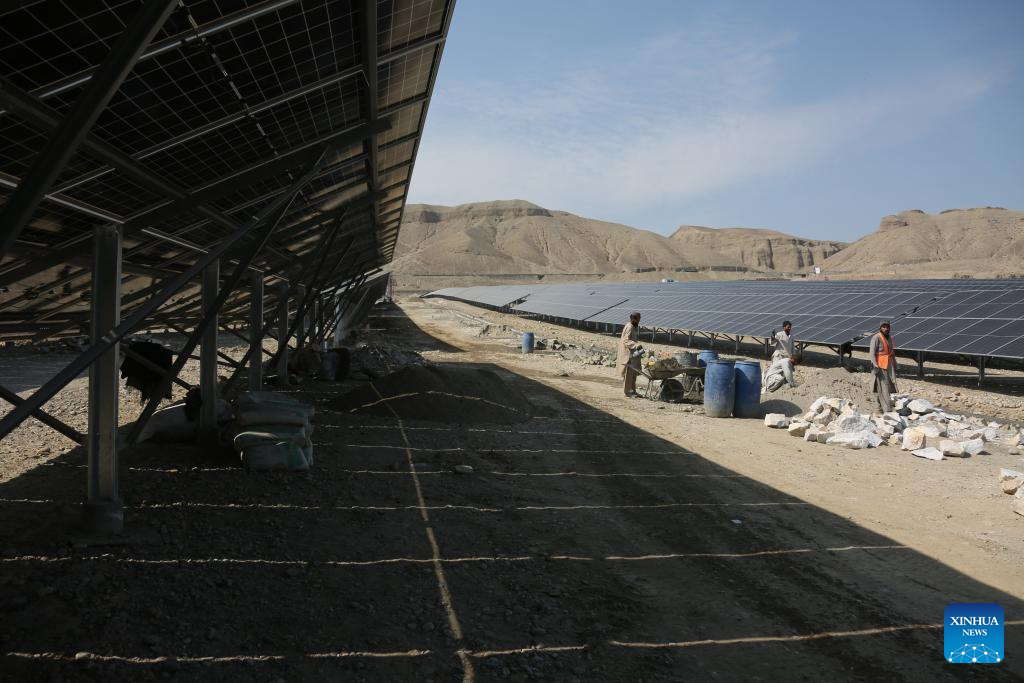
Workers check solar panels at a solar power plant in Surobi district of Kabul, Afghanistan, Feb. 17, 2026. (Photo by Saifurahman Safi/Xinhua)


