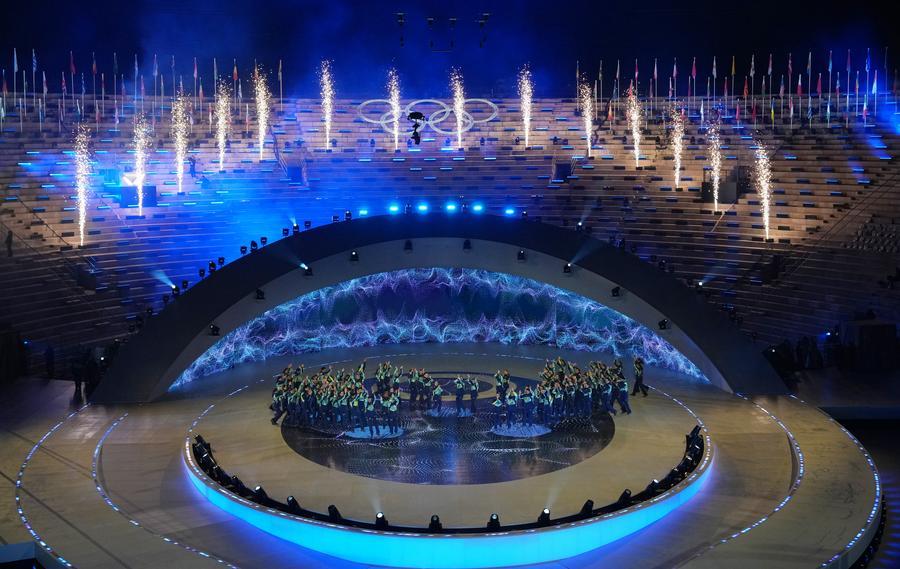
VERONA, Italy, Feb. 22 (Xinhua) -- The Milan-Cortina Winter Olympics concluded on Sunday, after 17 days of competition that saw broad participation, historic breakthroughs and China's best-ever performance at an overseas Winter Games.
International Olympic Committee president Kirsty Coventry declared the Games closed at the historic Verona Arena, a UNESCO World Heritage Site.
"This is the true Olympic spirit: competing, embracing, lifting each other up whatever the result. You showed us what excellence, respect and friendship look like in a world that often forgets these values," Coventry said in her closing speech.
"The flame may soon go out, but its light will stay with us - in every child inspired to dream big, in every person reminded that courage and kindness still matter."
"The Olympic Games will continue to be a space where the athletes can inspire the world through sport - freely, safely and proudly," said the former Olympic swimming champion.
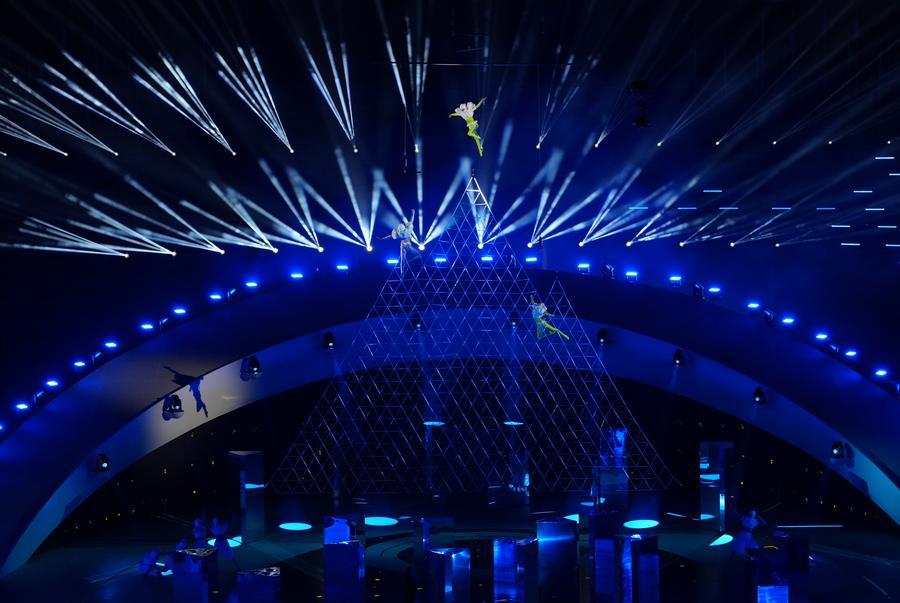
The Games officially opened on February 6, featuring 2,880 athletes from 93 delegations - including first-time Winter Olympic participants from Benin, Guinea-Bissau and the United Arab Emirates - competing in 116 events across eight sports and 16 disciplines, with women accounting for a record 47 percent of competitors.
As the most geographically spread-out Winter Olympics in history, the Games' competition venues were divided into four clusters: the urban hub of Milan, and the mountain venues of Cortina, Valtellina and Val di Fiemme, spanning over 22,000 square kilometers in northern Italy.
Norway topped the medal tally with 18 gold, 12 silver and 11 bronze medals, followed by the United States and the Netherlands. Host nation Italy finished fourth with 10 golds, six silvers and 14 bronzes, delivering its strongest performance in Winter Olympic history.
Norway's Johannes Hoesflot Klaebo delivered one of the standout performances of the Games, becoming the first athlete to win six gold medals at a single Winter Olympics by sweeping all men's cross-country events. The feat extended his record as the most decorated Winter Olympian with 11 gold medals.
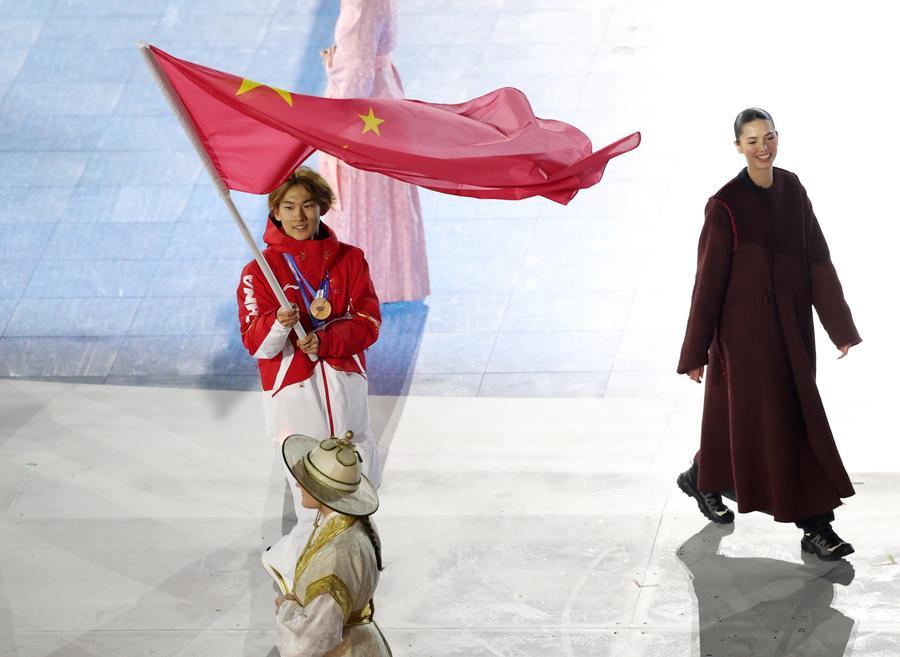
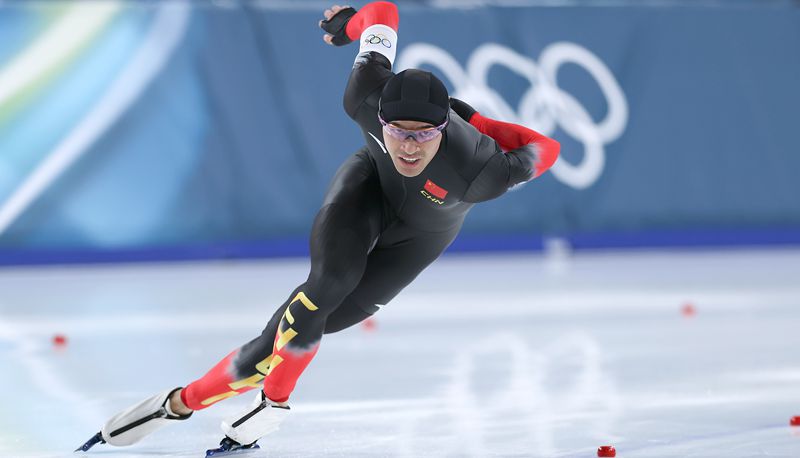
China sent its largest-ever delegation to an overseas Winter Olympics, fielding 126 athletes in 91 events across 15 disciplines. The team finished with five gold, four silver and six bronze medals, marking its best result at an overseas Winter Games and also equaling its overall medal count from Beijing 2022.
A highlight of China's campaign came in the men's 1,500m speed skating, where Ning Zhongyan clinched gold, breaking the century-long dominance of European and North American skaters in the event.
"Ning has fought extremely hard," said Tong Lixin, deputy head of the Chinese delegation. "He kept his focus and took the lead in a sport long dominated by Western athletes, helping China break new ground in an event where we previously had little chance to compete for medals."
Tong said China's medal haul of 15 consolidated the medal-winning structure established at Beijing 2022 and sustaining balanced development across both ice and snow disciplines. He added that the depth of China's winter sports talent pool is also growing.
Meanwhile, Tong stressed that despite the strong showing, China's overall standing in global winter sports remains that of a "chaser," with long-term development still required.
"We must recognize that we still lag behind the world's winter sports powers," he noted. ■